
Last updated on August 25th, 2026 at 12:26 pm
The powertrain control module (PCM) or engine control module (ECM) in your 1993 Toyota 4Runner 2.4L is the main computer that manages fuel injection, ignition timing, and emissions controls. When it fails, the engine may not start, run poorly, or stall.
If your 1993 Toyota 4Runner with the 2.4L engine is experiencing intermittent stalling, a no-start condition, or erratic running, the engine computer—often called the PCM or ECM—may be the culprit. This module is the brain of the fuel and ignition systems, and when it fails, the vehicle becomes undrivable. In this guide, you will learn exactly what the PCM/ECM does in your 4Runner, where it is located, how to replace it, and what symptoms point to a failing unit. We will also explain the factory relearn procedure that follows installation and how a pre-programmed replacement from Flagship One saves you that extra half-hour of labor. Because the 1993 4Runner is a pre-OBD-II vehicle, diagnosis relies on careful observation rather than reading diagnostic trouble codes. Understanding the role of this computer and the steps involved in its replacement will help you get your 4Runner back on the road with confidence. Whether you are a DIY owner or a professional mechanic, the information here is based on factory labor times and common failure patterns for this specific model.
1993 Toyota 4Runner 2.4L
OEM programmed replacements — plug & play, no dealer visit.
Find yours by year, make & model →
Free shipping · Lifetime warranty
The powertrain control module (PCM) or engine control module (ECM) in your 1993 Toyota 4Runner 2.4L is a sealed electronic unit that continuously monitors sensors such as the oxygen sensor, throttle position sensor, and coolant temperature sensor. It uses that data to adjust fuel injector pulse width, ignition timing, and idle speed. In this pre-OBD-II vehicle, the module does not store standardized diagnostic trouble codes; instead, it relies on a fixed calibration that cannot be updated. When the module fails, the engine may lose spark or fuel delivery entirely, or it may run in a degraded limp-home mode. The module is critical for meeting emissions standards and for drivability. If you need a replacement, you can find replacement engine computers for the 4Runner that are pre-programmed to match your vehicle’s original calibration. Because the 1993 4Runner uses a 2.4L engine with a distributor-based ignition, the ECM controls the spark advance curve as well as the fuel mixture. A failing module often causes symptoms that mimic other problems, such as a bad ignition coil or fuel pump. Understanding that the computer itself can be the root cause saves diagnostic time. The module is not user-serviceable; internal failures require replacement. The factory labor time for removal and installation is 0.8 hours, and a relearn procedure takes an additional 0.5 hours. Choosing a unit that arrives ready to install eliminates the need for that relearn step.
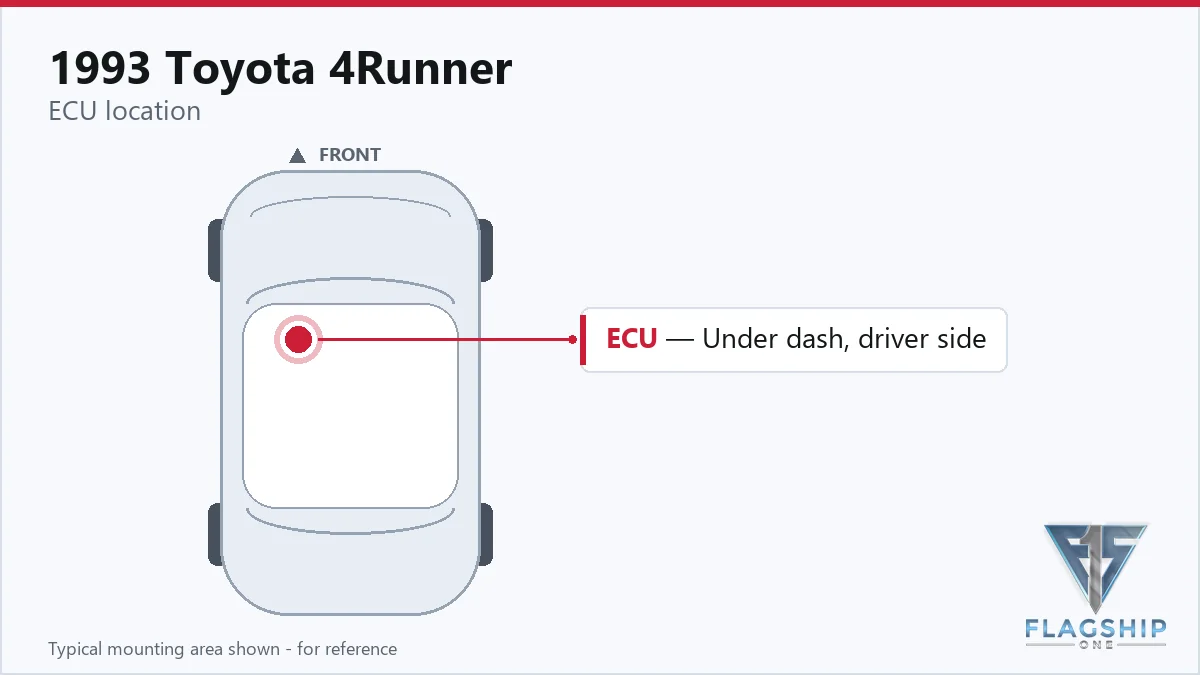
The engine control module (ECM) in the 1993 Toyota 4Runner 2.4L is located behind the instrument panel, according to the factory wiring guide’s component grid. To access it, you will need to remove the lower trim panel under the steering column or the glove box area, depending on the exact mounting position. The module is typically secured with a few bolts or screws and has one or two large wiring harness connectors. The factory book time for removal and replacement (R&R) of the PCM or ECM is 0.8 hours. This time includes disconnecting the battery, removing the trim, unbolting the module, disconnecting the harness, and installing the new unit in reverse order. No special tools are required, but care must be taken not to damage the connectors or the instrument panel trim. After installation, the factory specifies a 0.5-hour relearn procedure to allow the module to adapt to the vehicle’s sensors and actuators. If you use a pre-programmed replacement, that relearn step is already completed, saving you the extra labor. Always disconnect the battery before working on the module to avoid short circuits or damage to the computer.
| Operation | Configuration | Book Time |
|---|---|---|
| Powertrain Control Module R&R | All configurations | 0.8 hr |
| Powertrain Control Module Relearn | All configurations | 0.5 hr |
| Engine Control Module Relearn | All configurations | 0.5 hr |
| Engine Control Module R&R | All configurations | 0.8 hr |
After replacing the PCM or ECM in your 1993 Toyota 4Runner 2.4L, the factory procedure requires a relearn process that takes 0.5 hours. This involves starting the engine and allowing it to idle until the module has adapted to the specific sensor readings and actuator responses of your vehicle. The relearn ensures proper idle speed, fuel trim, and ignition timing. Without it, the engine may run roughly or stall. However, when you purchase a VIN-programmed replacement unit from Flagship One, the module arrives with the correct calibration already loaded and the relearn already performed. This means you can install the unit and drive immediately without any additional steps. The 0.5-hour relearn labor is eliminated, and you avoid the risk of an incomplete adaptation. For a pre-OBD-II vehicle like this 4Runner, the programming is fixed and cannot be updated, so having a unit that matches the original factory settings is essential. Flagship One ensures that the replacement module is programmed to your vehicle’s VIN and original specifications, so it is a direct plug-and-play solution.
A failing PCM or ECM in the 1993 Toyota 4Runner 2.4L can cause a variety of drivability issues. The most common symptom is a no-start condition where the engine cranks but does not fire, because the module is not sending spark or fuel injector pulses. Intermittent stalling while driving is another frequent complaint, often occurring without warning and then allowing the engine to restart after a few minutes. The engine may also run rough, misfire, or hesitate during acceleration. You might notice that the check engine light (if equipped) stays on constantly or flashes, but since this is a pre-OBD-II vehicle, there are no standardized diagnostic trouble codes to read. Another sign is a complete loss of communication with a scan tool when attempting to read data from the module. The vehicle may also exhibit poor fuel economy or fail to idle smoothly. Because these symptoms overlap with other issues like a bad ignition coil, fuel pump, or wiring, it is important to verify that the module itself is at fault by checking power and ground circuits and testing for proper sensor signals. A failed module often requires replacement rather than repair.
Common signs include a no-start condition, stalling, rough running, or a check engine light that stays on. Since this is a pre-OBD-II vehicle, you cannot read P-codes. You can test for power and ground at the module and check for spark and fuel delivery to isolate the issue.
Yes, the replacement is straightforward if you are comfortable removing the instrument panel trim. The factory book time is 0.8 hours. You will need basic hand tools and care not to damage the connectors. After installation, a 0.5-hour relearn is normally required, but a pre-programmed unit eliminates that step.
The factory relearn takes 0.5 hours and typically involves starting the engine and letting it idle until the module adapts to the vehicle’s sensors. This ensures proper idle and fuel trim. A pre-programmed replacement from Flagship One arrives with the relearn already completed, so you can drive immediately.
In this vehicle, the terms are often used interchangeably. The module controls both engine and powertrain functions. The factory labor times list both PCM and ECM with identical R&R and relearn times, indicating they refer to the same unit.
The factory wiring guide places the engine ECU behind the instrument panel. You will need to remove the lower trim under the steering column or the glove box to access it. The module is usually bolted to a bracket and has one or two large harness connectors.
When your 1993 Toyota 4Runner 2.4L needs a new engine computer, you have two options: repair the original module or replace it with a refurbished unit. Repair is rarely cost-effective for these sealed modules. A replacement from Flagship One comes pre-programmed to your vehicle’s VIN, saving you the 0.5-hour factory relearn. This direct plug-and-play solution gets your 4Runner back on the road quickly.
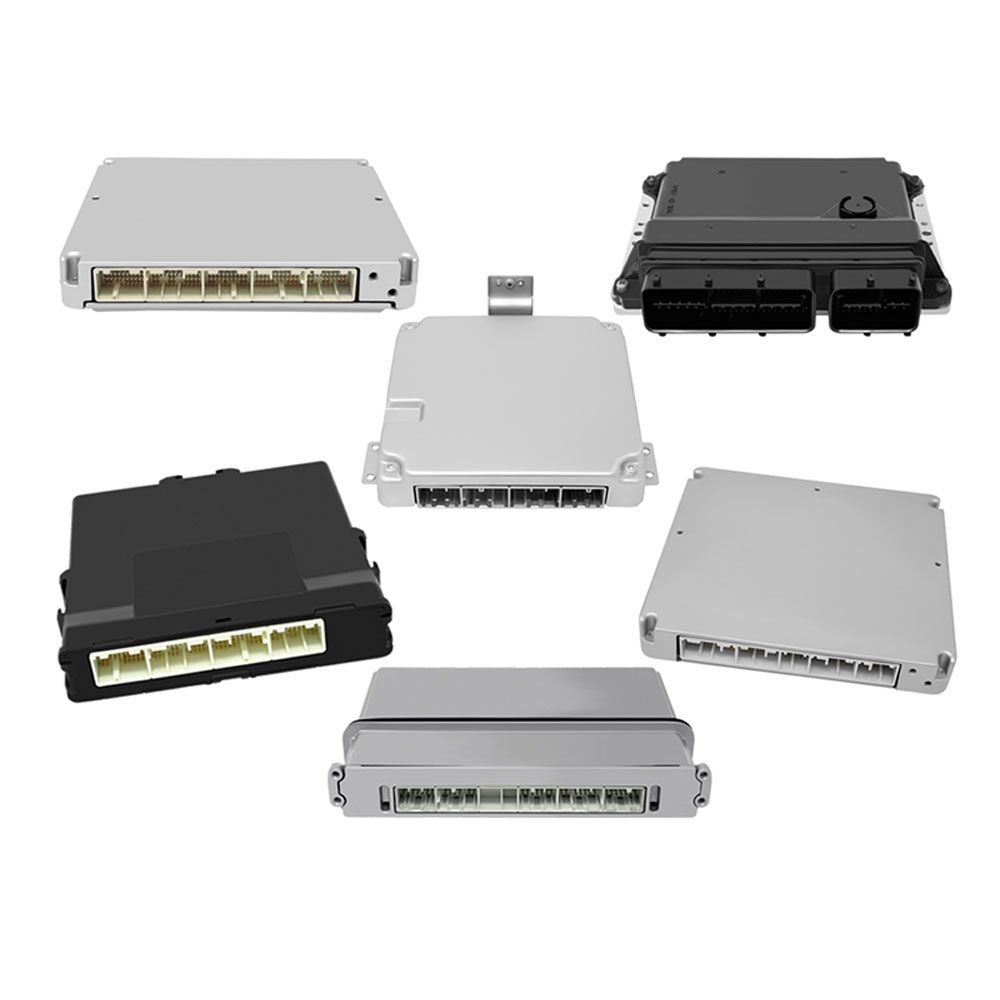
Flagship One stocks a refurbished, VIN-programmed PCM for the 1993 Toyota 4Runner with a lifetime warranty, free shipping and no core charge. The full Toyota 4Runner module lineup covers other engine configurations as well.
The PCM/ECM in your 1993 Toyota 4Runner 2.4L is a critical component that controls engine operation. Recognizing failure symptoms like no-start or stalling, knowing its location behind the instrument panel, and understanding the 0.8-hour replacement and 0.5-hour relearn times helps you plan the repair. A pre-programmed replacement from Flagship One eliminates the relearn step, making the job simpler.