
Last updated on August 25th, 2026 at 12:26 pm
The engine control module (ECM) in your 1991 Toyota 4Runner manages fuel delivery, ignition timing, and emissions systems. A failing ECM may cause erratic idling, stalling, or a complete no-start condition, often without warning.
If your 1991 Toyota 4Runner has been acting up—stalling unexpectedly, refusing to start, or running roughly—your engine control module may be the culprit. This small but vital computer oversees fuel injection, ignition timing, and other key functions. When it fails, your vehicle’s performance suffers. Replacing it isn’t complicated, but knowing where it’s located, what the process involves, and how to ensure proper function afterward can save you time and frustration. This guide explains what the ECM does, how to replace it, and why a pre-programmed unit simplifies the job.
1991 Toyota 4Runner
OEM programmed ECM for your 1991 Toyota 4Runner — plug & play, no dealer visit.
Free shipping · Lifetime warranty
The engine control module in your 1991 Toyota 4Runner acts as the brain of the engine, adjusting fuel and ignition timing based on sensor inputs. Without it, your vehicle may run poorly or not at all. Over time, heat, vibration, or electrical issues can degrade its performance. If you need a new one, replacement engine computers for the 4Runner are designed to restore proper function. The module’s role is critical, as it ensures smooth operation and optimal fuel efficiency under varying driving conditions.
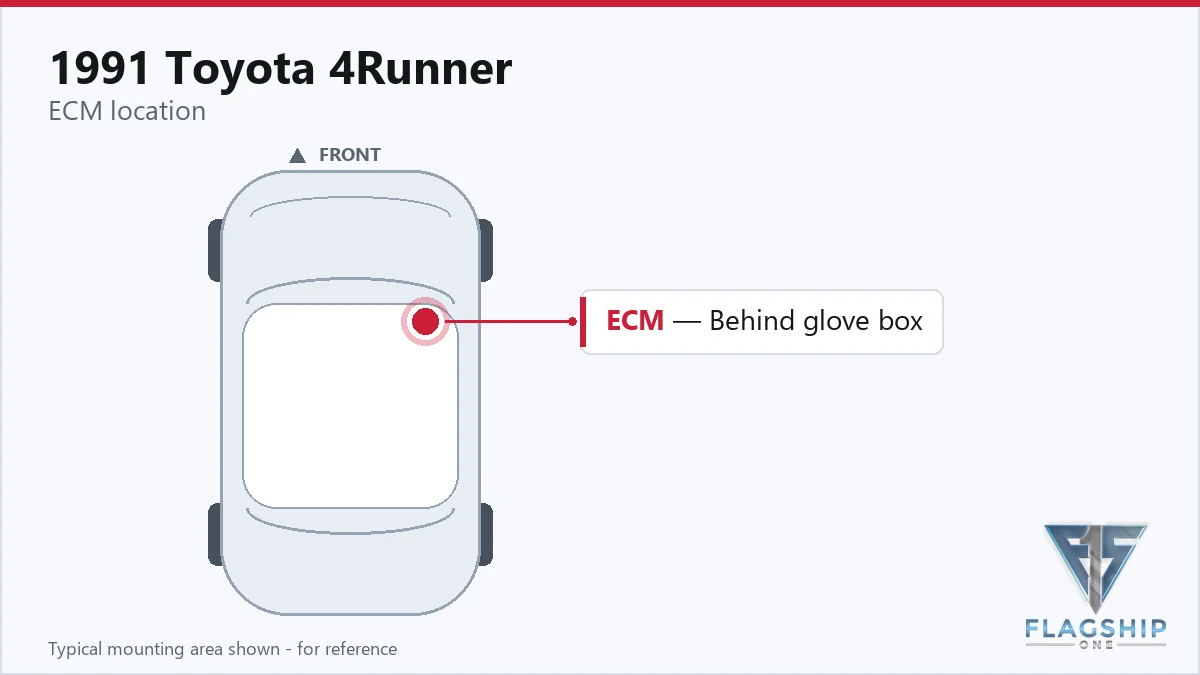
In the 1991 Toyota 4Runner, the ECM is typically mounted behind the glove box, making it relatively accessible. To replace it, you’ll need to remove the glove box or its mounting panel, disconnect the wiring harness, and unbolt the module. The factory labor time for removal and reinstallation is 0.8 hours. Once the new unit is in place, reconnect the harness and secure the module. No special tools are required, but ensuring a clean, tight connection helps prevent future issues.
| Operation | Configuration | Book Time |
|---|---|---|
| Engine Control Module Relearn | All configurations | 0.5 hr |
| Engine Control Module R&R | All configurations | 0.8 hr |
| Powertrain Control Module R&R | All configurations | 0.8 hr |
| Powertrain Control Module Relearn | All configurations | 0.5 hr |
After installing a new ECM in your 1991 Toyota 4Runner, a relearn procedure is required to synchronize the module with the engine’s sensors. This typically takes 0.5 hours and involves resetting the system to clear any stored adaptations. However, if you use a VIN-programmed replacement unit, these steps are already completed, saving you time and ensuring immediate compatibility with your vehicle’s existing settings.
A failing ECM in your 1991 Toyota 4Runner may cause a range of symptoms, including intermittent stalling, rough idling, or a no-start condition. You might also notice poor fuel economy or erratic engine behavior under load. In some cases, the vehicle may run fine one moment and cut out the next. If the module’s internal memory is corrupted, it could trigger drivability issues without setting a specific fault code. Addressing these symptoms promptly can prevent further complications.
Toyota issued service bulletin #EG002-93 addressing changes in ECM specifications for the 1991 4Runner and related models. This bulletin may outline updates to module calibration or compatibility, which could be relevant if you’re replacing the unit. While the details aren’t specified here, checking for applicable bulletins ensures your replacement aligns with factory recommendations.
| Bulletin | Subject | What It Addresses |
|---|---|---|
| EG002-93 | :EG002-93:Change In Celica/Camry/MR2 ECM Specifications | — |
Common signs include stalling, rough idling, or a no-start condition. The vehicle may also run poorly under load or exhibit erratic behavior. Since this model predates OBD-II, a scan tool may not always retrieve codes, so symptoms are often the best indicator.
Yes, if you’re comfortable with basic mechanical work. The ECM is located behind the glove box, and replacement involves disconnecting the wiring harness and unbolting the module. However, a relearn procedure is required afterward unless you use a pre-programmed unit.
The relearn procedure ensures the new module adapts to your vehicle’s specific sensor readings and operating conditions. Without it, the engine may run poorly or fail to start. A pre-programmed unit eliminates this step by arriving ready for your VIN.
If your 1991 Toyota 4Runner is experiencing ECM-related issues, you have options. A repair may be possible, but a refurbished replacement unit offers a reliable solution. Since this model requires a relearn procedure, choosing a VIN-programmed module simplifies the process and ensures compatibility right out of the box.
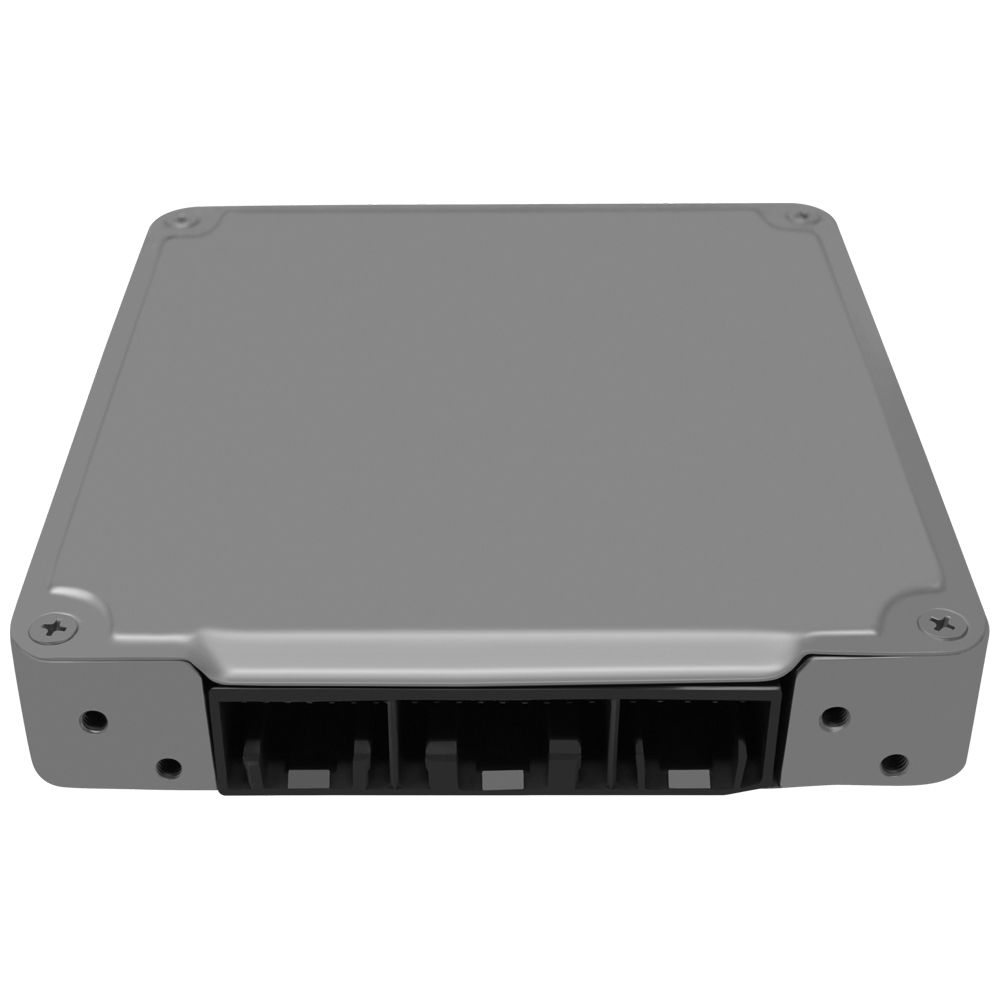
Flagship One stocks a refurbished, VIN-programmed PCM for the 1991 Toyota 4Runner with a lifetime warranty, free shipping and no core charge. The full Toyota 4Runner module lineup covers other engine configurations as well.
The 1991 Toyota 4Runner relies on its ECM for smooth operation, and a failing module can lead to frustrating drivability problems. Whether you’re replacing the unit yourself or having it done professionally, understanding the process helps you make an informed decision. A pre-programmed replacement can save time and restore your vehicle’s performance quickly.