
Last updated on August 25th, 2026 at 12:25 pm
The Engine Control Module in your 1995 Toyota 4Runner serves as the primary computer responsible for managing fuel delivery, ignition timing, and emission controls across the 3.0L powertrain. When this unit fails internally, your vehicle may exhibit drivability issues ranging from intermittent stalling to complete no-start conditions.
Finding yourself stranded because your 1995 Toyota 4Runner refuses to start or suddenly loses power while driving can be frustrating, especially when the root cause turns out to be the engine computer itself. The Electronic Control Module in these older Toyota trucks serves as the central nervous system for your 3.0L powertrain, managing critical functions that keep the engine running smoothly and efficiently. When this computer begins to fail internally, the symptoms can range from subtle drivability hiccups to complete vehicle disablement.
Understanding how the engine control system works in your pre-OBD-II 4Runner empowers you to make informed decisions about diagnosis and repair. This guide walks you through what these modules do, where they are located, common failure patterns to watch for, and what the replacement process involves. You will learn why professional-grade rebuilt units from suppliers like Flagship One offer advantages over used salvage yard computers, particularly when it comes to programming and long-term reliability. By the end, you will have a clear picture of what to expect if your 1995 Toyota 4Runner requires engine computer replacement.
The Engine Control Module in your 1995 Toyota 4Runner with the 3.0L V6 engine functions as the primary computer responsible for overseeing all major powertrain operations. This unit continuously monitors input signals from numerous sensors located throughout the engine bay and uses that data to calculate即时 adjustments to fuel injector pulsing, spark advance, idle speed control, and various emission control devices. The PCM/ECM essentially acts as the brain that translates driver demands—accelerator position, throttle angle—into precise mechanical responses from the fuel and ignition systems.
For a vehicle from this era, the degree of integration between the control module and daily drivability is substantial. Unlike modern OBD-II equipped vehicles where emissions monitoring dominates the computer’s focus, your pre-OBD-II 4Runner’s engine computer prioritizes driveability and basic engine management. The module stores adaptive learning data that compensates for normal component wear over time. When the original computer begins experiencing internal electrical degradation, these learned values may become corrupted or the processing logic itself can produce erratic outputs.
replacement engine computers for the 1995 Toyota 4Runner operate within the constraints of this specific application, meaning they are designed to interface properly with the 3.0L engine’s sensor suite and actuation systems. The programming within these units contains the base maps and default parameters that govern how your truck’s powertrain responds under various operating conditions. Factory engineers calibrated these settings to balance performance, fuel economy, and emissions compliance for the specific vehicle model year and engine combination.
1995 Toyota 4Runner
OEM programmed ECM for your 1995 Toyota 4Runner — plug & play, no dealer visit.
Free shipping · Lifetime warranty
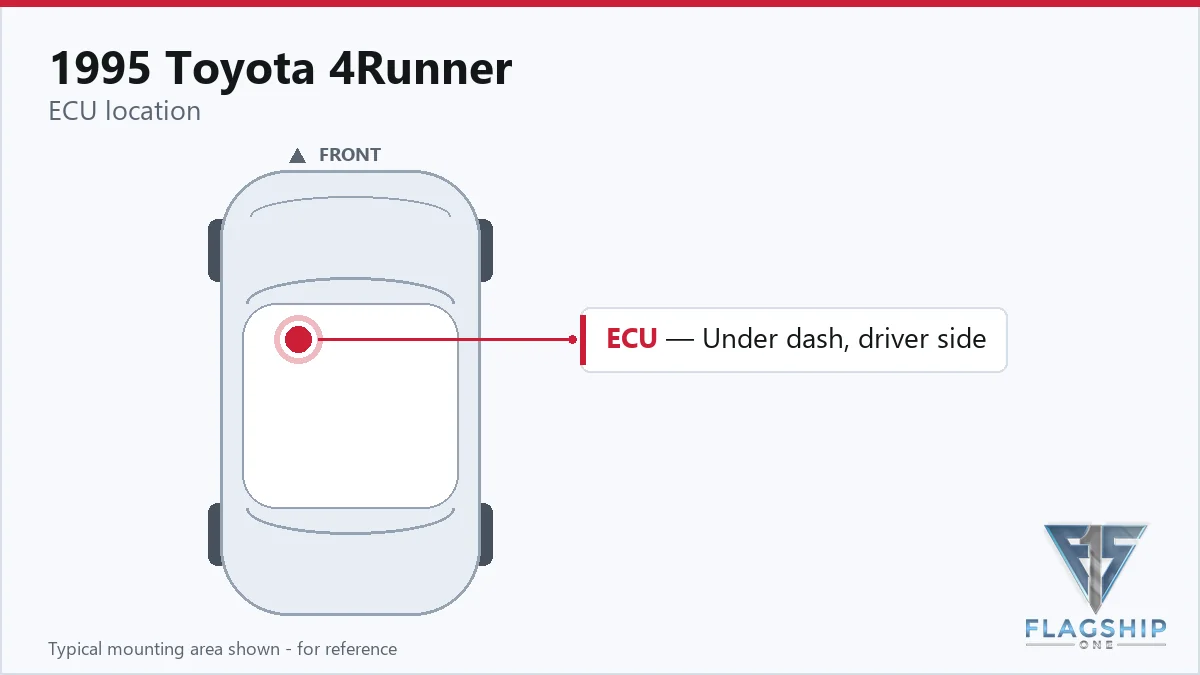
The factory wiring documentation for the 1995 Toyota 4Runner indicates the engine ECU is positioned within the instrument panel area, typically mounted behind the dashboard cluster or adjacent to the fuse box location. This interior placement means accessing the module requires removal of interior trim panels and potentially the instrument cluster assembly itself. The job involves working in the confined space behind the dashboard while carefully disconnecting electrical harnesses.
According to manufacturer labor guidelines, the time allowance for Powertrain Control Module removal and reinstallation on this vehicle is 0.8 hours. A similar allocation of 0.8 hours applies for Engine Control Module removal and reinstallation procedures. These book times assume a technician with proper experience handling instrument panel disassembly on 1990s Toyota trucks. After the physical installation is complete, an additional 0.5 hours may be required for relearn procedures that restore adaptive fuel trim data to proper values. Your technician should verify connector seating and ground integrity during reinstallation, as poor electrical connections can mimic module failure symptoms.
| Operation | Configuration | Book Time |
|---|---|---|
| Engine Control Module Relearn | All configurations | 0.5 hr |
| Engine Control Module R&R | All configurations | 0.8 hr |
| Powertrain Control Module R&R | All configurations | 0.8 hr |
| Powertrain Control Module Relearn | All configurations | 0.5 hr |
Following replacement of the engine control module in your 1995 Toyota 4Runner, the vehicle requires a relearn procedure to synchronize the new computer with your specific powertrain. The factory service procedure involves a series of steps that allow the replacement module to calibrate itself to your engine’s unique characteristics. This process typically includes idle relearn sequences and adaptive memory initialization that may involve driving the vehicle through specific throttle opening ranges.
The relearn time allocation for either the ECM or PCM following replacement is 0.5 hours according to the official labor reference. During this period, the new module compiles fresh adaptive data based on current sensor readings from your 3.0L engine. Until this process completes, you may notice slightly elevated idle speeds or minor throttle response differences.
When you install a VIN-programmed replacement unit from Flagship One, the time-consuming factory programming steps that would normally require dealer instrumentation or specialized scan tools are already completed before the unit arrives. This means your technician can proceed directly to physical installation and the abbreviated relearn procedure, rather than waiting for module initialization that could extend your repair timeline significantly.
When the Engine Control Module in your 1995 Toyota 4Runner begins experiencing internal problems, the warning signs often develop gradually before reaching the point where the vehicle becomes undriveable. One of the most frequently reported symptoms involves intermittent starting difficulties, where the engine may crank normally but fail to fire, or conversely, start briefly then stall immediately. These stalling events often occur without warning during normal driving, creating potentially dangerous situations if they happen at higher speeds.
Drivability symptoms commonly associated with failing engine computers include rough idle that manifests as noticeable engine vibration at standstill, hesitation during acceleration that makes the truck feel sluggish when you demand power, and stuttering under load that feels like a temporary fuel starvation event. The 3.0L engine may develop a persistent misfire sensation, particularly under acceleration, that can persist even after replacing conventional ignition components like spark plugs or wires.
Scanner communication problems represent another class of failure indicators. If diagnostic equipment cannot establish communication with your vehicle’s control module, or if data streams appear frozen or contain obviously erroneous values, internal module failure may be the culprit. In pre-OBD-II vehicles, accessing diagnostic information may require manufacturer-specific procedures rather than standardized OBD-II code retrieval.
Transmission shifting irregularities can also stem from engine computer issues, as the module often influences transmission control functions even in vehicles without fully integrated TCM systems. You might notice harsh engagement, failure to shift into higher gears, or automatic transmission erratic behavior that mimics mechanical transmission problems.
Distinguishing between computer failure and sensor or wiring problems typically requires diagnostic testing with manufacturer-specific equipment. While generic scan tools have limited capability with pre-OBD-II vehicles, specialized Toyota diagnostic systems can perform module self-tests, verify processor integrity, and check memory functions. Your technician may also use oscilloscope analysis to examine sensor waveforms at the computer input terminals, helping isolate whether symptoms originate from the signal source or the processing unit itself.
Used salvageyard engine computers carry significant risks that often make them poor choices despite lower upfront costs. These units have unknown operating histories, may have sustained heat or moisture damage, and frequently contain corrupted adaptive memory or marginal electronics. A professionally rebuilt replacement unit from a reputable supplier typically undergoes thorough testing, component-level repair of common failure points, and programming verification. The reduced failure risk and known-good status generally justify the slightly higher investment compared to uncertain used parts.
Units designated as VIN-programmed arrive configured specifically for your vehicle’s identification number and model specifications. This means the replacement module contains the correct calibration files, vehicle-specific settings, and immobilizer compatibility information required for plug-and-play installation. Your technician still performs the standard post-replacement relearn procedure, but the lengthy dealer-only programming step that applies to some replacement computers is already completed before the unit ships to you.
Transmission irregularities that resist mechanical diagnosis sometimes trace back to engine computer faults when the TCM is integrated with the ECM. Symptoms may include harsh gear engagements, failure to shift into overdrive, unexpected downshifts, or complete loss of transmission function accompanied by an illuminated check engine or transmission warning indicator. If fluid levels and mechanical condition check out normally but shifting problems persist, the powertrain control module merits consideration as the root cause.
While mechanically capable DIY technicians have successfully replaced engine computers on older Toyota vehicles, the job requires comfort with interior disassembly, careful handling of sensitive electronics, and proper connector reattachment. The location behind the instrument panel means removing and reinstalling dashboard components without causing damage or creating rattles. Professional installation ensures proper torque on mounting points, verified electrical connections, and completion of any required relearn procedures. Weigh the complexity against your specific tools and experience level before deciding on the DIY approach.
When your 1995 Toyota 4Runner requires engine computer replacement, you face a choice between repairing your failed module or installing a professionally rebuilt replacement unit. In-circuit repair of aged ECM circuit boards may restore function temporarily, but these repairs rarely address all degradation points within complex multi-layer circuit boards. Remanufactured replacement units undergo comprehensive testing under simulated operating conditions, component replacement of known failure points, and quality verification before shipping. This approach typically provides superior long-term reliability compared to repair attempts on aged electronics from a 1990s vehicle.
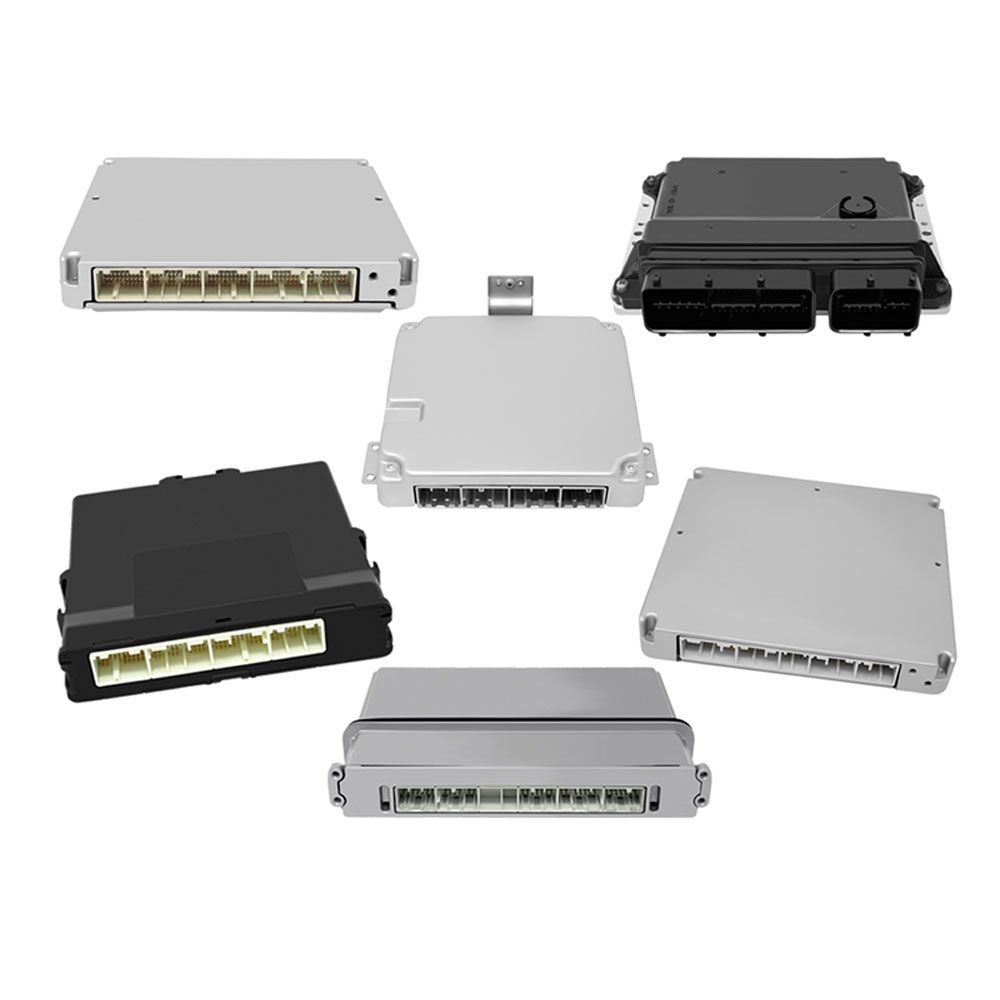
Flagship One stocks a refurbished, VIN-programmed PCM for the 1995 Toyota 4Runner with a lifetime warranty, free shipping and no core charge. The full Toyota 4Runner module lineup covers other engine configurations as well.
The 1995 Toyota 4Runner with its 3.0L engine relies on a robust but aging Engine Control Module that may eventually require replacement due to normal degradation of internal electronics. Understanding the module’s location, the relearn requirements, and the importance of proper programming helps you approach this repair with realistic expectations. Whether you ultimately choose professional installation or tackle the job yourself, selecting a quality replacement unit configured for your specific truck represents the foundation of a successful repair that restores your 4Runner to reliable daily transportation.