
Last updated on August 25th, 2026 at 12:26 pm
The Engine Control Module (ECM) in your 1992 Toyota 4Runner manages fuel delivery, ignition timing, and emissions systems. Failures may cause hard starting, stalling, or poor performance, often without warning.
If your 1992 Toyota 4Runner is experiencing unexplained stalling, hard starts, or poor engine performance, the Engine Control Module (ECM) may be the culprit. This small but critical component manages fuel injection, ignition timing, and emissions systems. Replacing it involves more than just swapping parts—proper installation and programming are key to restoring reliable operation. Understanding the process helps you make informed decisions, whether you’re tackling the job yourself or working with a mechanic.
The Engine Control Module in your 1992 Toyota 4Runner acts as the brain of the engine, adjusting fuel and ignition timing based on sensor inputs. Without it, your vehicle may struggle to start, run roughly, or even stall unexpectedly. Over time, heat and vibration can degrade internal components, leading to failures. When replacement becomes necessary, choosing replacement engine computers for the 4Runner ensures compatibility and proper functionality. The module’s role is especially critical in older vehicles, where wear and tear can amplify minor issues into noticeable drivability problems.
1992 Toyota 4Runner
OEM programmed replacements — plug & play, no dealer visit.
Find yours by year, make & model →
Free shipping · Lifetime warranty
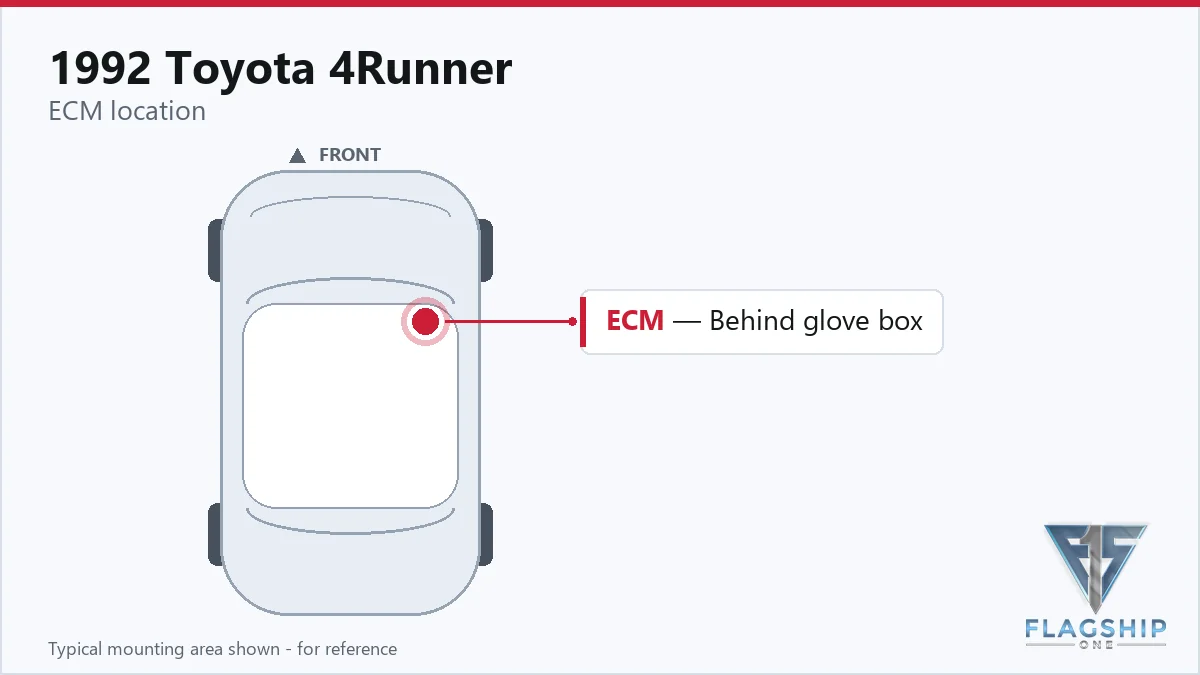
The ECM in your 1992 Toyota 4Runner is typically located behind the glove box, making it relatively accessible compared to other vehicles. To replace it, you’ll first need to remove the glove box assembly, which usually involves unscrewing a few fasteners. Once exposed, the module can be unplugged and swapped out. Labor time for removal and reinstallation is typically 0.8 hours. After installation, a relearn procedure of 0.5 hours is often required to ensure the new module communicates correctly with the engine’s sensors and systems.
| Operation | Configuration | Book Time |
|---|---|---|
| Powertrain Control Module R&R | All configurations | 0.8 hr |
| Powertrain Control Module Relearn | All configurations | 0.5 hr |
| Engine Control Module Relearn | All configurations | 0.5 hr |
| Engine Control Module R&R | All configurations | 0.8 hr |
After installing a new ECM in your 1992 Toyota 4Runner, the factory procedure typically requires a relearn process, which takes about 0.5 hours. This step ensures the module synchronizes with the vehicle’s sensors and fuel system. However, a VIN-programmed replacement unit arrives ready to install, eliminating the need for this additional step. This not only saves time but also reduces the risk of calibration errors, helping your vehicle return to optimal performance more quickly.
A failing ECM in your 1992 Toyota 4Runner may cause a range of symptoms, from intermittent stalling to a complete no-start condition. You might also notice poor fuel economy, rough idling, or the engine running too rich or too lean. In some cases, the vehicle may enter a limp mode, limiting power to prevent further damage. While these issues can stem from other sources, persistent problems often point to the ECM, especially if they occur without an obvious mechanical cause.
Toyota issued service bulletin #EG002-93 addressing changes in ECM specifications for several models, including the 1992 4Runner. This bulletin may outline updated calibration requirements or hardware revisions to improve reliability. If your vehicle is experiencing ECM-related issues, checking for applicable bulletins can provide insight into known problems and recommended fixes.
| Bulletin | Subject | What It Addresses |
|---|---|---|
| EG002-93 | :EG002-93:Change In Celica/Camry/MR2 ECM Specifications | — |
Common signs include hard starting, stalling, or poor engine performance. If the vehicle runs rough or fails to start despite a healthy battery and fuel system, the ECM may be the issue. A diagnostic scan can help confirm the problem.
Replacement is straightforward if you’re comfortable with basic mechanical work, as the module is located behind the glove box. However, a relearn procedure is often required afterward, which may require professional tools or equipment.
The relearn process ensures the new ECM synchronizes with the vehicle’s sensors and fuel system. Without it, the engine may run poorly or fail to start. This step is typically required to restore proper performance.
If your 1992 Toyota 4Runner is showing signs of ECM failure, you have options. A repair may be possible in some cases, but a replacement is often the most reliable solution. Pre-programmed units save time and eliminate the need for post-installation reprogramming, making the process smoother and more efficient.
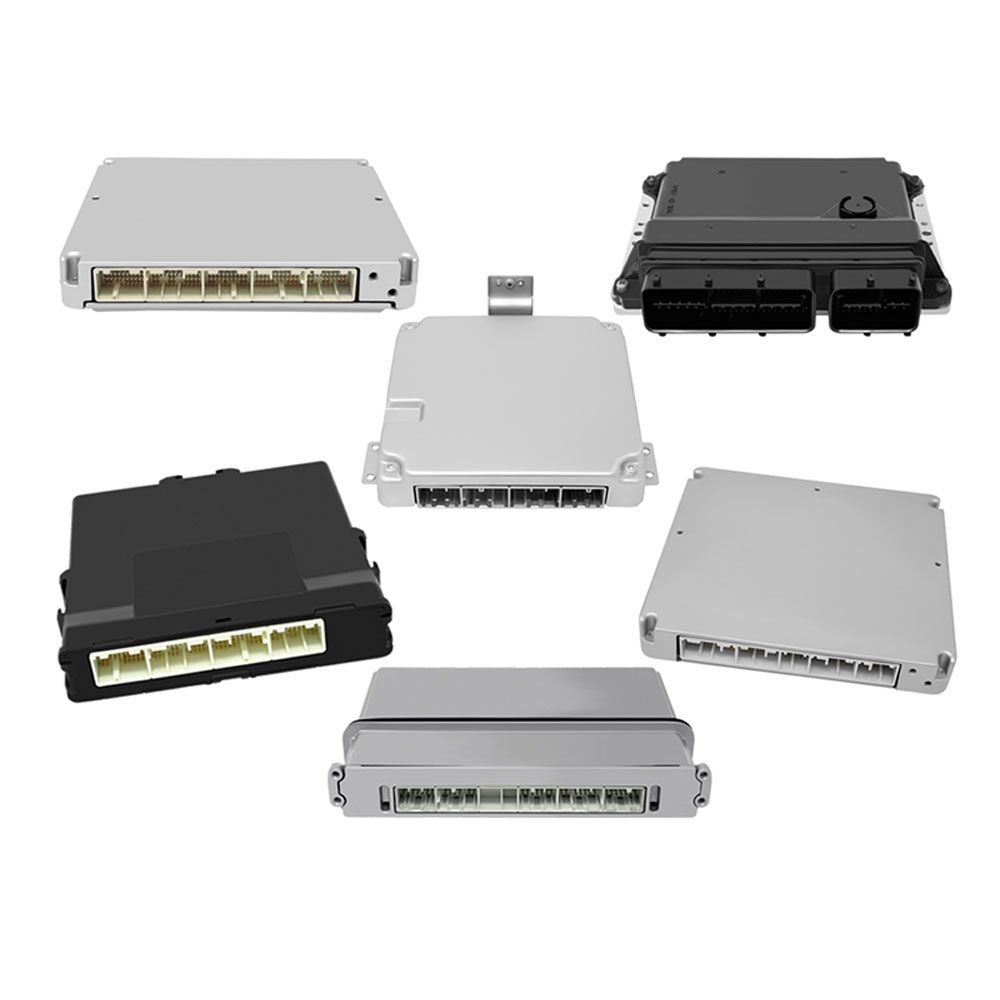
Flagship One stocks a refurbished, VIN-programmed PCM for the 1992 Toyota 4Runner with a lifetime warranty, free shipping and no core charge. The full Toyota 4Runner module lineup covers other engine configurations as well.
The ECM in your 1992 Toyota 4Runner plays a vital role in engine performance and reliability. If you’re experiencing issues, replacement is a practical solution, especially with a pre-programmed unit. Addressing the problem promptly can restore your vehicle’s drivability and prevent further complications down the road.