
Last updated on August 25th, 2026 at 12:26 pm
The Engine Control Module (ECM) in your 1994 Toyota 4Runner manages fuel injection, ignition timing, and idle speed. Failures may cause hard starting, stalling, or erratic engine behavior without warning.
If your 1994 Toyota 4Runner suddenly refuses to start or stalls unexpectedly, the Engine Control Module (ECM) may be at fault. This small but critical computer oversees engine performance by regulating fuel delivery and ignition timing. When it fails, your vehicle may exhibit symptoms ranging from rough idling to complete power loss. Understanding the ECM’s role, location, and replacement process helps you make informed decisions about repairs. With the right replacement unit, you can restore reliable operation without unnecessary delays or additional programming steps.
1994 Toyota 4Runner
OEM programmed ECM for your 1994 Toyota 4Runner — plug & play, no dealer visit.
Free shipping · Lifetime warranty
The ECM in your 1994 Toyota 4Runner acts as the brain of the engine, interpreting signals from sensors to optimize fuel mixture and spark timing. This ensures smooth acceleration and efficient combustion. A malfunctioning ECM may disrupt these processes, leading to poor performance or even preventing the engine from running. Replacing it requires replacement engine computers for the 4Runner, which must match the vehicle’s original specifications to function correctly. Without proper calibration, the new module may not communicate effectively with the engine’s sensors, causing further issues.
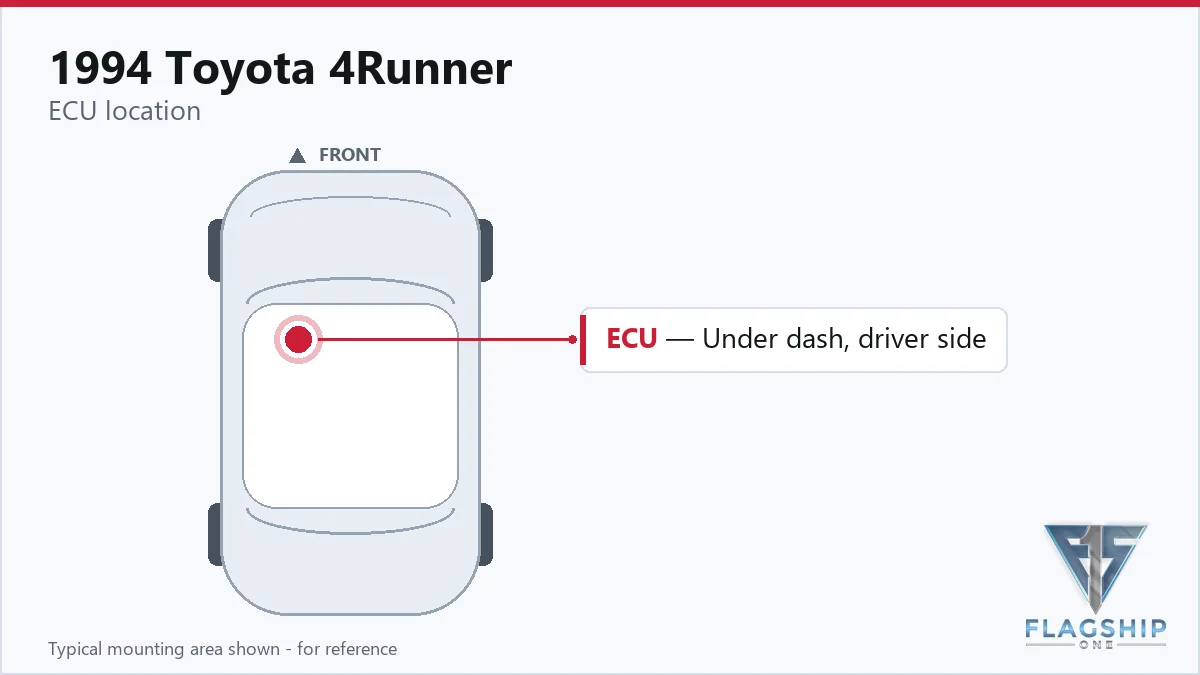
The ECM in your 1994 Toyota 4Runner is mounted behind the instrument panel, requiring removal of the dashboard trim for access. Replacement involves disconnecting the wiring harness, removing the old unit, and securing the new one in place. Labor estimates for this procedure typically run 0.8 hours. After installation, the factory requires a relearn process, which may add another 0.5 hours to the job. Proper torque on mounting fasteners ensures a secure connection, though specific values are not provided for this model.
| Operation | Configuration | Book Time |
|---|---|---|
| Engine Control Module Relearn | All configurations | 0.5 hr |
| Engine Control Module R&R | All configurations | 0.8 hr |
| Powertrain Control Module R&R | All configurations | 0.8 hr |
| Powertrain Control Module Relearn | All configurations | 0.5 hr |
After installing a new ECM in your 1994 Toyota 4Runner, the factory procedure mandates a relearn process to synchronize the module with the engine’s sensors. This step typically takes 0.5 hours and ensures proper communication between components. However, a VIN-programmed replacement unit arrives pre-configured for your vehicle, eliminating the need for additional programming. This saves time and reduces the risk of calibration errors during the installation process.
A failing ECM in your 1994 Toyota 4Runner may cause a range of issues, including intermittent stalling, hard starting, or sudden loss of power. You might also notice poor fuel economy or erratic idle speeds. In some cases, the engine may crank but fail to start entirely. If the module loses communication with the scan tool, diagnosing other potential problems becomes difficult. Symptoms like these often point to internal faults, such as memory integrity errors, which require module replacement to resolve.
Replacing the ECM is possible if you have basic mechanical skills and the right tools. The module is located behind the instrument panel, requiring dashboard trim removal. However, the factory relearn process may still be necessary unless you use a VIN-programmed replacement unit.
Stalling after ECM replacement may occur if the module isn’t properly synchronized with the engine’s sensors. The factory relearn procedure is designed to address this, but skipping it can lead to performance issues. A VIN-programmed unit avoids this step entirely.
Common signs include no-start conditions, stalling, or erratic engine behavior. A scan tool may reveal internal module faults, though communication errors can also indicate a failing ECM. If symptoms persist after checking sensors and wiring, the module itself may need replacement.
When your 1994 Toyota 4Runner’s ECM fails, you have two options: repair the existing unit or install a replacement. Refurbished modules offer a cost-effective solution, especially when pre-programmed to your vehicle’s VIN. This eliminates the need for post-install programming, saving time and reducing the risk of calibration issues during the process.
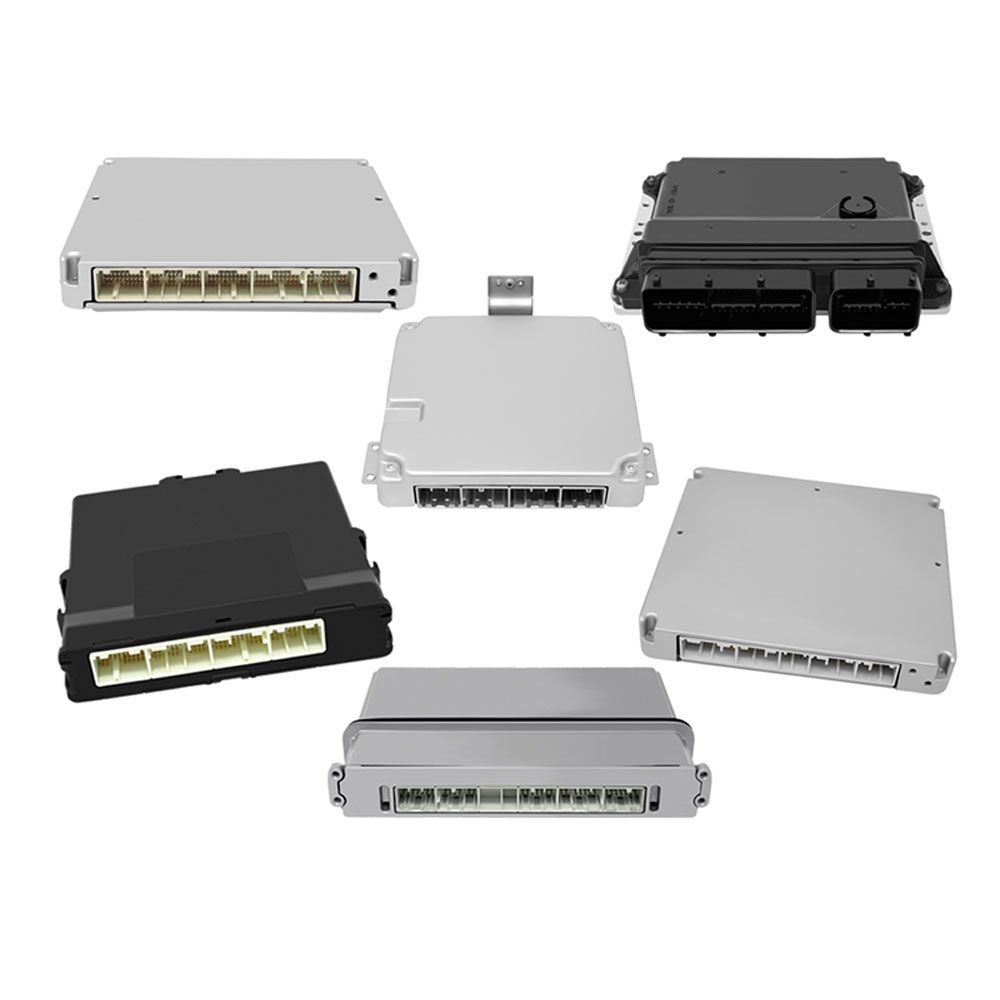
Flagship One stocks a refurbished, VIN-programmed PCM for the 1994 Toyota 4Runner with a lifetime warranty, free shipping and no core charge. The full Toyota 4Runner module lineup covers other engine configurations as well.
A failing ECM in your 1994 Toyota 4Runner can disrupt daily driving, but replacement is straightforward with the right approach. Opting for a VIN-programmed unit ensures a smooth installation and reliable performance. Addressing the issue promptly restores your vehicle’s dependability and keeps you on the road without unnecessary delays.