
Last updated on August 25th, 2026 at 12:06 pm
The engine control unit in the 1999 Toyota 4Runner manages fuel delivery and ignition timing. When this computer fails, it often causes severe drivability problems, including engine stalling, failed communication with scan tools, or a vehicle that refuses to start entirely.
Dealing with an unpredictable engine in your 1999 Toyota 4Runner can be incredibly frustrating, especially when the root cause traces back to the vehicle’s central computer. When dashboard warning lights illuminate or the engine suddenly refuses to fire up, the powertrain control module often becomes a primary suspect. This critical component acts as the brain of your SUV, dictating how the engine operates under various conditions. Understanding how this system functions, where it is located, and what happens when it malfunctions empowers you to make informed repair decisions. You will gain clarity on the specific symptoms associated with computer failure in this vehicle, learn the exact steps required for physical replacement, and discover why programming is a necessary final step. Rather than guessing at the problem, you can approach the diagnostic process with confidence. By exploring the factory time allowances for replacement and relearn procedures, you will also know what to expect when visiting a mechanic or tackling the job yourself. This knowledge ensures you avoid unnecessary repairs and get your 4Runner back on the road efficiently.
In the 1999 Toyota 4Runner, the engine control module serves as the central processor responsible for managing the interplay between various sensors and actuators. It continuously calculates the precise amount of fuel to inject and determines the optimal ignition timing based on real-time data from the engine. Without this orchestrated direction, the 3.4L engine would simply fail to run efficiently or at all. The computer monitors oxygen sensor readings, throttle position, and coolant temperature to adjust operational parameters on the fly. When this module functions correctly, your SUV delivers the reliable performance expected from a Toyota. However, internal circuitry can degrade over time due to heat and vibration, leading to erratic behavior. A failing unit might send incorrect fuel commands, creating a cascade of performance issues that mimic mechanical failures. This often leads mechanics down the wrong diagnostic path, replacing perfectly good sensors instead of addressing the root cause. When faced with such failures, sourcing 1999 Toyota 4Runner replacement computers ensures your vehicle regains its proper operational logic. The module does not just control the engine; it also integrates transmission functions under the powertrain umbrella, making it vital for overall vehicular coordination. Recognizing the critical nature of this component helps you understand why resolving electronic faults promptly prevents further wear on your engine and transmission. Proper functionality of this computer dictates whether your SUV drives smoothly or leaves you stranded.
1999 Toyota 4Runner
OEM programmed replacements — plug & play, no dealer visit.
Find yours by year, make & model →
Free shipping · Lifetime warranty
Locating the engine computer in your 1999 Toyota 4Runner requires looking inside the passenger compartment. According to the factory wiring guide, the component grid places the engine ECU within the instrument panel. To access the unit for replacement, you must remove specific interior trim pieces. The access path involves taking off the glove compartment door and detaching the lower finish number two panel. Once these components are out of the way, the module becomes reachable for service. When it comes to labor expectations, the standard book time for removing and reinstalling the engine control module is 0.8 hours. If you are addressing the powertrain control module, the R&R time remains 0.8 hours as well. This time frame accounts for the physical swap of the hardware. Technicians typically need minimal tools to navigate the interior trim, but care is necessary to avoid damaging the plastic clips that hold the panels in place. Properly routing the wiring harness connectors back into the module ensures a secure electrical connection before reassembling the interior components.
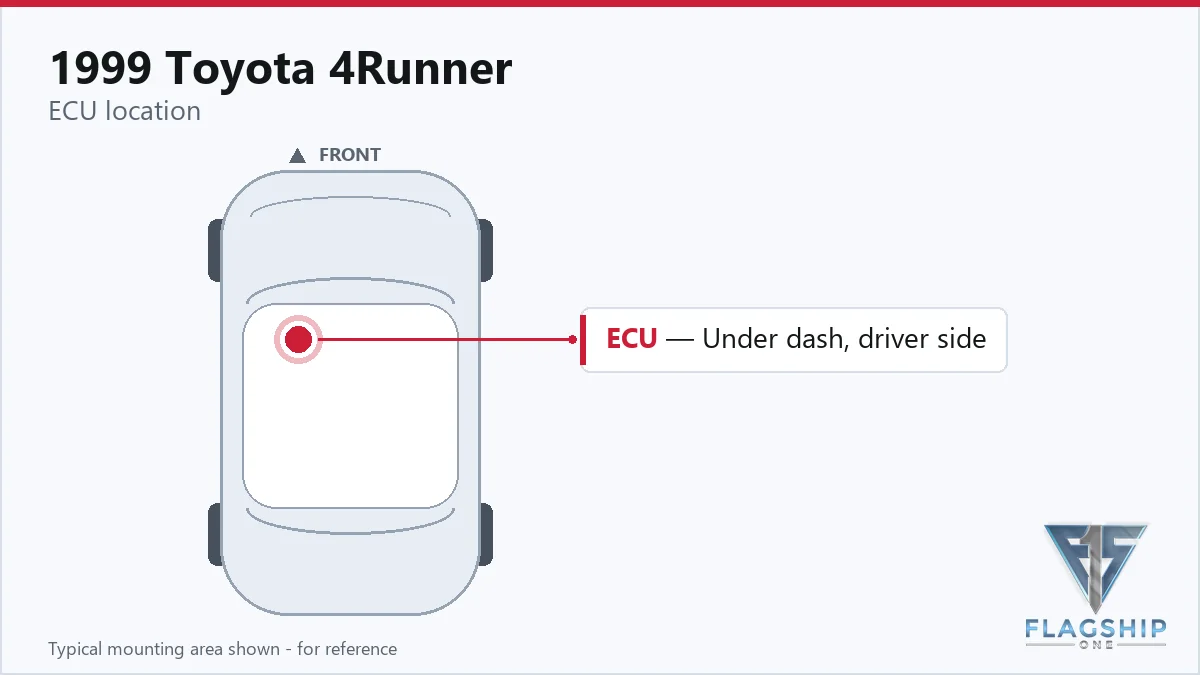
Work with the ignition off, and treat the module as static-sensitive: avoid touching the connector pins at any point.
| Operation | Configuration | Book Time |
|---|---|---|
| Engine Control Module Relearn | All configurations | 0.5 hr |
| Engine Control Module R&R | All configurations | 0.8 hr |
| Powertrain Control Module R&R | All configurations | 0.8 hr |
| Powertrain Control Module Relearn | All configurations | 0.5 hr |
Installing a new or refurbished computer into your 1999 Toyota 4Runner is only part of the repair process. The factory service procedure mandates a relearn operation after the hardware is swapped. The designated book time for an engine control module relearn is 0.5 hours, and the powertrain control module relearn also requires 0.5 hours. During this procedure, the vehicle undergoes a series of driving cycles and idle periods so the new computer can memorize the specific characteristics of your engine and transmission. Without completing this step, the 3.4L engine may idle roughly, exhibit shifting anomalies, or fail emission tests. However, choosing a VIN-programmed replacement unit from Flagship One bypasses these lengthy dealership procedures entirely. Because the necessary vehicle identification number programming and operational software are already flashed into the module before it ships, the relearn steps are effectively completed. This pre-programming allows your 4Runner to start up and adapt seamlessly, saving you the expense of a dealership visit and eliminating the downtime typically associated with computer replacements.
When the engine computer begins to fail in the 1999 Toyota 4Runner, the vehicle often exhibits a range of frustrating drivability symptoms that mimic other mechanical issues. One of the most common indicators is a no-start condition, where the engine cranks vigorously but refuses to fire up because the module fails to trigger the fuel injectors or ignition coils. Intermittent stalling is another frequent complaint; the engine may suddenly shut off while driving, creating a hazardous situation, especially at highway speeds or when decelerating. You might also notice misfire codes appearing on a diagnostic scanner, as the failing processor incorrectly calculates ignition timing or fuel delivery, leading to rough running conditions and reduced power. Transmission shifting issues often accompany these engine problems, as the powertrain control unit governs shift solenoids, and erratic commands can cause harsh, erratic, or delayed gear changes. Furthermore, dead scan-tool communication is a hallmark of internal computer failure. If your diagnostic scanner cannot establish a link with the module, the processor has likely suffered internal circuit damage or a complete shutdown. Often, these symptoms appear sporadically at first, triggered by engine heat or vibration, before becoming permanent failures. Recognizing these signs early helps distinguish a computer failure from simple sensor malfunctions, ensuring you address the actual electronic root cause rather than replacing unrelated components unnecessarily.
The factory wiring guide indicates that the engine ECU is positioned inside the instrument panel. You can access it by removing the glove compartment door along with the lower finish number two panel.
The designated book time for removing and reinstalling the powertrain control module is 0.8 hours. Additionally, the powertrain control module relearn procedure typically requires 0.5 hours of labor.
A relearn procedure is necessary so the new module can memorize the specific operational characteristics of your engine and transmission. Without this step, the vehicle may experience rough idling or shifting anomalies until the computer adapts.
Installing a used module typically requires programming to match your vehicle’s specific identification number and immobilizer settings. A unit that is not properly flashed will often fail to start the engine or communicate with other systems.
To reach the module, you must remove the glove compartment door and the lower finish number two panel. This provides clear access to the unit within the instrument panel for testing or replacement.
When the computer fails in your 1999 Toyota 4Runner, deciding between repairing the existing unit or purchasing a refurbished replacement becomes the next step. Repairing a damaged module often involves lengthy downtime and limited warranties, whereas a refurbished replacement offers a quicker resolution. Choosing a pre-programmed unit tailored to your specific SUV eliminates the need for dealership programming, getting your vehicle back on the road faster.
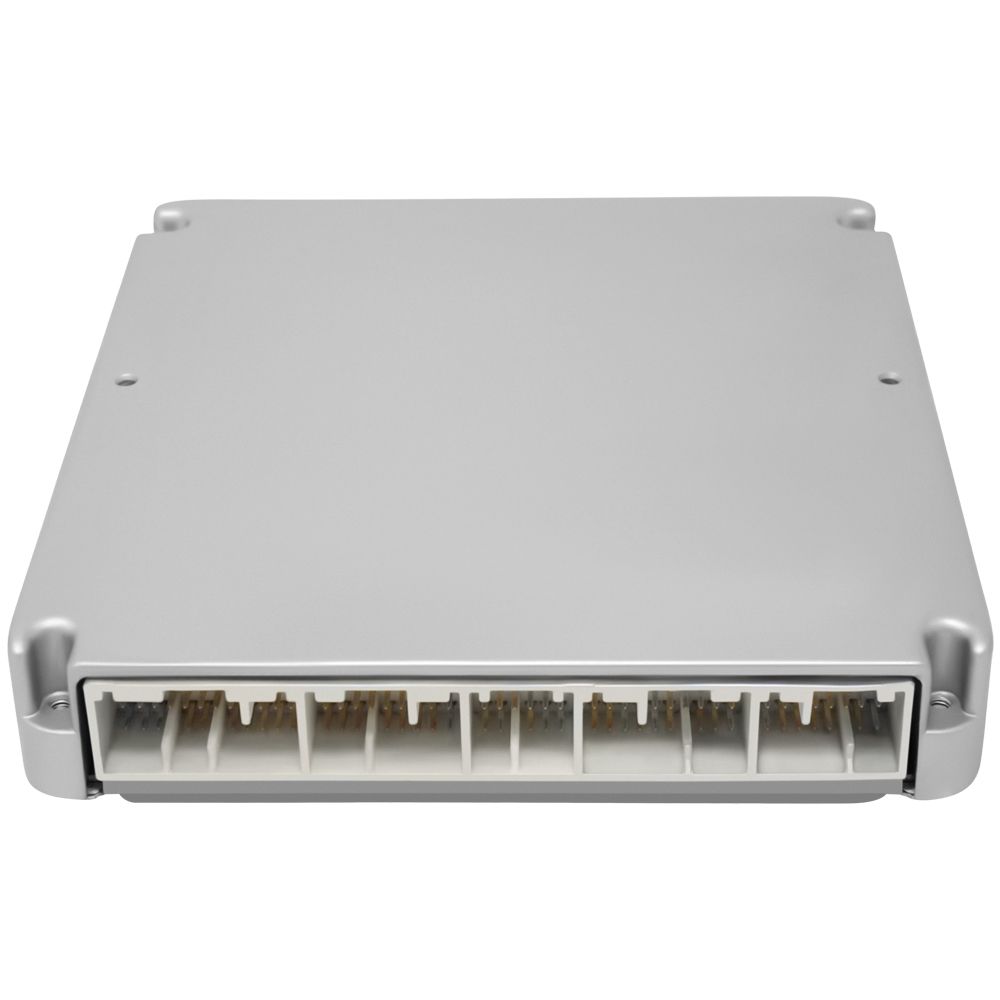
Flagship One stocks a refurbished, VIN-programmed PCM for the 1999 Toyota 4Runner with a lifetime warranty, free shipping and no core charge. The full Toyota 4Runner module lineup covers other engine configurations as well.
Dealing with a failing computer in your 1999 Toyota 4Runner certainly disrupts your daily routine, but understanding the replacement process simplifies the solution. Knowing the module’s location inside the instrument panel, the expected labor times, and the necessary programming requirements equips you to handle the repair confidently. When you are ready to restore your SUV, explore quality replacement options to get your vehicle running smoothly again.