
Last updated on August 25th, 2026 at 12:04 pm
The engine control module manages fuel and ignition systems for your 2002 Toyota Solara. Failure causes stalling, no-start conditions, or poor performance. This computer processes sensor data to regulate engine operation continuously. Replacement restores proper communication between vehicle systems and components.
When your 2002 Toyota Solara experiences persistent electrical issues or engine management faults, the root cause often points toward the central computer system. Understanding the role of this component helps you make informed decisions about repairs versus replacement. This guide explains the function of the powertrain controller within your specific vehicle architecture. You will learn where the unit resides and what standard labor operations entail according to factory guidelines. Recognizing the signs of internal failure allows you to address problems before they affect drivability. We outline the necessary steps for swapping the hardware and ensuring proper communication with the engine. Proper identification prevents unnecessary part purchases and reduces diagnostic time. Your goal is restoring reliable performance without overspending on dealership services. This overview provides the technical context needed to proceed with confidence. You gain clarity on labor expectations and programming requirements. Knowing these details helps you manage repair costs effectively. Many owners hesitate when facing computer faults due to perceived complexity. However, the process follows a logical sequence once you understand the system layout. Your vehicle relies on this module to manage fuel delivery and ignition timing accurately. Ignoring warning signs can lead to reduced efficiency or unexpected stalling events. We break down the technical specifications into understandable terms. You will see exactly what the factory recommends for removal and installation tasks. This knowledge empowers you to verify quotes from service providers. Accurate information reduces the risk of misdiagnosis during the troubleshooting phase.
2002 Toyota Solara
OEM programmed ECM for your 2002 Toyota Solara — plug & play, no dealer visit.
Free shipping · Lifetime warranty
The engine management computer serves as the brain for your 2002 Toyota Solara powertrain system. It processes data from various sensors to regulate fuel mixture and spark advance continuously. Without this unit, the engine cannot operate within optimal parameters for emissions or efficiency. This module monitors input signals to determine the correct output commands for actuators. Failure here disrupts the balance required for smooth combustion and power delivery. You depend on this electronics hub to maintain consistent idle quality and throttle response. When internal circuits degrade, the system may default to a limp mode strategy. This protective state limits performance to prevent further damage to mechanical components. Replacing a faulty unit requires matching the hardware to your specific engine configuration. You can find replacement engine computers for the 2002 Toyota Solara that meet original equipment standards. These components must communicate correctly with the immobilizer and transmission controllers. The software embedded within the chip dictates how the vehicle responds to driver inputs. Corrosion or voltage spikes often cause the internal memory to corrupt over time. Your driving experience suffers when the computer cannot process sensor data quickly enough. Restoring full functionality ensures the engine runs as designed by the manufacturer. Technicians use specialized tools to verify communication lines before condemning the hardware. Understanding this role helps you appreciate why programming is critical after installation. The unit coordinates complex tasks that mechanical parts cannot handle alone. It also stores diagnostic trouble codes when parameters fall outside expected ranges. These codes assist in pinpointing which sensor or circuit triggered the warning light. Your vehicle uses this data to adjust long-term fuel trim values for aging components. If the memory becomes unstable, the engine may run rich or lean unexpectedly. Proper operation ensures the catalytic converter receives the correct exhaust gas composition. You want the system to adapt to changing environmental conditions without driver intervention. The module protects itself by shutting down outputs if short circuits are detected. This safety feature prevents wiring harness damage during electrical faults. Your engine performance relies on the integrity of this central processing unit.
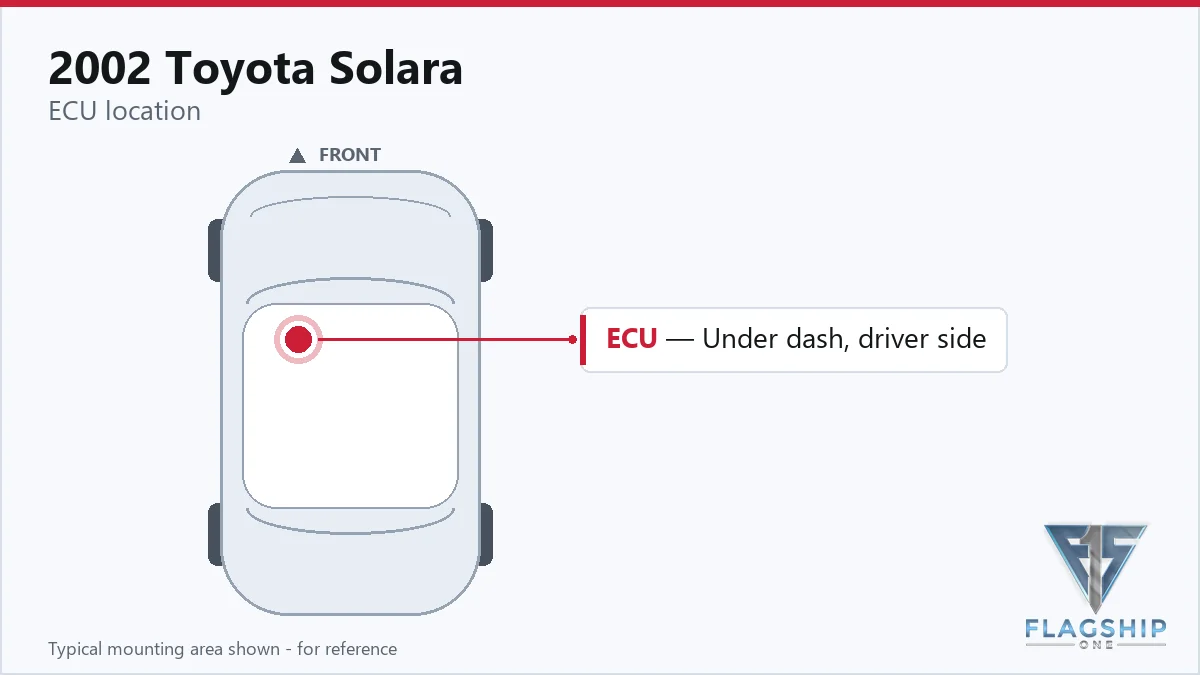
Accessing the engine computer requires removing interior trim panels to reach the instrument panel area. Official documentation locates the electronic control unit behind the dashboard. You must disconnect the battery before attempting any removal procedures to prevent short circuits. Labor guides list the removal and installation of the engine computer at 0.5 hours for this vehicle. Similarly, swapping the powertrain controller is also booked at 0.5 hours. These times reflect the physical swap only and do not include diagnostic efforts. You should expect to remove multiple fasteners and connectors to free the unit. Careful handling prevents damage to the pins during the extraction process. Reinstallation involves securing the hardware and reconnecting the wiring harness firmly. The relearning procedure for the engine management unit requires an additional 0.5 hours of labor time. Likewise, the calibration task for the powertrain module is assigned 0.5 hours in the book. These programming steps ensure the new unit synchronizes with the vehicle systems. You must follow the specific sequence to avoid communication errors. Proper torque on mounting bolts ensures the case grounds correctly.
| Operation | Configuration | Book Time |
|---|---|---|
| Engine Control Module Relearn | All configurations | 0.5 hr |
| Engine Control Module R&R | All configurations | 0.5 hr |
| Powertrain Control Module R&R | All configurations | 0.5 hr |
| Powertrain Control Module Relearn | All configurations | 0.5 hr |
After installing the hardware, the factory procedure requires a relearn process to initialize the system. This step allows the new module to adapt to your specific engine characteristics. Without this calibration, the vehicle may exhibit rough idle or shifting concerns. Flagship One units arrive VIN-programmed so those steps are already done. You receive a VIN-programmed replacement unit ready for installation without extra setup. This eliminates the need for specialized scanning tools at the repair site. The standard labor time for relearning procedure for the engine management unit is 0.5 hours if done manually. However, pre-configured hardware bypasses this requirement entirely. You save time and reduce the risk of configuration errors during the process. The calibration task for the powertrain module also typically takes 0.5 hours according to book rates. Pre-programming ensures the immobilizer system recognizes the new computer immediately. Your vehicle starts and runs without additional dealership intervention. This approach streamlines the repair workflow for both shops and private owners. You avoid the complexity of matching security codes manually. The unit is configured to match the original specifications exactly.
Common failure symptoms of this module type include no-start conditions where the crankshaft turns but the engine does not fire. You may experience sudden stalling while driving at steady speeds or during idle periods. Misfire codes often appear when the computer fails to trigger the ignition coils correctly. Dead scan-tool communication indicates the module is not responding to diagnostic requests. Shifting issues may arise if the transmission control signals become corrupted or lost. Your vehicle might enter a limp mode that limits speed and engine power significantly. Intermittent electrical glitches can cause the check engine light to flicker on and off. Fuel trim errors lead to poor mileage and rough running conditions. You might notice hesitation during acceleration when the throttle position signal is misinterpreted. The engine may fail to enter closed loop operation without proper computer function. Warning lights related to emissions systems often illuminate due to internal processing faults. Your driving experience becomes unpredictable when the central controller malfunctions. In some cases, the fuel pump may not prime when turning the key. These signs suggest the internal circuitry is no longer processing inputs reliably. You should verify power and ground supplies before replacing the unit. Ignoring these warnings can leave you stranded unexpectedly. Corrosion on the connector pins can mimic internal computer failure symptoms easily. You should inspect the harness for water intrusion or physical damage first. Sometimes the issue lies in the wiring rather than the module itself. Persistent communication errors across multiple systems point toward the central computer. Your vehicle may fail state emissions testing due to readiness monitor issues. The engine might run rich causing a strong fuel smell from the exhaust. Rough idle vibrations are common when timing calculations are incorrect.
Driving is not recommended as the vehicle may stall or lose power suddenly. Safety risks increase when engine management functions are compromised. You should arrange for towing to avoid further damage.
Flagship One units come pre-configured to eliminate dealership programming steps. You install the part and start the engine without additional tools. This saves time and reduces overall repair costs significantly.
Book time for removal and installation is listed at 0.5 hours. Relearn procedures may add another 0.5 hours if not pre-programmed. Total labor varies based on shop rates and diagnostic needs.
The factory wiring guide places the engine ECU in the instrument panel. You must remove interior trim to access the component grid area. Access requires careful handling of dashboard fasteners.
Voltage spikes from alternator issues often damage internal circuits over time. Moisture intrusion through compromised seals can also cause corrosion. Poor grounding connections contribute to unstable operation and failure.
You have options between repairing your existing unit or installing a refurbished replacement. Repairing involves bench testing and component replacement which may not resolve underlying issues. A refurbished exchange offers a tested solution with verified functionality. Your vehicle benefits from a unit that meets original performance standards. Consider the longevity of the solution when choosing your path. Refurbished units often provide better reliability than repaired original hardware.

Flagship One stocks a refurbished, VIN-programmed PCM for the 2002 Toyota Solara with a lifetime warranty, free shipping and no core charge. The full Toyota Solara module lineup covers other engine configurations as well.
Restoring your 2002 Toyota Solara to peak condition requires addressing the engine computer properly. Understanding the location and labor requirements helps you plan the repair effectively. You can achieve reliable performance with the correct replacement component. Contact our team for further assistance with your specific vehicle needs. We provide the technical support required for a successful installation.