
Last updated on August 25th, 2026 at 12:05 pm
The engine control module in the 2000 Toyota Solara acts as the primary computer managing fuel and ignition. When this component fails, the vehicle often suffers from erratic idling or a complete failure to start.
A 2000 Toyota Solara that will not start or behaves erratically often points to a failure in the electronic control system. This system relies on a central computer to coordinate every aspect of the combustion process. When this module fails, you may experience a variety of performance issues that range from minor hesitation to complete engine failure. Understanding the role of the Powertrain Control Module or Engine Control Module is essential for any owner attempting to diagnose these issues. By learning how these units function and where they are located, you can make an informed decision about whether to attempt a repair or seek a replacement. The knowledge provided here helps you avoid unnecessary diagnostic costs and ensures the repair is handled correctly. You can obtain the necessary information to understand the technical requirements for restoring your vehicle to a reliable operating state through the proper replacement of the electronic control unit.
2000 Toyota Solara
OEM programmed ECM for your 2000 Toyota Solara — plug & play, no dealer visit.
Free shipping · Lifetime warranty
The engine control module serves as the primary intelligence for the 2000 Toyota Solara. It continuously monitors data from various sensors throughout the engine bay and the exhaust system to ensure the vehicle operates at peak efficiency. By analyzing inputs such as air intake volume and engine temperature, the module calculates the precise amount of fuel to inject and the exact moment to trigger the spark plugs. This coordination is vital for maintaining fuel economy and reducing harmful emissions. If the internal circuitry of the module degrades, the vehicle may struggle to maintain a steady idle or exhibit poor acceleration. Because these units are complex, finding high-quality 2000 Toyota Solara computers is often the most effective way to resolve persistent electronic faults. The module also manages the communication between the engine and the transmission, ensuring that gear shifts occur smoothly and at the correct time. Without a functioning computer, the vehicle cannot enter the correct operating modes, which often results in a limp home state or a complete lack of ignition. The precision of this module allows the vehicle to adapt to different driving conditions and altitudes, ensuring the engine remains protected from overheating or knocking. The integration of these electronic controls allows for a more refined driving experience by balancing power delivery with environmental regulations. When the hardware fails, the interaction between the sensors and actuators is broken, leaving the engine unable to function.
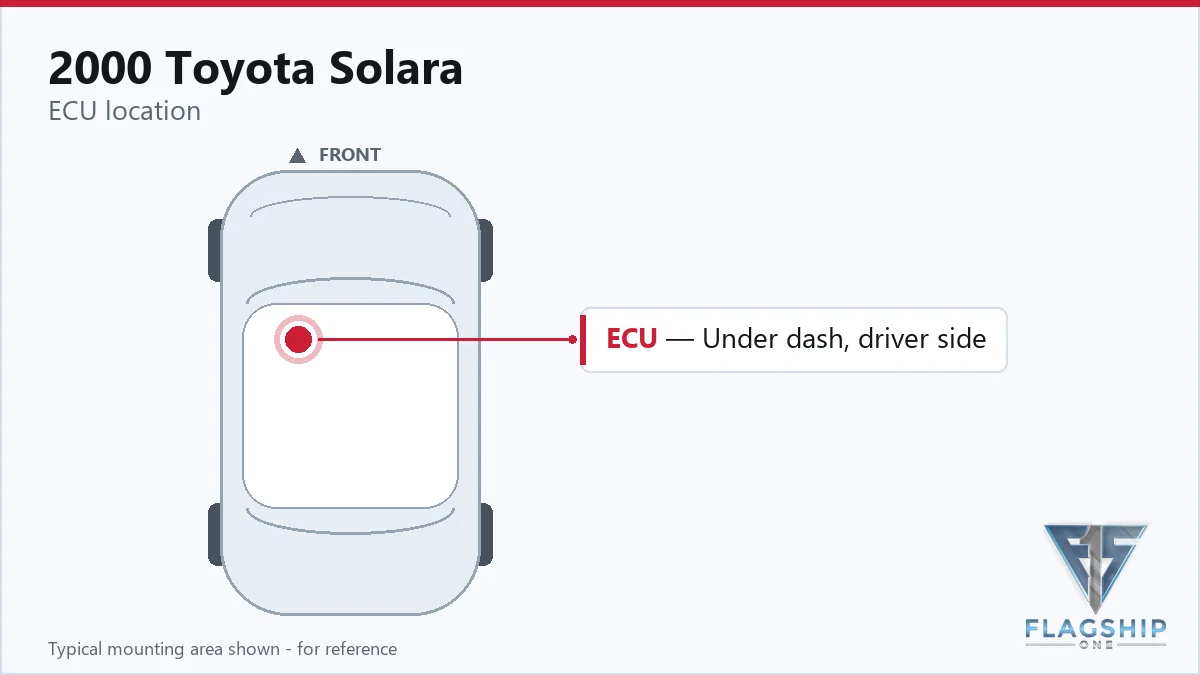
The engine ECU is situated inside the instrument panel according to the wiring guide. This location means that access requires removing portions of the interior trim to reach the module. The process of removing and replacing the Powertrain Control Module typically requires 0.5 hours of labor. Similarly, the removal and replacement of the Engine Control Module is listed at 0.5 hours. Because the unit is housed within the dashboard area, careful handling of the surrounding plastics is necessary to avoid damage during the installation process. Once the old unit is disconnected, the new module is seated into the existing mounting bracket and secured. Proper alignment of the electrical connectors is crucial to ensure a secure connection. You should verify that all pins are clean and free of debris before clicking the harness into place.
| Operation | Configuration | Book Time |
|---|---|---|
| Engine Control Module Relearn | All configurations | 0.5 hr |
| Engine Control Module R&R | All configurations | 0.5 hr |
| Powertrain Control Module R&R | All configurations | 0.5 hr |
| Powertrain Control Module Relearn | All configurations | 0.5 hr |
After a new module is installed, the vehicle typically requires a specific calibration process to align the computer with the engine’s current state. For the 2000 Toyota Solara, performing a relearn for the engine control module often takes 0.5 hours. Additionally, the relearn process for the Powertrain Control Module is also listed as 0.5 hours. These steps are necessary to ensure the vehicle recognizes the new hardware and optimizes performance. However, Flagship One streamlines this process by providing a VIN-programmed replacement unit that arrives with the necessary vehicle information already stored. This means the extensive factory programming steps are handled before the part reaches you. By eliminating the need for dealership-level programming tools, you can significantly reduce the time your vehicle spends in the shop and avoid the costs associated with professional calibration services.
A failing control module in the 2000 Toyota Solara often manifests as a total loss of engine power or a complete no-start condition. You may notice that the engine cranks normally but fails to ignite because the computer is not sending the signal to the fuel injectors or the ignition coils. In some cases, the vehicle may start and then suddenly stall while idling or during deceleration. Erratic shifting patterns or a transmission that feels like it is slipping can also be attributed to a malfunctioning PCM. Many owners report the appearance of random misfire codes or intermittent sensor failures that do not resolve after the sensors themselves have been replaced. A critical sign of failure is the loss of communication with the onboard diagnostic port, where a scan tool cannot establish a connection with the ECU. This lack of communication usually indicates a hardware failure within the module’s internal processor. You might also experience poor fuel economy or an engine that runs overly rich or lean, as the computer can no longer accurately regulate the air-fuel mixture. These symptoms often appear gradually before the module fails completely, leaving the vehicle immobile.
The engine ECU is found inside the instrument panel. Accessing it requires removing the relevant dashboard trim.
The labor time for removing and replacing the Powertrain Control Module is typically 0.5 hours.
Yes, the factory procedure usually involves a relearn process that takes 0.5 hours.
Yes, the PCM manages transmission logic, and a failure may result in erratic gear shifts.
A VIN-programmed unit is designed to work upon installation, removing the need for additional dealer programming.
When dealing with a failed module in the 2000 Toyota Solara, you have a choice between attempting to repair the old unit or opting for a replacement. Internal circuit repairs are often unreliable and may lead to recurring failures. A refurbished replacement unit provides a more stable solution, especially when it arrives pre-programmed for your specific vehicle. This approach reduces the risk of installation errors and ensures the vehicle returns to factory specifications quickly.
Flagship One stocks a refurbished, VIN-programmed PCM for the 2000 Toyota Solara with a lifetime warranty, free shipping and no core charge. The full Toyota Solara module lineup covers other engine configurations as well.
Restoring the electronic systems of your 2000 Toyota Solara requires a reliable control module and a precise installation. By understanding the symptoms and the location of the ECU, you can efficiently resolve performance issues. Whether you choose a professional installation or a DIY approach, ensuring the module is correctly programmed is the key to success. We recommend verifying all electrical connections before starting the engine to ensure a smooth recovery for your 2000 Toyota Solara.