
Last updated on August 25th, 2026 at 12:31 pm
The Powertrain Control Module (PCM) in your 1990 Pontiac Trans Sport manages fuel delivery, ignition timing, and transmission shifts. A failing PCM may cause erratic engine behavior, stalling, or no-start conditions, often mimicking sensor or wiring problems.
If your 1990 Pontiac Trans Sport with the 3.1L engine is running poorly or refusing to start, the Powertrain Control Module (PCM) may be the culprit. This small but critical computer manages everything from fuel injection to transmission shifts, and its failure can create frustrating symptoms that don’t always point to a clear cause. Unlike later vehicles with standardized diagnostic codes, the Trans Sport’s pre-OBD-II system relies on the PCM to interpret sensor data and adjust engine performance in real time. When the module fails, you might notice stalling, misfires, or even a complete no-start situation—issues that can leave you stranded if not addressed. Replacing the PCM isn’t just about swapping a part; it requires careful handling to avoid damaging connectors or introducing electrical gremlins. Understanding where the module is located, how to replace it, and what to expect afterward can save you time and prevent unnecessary trips to the shop. This guide covers the essentials, from identifying failure symptoms to ensuring a smooth installation with a pre-programmed replacement unit.
1990 Pontiac Trans Sport
OEM programmed ECM for your 1990 Pontiac Trans Sport — plug & play, no dealer visit.
Free shipping · Lifetime warranty
The Powertrain Control Module (PCM) in your 1990 Pontiac Trans Sport serves as the brain of the engine and transmission system. It continuously monitors inputs from sensors—such as the throttle position, coolant temperature, and oxygen sensors—to adjust fuel delivery, ignition timing, and shift points for optimal performance. Because the Trans Sport lacks the self-diagnostic capabilities of later OBD-II vehicles, the PCM’s role is even more critical; it must interpret raw sensor data and make real-time adjustments without relying on standardized trouble codes. A failing PCM may cause the engine to run rich or lean, leading to poor fuel economy, hesitation under acceleration, or even transmission shifting problems. The module also stores calibration data unique to your vehicle, including its weight, axle ratio, and transmission type, which ensures the engine operates within its designed parameters. When replacing the PCM, you’ll need replacement engine computers for the Trans Sport that match these specifications to avoid drivability issues. Without a properly functioning PCM, your vehicle may struggle to start, idle roughly, or fail to respond to throttle inputs, making it a component that demands attention when symptoms arise.
The PCM in your 1990 Pontiac Trans Sport is located behind the convenience center on the right-hand side of the dashboard. To access it, you’ll need to remove the lower dashboard panel, which typically involves unscrewing a few fasteners and carefully disconnecting any wiring harnesses or climate control linkages in the way. Once the panel is removed, the PCM is visible and secured with a mounting bracket. Replacement involves unplugging the electrical connectors, removing the old module, and installing the new one in its place. Take care to avoid bending the connector pins or damaging the wiring harness during this process. While the physical replacement is straightforward, the module’s location behind the dashboard means you’ll need to work carefully to avoid breaking plastic clips or misaligning components during reassembly. No special tools are required, but patience and attention to detail will help prevent additional issues.
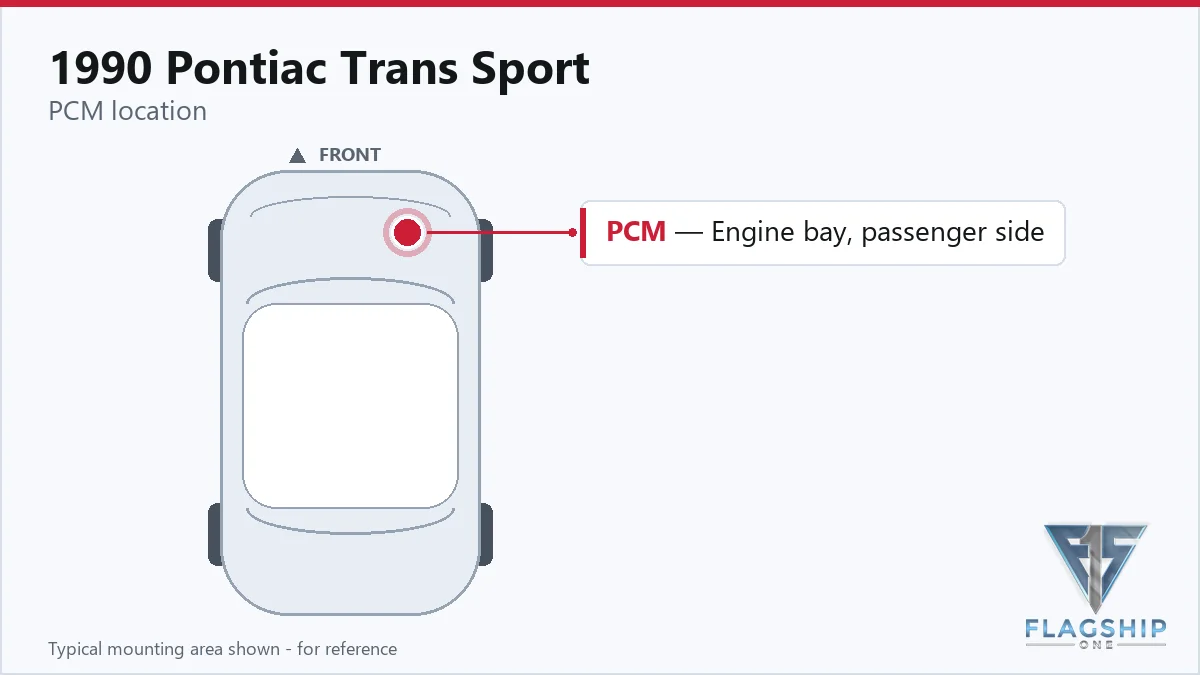
Work with the ignition off, and treat the module as static-sensitive: avoid touching the connector pins at any point.
After replacing the PCM in your 1990 Pontiac Trans Sport, the factory procedure requires programming the module with your vehicle’s specific VIN and calibration data. This step ensures the new PCM recognizes the engine, transmission, and other unique characteristics of your Trans Sport, allowing it to manage fuel delivery, ignition timing, and transmission shifts correctly. Without this programming, the vehicle may run poorly, fail to start, or exhibit erratic behavior. However, opting for a VIN-programmed replacement unit eliminates the need for this step, as the module arrives pre-configured with your vehicle’s data. This not only saves time but also reduces the risk of programming errors that can occur during a manual setup. If you choose to use a non-programmed unit, you’ll need to visit a dealership or a shop equipped with the necessary tools to complete the programming process, which can add unexpected delays and costs to the repair.
A failing PCM in your 1990 Pontiac Trans Sport can produce a range of symptoms that may initially seem unrelated to the module itself. One of the most common signs is a no-start condition, where the engine cranks but refuses to fire, often due to incorrect fuel or spark timing signals from the PCM. You might also notice the engine stalling unexpectedly, particularly at idle or during low-speed driving, which can be dangerous if it occurs in traffic. Misfires are another frequent issue, often felt as a rough idle or hesitation under acceleration, as the PCM struggles to maintain proper ignition timing. Transmission shifting problems, such as delayed or harsh shifts, may also indicate a PCM issue, as the module controls shift points based on engine load and speed. In some cases, the vehicle may enter a “limp mode,” where the engine runs at reduced power to prevent damage, though this is less common in pre-OBD-II vehicles like the Trans Sport. Another subtle symptom is poor fuel economy, as the PCM may fail to optimize the air-fuel mixture, leading to excessive fuel consumption. If you’ve ruled out sensor or wiring issues and the vehicle exhibits these behaviors, the PCM may be the root cause. For example, a memory checksum error could trigger erratic engine behavior, though the Trans Sport’s limited diagnostic capabilities mean you may not see a code at all.
Stalling at idle in your Trans Sport may indicate a PCM issue, particularly if the module is failing to adjust fuel delivery or ignition timing correctly. The PCM relies on inputs from sensors like the throttle position and idle air control to maintain a stable idle, and if these signals are misinterpreted, the engine may stall. Before assuming the PCM is at fault, check for vacuum leaks, faulty sensors, or dirty throttle bodies, as these can also cause similar symptoms.
Yes, the PCM in your Trans Sport controls both engine and transmission functions, including shift points. If the module is failing, it may send incorrect signals to the transmission, leading to delayed or harsh shifts. This is particularly common if the PCM’s internal memory is corrupted or if it’s receiving faulty sensor data. Before replacing the PCM, rule out transmission fluid issues or solenoid problems, as these can also cause shifting irregularities.
Distinguishing between a failing PCM and a bad sensor in your Trans Sport can be challenging, as both can produce similar symptoms like misfires, stalling, or poor acceleration. Start by checking the sensors (e.g., oxygen, coolant temperature, or throttle position) for proper operation, as these are more likely to fail than the PCM. If all sensors appear functional but symptoms persist, the PCM may be the issue. A scan tool capable of reading pre-OBD-II codes can help identify internal PCM faults, though not all failures will trigger a code.
Driving with a failing PCM in your Trans Sport can be risky, as the module controls critical engine and transmission functions. Symptoms like stalling, misfires, or erratic shifting can compromise safety, especially in traffic or at highway speeds. If the PCM fails completely, the vehicle may not start at all. If you suspect a PCM issue, have it diagnosed promptly to avoid potential breakdowns or further damage to other components.
The factory procedure for replacing the PCM in your Trans Sport requires programming the new module with your vehicle’s VIN and calibration data. This ensures the PCM recognizes the engine, transmission, and other specifications unique to your vehicle. However, if you use a pre-programmed replacement unit, this step is already completed, saving you time and the hassle of visiting a dealership for programming. Installing a non-programmed unit without completing this step may result in poor performance or a no-start condition.
If your 1990 Pontiac Trans Sport is exhibiting symptoms of a failing PCM, you have a few options for addressing the issue. Replacing the module yourself is feasible if you’re comfortable working behind the dashboard, but programming the new unit requires specialized tools and knowledge. Opting for a pre-programmed replacement unit eliminates this step, allowing you to install the module and get back on the road without additional delays. Whether you choose to tackle the repair yourself or seek professional help, ensuring the PCM is properly matched to your vehicle’s specifications is key to restoring reliable performance.
Flagship One stocks a refurbished, VIN-programmed ECM for the 1990 Pontiac Trans Sport with a lifetime warranty, free shipping and no core charge. The full Pontiac Trans Sport module lineup covers other engine configurations as well.
The PCM in your 1990 Pontiac Trans Sport plays a vital role in keeping the engine and transmission running smoothly. When it fails, symptoms like stalling, misfires, or shifting issues can make driving frustrating and unreliable. By understanding where the module is located, how to replace it, and what to expect during the process, you can address PCM issues with confidence. Whether you opt for a DIY replacement or a pre-programmed unit, ensuring the new module is properly configured for your Trans Sport will help restore its performance and dependability.