
Last updated on August 25th, 2026 at 01:14 pm
In the 2013 Ford Expedition the Powertrain Control Module and Engine Control Module manage engine timing, fuel delivery and transmission shifts. Failure typically stems from internal circuitry loss, voltage spikes or corrupted memory, leading to loss of control and diagnostic trouble codes.
When a 2013 Ford Expedition begins to exhibit intermittent power loss, rough idle or unexpected transmission shifts, the underlying cause may be a malfunctioning Powertrain Control Module or Engine Control Module. These computers act as the vehicle’s brain, interpreting sensor data and directing fuel, spark and gear commands. Understanding how the modules function, where they sit, and what the factory recommends for removal, replacement and programming can help you decide whether to pursue a repair or consider a refurbished unit. This guide walks you through the essential facts, typical symptoms, required labor, and how Flagship One’s VIN‑programmed replacements streamline the process, so you can make an informed choice for your Expedition.
2013 Ford Expedition
OEM programmed ECM for your 2013 Ford Expedition — plug & play, no dealer visit.
Free shipping · Lifetime warranty
The Powertrain Control Module in the 2013 Ford Expedition coordinates engine output and transmission behavior, while the Engine Control Module fine‑tunes fuel injection and ignition timing. Both modules store calibration data and monitor sensor inputs to keep the powertrain operating within safe parameters. When these computers lose internal memory or suffer voltage damage, they may send incorrect commands, resulting in performance issues or a complete loss of drive. The module’s role is critical because it directly influences emissions compliance, fuel economy and drivability. In this vehicle, the modules share a common data bus and rely on stable power, making proper grounding essential. The replacement powertrain control modules for the 2013 Ford Expedition are designed to meet the same specifications as the originals, ensuring seamless integration once installed.
The Powertrain Control Module on a 2013 Ford Expedition is mounted within the engine compartment, typically attached to the firewall near the intake manifold. Access requires removal of the air intake hose and a few fasteners before the module can be unplugged and taken out. Labor time for removal and replacement is listed as 0.8 hours. The Engine Control Module resides in a similar area, often secured to the same bracket, and follows the same removal steps, also requiring 0.8 hours of labor. Once each module is out, the factory recommends a relearn procedure that takes an additional 0.5 hours per module, allowing the vehicle’s control strategies to recalibrate to the new unit.
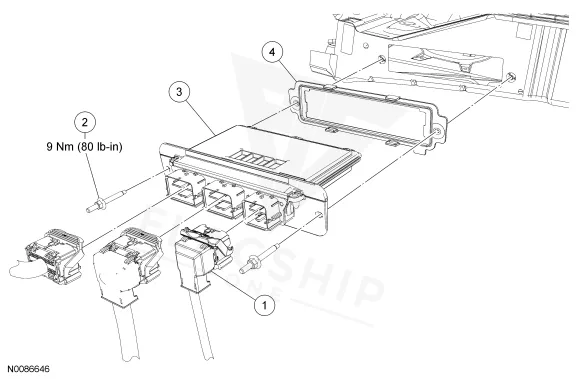
Work with the ignition off, and treat the module as static-sensitive: avoid touching the connector pins at any point.
| Operation | Configuration | Book Time |
|---|---|---|
| Powertrain Control Module R&R | All configurations | 0.8 hr |
| Powertrain Control Module Relearn | All configurations | 0.5 hr |
| Engine Control Module Relearn | All configurations | 0.5 hr |
| Engine Control Module R&R | All configurations | 0.8 hr |
After installing a new PCM or ECM in the Expedition, the factory service guide calls for a Flash Electrically Erasable Programmable Read Only Memory (EEPROM) update to program the VID block for the replacement unit. This step ensures the module recognizes the vehicle’s VIN and operates correctly. Flagship One provides units that arrive already VIN‑programmed, so the EEPROM update and subsequent relearn steps are effectively completed before the part reaches your shop. The a VIN‑programmed replacement unit therefore removes the need for the technician to perform the flash procedure, simplifying the overall repair workflow.
A failing PCM or ECM in the 2013 Ford Expedition often shows up as a complete no‑start condition, rough idle, stalling during acceleration, or unexpected transmission shifts. Drivers may also notice the check engine light illuminating with a generic powertrain fault, and a scan tool may report loss of communication with the module. In some cases, the vehicle can produce internal diagnostic codes such as internal PCM failure code that indicate the module’s internal circuitry is compromised. These symptoms tend to appear gradually as the module’s memory degrades or after exposure to voltage spikes from the charging system.
The following internal diagnostic code list applies specifically to the 2013 Ford Expedition’s powertrain and engine control modules:
| Code | Meaning | Full Guide |
|---|---|---|
| P0606 | Module processor failure | Full P0606 guide → |
When your 2013 Ford Expedition shows signs of PCM or ECM failure, you can choose a direct repair with a new OEM part or opt for a refurbished Flagship One unit that arrives VIN‑programmed and ready for installation. Both paths address the underlying issue, but the refurbished option may reduce labor time and simplify the post‑install process, especially if you need to get the vehicle back on the road quickly.
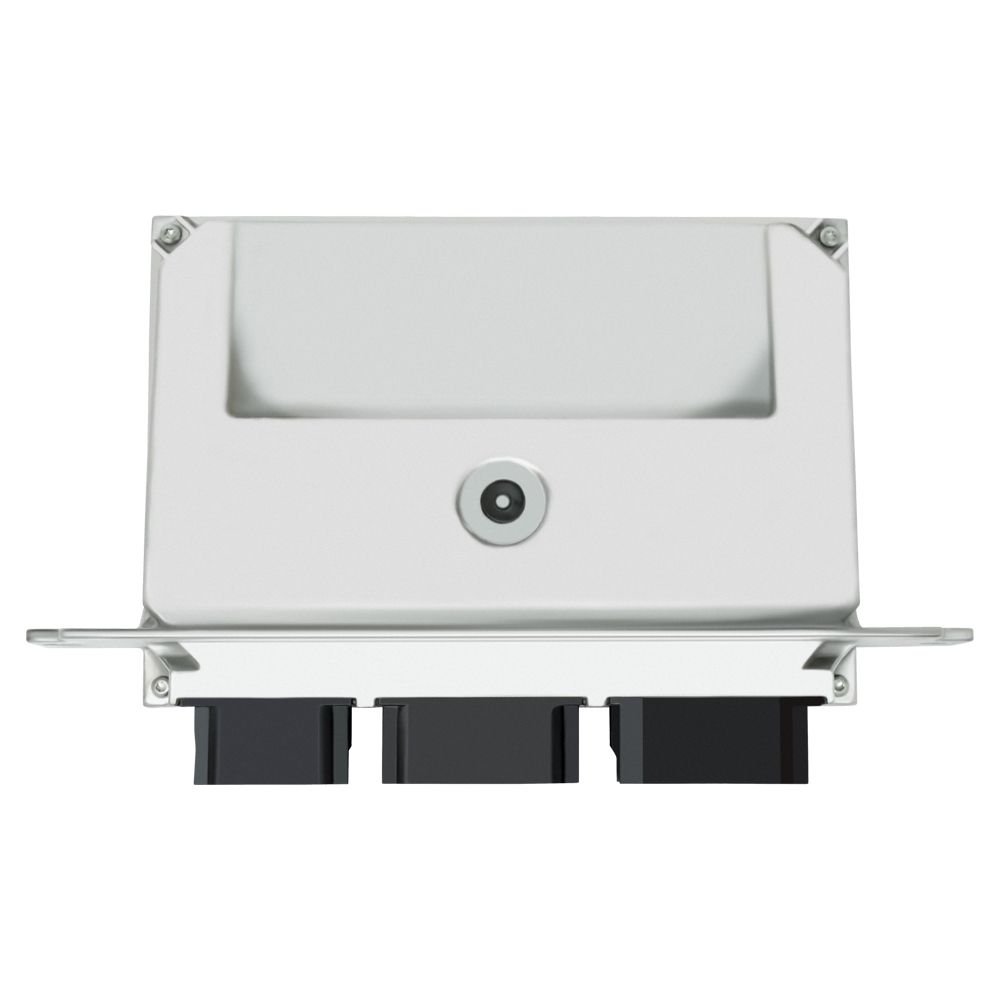
Flagship One stocks a refurbished, VIN-programmed PCM for the 2013 Ford Expedition with a lifetime warranty, free shipping and no core charge. The full Ford Expedition module lineup covers other engine configurations as well.
A malfunctioning PCM or ECM can significantly affect the drivability of your 2013 Ford Expedition. Understanding the symptoms, labor requirements and programming steps helps you decide between repair or a refurbished replacement, ensuring reliable performance for years ahead.