
Last updated on August 25th, 2026 at 02:02 pm
The Powertrain Control Module (PCM) or Engine Control Module (ECM) in your 1997 Mazda B3000 manages fuel delivery, ignition timing, and emissions systems. Failures may cause erratic engine behavior, poor fuel economy, or no-start conditions due to corrupted data or electrical faults.
If your 1997 Mazda B3000 is experiencing rough idle, stalling, or an illuminated check engine light, the Powertrain Control Module (PCM) or Engine Control Module (ECM) may be the culprit. These modules act as the brain of your vehicle’s engine management system, regulating fuel injection, ignition timing, and emissions controls. When they fail, symptoms can range from subtle driveability issues to complete engine shutdown. Replacing the PCM or ECM is a straightforward process, but it requires careful handling and, in most cases, a relearn procedure to ensure the new module communicates correctly with the rest of the vehicle’s systems. Understanding the role of this component, the labor involved, and the steps needed to restore proper function can save you time and frustration. This guide will walk you through what the module does, where it’s located, common failure symptoms, and how a pre-programmed replacement unit can simplify the repair process.
The PCM or ECM in your 1997 Mazda B3000 is responsible for managing the engine’s air-fuel mixture, ignition timing, and emissions systems to ensure optimal performance and efficiency. It continuously monitors inputs from sensors throughout the engine, such as the crankshaft position sensor, oxygen sensors, and throttle position sensor, to make real-time adjustments. Without a properly functioning module, your vehicle may experience poor fuel economy, hesitation under acceleration, or even fail to start. The module also plays a role in transmission shifting on automatic models, so a faulty unit can lead to erratic or harsh gear changes. When replacing this component, it’s important to use a module that matches your vehicle’s specifications. Replacement engine computers for the B3000 are designed to integrate seamlessly with your truck’s systems, but they must be programmed to your VIN to avoid communication errors with the engine and transmission. A failed or incorrectly programmed module can trigger a range of diagnostic trouble codes, some of which may not immediately point to the PCM or ECM as the root cause.
1997 Mazda B3000
OEM programmed ECM for your 1997 Mazda B3000 — plug & play, no dealer visit.
Free shipping · Lifetime warranty
In the 1997 Mazda B3000, the PCM or ECM is typically located in the engine bay, though the exact position may vary slightly depending on the model variant. Replacement involves disconnecting the negative battery terminal to prevent electrical shorts, followed by removing the module’s electrical connectors and mounting bolts. The labor time for removing and reinstalling the module is listed as 0.5 hours in factory service manuals. After installation, the module must be securely fastened, and all connectors should be inspected for corrosion or damage before reattachment. There are no additional torque specifications provided for this procedure, but ensuring a snug fit is critical to prevent vibration-related issues. The relearn procedure, which also takes 0.5 hours, is often required to synchronize the new module with the vehicle’s sensors and transmission.
| Operation | Configuration | Book Time |
|---|---|---|
| Powertrain Control Module R&R | B2300 | 0.5 hr |
| Powertrain Control Module R&R | B4000 | 0.5 hr |
| Powertrain Control Module Relearn | B2300 | 0.5 hr |
| Powertrain Control Module Relearn | B4000 | 0.5 hr |
| Engine Control Module R&R | B2300 | 0.5 hr |
| Engine Control Module R&R | B4000 | 0.5 hr |
| Engine Control Module Relearn | B2300 | 0.5 hr |
| Engine Control Module Relearn | B4000 | 0.5 hr |
After replacing the PCM or ECM in your 1997 Mazda B3000, a relearn procedure is typically required to ensure the new module communicates correctly with the engine and transmission. This process involves using a scan tool to reset adaptive values and may include driving the vehicle under specific conditions to allow the module to relearn fuel trims and shift patterns. The factory-recommended relearn procedure takes 0.5 hours of labor, but this step can be avoided by installing a VIN-programmed replacement unit. Flagship One modules arrive pre-configured to your vehicle’s VIN, eliminating the need for dealer reprogramming and reducing downtime. This ensures the new module is immediately compatible with your B3000’s engine and transmission systems, allowing for a smoother transition and quicker resolution of driveability issues.
A failing PCM or ECM in your 1997 Mazda B3000 can manifest in several ways, often mimicking other mechanical or electrical issues. One of the most common symptoms is a rough or unstable idle, which may feel like the engine is misfiring or struggling to maintain consistent RPMs. Stalling, particularly when coming to a stop or during deceleration, is another frequent complaint and may be accompanied by difficulty restarting the engine. Some drivers report poor acceleration or hesitation under load, as the module fails to adjust fuel delivery or ignition timing correctly. Diagnostic trouble codes are often the first indication of a problem, with codes like camshaft position sensor circuit malfunction or P1405 appearing on a scan tool. However, these codes may not always point directly to the PCM or ECM, as they can also be triggered by faulty sensors or wiring issues. In some cases, the vehicle may fail to communicate with a scan tool at all, indicating a complete loss of module functionality. Other symptoms include erratic transmission shifting, reduced fuel economy, or an illuminated check engine light with no apparent cause. If you experience any of these issues, it’s worth inspecting the module and its connections before assuming a more complex mechanical failure.
Mazda has issued several service bulletins addressing driveability and PCM-related issues in the 1997 B3000. One bulletin highlights loose or corroded ground connections as a potential cause of rough idle or poor driveability, emphasizing the importance of inspecting the engine control unit’s grounding points. Another bulletin, F028/97, addresses an illuminated check engine light with diagnostic trouble code P1405, noting that this condition may not always result in noticeable driveability concerns. Additionally, Mazda has documented instances of the MIL illuminating with code P0340, which can indicate a problem with the camshaft position sensor circuit or, in some cases, a faulty PCM. While these bulletins don’t always prescribe module replacement, they underscore the need to rule out other potential causes before assuming the PCM or ECM is at fault.
| Bulletin | Subject | What It Addresses |
|---|---|---|
| — | Mazda Tips: Driveability Problems: Ecu Ground Loose | s If a customer complains of rough idle, or poor |
| — | Mazda Tips: MIL On With DTC P0340 | — |
| — | F028/97 MIL Illumination With DTC P1405 No Driveability Concerns | — |
Stalling at stoplights is a common symptom of a failing PCM or ECM in the B3000. The module may struggle to maintain idle speed due to corrupted data or sensor communication errors. Before replacing the PCM, check for vacuum leaks, faulty idle air control valves, or loose electrical connections, as these can also cause similar issues.
Distinguishing between a bad PCM and a faulty sensor can be challenging. Start by scanning for diagnostic trouble codes, as some codes, like P0340, may point to sensor issues but can also indicate PCM failure. If multiple unrelated codes appear or the vehicle fails to communicate with a scan tool, the PCM is more likely the culprit. Inspecting wiring and connectors for damage or corrosion can also help rule out other causes.
Yes, a relearn procedure is typically required after replacing the PCM in your B3000 to ensure the new module synchronizes with the engine and transmission. This process can take 0.5 hours of labor and may involve using a scan tool to reset adaptive values. However, a VIN-programmed replacement unit from Flagship One arrives pre-configured, eliminating the need for dealer reprogramming.
Absolutely. The PCM in your B3000 controls the vehicle’s emissions systems, including the oxygen sensors and catalytic converter. A failing module may not adjust fuel delivery correctly, leading to elevated emissions levels. If your vehicle fails an emissions test with no obvious mechanical issues, the PCM should be inspected as a potential cause.
In the 1997 B3000, the terms PCM (Powertrain Control Module) and ECM (Engine Control Module) are often used interchangeably, as the module performs both engine and transmission control functions. The PCM/ECM manages fuel injection, ignition timing, and emissions systems, as well as transmission shifting in automatic models. Both terms refer to the same physical component in this vehicle.
If your 1997 Mazda B3000 is exhibiting symptoms of a failing PCM or ECM, you have a few repair options to consider. Replacing the module with a new or refurbished unit is often the most straightforward solution, particularly if diagnostic trouble codes or driveability issues persist after ruling out other causes. A VIN-programmed replacement unit can save time and ensure compatibility without the need for dealer reprogramming. Refurbished modules are also a cost-effective alternative, provided they are tested and programmed to meet factory specifications. Weighing the cost of a replacement against the potential for ongoing driveability issues can help you decide the best course of action for your vehicle.
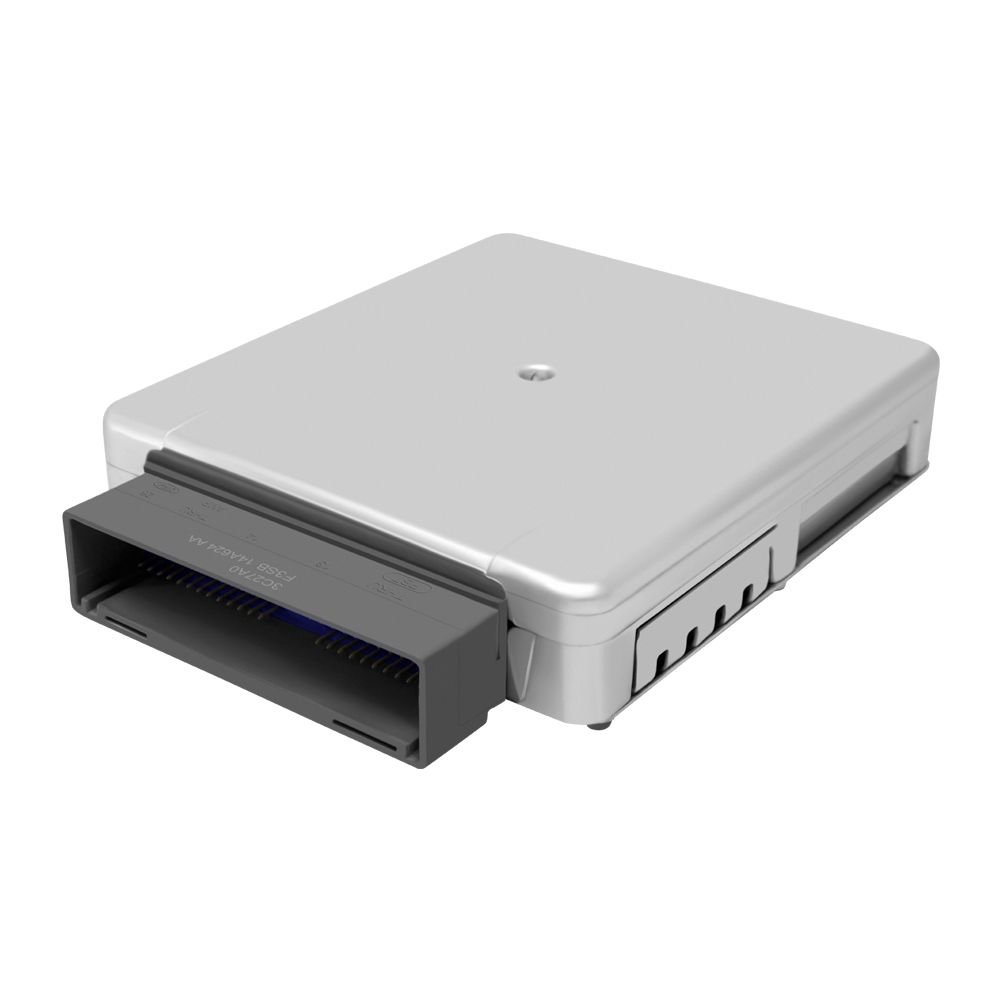
Flagship One stocks a refurbished, VIN-programmed PCM for the 1997 Mazda B3000 with a lifetime warranty, free shipping and no core charge. The full Mazda B3000 module lineup covers other engine configurations as well.
The PCM or ECM in your 1997 Mazda B3000 plays a critical role in maintaining smooth engine operation and efficient performance. If you’re experiencing rough idle, stalling, or diagnostic trouble codes, addressing the module early can prevent more serious issues down the road. Whether you opt for a new or refurbished replacement, ensuring the unit is properly programmed to your VIN will save time and hassle. With the right approach, you can restore your B3000’s reliability and keep it running smoothly for years to come.