
Last updated on August 25th, 2026 at 02:00 pm
In the 1999 Mazda B3000 the Powertrain Control Module (PCM) and Engine Control Module (ECM) serve as the vehicle’s electronic brain, managing fuel delivery, ignition timing, and transmission control. Failure of either unit can interrupt engine start, cause stalling, or trigger multiple diagnostic trouble codes, often requiring removal and relearn procedures.
When a 1999 Mazda B3000 experiences intermittent starting, unexpected stalling, or transmission anomalies, the electronic control modules are frequent suspects. Understanding how the Powertrain Control Module (PCM) and Engine Control Module (ECM) operate in this truck helps you assess whether a repair or a replacement is warranted. This guide explains the role of each module, outlines the typical removal steps, clarifies the factory‑required relearn process, and shows how a Flagship One replacement can simplify the job. By the end, you should know what to expect in terms of labor, the importance of a thorough system inspection, and how to protect the new unit for reliable performance.
The PCM in the 1999 Mazda B3000 acts as the central processor for both engine and transmission functions, interpreting sensor data to regulate fuel injection, ignition timing, and gear shifts. It also stores diagnostic information that helps pinpoint faults. The ECM, while closely related, focuses specifically on engine management, ensuring optimal combustion and emissions control. Both modules share a common power and ground architecture, making their health critical to overall drivability. A malfunction can manifest as loss of power, erratic shifting, or a cascade of trouble codes. Because the PCM and ECM communicate over the vehicle’s data bus, a failure in one often affects the other, requiring simultaneous attention. Replacement units must match the vehicle’s specifications, and replacement powertrain control modules for 1999 Mazda B3000 are engineered to meet those exact requirements, preserving calibration data and ensuring compatibility with existing wiring harnesses.
1999 Mazda B3000
OEM programmed replacements — plug & play, no dealer visit.
Find yours by year, make & model →
Free shipping · Lifetime warranty
The PCM and ECM are mounted within the engine compartment, typically secured to the firewall or a nearby bracket. Access involves disconnecting the negative battery terminal, removing any shielding covers, and unplugging the module connectors. The factory book time for removing and reinstalling either the PCM or ECM on a 1999 Mazda B3000 is listed as 0.5 hours. After the old unit is withdrawn, the replacement is positioned in the same location, bolted to the original mounting points, and the electrical connectors are reattached. Final torque specifications are not provided in the supplied data, so follow the standard practice of tightening fasteners to a snug fit without over‑torquing. Once installed, the vehicle’s battery is reconnected and a visual inspection confirms proper connector seating before proceeding to the programming step.
Work with the ignition off, and treat the module as static-sensitive: avoid touching the connector pins at any point.
| Operation | Configuration | Book Time |
|---|---|---|
| Powertrain Control Module R&R | B2500 | 0.5 hr |
| Powertrain Control Module R&R | B3000 | 0.5 hr |
| Powertrain Control Module R&R | B4000 | 0.5 hr |
| Powertrain Control Module Relearn | B2500 | 0.5 hr |
| Powertrain Control Module Relearn | B3000 | 0.5 hr |
| Powertrain Control Module Relearn | B4000 | 0.5 hr |
| Engine Control Module R&R | B2500 | 0.5 hr |
| Engine Control Module R&R | B3000 | 0.5 hr |
Factory documentation requires a PCM relearn procedure after any replacement, as well as an ECM relearn for the engine control unit. These steps involve cycling the ignition, running the engine under specific conditions, and using a scan tool to confirm successful calibration. With a Flagship One unit, the module arrives a VIN-programmed replacement unit that already contains the correct calibration data for your vehicle, so the relearn steps are effectively completed at the factory. You still need to verify communication with a scan tool and clear any residual codes, but the extensive programming portion is eliminated, reducing shop time and potential for error.
Typical signs of a failing PCM or ECM in a 1999 Mazda B3000 include a complete no‑start condition, rough idle, unexpected stalling, and erratic transmission shifts. Drivers may also notice a loss of power during acceleration or illumination of the malfunction indicator lamp with multiple codes present. In many cases, the vehicle will report internal control module error on a diagnostic scan, indicating a communication problem within the control module itself. Additional clues are dead scan‑tool communication, which suggests the module is not responding, and intermittent loss of fuel trim adjustments, leading to fuel‑rich or lean conditions. Addressing these symptoms promptly can prevent further drivetrain damage.
Service Bulletins relevant to this model include 01 005/99, which provides base PCM calibration information for the 1999 B Series, and the Mazda Tips notice indicating that the 3.0 L engine does not require a PCM reflash due to hardware limitations for model years 1998‑2000. Additionally, bulletin K016/98 addresses MIL illumination with codes P0705, P0708, P1704, and P1705 for the 1997‑1999 B Series.
| Bulletin | Subject | What It Addresses |
|---|---|---|
| — | 01 005/99 1999 B Series Base PCM Calibration Information | — |
| — | Mazda Tips: 3.0 L No Reflash Due To PCM Hardware (1998 2000) | — |
| — | K016/98 1997 99 B Series MIL Illumination With Dt Cs P0705, P0708, P1704 And P1705 | — |
A malfunctioning PCM can cause the engine to stall, refuse to start, or shift improperly. While the vehicle may run intermittently, reliable operation typically requires a functional PCM.
The removal and installation use standard hand tools. The primary requirement is a scan tool to verify communication after the replacement.
Yes, factory guidelines call for a PCM relearn after any replacement. A VIN‑programmed unit from Flagship One includes this data, reducing the on‑site steps.
P0705 points to a transmission range sensor circuit malfunction, which can be triggered by a failing PCM or wiring issues.
Periodic visual checks during routine service are advisable, especially if you notice intermittent electrical issues or corrosion.
When the PCM or ECM in your 1999 Mazda B3000 shows signs of failure, you can choose a direct repair or replace it with a refurbished unit that matches factory specifications. Flagship One offers a VIN‑programmed replacement that arrives ready for installation, eliminating the need for extensive post‑install coding while preserving the vehicle’s original performance characteristics.
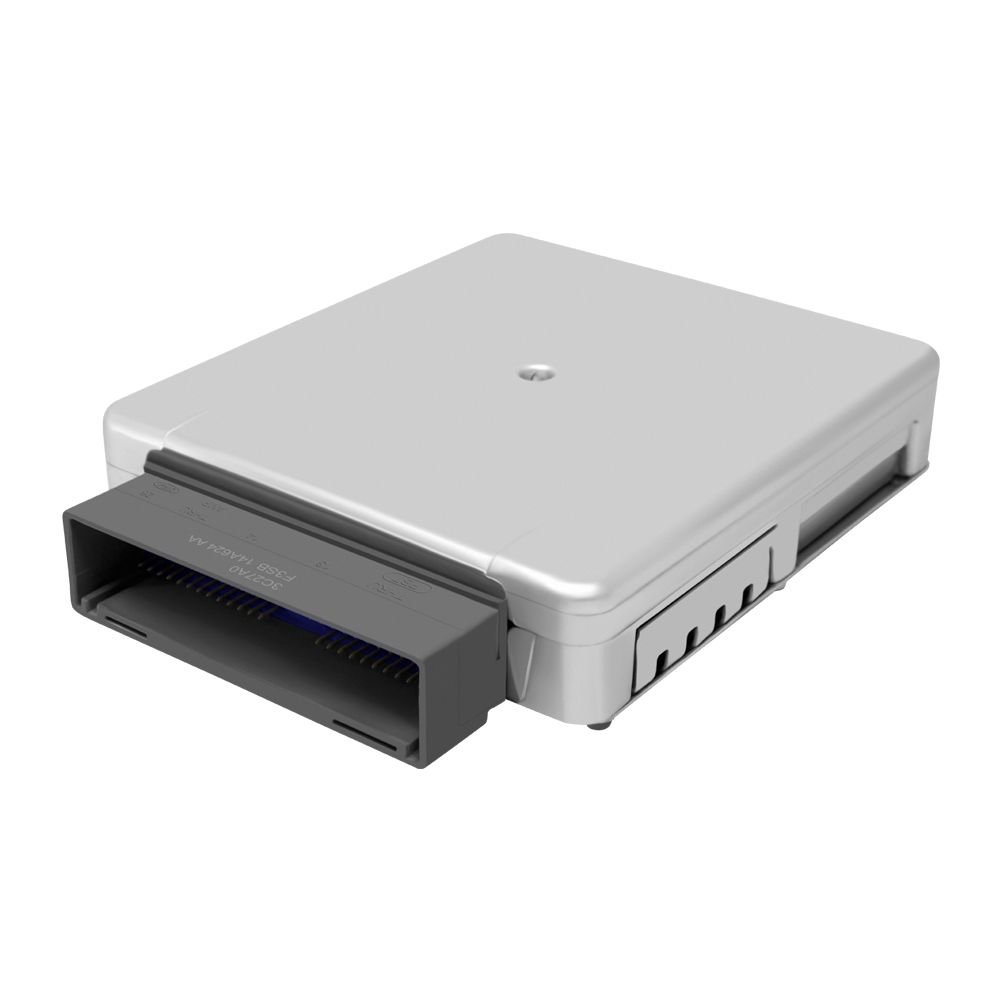
Flagship One stocks a refurbished, VIN-programmed PCM for the 1999 Mazda B3000 with a lifetime warranty, free shipping and no core charge. The full Mazda B3000 module lineup covers other engine configurations as well.
Addressing PCM or ECM problems in a 1999 Mazda B3000 promptly helps maintain reliable engine and transmission operation. Whether you opt for a repair or a Flagship One refurbished module, the right approach restores drivability and protects your investment.