
Last updated on August 25th, 2026 at 12:28 pm
The engine control module (ECM) in your 2007 Pontiac Grand Prix manages fuel delivery, ignition timing, and emissions systems. Failure may cause erratic engine behavior, poor performance, or a no-start condition, often triggered by internal faults or electrical issues.
If your 2007 Pontiac Grand Prix 3.8L is experiencing unexplained stalling, rough idling, or a no-start condition, the engine control module (ECM) may be at fault. This small but critical computer manages fuel injection, ignition timing, and emissions controls, ensuring smooth operation. When it fails, symptoms can range from subtle performance issues to complete engine shutdown. Replacing the ECM isn’t just about swapping parts—it requires careful data management to avoid further complications. Understanding the role of this module, where it’s located, and what the replacement process entails can help you make informed decisions. Whether you’re diagnosing a persistent trouble code or preparing for a repair, knowing these details ensures your Grand Prix runs reliably after the fix.
The engine control module in your 2007 Pontiac Grand Prix 3.8L acts as the brain of the engine, continuously monitoring sensors and adjusting fuel, air, and spark to maintain optimal performance. It ensures the engine runs efficiently under all driving conditions, from cold starts to highway cruising. Without a functioning ECM, your vehicle may struggle to start, idle roughly, or even stall unexpectedly. Over time, electrical stress, heat, or internal faults can degrade the module, leading to erratic behavior or complete failure. When replacement becomes necessary, choosing the right replacement engine computers for the Grand Prix is essential to restore proper function. The module’s location near the air cleaner assembly makes it accessible, but the procedure requires precision to avoid damaging connectors or losing critical data during the swap.
In the 2007 Pontiac Grand Prix 3.8L, the engine control module is positioned next to the air cleaner assembly, making it relatively accessible for replacement. The factory removal procedure involves disconnecting the electrical connector and carefully extracting the module from its mount. Labor estimates for this job typically range around 1.4 hours for the ECM replacement, which includes the time needed to access and reinstall the unit. While the physical swap is straightforward, proper handling is crucial to avoid bending pins or damaging the connector. Once removed, the new module must be installed securely to ensure a stable connection. Always follow the manufacturer’s torque specifications if provided, though the focus should remain on a clean, secure fit to prevent future electrical issues.
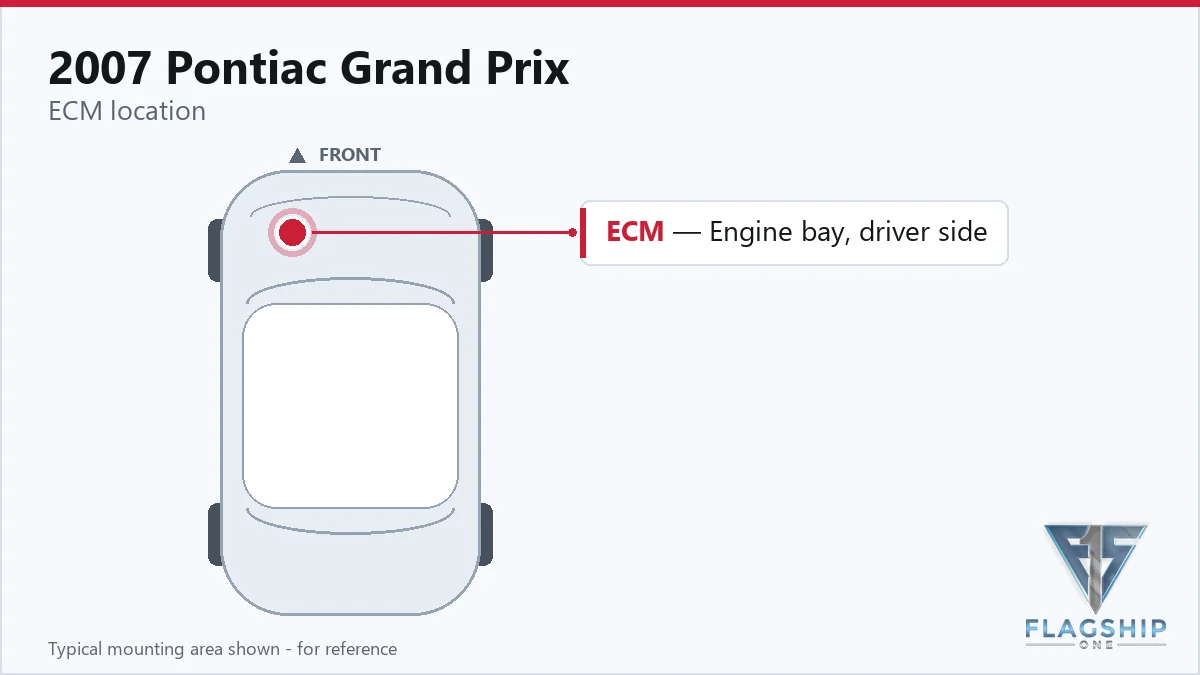
Work with the ignition off, and treat the module as static-sensitive: avoid touching the connector pins at any point.
| Operation | Configuration | Book Time |
|---|---|---|
| Powertrain Control Module Relearn | All configurations | 0.5 hr |
| Powertrain Control Module R&R | All configurations | 0.7 hr |
| Engine Control Module R&R | 3.8L | 1.4 hr |
| Engine Control Module R&R | 5.3L | 0.9 hr |
| Engine Control Module Relearn | All configurations | 0.5 hr |
2007 Pontiac Grand Prix 3.8L: When the
OEM programmed replacements — plug & play, no dealer visit.
Find yours by year, make & model →
Free shipping · Lifetime warranty
Before removing the engine control module in your 2007 Pontiac Grand Prix 3.8L, the factory procedure requires capturing the existing data using a scan tool. This data must then be restored into the new module to ensure proper communication with the vehicle’s systems. Skipping this step may result in drivability issues, such as poor fuel economy or erratic shifting. However, when you opt for a VIN-programmed replacement unit, these programming steps are already completed. The module arrives ready to install, eliminating the need for additional software updates or data transfers. This streamlines the replacement process, allowing your Grand Prix to return to normal operation without the hassle of post-install programming.
A failing engine control module in your 2007 Pontiac Grand Prix 3.8L may cause a variety of symptoms, often mimicking other engine or transmission issues. Common signs include intermittent stalling, especially at idle or during acceleration, as the module loses its ability to regulate fuel and spark. You might also notice the engine misfiring or running rough, as if it’s struggling to maintain a smooth rhythm. In some cases, the vehicle may fail to start altogether, leaving you stranded. Another red flag is the illumination of the check engine light, often accompanied by trouble codes like internal control module memory checksum error. If your scan tool suddenly loses communication with the ECM, that’s a strong indicator of module failure. Shifting issues, such as delayed or harsh gear changes, may also occur if the module’s signals to the transmission control system become unreliable. These symptoms can worsen over time, so addressing them promptly helps prevent further drivability problems.
The 2007 Pontiac Grand Prix 3.8L may store specific trouble codes when the engine control module begins to fail. These codes often point to internal faults or communication errors within the module itself.
Random stalling in your Grand Prix may stem from the ECM losing its ability to regulate fuel or spark timing. If the module fails intermittently, it can cause the engine to cut out unexpectedly. Other symptoms, like rough idling or trouble codes, often accompany this issue and help confirm the diagnosis.
A failing ECM often triggers multiple trouble codes, including those related to internal module faults like P0601 or P0603. If your scan tool loses communication with the ECM entirely, that’s a strong sign of module failure. Sensor issues, by contrast, usually generate codes specific to the affected sensor rather than the module itself.
Skipping the data capture step may result in drivability issues after installation. The new module won’t have the necessary calibration data, leading to poor performance, erratic shifting, or even a no-start condition. This is why the factory procedure emphasizes capturing and restoring the data before and after replacement.
Driving with a failing ECM may lead to further issues, such as poor fuel economy or engine misfires. In some cases, the vehicle may stall unexpectedly, creating a safety risk. If you suspect ECM failure, it’s best to address it promptly to avoid additional complications.
A failing ECM may generate inconsistent trouble codes because it struggles to maintain stable communication with the vehicle’s sensors. If the codes vary widely or include module-specific faults like P0601, the ECM itself is likely the root cause rather than individual sensors or components.
If your 2007 Pontiac Grand Prix 3.8L is showing signs of ECM failure, you have options for replacement. A new or refurbished module can restore reliable performance, but the choice depends on your budget and needs. Refurbished units often provide a cost-effective solution without sacrificing quality, especially when pre-programmed to your vehicle’s VIN. Whether you’re tackling the job yourself or leaving it to a professional, ensuring the module is properly matched and installed will get your Grand Prix back on the road smoothly.
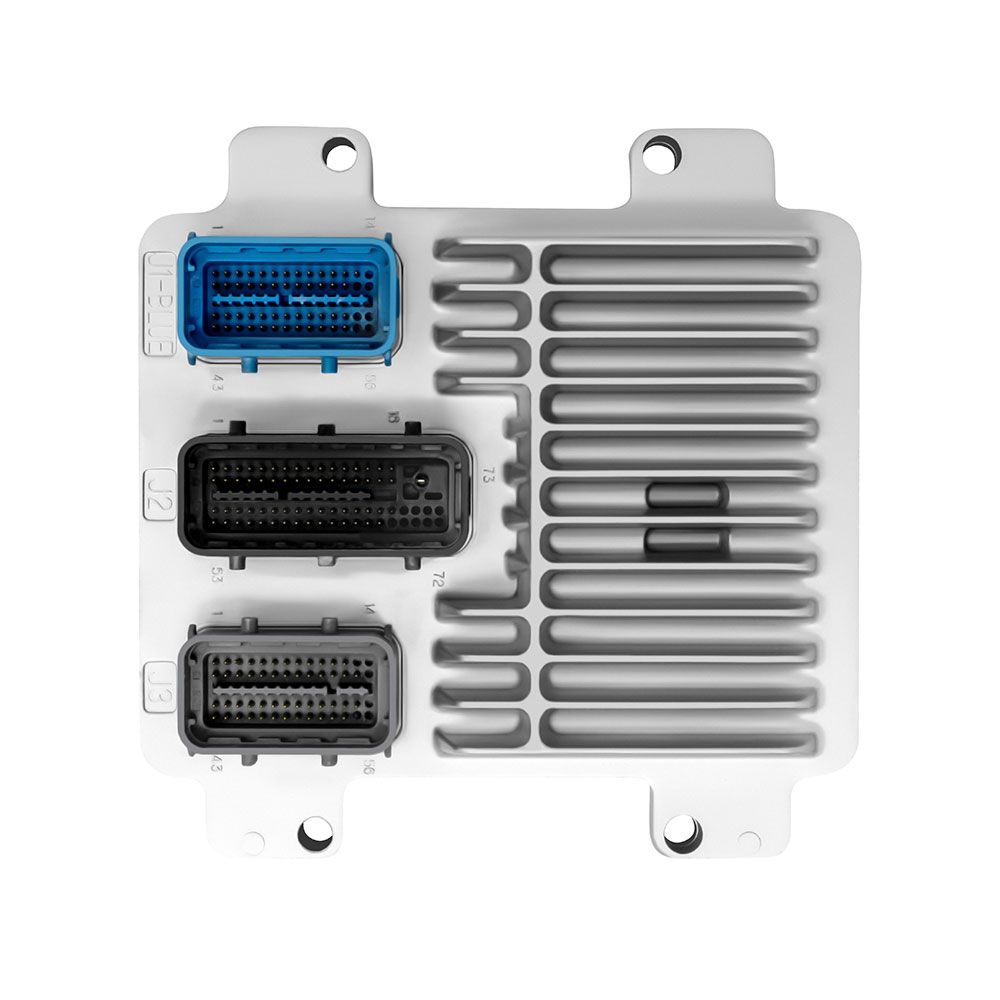
Flagship One stocks a refurbished, VIN-programmed PCM for the 2007 Pontiac Grand Prix with a lifetime warranty, free shipping and no core charge. The full Pontiac Grand Prix module lineup covers other engine configurations as well.
The engine control module in your 2007 Pontiac Grand Prix 3.8L plays a vital role in keeping your vehicle running smoothly. When it fails, symptoms like stalling, misfires, or a no-start condition can disrupt your daily driving. Replacing the module involves careful data management and precise installation to ensure long-term reliability. By understanding the process and choosing the right replacement, you can restore your Grand Prix’s performance and avoid future headaches.