
Last updated on August 25th, 2026 at 12:08 pm
The Powertrain Control Module in a 2004 Pontiac Grand Prix manages engine and transmission commands. Failure of this computer can disrupt fuel delivery, ignition timing, and shift logic, often triggering processor‑related trouble codes and loss of driveability.
When a 2004 Pontiac Grand Prix begins to exhibit intermittent stalling, loss of power, or a complete no‑start condition, the Powertrain Control Module often becomes the focal point of diagnosis. This guide walks you through what the PCM does for this specific model, where it lives under the hood, the labor involved in swapping it out, and the post‑install steps required to get your vehicle back on the road. By understanding the module’s role, the factory cautions, and the typical symptoms, you can decide whether a repair or a Flagship One refurbished unit best fits your situation. The information below equips you with the knowledge to evaluate the job, anticipate the time commitment, and avoid common pitfalls that could compromise the new computer’s performance.
In the 2004 Pontiac Grand Prix the Powertrain Control Module acts as the central brain that translates sensor data into commands for fuel injection, ignition timing, and transmission shift points. It constantly monitors inputs such as crankshaft position, throttle position, and coolant temperature, then calculates the optimal output for each cylinder and gear. Because the PCM also stores calibration data, any corruption or hardware failure can cause the engine to run lean, stall, or refuse to start. The module’s integrity is essential for meeting emissions standards and delivering smooth acceleration. When the PCM fails, the vehicle may generate a series of processor‑related diagnostic codes that point to internal communication loss. Proper handling during removal is critical, as electrostatic discharge can damage the delicate circuitry. Selecting a replacement that matches the vehicle’s specifications ensures that the engine control strategies remain consistent with factory tuning. 2004 Pontiac Grand Prix replacement PCM helps maintain the calibrated performance parameters that the original unit provided.
The factory removal procedure indicates that the PCM is positioned beside the air cleaner assembly, making it accessible after the intake components are removed. The labor guide lists 1.4 hours for the removal and replacement of the engine control module, followed by a 0.5‑hour relearn for the ECM and another 0.5‑hour relearn for the PCM itself. The powertrain control module removal adds 0.7 hours of labor. During the swap, technicians are instructed to turn the ignition off and avoid touching the connector pins or any soldered parts on the board to prevent electrostatic discharge. After the module is secured, the connector must be re‑engaged only when the battery and related power sources are disconnected, ensuring a safe installation environment.
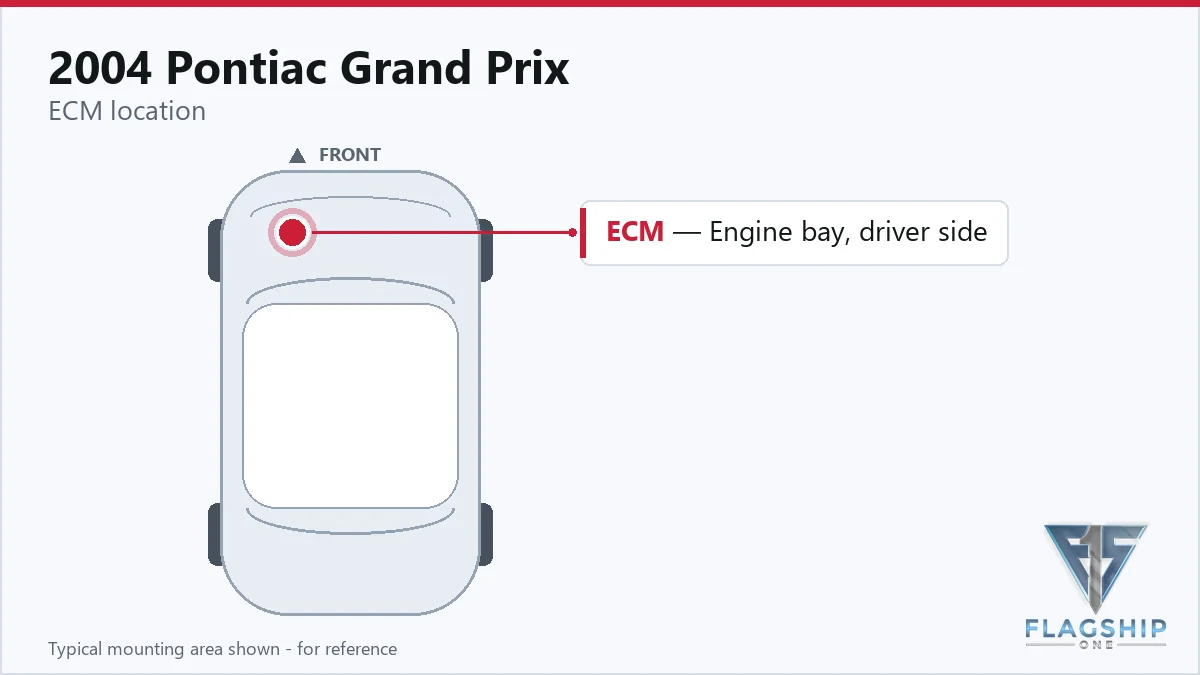
Work with the ignition off, and treat the module as static-sensitive: avoid touching the connector pins at any point.
| Operation | Configuration | Book Time |
|---|---|---|
| Engine Control Module R&R | All configurations | 1.4 hr |
| Engine Control Module Relearn | All configurations | 0.5 hr |
| Powertrain Control Module Relearn | All configurations | 0.5 hr |
| Powertrain Control Module R&R | All configurations | 0.7 hr |
Engine computer (ECM/PCM)
OEM programmed replacements — plug & play, no dealer visit.
Find yours by year, make & model →
Free shipping · Lifetime warranty
Once the new PCM is physically installed, the factory service process requires a series of relearn steps: the engine control module relearn (0.5 hours) and the powertrain control module relearn (0.5 hours). These procedures reset adaptive strategies and record the remaining engine oil life, which otherwise defaults to 100 % if not programmed. Flagship One units arrive already VIN‑programmed, so the technician can skip the manual data entry and focus on the physical installation. a VIN-programmed replacement unit eliminates the need for post‑install calibration, reducing shop time and the risk of human error.
Owners of a 2004 Pontiac Grand Prix may notice a range of issues when the PCM begins to fail. Common signs include an inability to start the engine, sudden stalling while driving, rough idle, and erratic transmission shifts. Diagnostic scans often reveal processor‑related codes such as processor clock signal which indicates a loss of internal timing reference. Additional symptoms can be intermittent loss of power, flickering instrument panel gauges, and occasional loss of communication with scan tools. In some cases, the vehicle may run in limp mode, limiting RPMs and gear selection to protect the engine. These behaviors typically correlate with the internal fault list that includes P0601 through P1680, reflecting the broad impact a malfunctioning PCM can have on engine and transmission management.
The 2004 Pontiac Grand Prix PCM monitors a comprehensive set of internal parameters, and the following trouble codes may be stored when the module experiences a fault:
Service bulletin #03-06-04-027 and its amendment #03-06-04-027A outline a parts restriction program for the PCM, indicating limited availability of certain revisions. Bulletin #05-06-04-037 addresses instrument panel gauges that drop to zero and intermittent engine stalls, recommending ground repairs and PCM reprogramming. Additionally, bulletin #07-00-89-043 clarifies warranty administration for control module calibrations not issued through General Motors, affecting how aftermarket replacements are handled.
| Bulletin | Subject | What It Addresses |
|---|---|---|
| 03-06-04-027 | Parts Restriction Program for Powertrain Control Module (PCM) – (May 21, 2003) | — |
| 05-06-04-037 | Certain Instrument Panel Gauges Go to Zero and/or Intermittent Engine Stall (Repair Ground Conn | — |
| 07-00-89-043 | Warranty Admin. – Use of Parts and Components (Including Control Module Calibrations) Not Issue | — |
The vehicle will not operate because the PCM controls essential fuel, ignition, and transmission functions. Without it, the engine cannot start or run.
Yes, the factory procedure requires recording the remaining oil life; otherwise the new module will assume 100 % oil life, which may affect maintenance reminders.
A VIN‑programmed unit ensures the correct calibration data is pre‑loaded, eliminating the need for manual reprogramming and reducing the chance of errors.
Factory labor times list 1.4 hours for the ECM removal and replacement, plus additional half‑hour relearn steps for both the ECM and PCM.
The module is reachable near the air cleaner, but the cautions about ESD and connector handling recommend professional tools and procedures to avoid damage.
When the PCM in your 2004 Pontiac Grand Prix needs attention, you can choose a factory‑refurbished unit or a Flagship One replacement that arrives VIN‑programmed. Both options restore the vehicle’s control logic, but the Flagship One part eliminates the post‑install programming steps, potentially saving shop time and reducing the risk of error.
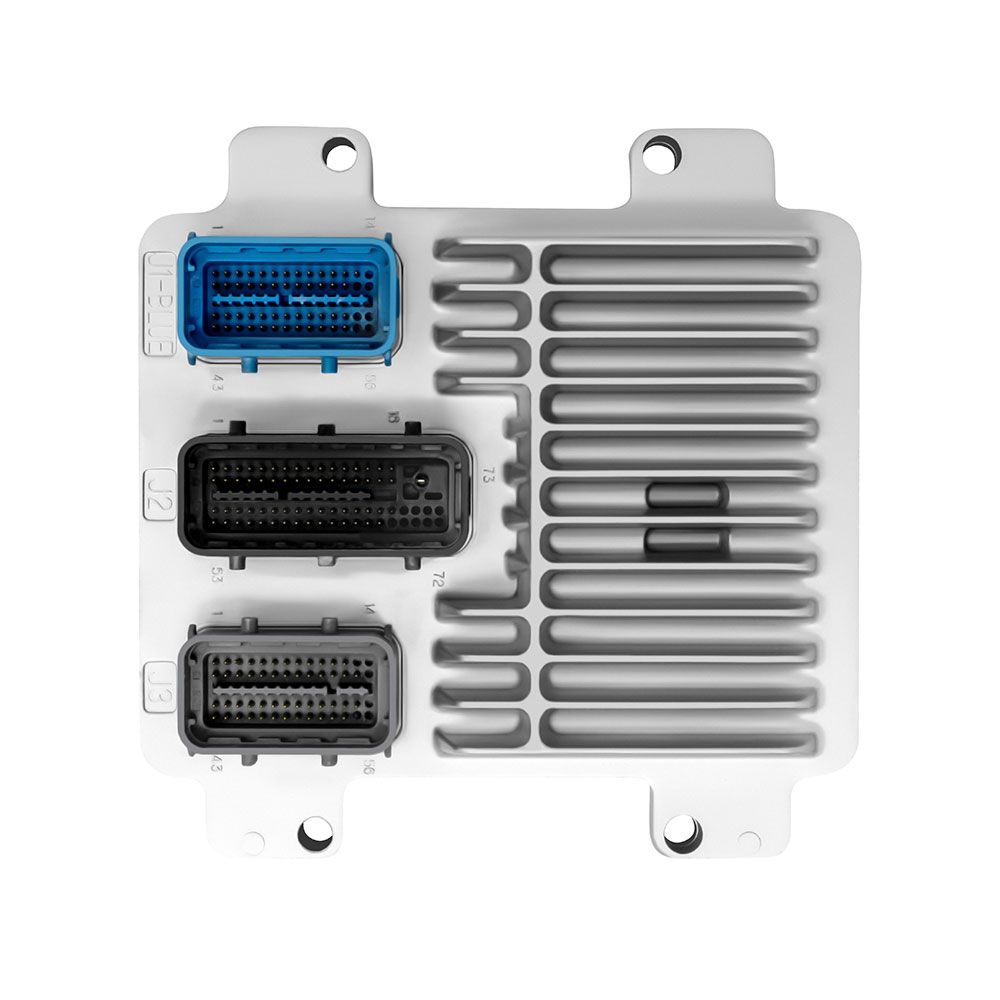
Flagship One stocks a refurbished, VIN-programmed PCM for the 2004 Pontiac Grand Prix with a lifetime warranty, free shipping and no core charge. The full Pontiac Grand Prix module lineup covers other engine configurations as well.
The Powertrain Control Module is vital to the operation of your 2004 Pontiac Grand Prix. Whether you opt for a repair or a Flagship One refurbished replacement, understanding the installation and programming requirements helps ensure a reliable fix and keeps your Grand Prix performing as intended.