
Last updated on August 25th, 2026 at 12:28 pm
The Powertrain Control Module and Engine Control Module on your 2008 Pontiac Grand Prix are the central computers managing engine operation, transmission shifting, and emissions systems. When these units fail internally, your vehicle may not start or run properly.
If your 2008 Pontiac Grand Prix has developed starting issues, running problems, or is setting multiple trouble codes, the engine computer may be the culprit. This guide explains what the PCM and ECM do in your vehicle, where they are located, and what the replacement process involves. Whether you are diagnosing a no-start condition or planning a repair, you will learn the factory-recommended steps and understand why proper programming is critical for a successful repair.
The Powertrain Control Module and Engine Control Module in your 2008 Pontiac Grand Prix serve as the primary computers managing the 3.8L engine and automatic transmission. The PCM handles powertrain functions including fuel injection, ignition timing, and transmission shift points, while the ECM monitors engine sensors and controls emissions systems. These modules communicate with virtually every electrical system in your vehicle, making their proper function essential for drivability. When the internal processor or memory of replacement engine computers for the Grand Prix becomes corrupted or fails, the vehicle may not run correctly or may not start at all. The factory designs these units to be serviceable, but internal failures often require complete replacement rather than repair.
The control module on your 2008 Pontiac Grand Prix is located next to the air cleaner assembly, requiring removal of the air intake ducting and associated components to gain access. The factory removal procedure involves disconnecting the battery, removing the mounting hardware, and carefully extracting the unit to avoid damaging the wiring harness. Book time for PCM replacement on the 3.8L engine is 1.4 hours, while ECM replacement also requires 1.4 hours plus an additional 0.5 hours for the relearn procedure. Proper torque specifications and connector seating are critical during installation to ensure reliable operation and prevent water intrusion into the new module.
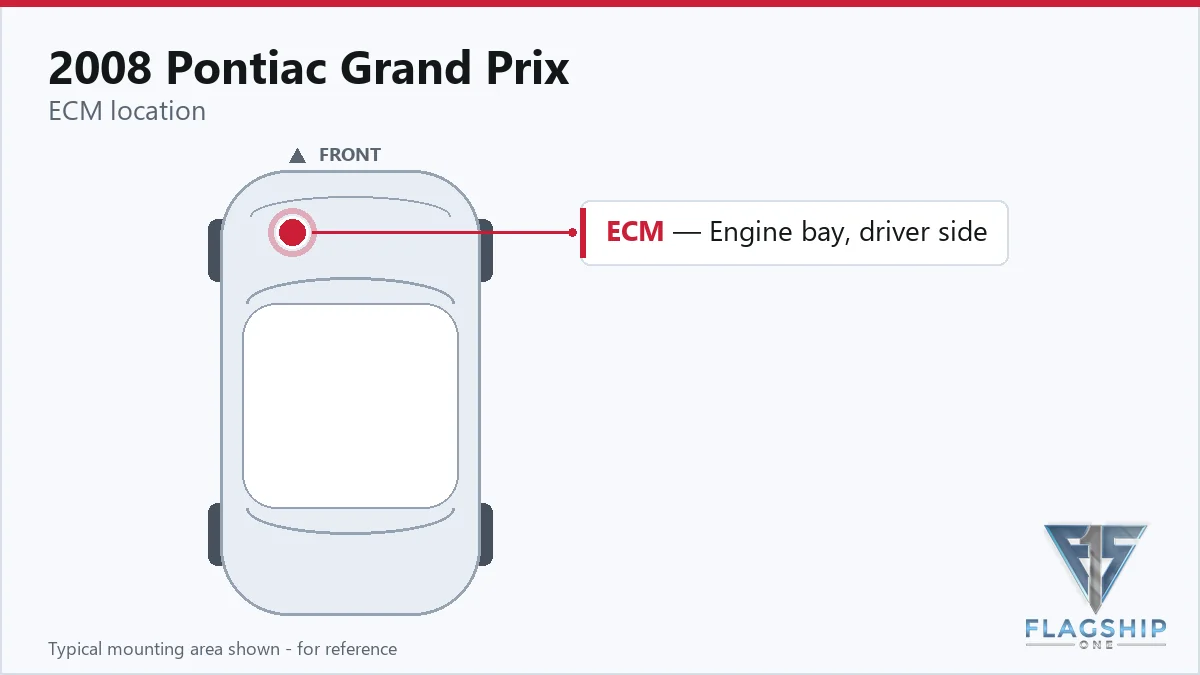
Work with the ignition off, and treat the module as static-sensitive: avoid touching the connector pins at any point.
| Operation | Configuration | Book Time |
|---|---|---|
| Powertrain Control Module R&R | 3.8L | 1.4 hr |
| Powertrain Control Module R&R | 5.3L | 1.3 hr |
| Engine Control Module R&R | 3.8L | 1.4 hr |
| Engine Control Module R&R | 5.3L | 1.3 hr |
| Engine Control Module Relearn | All configurations | 0.5 hr |
2008 Pontiac Grand Prix
OEM programmed ECM for your 2008 Pontiac Grand Prix — plug & play, no dealer visit.
Free shipping · Lifetime warranty
The factory procedure for your 2008 Pontiac Grand Prix requires using a scan tool to capture the existing PCM data before removal, then restoring that captured data into the replacement module. The same requirement applies to the ECM — the technician must capture the ECM data prior to disassembly and transfer it to the new unit. Flagship One units arrive VIN-programmed to your specific vehicle, which means the programming steps the factory specifies are already completed when you receive the replacement. This allows you to install the new module and perform the relearn procedure without needing to manually transfer the captured data.
Every VIN-programmed replacement unit from Flagship One arrives with these steps already completed.
When the engine computer fails on your 2008 Pontiac Grand Prix, common symptoms include a no-start condition where the engine cranks but will not run, intermittent stalling during acceleration, and multiple misfire codes setting across cylinders. The scan tool may fail to communicate with the module entirely, or communication may be intermittent. Transmission shifting problems such as harsh engagements or failure to shift properly can also indicate PCM or ECM issues. Internal module failures often trigger internal memory checksum codes that cannot be cleared even after replacing other components. These symptoms typically appear suddenly rather than developing gradually, as the internal electronics degrade to the point of failure.
The 2008 Pontiac Grand Prix may store module-internal trouble codes when the PCM or ECM experiences internal faults. These codes include P0601 through P0607, along with P060D, P062F, P0641, P0651, and P1621, all indicating various internal processor, memory, or sensor reference voltage problems within the control module itself.
No. The module must be programmed with your specific vehicle identification number to communicate with the rest of the car systems. An unprogrammed unit will not allow the engine to start.
Technically yes, but the job requires proper scan tool capability to capture the original data and perform the relearn procedure. Professional installation ensures correct programming and avoids common installation errors.
If the scan tool cannot communicate with the module, if multiple unrelated codes are present, or if the vehicle exhibits symptoms across multiple systems simultaneously, the PCM or ECM is likely at fault.
If your 2008 Pontiac Grand Prix requires a new engine computer, you have two primary options: a new replacement from the dealer at significantly higher cost, or a quality refurbished unit from Flagship One that arrives VIN-programmed and ready to install. The refurbished path typically saves hundreds of dollars while providing comparable reliability when sourced from a reputable supplier. Consider your budget, timeline, and warranty preferences when deciding which repair path suits your needs.
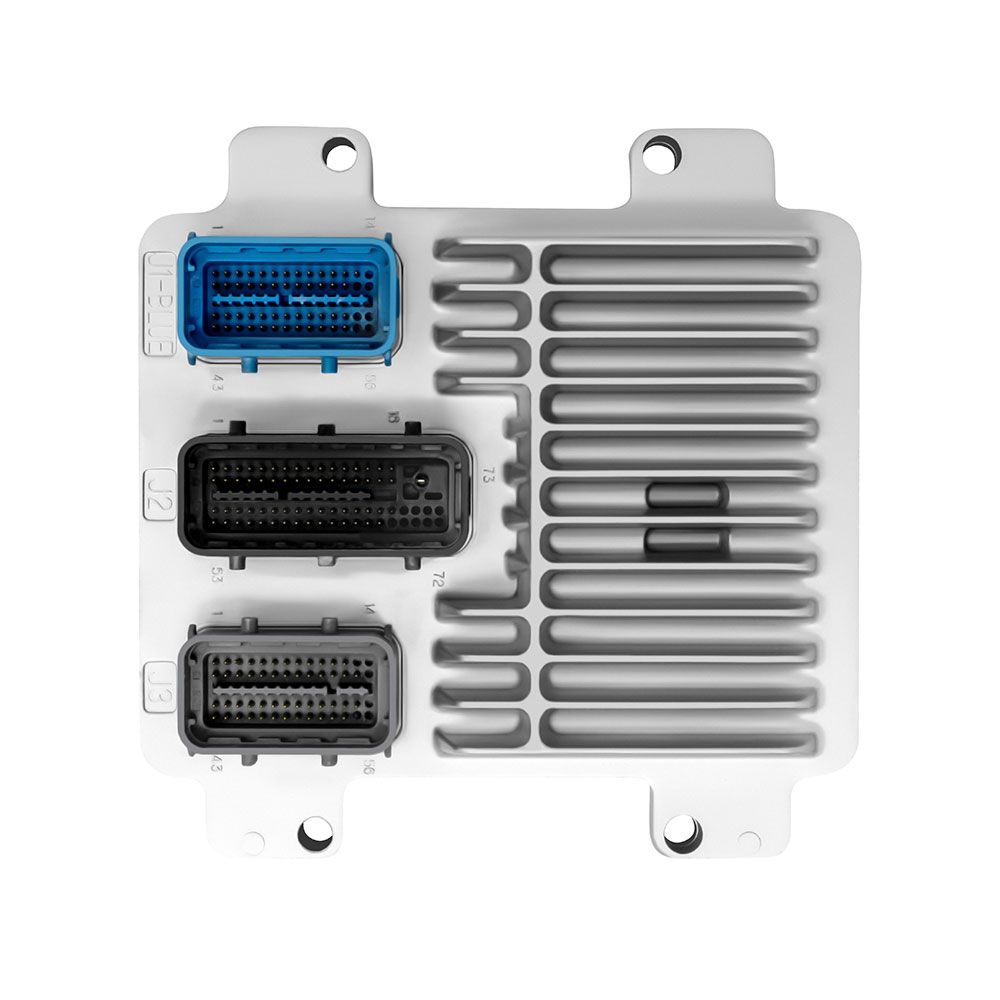
Flagship One stocks a refurbished, VIN-programmed PCM for the 2008 Pontiac Grand Prix with a lifetime warranty, free shipping and no core charge. The full Pontiac Grand Prix module lineup covers other engine configurations as well.
The PCM and ECM in your 2008 Pontiac Grand Prix are essential for proper engine and transmission operation. When these modules fail, symptoms range from no-start conditions to shifting problems and multiple trouble codes. Understanding the location, programming requirements, and replacement process helps you make informed decisions about your repair options.