
Last updated on August 25th, 2026 at 12:29 pm
In the 2002 Pontiac Grand Prix, the Powertrain Control Module (PCM) governs engine timing, fuel delivery, and emissions controls. A failure can prevent the vehicle from communicating diagnostic data, disrupt EGR testing, and trigger a range of power‑train error codes, leading to reduced performance or loss of driveability.
When a 2002 Pontiac Grand Prix begins to exhibit erratic sensor data or refuses to communicate with generic scan tools, the underlying cause often points to the Powertrain Control Module. Understanding how this module functions, where it sits in the engine bay, and what steps are required to replace or reprogram it can save you time and prevent unnecessary diagnostic trips. This guide walks you through the PCM’s role in your Grand Prix, outlines the factory‑specified removal and relearn process, and explains why a VIN‑programmed replacement from Flagship One typically removes the need for additional programming steps. By the end, you’ll know what to expect during service and how to keep the module operating reliably.
The Powertrain Control Module in the 2002 Pontiac Grand Prix acts as the vehicle’s central computer, interpreting sensor inputs to control fuel injection, ignition timing, and emissions functions. It also stores diagnostic information that service equipment accesses during trouble‑code scans. Because the PCM manages both engine and transmission parameters, a malfunction can affect idle quality, throttle response, and shift timing. Maintaining proper communication between the PCM and diagnostic tools is essential for accurate service. The module’s reliability directly influences emissions compliance and overall drivability. For owners seeking a replacement, the market offers several options, including OEM‑spec units and aftermarket alternatives such as replacement engine computers for the 2002 Pontiac Grand Prix that meet the same functional standards.
The PCM is positioned adjacent to the air cleaner assembly, making it reachable once the intake components are removed. Factory labor times list 0.9 hours for removal and replacement, reflecting the need to disconnect powertrain and data link connectors before extracting the unit. After the new module is installed, a 0.5‑hour relearn procedure is required to synchronize the PCM’s memory with the vehicle’s existing sensors and actuators. The same 0.5 hour interval applies for the Powertrain Control Module relearn step, ensuring the vehicle’s control strategies are correctly calibrated before normal operation resumes.
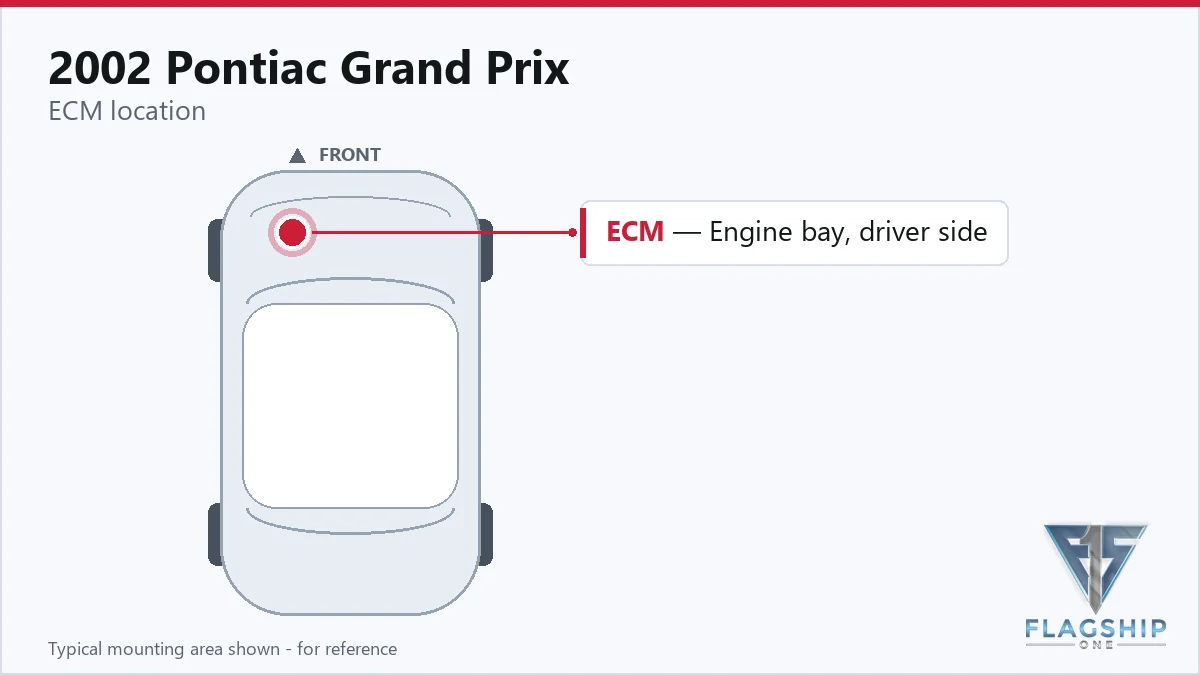
Work with the ignition off, and treat the module as static-sensitive: avoid touching the connector pins at any point.
| Operation | Configuration | Book Time |
|---|---|---|
| Engine Control Module R&R | All configurations | 0.9 hr |
| Engine Control Module Relearn | All configurations | 0.5 hr |
| Powertrain Control Module Relearn | All configurations | 0.5 hr |
| Powertrain Control Module R&R | One | 0.9 hr |
2002 Pontiac Grand Prix
OEM programmed ECM for your 2002 Pontiac Grand Prix — plug & play, no dealer visit.
Free shipping · Lifetime warranty
Once the PCM has been physically installed, the factory service routine calls for a relearn of both the engine and powertrain control strategies, each taking about half an hour. In many cases, technicians also need to reprogram the module using the Off‑Board Programming method, selecting Tech 2, Reprogram ECU, and the Off‑Board Programming Adapter as the ECU location. However, Flagship One provides units that arrive already VIN‑programmed, so the reprogramming step is typically completed before the part reaches the shop. This eliminates the risk of an interrupted programming session and satisfies the caution that the ignition must remain on if the process is halted. The correct approach is to follow the service bulletin instructions and ensure all PCM and DLC connections are secure before any software action.
Every VIN-programmed replacement unit from Flagship One arrives with these steps already completed.
Owners of a 2002 Pontiac Grand Prix may notice that the engine will not start, stalls unexpectedly, or exhibits irregular idle when the PCM fails to exchange data with generic diagnostic equipment. Additionally, the vehicle might display a range of power‑train error codes, such as internal control module memory error, which indicates a loss of communication within the module itself. Other observable issues include missing EGR test results during a scan, inability to retrieve freeze‑frame data, and occasional shift‑related roughness if the transmission control logic is compromised. These symptoms typically arise when the PCM cannot correctly process sensor inputs or relay diagnostic information, prompting the need for replacement or reprogramming.
The following diagnostic trouble codes are commonly logged by the Powertrain Control Module in this model:
Two GM service bulletins address communication problems with the PCM. Bulletin #04‑06‑04‑024 (Apr 7 2004) describes a condition where the PCM fails to properly share on‑board diagnostic freeze‑frame data with non‑Tech 2 service equipment, recommending a reprogramming action. Bulletin #04‑06‑04‑023 (Apr 7 2004) covers a similar issue but focuses on the PCM’s inability to report EGR test results to generic tools, also resolved through reprogramming. Both bulletins advise following the prescribed reprogramming procedure to restore full diagnostic capability.
| Bulletin | Subject | What It Addresses |
|---|---|---|
| 04-06-04-024 | Powertrain Control Module (PCM) Will Not Properly Communicate On-Board Diagnostic Freeze Frame | Some customers may comment that their vehicle’s engine is unable to be properly serviced or tested using non-TECH2® (Generic) service or test equipment. When… |
| 04-06-04-023 | Powertrain Control Module (PCM) Will Not Properly Communicate On-Board Diagnostic EGR Test Resu | Some customers may comment that their vehicle’s engine is unable to be properly serviced or tested using non-TECH2® (Generic) service or test equipment. When… |
Loss of communication often results from outdated firmware, corrupted memory, or poor electrical connections. Reprogramming the PCM with the correct software version or replacing a faulty unit typically restores proper data exchange.
Yes, the factory procedure uses a Tech 2 scanner with the Off‑Board Programming Adapter selected as the ECU location. Off‑board programming is required when the vehicle is not present for the reflash.
A VIN‑programmed unit arrives with the correct calibration data, so the on‑site relearn process is generally not needed, though the factory may still require a brief verification after installation.
The labor guide specifies 0.9 hours for removal and reinstall, plus 0.5 hours for each relearn step, totaling roughly two hours of work for a complete swap and calibration.
Programming without a directive may not permanently resolve the issue and could introduce new errors, as the factory cautions against unsupervised reprogramming.
When the PCM in your 2002 Pontiac Grand Prix needs attention, you can either have a certified shop perform the removal, relearn, and programming steps, or consider a refurbished, VIN‑programmed replacement that arrives ready for installation. Both approaches address the underlying communication faults, but the latter can reduce labor time and eliminate the need for on‑site reprogramming, provided the unit matches your vehicle’s specifications.
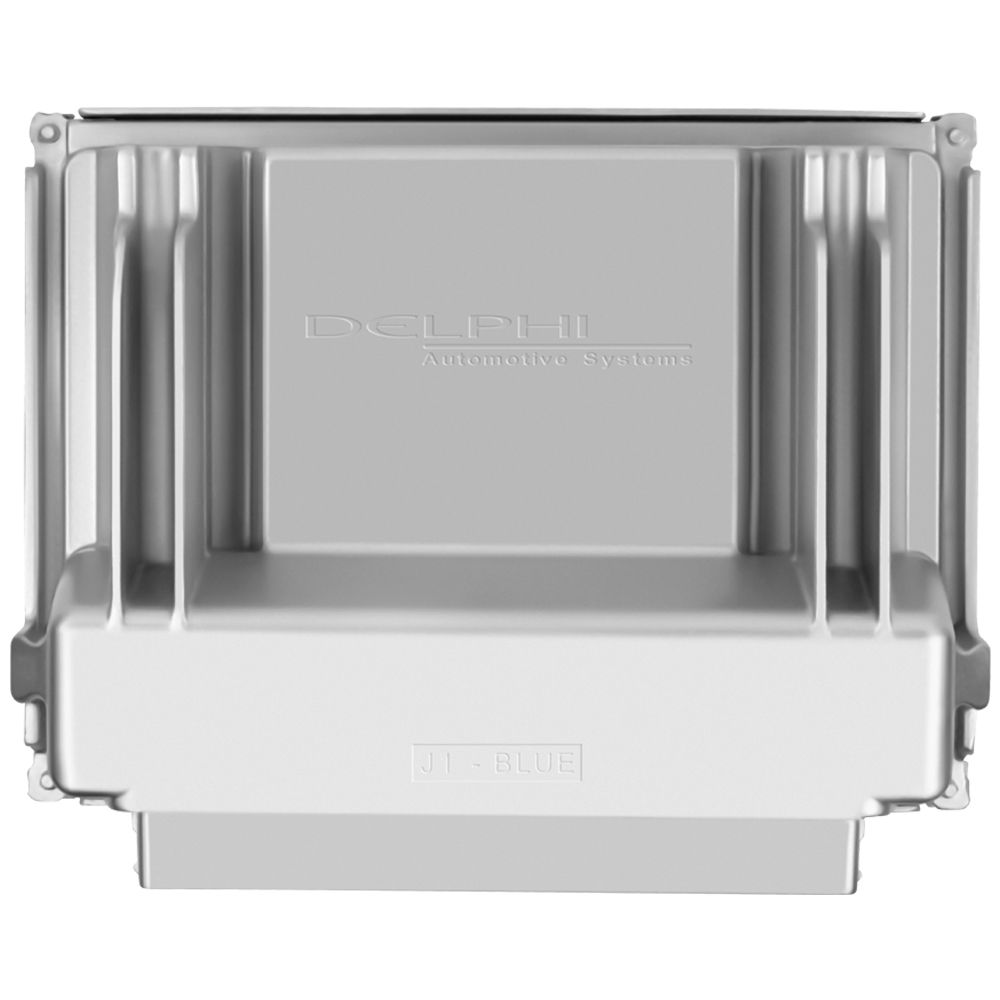
Flagship One stocks a refurbished, VIN-programmed PCM for the 2002 Pontiac Grand Prix with a lifetime warranty, free shipping and no core charge. The full Pontiac Grand Prix module lineup covers other engine configurations as well.
If your 2002 Pontiac Grand Prix is experiencing PCM‑related issues, evaluating a VIN‑programmed replacement may simplify the repair process while ensuring reliable performance. Choose the option that best fits your schedule and budget, and keep the module’s health in mind for future service.