
Last updated on August 25th, 2026 at 12:08 pm
The powertrain control module in your 2001 Pontiac Grand Prix serves as the central processor for engine and transmission management. Internal memory or processor faults often trigger diagnostic trouble codes starting with P0600, while communication failures may prevent scan tools from retrieving freeze frame data during intermittent drivability concerns.
When your 2001 Pontiac Grand Prix begins exhibiting intermittent stalling, hard starting, or complete loss of communication with diagnostic equipment, the powertrain control module may be approaching failure. This onboard computer coordinates fuel injection, ignition timing, and transmission shifting based on continuous sensor inputs throughout your driving cycle. Understanding how this module functions, where it physically resides, and what symptoms typically precede failure can help you avoid roadside breakdowns and unnecessary component replacement. This guide explains the specific location of the control unit beside the air cleaner assembly, the exact labor times quoted for professional replacement, and the factory programming requirements that must follow installation. You will learn to recognize internal fault codes ranging from P0601 to P1683, understand the service bulletin addressing freeze frame communication issues with generic scan tools, and discover why pre-programmed replacement modules eliminate the complex setup procedures that otherwise require specialized Tech 2 equipment and careful adherence to ignition state protocols. Whether you are troubleshooting a no-start condition, addressing communication errors, or planning preventative maintenance, the following information provides the comprehensive technical foundation necessary to make informed decisions about your vehicle’s electronic control systems and potential repair strategies.
The powertrain control module in your 2001 Pontiac Grand Prix functions as the central processing unit for all engine management and transmission control operations. This sealed electronic assembly receives continuous data streams from oxygen sensors, throttle position sensors, mass airflow meters, and crankshaft position sensors to calculate precise fuel delivery quantities and ignition advance angles. The module stores adaptive learning values that optimize shift points for the automatic transmission and maintains volatile memory for diagnostic freeze frame data when faults occur. Unlike simple relay boxes, this processor executes complex algorithms multiple times per second to balance performance, emissions compliance, and fuel economy under varying driving conditions. When considering replacement engine computers for the Grand Prix, you should understand that these units contain vehicle-specific calibrations for the 3.8L V6 engine configuration. The module communicates with the antilock brake system, instrument cluster, and body control module through the Class 2 serial data circuit, coordinating vehicle-wide operations that extend beyond basic engine control. Internal memory stores VIN-specific information, theft deterrent programming, and transmission calibration values that must match your specific vehicle configuration. Failure of this module typically manifests as processor faults, memory corruption, or communication interruptions that prevent the powertrain from operating within designed parameters. The module’s location adjacent to the air cleaner assembly exposes it to temperature cycling and vibration, though the sealed housing typically protects internal components from direct moisture intrusion. Understanding these comprehensive functions helps diagnose whether symptoms originate from sensor failures, wiring issues, or actual processor malfunction requiring complete module replacement rather than peripheral repairs.
2001 Pontiac Grand Prix
OEM programmed ECM for your 2001 Pontiac Grand Prix — plug & play, no dealer visit.
Free shipping · Lifetime warranty
The control module in your 2001 Pontiac Grand Prix resides beside the air cleaner assembly according to factory removal procedures. Accessing the unit typically requires disconnecting the battery to prevent electrical shorts during service. The physical replacement operation carries a standard labor allowance of 0.9 hours, which generally covers removing the old module, transferring any mounting hardware, and securing the new unit in position. After installation, the module requires a relearn procedure accounting for an additional 0.5 hours of labor time. This subsequent step involves establishing communication between the new processor and your vehicle’s existing electronic systems. While the location near the air cleaner provides relatively straightforward access compared to under-dash modules, you should ensure the ignition remains off during the physical swap to protect sensitive circuits. The multi-pin connectors linking the module to the engine harness and diagnostic link connector require careful handling to avoid pin damage during removal and installation. Proper seating of these connections ensures reliable data transmission between the powertrain control module and the Tech 2 equipment used for subsequent programming procedures.
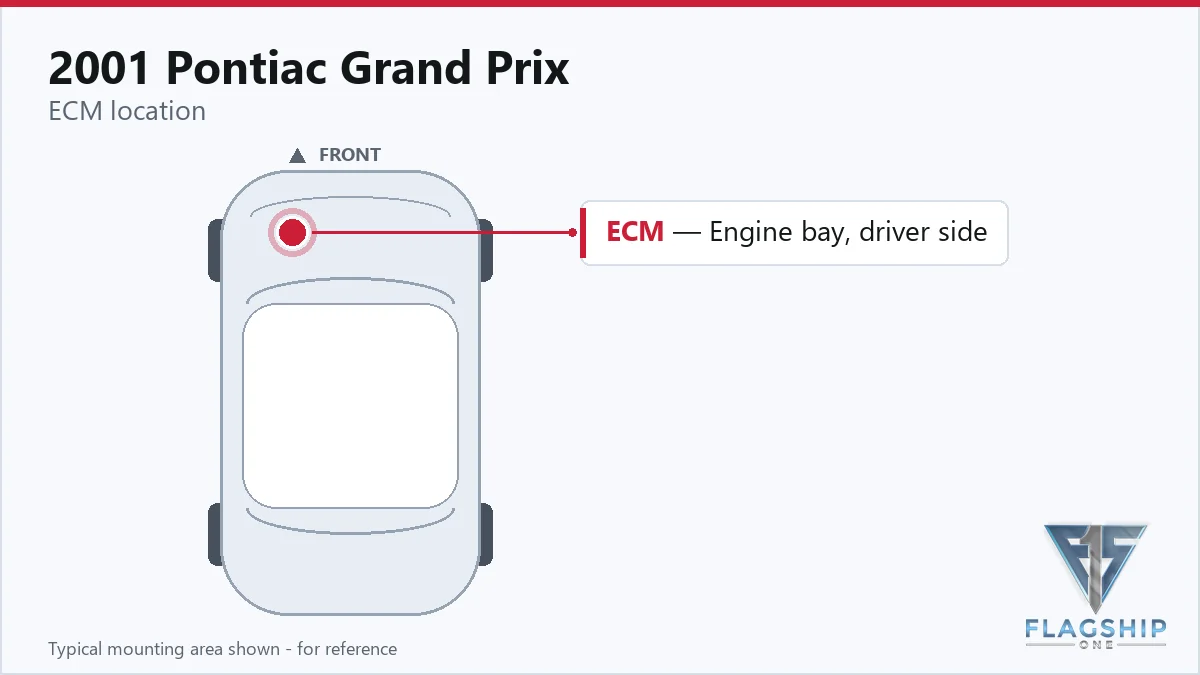
Work with the ignition off, and treat the module as static-sensitive: avoid touching the connector pins at any point.
| Operation | Configuration | Book Time |
|---|---|---|
| Engine Control Module R&R | All configurations | 0.9 hr |
| Engine Control Module Relearn | All configurations | 0.5 hr |
| Powertrain Control Module Relearn | All configurations | 0.5 hr |
| Powertrain Control Module R&R | One | 0.9 hr |
Factory procedures require specific programming steps after installing a replacement module in your 2001 Pontiac Grand Prix. Technicians must attempt reprogramming the control module using Tech 2 equipment, selecting Reprogram ECU with Off-Board Programming Adapter designated as the location when the vehicle is not present. Service manuals emphasize that you should not attempt programming unless directed by a specific service procedure or General Motors Corporation service bulletin, as unnecessary programming will not permanently correct drivability concerns. During the procedure, you must avoid switching off the ignition if programming becomes interrupted or unsuccessful. Instead, verify that all PCM and DLC connections remain secure and confirm that Techline operating software is current before continuing. These requirements create significant complexity for DIY installations and typically require specialized equipment and software access. However, when you install a VIN-programmed replacement unit, these post-installation programming steps are already completed. The module arrives ready to communicate with your specific vehicle configuration, eliminating the risk of interrupted procedures or incorrect calibration selection while ensuring immediate functionality upon connection.
Failed powertrain control modules in your 2001 Pontiac Grand Prix typically produce distinct symptoms that distinguish electronic faults from mechanical failures. You may experience intermittent stalling that occurs without warning, often accompanied by difficulty restarting the engine immediately afterward. The engine may crank normally but fail to start due to lack of injector pulse or ignition coil activation when the processor cannot execute firing commands. Transmission shifting irregularities often appear as harsh engagements, delayed upshifts, or failure to shift out of first gear when the module cannot process throttle position and vehicle speed data correctly. Perhaps the most telling indicator involves diagnostic communication failures where generic scan tools cannot establish a link with the vehicle, preventing code retrieval or live data monitoring while the module remains unresponsive. When communication is possible, you may encounter internal control module memory checksum error indicating corrupted memory within the processor itself. Additional internal fault codes such as P0602 through P0607, P062F, P1600, P1621, P1627, P1680, P1681, and P1683 may appear, each pointing to specific processor, memory, or communication malfunctions rather than external sensor issues. These codes typically persist even after clearing attempts when the module hardware has actually failed rather than recording temporary glitches. Intermittent operation during hot weather or after extended driving often precedes complete failure, as thermal expansion affects solder connections inside the sealed housing. Some drivers report random check engine light illumination with no perceptible performance changes initially, though these warnings usually progress to more severe drivability concerns.
The following diagnostic trouble codes indicate internal faults within the powertrain control module of your 2001 Pontiac Grand Prix. These codes differ from sensor or circuit malfunctions by pointing directly to processor, memory, or communication failures requiring module-level attention rather than wiring repairs or component replacement.
Service bulletin #04-06-04-024 addresses a specific communication limitation affecting your 2001 Pontiac Grand Prix. Released April 7, 2004, this bulletin documents instances where the powertrain control module fails to properly communicate freeze frame information to non-Tech 2 service equipment. Some customers may comment that generic scan tools cannot properly service or test the engine because the vehicle cannot properly transmit diagnostic freeze frame information when requested. This condition stems from software calibration issues within the module rather than hardware failure. The bulletin recommends reprogramming the PCM to restore proper data transmission capabilities and ensure compatibility with standard aftermarket diagnostic equipment.
| Bulletin | Subject | What It Addresses |
|---|---|---|
| 04-06-04-024 | Powertrain Control Module (PCM) Will Not Properly Communicate On-Board Diagnostic Freeze Frame | Some customers may comment that their vehicle’s engine is unable to be properly serviced or tested using non-TECH2® (Generic) service or test equipment. When… |
The physical removal and installation typically requires 0.9 hours according to standard labor guides. An additional 0.5 hours is allocated for the relearn procedure. Your actual time may vary depending on shop equipment and technician familiarity with the air cleaner assembly location.
Used modules from salvage yards typically require VIN-specific programming and theft deterrent relearn procedures that demand specialized Tech 2 equipment. Without proper programming, the vehicle may not start or may exhibit security system lockouts.
Communication failures often stem from internal processor faults or the specific condition described in service bulletin #04-06-04-024. Ensure your scan tool supports the vehicle protocol, check DLC connections for security, and verify the module powers up correctly during ignition cycles.
Factory procedures require programming attempts using Tech 2 equipment unless the module arrives pre-configured. However, modules that arrive VIN-programmed eliminate these steps, allowing immediate installation without the ignition-on requirements that risk procedure interruption.
These codes typically indicate memory checksum errors, processor faults, or communication failures within the module itself. Thermal cycling, voltage spikes, or internal solder joint deterioration often cause these faults, requiring module replacement rather than circuit repair.
When evaluating repair options for your 2001 Pontiac Grand Prix, consider whether you have access to the specialized programming equipment required for raw module installation. Pre-configured replacements eliminate the complex setup procedures while ensuring proper communication with your vehicle’s specific systems and diagnostic equipment. This approach typically reduces installation time and avoids the risks associated with interrupted programming sequences or incorrect calibration selection.
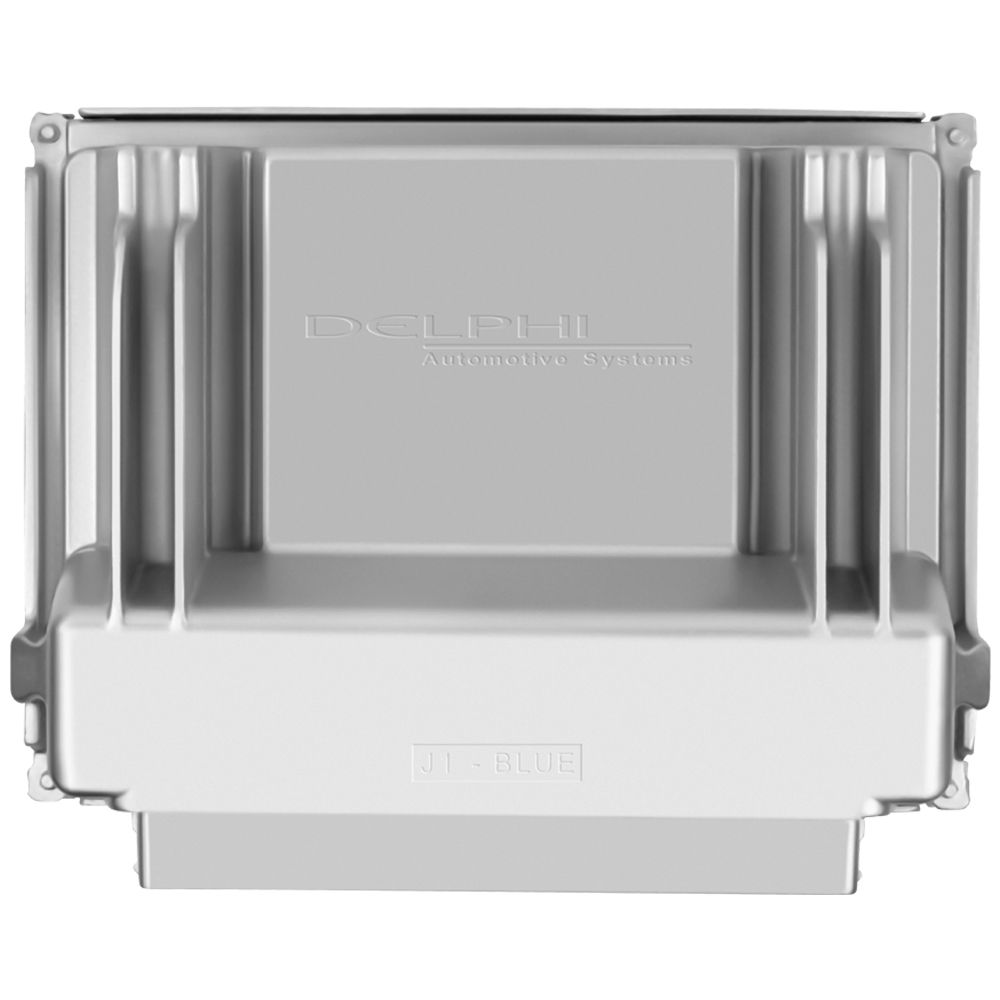
Flagship One stocks a refurbished, VIN-programmed PCM for the 2001 Pontiac Grand Prix with a lifetime warranty, free shipping and no core charge. The full Pontiac Grand Prix module lineup covers other engine configurations as well.
Understanding the function and failure modes of your 2001 Pontiac Grand Prix powertrain control module helps you address communication errors and drivability concerns efficiently. Whether troubleshooting internal fault codes or planning complete module replacement, informed decisions ensure your vehicle returns to reliable operation with proper freeze frame data logging and diagnostic capabilities restored. Selecting properly programmed components typically provides the most straightforward path to resolution.