
Last updated on August 25th, 2026 at 12:10 pm
The powertrain control module in the 2002 Mercury Mountaineer acts as the central processor for engine and transmission management. When this module fails, it often causes severe driveability issues, including stalling, no-start conditions, or erratic shifting, requiring complete unit replacement to restore vehicle operation.
When a 2002 Mercury Mountaineer begins to exhibit frustrating driveability problems, the root cause may trace back to a malfunctioning engine computer. You might find yourself dealing with unexpected stalling, a stubborn no-start condition, or mysterious warning lights illuminating the dashboard. These symptoms often point toward internal failures within the powertrain control module, which serves as the primary brain commanding your engine and transmission. Understanding how this critical component operates, where it resides, and what happens when it degrades helps you make informed repair decisions. This guide covers the fundamental role of the module in your specific vehicle, detailing the labor times involved for replacement and the necessary relearn steps. You will also learn about the specific diagnostic trouble codes that frequently accompany module failure in this model, alongside relevant factory service bulletins. By recognizing the signs of a failing unit and the steps required for a proper fix, you can approach the repair process with confidence. Whether you are troubleshooting an existing fault or preparing for a module swap, this information provides a clear roadmap to getting your vehicle back on the road smoothly and reliably.
The powertrain control module in the 2002 Mercury Mountaineer functions as the central processing unit for the entire vehicle management system. It continuously gathers data from an array of sensors monitoring airflow, crankshaft position, and coolant temperature to calculate precise fuel injector pulse widths and ignition timing. Within the 4.6L engine architecture, this module ensures the engine operates within optimal parameters while simultaneously managing transmission shift points for smooth acceleration. When this computer malfunctions, the consequences often extend beyond a simple check engine light; the vehicle may experience severe performance degradation or complete operational failure. Because the module dictates so many vital functions, any internal circuitry fault disrupts the harmonious operation of the drivetrain. Sourcing replacement Mercury Mountaineer computers becomes necessary when the original unit can no longer store memory or process sensor inputs accurately. A failing module might also trigger false codes or prevent the diagnostic tool from establishing communication, making accurate troubleshooting incredibly difficult. Recognizing the essential role this computer plays helps you understand why resolving internal faults promptly is critical. The module essentially translates your mechanical inputs into electronic commands, and without a functioning unit, the engine cannot maintain proper combustion or emissions compliance. Furthermore, the module controls various emission reduction strategies and idle air control, meaning a defect often leads to rough idling or failed emissions testing.
Engine computer (ECM/PCM)
OEM programmed replacements — plug & play, no dealer visit.
Find yours by year, make & model →
Free shipping · Lifetime warranty
Replacing the powertrain control module on the 2002 Mercury Mountaineer requires specific labor times that reflect the accessibility of the unit. According to established book times, the physical removal and replacement of the engine control module takes 0.6 hours, while the same procedure for the powertrain control module also requires 0.6 hours. This indicates that the module is reasonably accessible, avoiding extensive disassembly of dashboard or engine components. Once the new unit is installed, the vehicle typically requires a reset procedure, which accounts for 0.3 hours of labor. Additionally, a relearn process is necessary to synchronize the replacement computer with the vehicle’s specific sensor configurations and security parameters; this relearn takes 0.5 hours for either the engine or powertrain control module. These designated times ensure that the technician has adequate opportunity to properly integrate the new hardware without rushing the synchronization steps.
Work with the ignition off, and treat the module as static-sensitive: avoid touching the connector pins at any point.
| Operation | Configuration | Book Time |
|---|---|---|
| Engine Control Module Reset | All configurations | 0.3 hr |
| Engine Control Module Relearn | All configurations | 0.5 hr |
| Engine Control Module R&R | All configurations | 0.6 hr |
| Powertrain Control Module R&R | All configurations | 0.6 hr |
| Powertrain Control Module Relearn | All configurations | 0.5 hr |
After installing a new powertrain control module in the 2002 Mercury Mountaineer, the factory procedure requires specific programming steps to ensure the vehicle runs correctly. The engine control module relearn process takes 0.5 hours, and the powertrain control module relearn similarly takes 0.5 hours, allowing the new computer to adapt to the vehicle’s idle characteristics, fuel trims, and transmission adaptives. Additionally, an engine control module reset requires 0.3 hours to clear old data and establish a baseline. Failing to complete these steps often results in rough idling, poor acceleration, or transmission shifting abnormalities. However, choosing a VIN-programmed replacement unit from Flagship One eliminates the need for these extensive post-installation programming procedures. Because the necessary vehicle identification number programming and software updates are already completed before the unit ships, you simply install the computer and start the vehicle. This pre-programming advantage significantly reduces the overall downtime and prevents the common driveability issues associated with an uninitialized module.
When the engine computer begins to fail in the 2002 Mercury Mountaineer, the vehicle often exhibits a range of noticeable driveability symptoms that progressively worsen over time. One of the most common indications is a persistent no-start condition, where the engine cranks vigorously but fails to ignite due to a lack of fuel injector pulse or ignition coil control from the module. You may also experience unexpected stalling while idling or driving at highway speeds, which creates hazardous situations in traffic and severely limits vehicle reliability. Misfire codes frequently appear because the faulty module cannot properly calculate ignition timing, leading to rough engine operation, hesitation during acceleration, and significantly reduced power output. Another significant symptom involves communication failures; a malfunctioning computer often refuses to connect to diagnostic scan tools entirely, preventing technicians from reading live data or clearing historical codes. Transmission shifting issues, such as harsh or delayed gear changes, may also occur since the powertrain control module directly manages the transmission solenoids based on sensor inputs. Internal circuitry degradation often triggers specific diagnostic trouble codes pointing directly to the computer itself. For example, encountering a P0603 memory error code typically indicates that the module has lost its keep-alive memory, disrupting adaptive fuel strategies. Additionally, dashboard anomalies like an illuminated 4X4 lamp or an inaccurate speedometer frequently accompany these performance issues, further confirming an internal module fault.
The 2002 Mercury Mountaineer utilizes specific diagnostic trouble codes to indicate internal failures within the powertrain control module. When the computer detects faults in its own memory, programming, or voltage circuits, it logs these codes. The following list represents the module-internal fault codes documented for this specific vehicle, guiding accurate diagnostics.
| Code | Meaning | Full Guide |
|---|---|---|
| P0602 | Control module programming error | Full P0602 guide → |
| P0603 | Keep-alive memory (KAM) error | Full P0603 guide → |
| P0605 | Internal ROM error | Full P0605 guide → |
| P0606 | Module processor failure | Full P0606 guide → |
| P0645 | Module-internal fault | Full P0645 guide → |
| P1605 | Module-internal fault | — |
| P1633 | Module-internal fault | — |
| P1635 | Module-internal fault | — |
| P1636 | Module-internal fault | — |
| P1639 | Module-internal fault | — |
| P1640 | Module-internal fault | — |
| P1641 | Module-internal fault | — |
Manufacturer service bulletins provide critical insights regarding known issues affecting the 2002 Mercury Mountaineer. Bulletin 02-23-04 specifically addresses a condition where the 4X4 lamp becomes illuminated after replacing the powertrain control module or the instrument cluster on gasoline engine vehicles. This bulletin also notes that diagnostic trouble codes P1635 and P1639 may be present following such replacements, often accompanied by an inaccurate or inoperative speedometer. Technicians must follow the outlined diagnostic steps to clear these false codes and restore proper speedometer operation. Additionally, bulletin 06-08-03 offers diagnostic tips specifically for speed control concerns related to the powertrain control module. These tips help technicians accurately differentiate between actual speed control system malfunctions and module-related glitches, ensuring the cruise control system functions safely and reliably after repairs or module replacements are completed.
| Bulletin | Subject | What It Addresses |
|---|---|---|
| 02-23-04 | 4X4 LAMP ILLUMINATED AFTER POWERTRAIN CONTROL MODULE (PCM) OR INSTRUMENT CLUSTER REPLACEMENT – | — |
| 06-08-03 | PCM – SPEED CONTROL DIAGNOSTIC TIPS | — |
A failing module in the 2002 Mercury Mountaineer often causes a no-start condition, unexpected stalling, or harsh transmission shifting. You might also notice an illuminated 4X4 lamp or an inaccurate speedometer. Additionally, the vehicle may exhibit misfire codes or completely fail to communicate with a diagnostic scan tool.
The standard book time for removing and replacing the engine control module is 0.6 hours. Following the physical installation, the relearn procedure requires an additional 0.5 hours to properly synchronize the new unit with the vehicle. An engine control module reset also accounts for 0.3 hours of labor time.
According to service bulletin 02-23-04, codes P1635 and P1639 often appear after replacing the powertrain control module or the instrument cluster on gasoline engine vehicles. These codes typically accompany an illuminated 4X4 lamp and an inaccurate or inoperative speedometer. Proper diagnostic procedures must be followed to resolve these specific faults.
Yes, the factory procedure requires a relearn process that takes 0.5 hours to ensure the new module correctly adapts to the vehicle’s idle and fuel parameters. However, obtaining a unit that is already VIN-programmed eliminates the need for these extensive post-installation programming steps. This allows the vehicle to start and run immediately upon installation.
Yes, a malfunctioning powertrain control module can directly affect the speed control system. Service bulletin 06-08-03 provides specific diagnostic tips for troubleshooting speed control problems related to the module. Technicians must evaluate the module’s data to determine if an internal fault is disrupting the cruise control operation.
Deciding between repairing or replacing the faulty computer in your 2002 Mercury Mountaineer requires evaluating the extent of the internal damage. While some localized circuit board repairs might seem appealing, they often lack the reliability needed for long-term operation. Choosing a refurbished replacement ensures that all known internal weaknesses are addressed, providing a dependable solution that restores full engine and transmission management. This route offers a practical balance of value and performance for your specific vehicle.
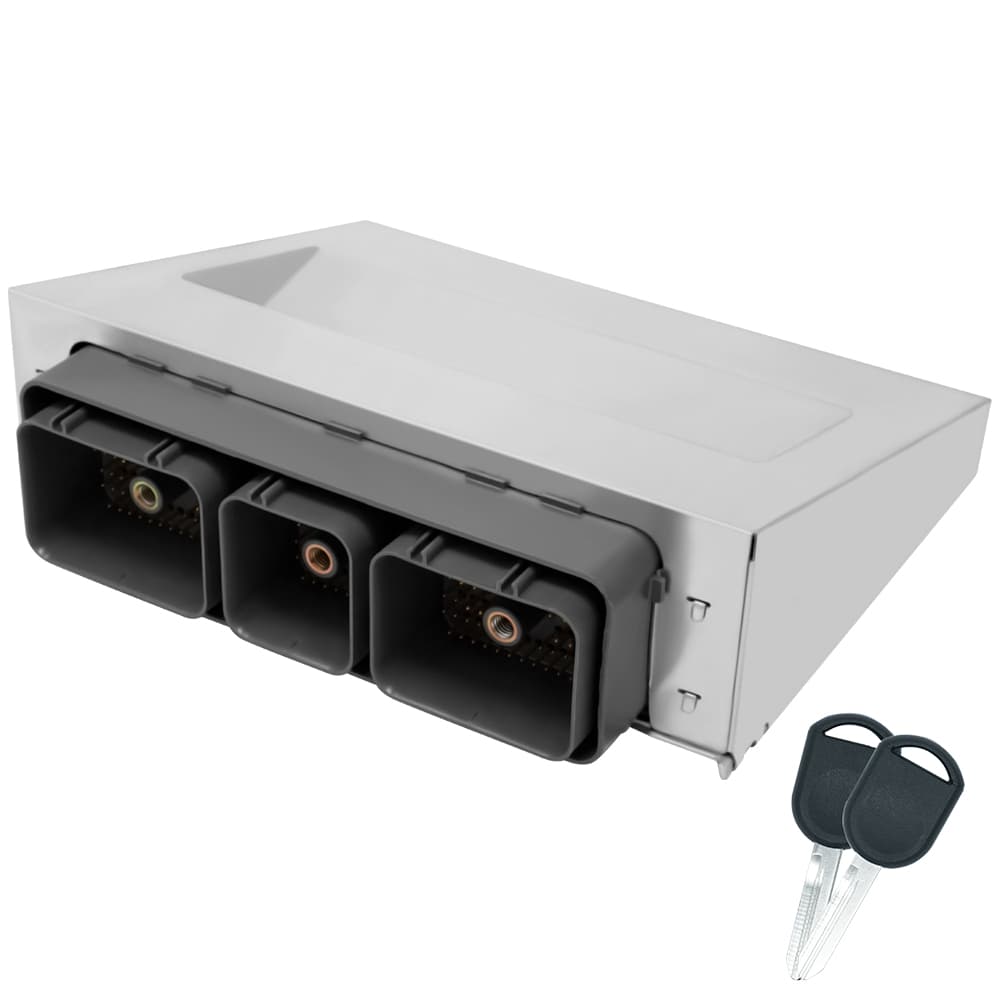
Flagship One stocks a refurbished, VIN-programmed PCM for the 2002 Mercury Mountaineer with a lifetime warranty, free shipping and no core charge. The full Mercury Mountaineer module lineup covers other engine configurations as well.
Addressing powertrain control module failures in the 2002 Mercury Mountaineer promptly prevents compounding driveability issues and dashboard anomalies. Understanding the specific labor times, relearn procedures, and relevant service bulletins equips you to handle the repair process effectively. Recognizing the symptoms and associated trouble codes early allows for accurate diagnostics, saving both time and resources. When you are ready to restore your vehicle’s performance and reliability, exploring pre-programmed replacement options ensures your Mountaineer returns to dependable daily service.