
Last updated on August 25th, 2026 at 12:22 pm
The Powertrain Control Module (PCM) in your 1999 Ford Mustang serves as the central computer managing engine and transmission operations. When this unit fails, your vehicle may experience drivability problems or become inoperable.
If your 1999 Ford Mustang is experiencing starting issues, stalling, or warning lights, the Powertrain Control Module may be the culprit. This guide explains what the PCM does, common failure symptoms, and what replacement involves. Whether you are diagnosing a no-start condition or planning a repair, understanding this critical component helps you make informed decisions about your vehicle’s engine computer.
The replacement engine computers for the Mustang serves as the central brain for your 1999 Ford Mustang’s powertrain. This module processes input from dozens of sensors throughout the engine and transmission, then adjusts fuel delivery, ignition timing, and transmission shift points in real time. In a 3.8L V6 engine, the PCM must coordinate smooth idle control, proper cold-start enrichment, and accurate wide-open-throttle acceleration. The module also manages emissions control systems, ensuring your vehicle meets federal standards. Because this computer makes hundreds of decisions per second while you drive, a failing or corrupted PCM can cause your engine to run poorly, stall unexpectedly, or fail to start altogether. The unit is mounted in the passenger compartment where it is protected from direct weather exposure but still subject to heat cycles and electrical stress over time.
1999 Ford Mustang
OEM programmed ECM for your 1999 Ford Mustang — plug & play, no dealer visit.
Free shipping · Lifetime warranty
The factory removal procedure reaches the control module behind the cowl side trim panel. Accessing the PCM requires removing the trim piece on the passenger side of the vehicle, typically near where the windshield meets the dashboard. Once exposed, the technician disconnects the electrical harness, removes the mounting hardware, and installs the replacement unit. Book time for the Powertrain Control Module R&R is 0.5 hours. After installation, the relearn procedure requires an additional 0.5 hours to allow the new module to calibrate to your vehicle’s specific sensors and drivetrain characteristics. Proper torque of mounting bolts and secure harness connections are essential for reliable operation.
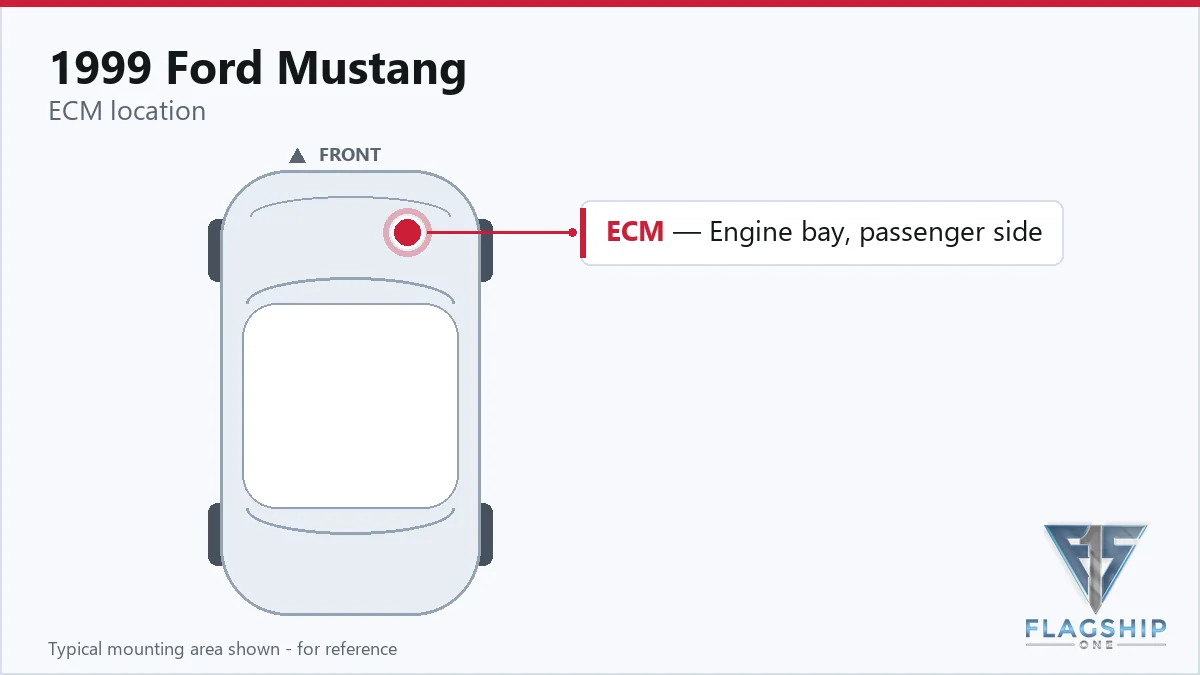
Work with the ignition off, and treat the module as static-sensitive: avoid touching the connector pins at any point.
| Operation | Configuration | Book Time |
|---|---|---|
| Engine Control Module R&R | All configurations | 1.0 hr |
| Powertrain Control Module R&R | All configurations | 0.5 hr |
| Powertrain Control Module Relearn | All configurations | 0.5 hr |
After replacing the PCM, the factory procedure requires a relearn process to establish communication between the new module and your vehicle’s sensors. This step is necessary because each PCM must recognize the specific characteristics of your engine and transmission. However, a VIN-programmed replacement unit from Flagship One arrives already configured with your vehicle’s identification number, meaning the relearn procedure may be shortened or simplified depending on your diagnostic equipment. This pre-programming eliminates the need for dealer-only programming sessions that some replacement modules require.
When the PCM fails, your 1999 Ford Mustang may exhibit several telltale signs. A no-start condition where the engine cranks but will not run often points to a failed PCM. Stalling after the vehicle starts, rough idle, or hesitation during acceleration are common symptoms of a malfunctioning module. Illuminated check engine light accompanied by stored trouble codes, particularly those related to sensor communication, frequently indicates PCM issues. In some cases, the scan tool may show no communication with the module at all. Transmission shifting problems such as harsh shifts, delayed engagement, or failure to shift into overdrive can also stem from a failing PCM. If your vehicle displays CODE:P1635:voltage reference fault], that code specifically relates to PCM internal voltage reference circuits and warrants investigation.
Factory service bulletin #02-23-04 addresses issues where the 4X4 lamp may illuminate after PCM replacement on gasoline vehicles, with DTCs P1635 and P1639 present. This bulletin also covers speedometer inaccuracies following module replacement. Bulletin #99-04-03 covers out-of-vehicle reprogramming procedures for PCM modules on EEC V vehicles. These bulletins confirm that the 1999 Ford Mustang PCM replacement process may trigger certain diagnostic conditions requiring specific procedures to resolve.
| Bulletin | Subject | What It Addresses |
|---|---|---|
| 02-23-04 | 4X4 LAMP ILLUMINATED AFTER POWERTRAIN CONTROL MODULE (PCM) OR INSTRUMENT CLUSTER REPLACEMENT – | — |
| 99-04-03 | EEC V VEHICLES ONLY – OUT-OF-VEHICLE – REPROGRAMMING POWERTRAIN CONTROL MODULES (PCMS) | — |
The replacement PCM must be compatible with your vehicle’s engine and transmission combination. Flagship One provides units pre-programmed with your specific VIN, ensuring plug-and-play installation without additional programming.
While the physical replacement is straightforward once you access the module behind the cowl trim, proper post-installation procedures and diagnostic verification are recommended for most owners.
If your vehicle shows no communication with the PCM on a scan tool, or exhibits multiple unrelated symptoms simultaneously such as starting failure plus transmission issues, the PCM is likely the cause.
When your 1999 Ford Mustang requires a replacement engine computer, you have options ranging from repair of the existing unit to purchasing a refurbished replacement. A new or remanufactured PCM from Flagship One offers a warranty and arrives ready to install, saving you time compared to sending your original module out for repair. Consider your vehicle’s overall condition and usage requirements when deciding between repair and replacement options.
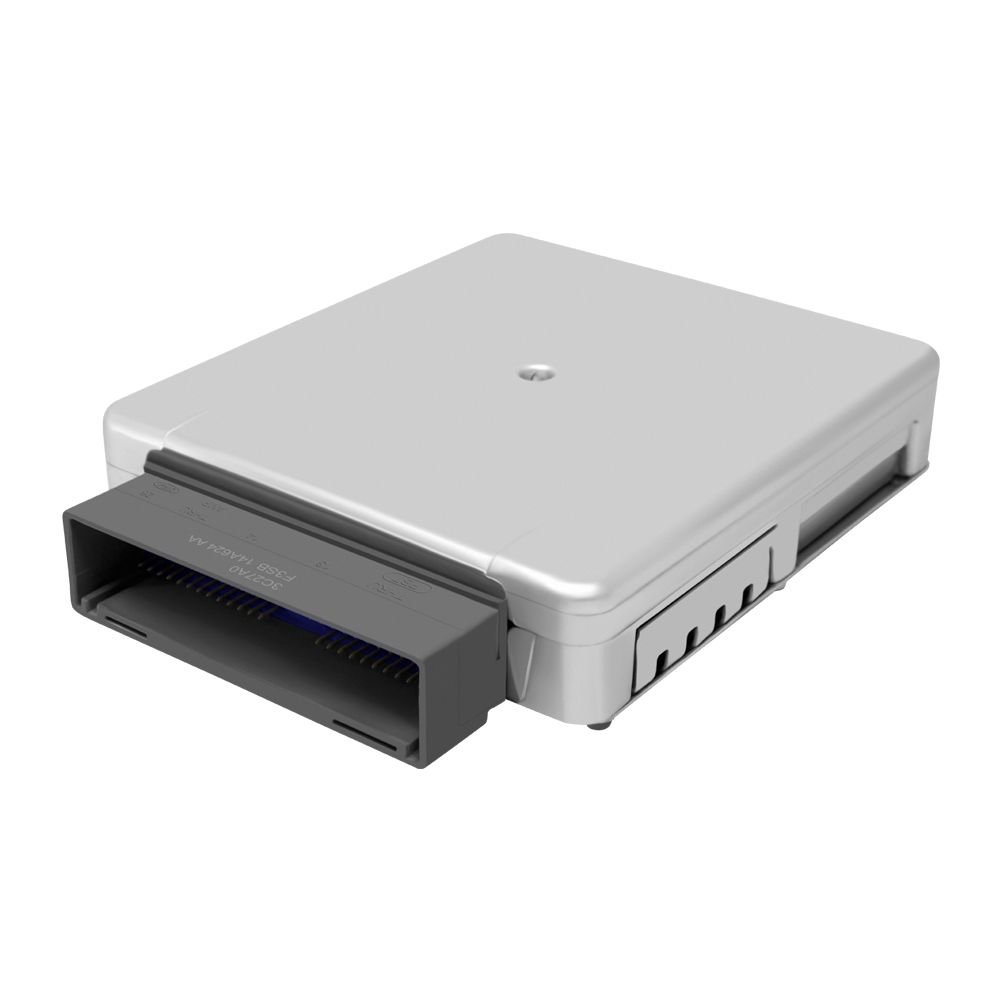
Flagship One stocks a refurbished, VIN-programmed PCM for the 1999 Ford Mustang with a lifetime warranty, free shipping and no core charge. The full Ford Mustang module lineup covers other engine configurations as well.
The Powertrain Control Module in your 1999 Ford Mustang is a critical component that manages engine and transmission functions. Understanding its role, symptoms of failure, and replacement considerations helps you make informed repair decisions. Whether you need a replacement engine computer or diagnostic guidance, Flagship One provides model-specific solutions for your Mustang.