
Last updated on August 25th, 2026 at 01:37 pm
The Powertrain Control Module (PCM) in your 2000 Ford Mustang is the central computer that manages engine fuel delivery, ignition timing, emissions controls, and transmission shift points. It processes inputs from multiple sensors and adjusts engine operation accordingly. When the PCM fails, the engine may not run properly or may not start at all.
If your 2000 Ford Mustang is experiencing starting problems, intermittent stalling, or transmission shifting issues, the Powertrain Control Module may be the culprit. The PCM serves as the brain of your vehicle’s engine management system, continuously monitoring sensors and adjusting fuel delivery, ignition timing, and other critical functions. This guide explains what the PCM does, where it’s located, common failure symptoms, and what replacement involves. You’ll learn why proper programming after replacement matters and how Flagship One units arrive pre-programmed to simplify your repair.
The Powertrain Control Module in your 2000 Mustang is the primary computer governing engine and transmission operation. Unlike some vehicles that use separate engine and transmission control units, the Mustang integrates both functions into a single PCM for the Mustang. This module receives input from the crankshaft position sensor, throttle position sensor, coolant temperature sensor, and numerous other monitoring devices. It then calculates the optimal fuel injector pulse width and ignition timing for current operating conditions. The module also controls the automatic transmission shift points and converter clutch engagement. Because every engine adjustment flows through this unit, a failing PCM can cause your Mustang to run poorly or become inoperable regardless of how healthy the underlying mechanical components are.
2000 Ford Mustang
OEM programmed replacements — plug & play, no dealer visit.
Find yours by year, make & model →
Free shipping · Lifetime warranty
The factory service procedure requires removing the cowl side trim panel to access the PCM on your 2000 Mustang. This trim panel sits at the base of the windshield on the driver’s side, and removal exposes the module for replacement. Book time for the removal and reinstallation portion of this job is 0.5 hours. After the new module is installed, the technician must perform the relearn procedure, which accounts for an additional 0.5 hours of labor. The total hands-on labor for a complete PCM R&R with relearn totals 1.0 hours. Ensure the mounting bolts are torqued to specification and all electrical connectors are fully seated before proceeding to the programming step.
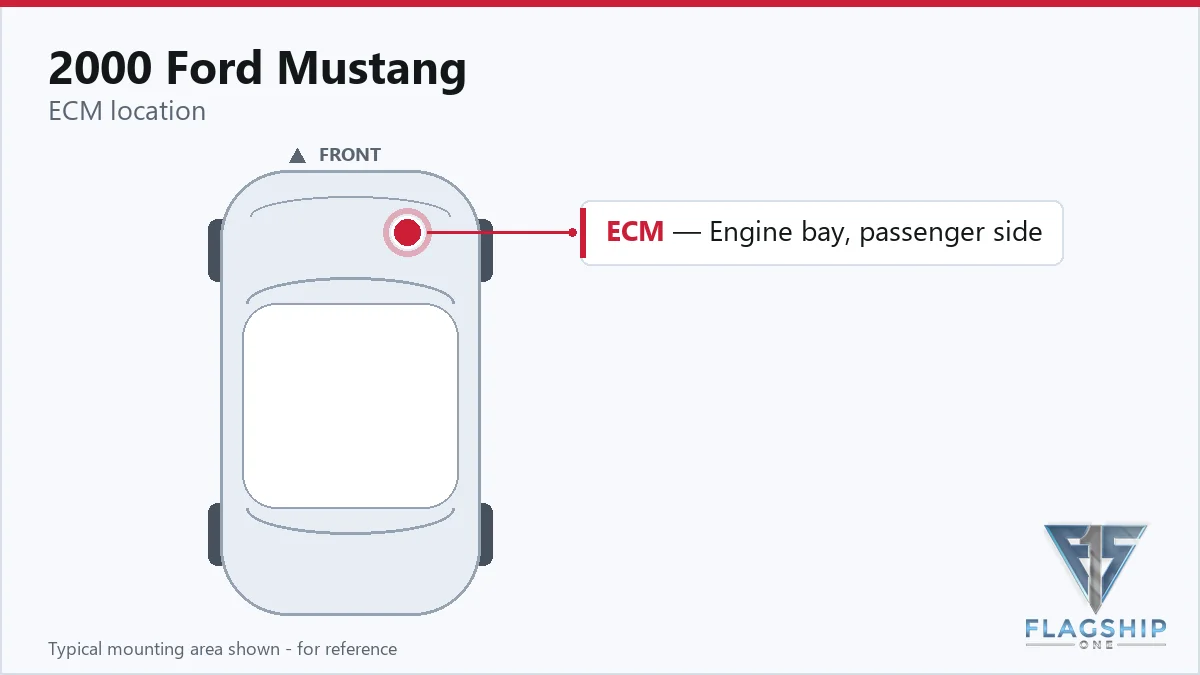
Work with the ignition off, and treat the module as static-sensitive: avoid touching the connector pins at any point.
| Operation | Configuration | Book Time |
|---|---|---|
| Powertrain Control Module R&R | All configurations | 0.5 hr |
| Powertrain Control Module Relearn | All configurations | 0.5 hr |
| Engine Control Module R&R | All configurations | 1.0 hr |
After physically installing the new PCM, the factory procedure requires a relearn process to calibrate the module to your specific engine. This step allows the PCM to adapt its fuel and timing maps to the actual running characteristics of your 2000 Mustang’s 3.8L engine. Without completing this procedure, the vehicle may run poorly or exhibit drivability issues. Flagship One solves this by shipping each unit as a VIN-programmed replacement unit that arrives ready to install. This means the relearn procedure is already completed at the factory using your actual vehicle identification number, saving you the programming step and ensuring immediate compatibility upon installation.
When the PCM fails on a 2000 Mustang, the most common complaints include a no-start condition where the engine cranks but won’t fire, intermittent stalling especially at idle, and hesitation under acceleration. You may also notice the transmission refusing to shift properly or the converter clutch failing to engage. Diagnostic trouble codes stored in the module often indicate communication failures or internal processor errors. A dead or intermittent scan tool connection to the PCM is another strong indicator of module failure. The check engine light may illuminate with multiple unrelated codes appearing simultaneously, which often confuses the diagnostic process. If your Mustang exhibits any combination of these symptoms, the PCM should be high on your list of potential causes.
Factory service bulletin TSB 02-23-04 addresses issues that can occur after PCM replacement on this vehicle. The bulletin specifically mentions that codes P1635 and P1639 may appear following module replacement, causing speedometer inaccuracy or inoperative instrument cluster functions. This occurs when the new PCM isn’t properly configured for the vehicle or when the relearn procedure wasn’t completed. The bulletin applies to gasoline engine vehicles only and covers 4X4 lamp illumination concerns that can arise from these PCM-related code conditions. Always verify the replacement module is correctly programmed to your specific VIN before considering the repair complete.
| Bulletin | Subject | What It Addresses |
|---|---|---|
| 02-23-04 | 4X4 LAMP ILLUMINATED AFTER POWERTRAIN CONTROL MODULE (PCM) OR INSTRUMENT CLUSTER REPLACEMENT – | — |
A bad PCM often produces multiple unrelated diagnostic codes simultaneously. If your scan tool cannot communicate with the PCM or shows multiple sensor failures at once, the module itself is likely failed. Professional diagnosis is recommended to confirm.
While mechanically skilled DIYers can perform the physical replacement, the required relearn procedure typically needs dealer-level scan tools. Flagship One units arrive VIN-programmed, which eliminates this step for most owners, but professional installation ensures proper connector seating and mounting.
Repaired units have the original circuit board refurbished, while refurbished units are complete assemblies that have been cleaned and tested. New units contain all new components. Flagship One provides quality-tested replacements that arrive ready to install with your VIN pre-programmed.
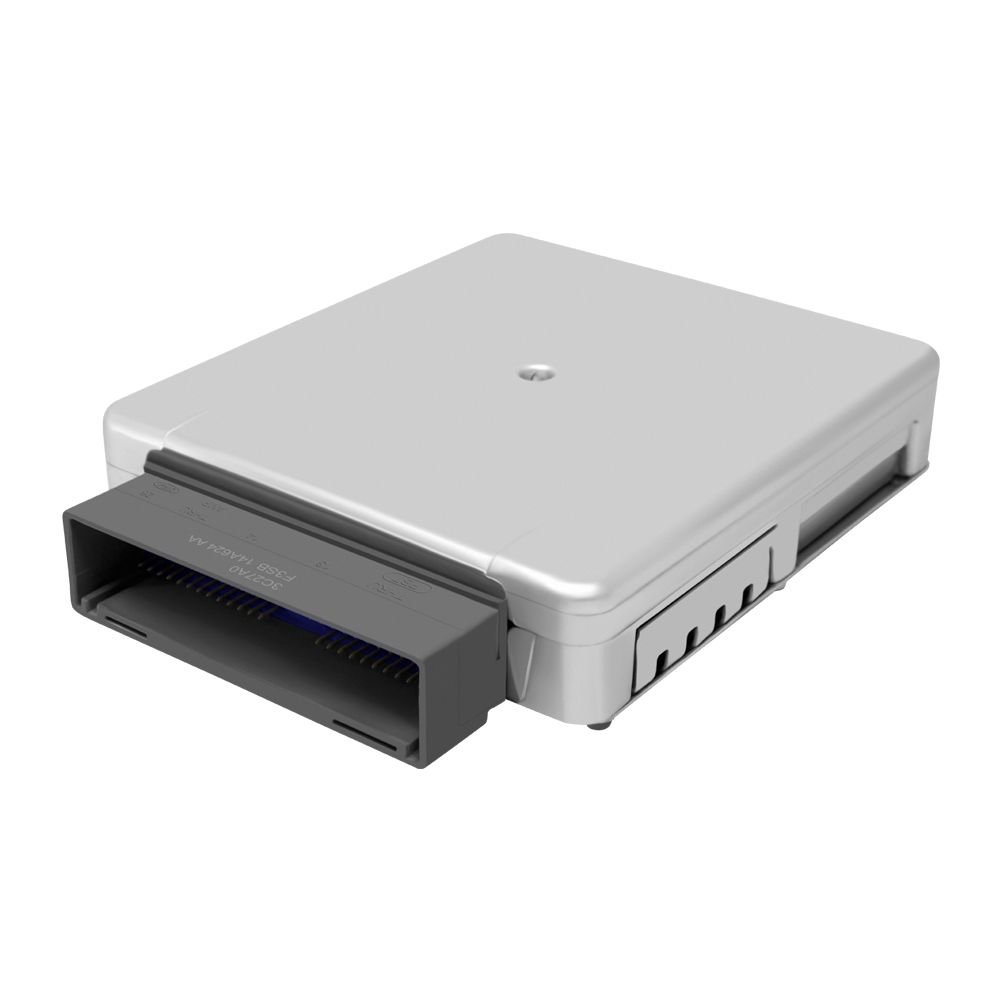
Flagship One stocks a refurbished, VIN-programmed PCM for the 2000 Ford Mustang with a lifetime warranty, free shipping and no core charge. The full Ford Mustang module lineup covers other engine configurations as well.
The Powertrain Control Module is the heart of your 2000 Ford Mustang’s engine management system. When it fails, your vehicle’s operation is directly affected. Whether you choose repair or replacement, addressing PCM issues promptly restores your Mustang’s drivability and prevents further damage. A properly programmed replacement unit from Flagship One gets you back on the road with confidence.