
Last updated on August 25th, 2026 at 12:22 pm
The 1998 Ford Mustang 4.6L uses dual control modules: an Engine Control Module managing fuel injection and ignition, and a Powertrain Control Module handling transmission functions. When either module fails, your vehicle may experience drivability issues or become inoperable.
If your 1998 Ford Mustang with the 4.6L engine is experiencing starting problems, stalling, or unexpected shifting behavior, the root cause may lie within its control module system. Modern vehicles rely heavily on electronic control units to manage engine operations, transmission shift points, and emissions systems—and when these modules develop internal faults, diagnostic trouble codes alone may not tell the complete story. This guide addresses what you need to know about diagnosing, replacing, and programming the Engine Control Module and Powertrain Control Module in your specific vehicle. You will gain an understanding of where these components are located, what symptoms typically indicate failure, how the factory service procedure works, and what options exist for getting your Mustang back on the road. Whether you are a DIY mechanic or discussing repair options with a professional, the information here helps you make informed decisions without relying on vague promises or sales language.
Your 1998 Ford Mustang 4.6L employs two distinct but interconnected control modules to manage its powertrain operations. The Engine Control Module, often referred to as the ECM, primarily handles fuel delivery, ignition timing, idle air control, and emissions monitoring—it processes signals from various engine sensors and adjusts combustion parameters in real time to maintain performance while meeting regulatory standards. The Powertrain Control Module, commonly called the PCM, takes on additional responsibilities including transmission shift scheduling, torque converter clutch engagement, and vehicle speed control. In essence, the ECM handles what happens inside the engine bay while the PCM coordinates how power reaches the wheels through the automatic or manual transmission. These modules communicate constantly, sharing data about throttle position, coolant temperature, oxygen sensor readings, and wheel speed. When either module suffers an internal electrical failure—whether from age, voltage spikes, or corrupted memory—the entire system may fall into a limp mode or refuse to start. Understanding that these are replacement engine computers for the Ford Mustang helps clarify why proper diagnosis matters before assuming a module is at fault.
1998 Ford Mustang
OEM programmed ECM for your 1998 Ford Mustang — plug & play, no dealer visit.
Free shipping · Lifetime warranty
The control modules on your 1998 Ford Mustang are not buried deep within the engine compartment as you might expect. According to the factory removal procedure, technicians reach the primary control module by removing the cowl side trim panel—this interior trim piece sits at the base of the windshield on either side of the vehicle, protecting the module from heat and debris while keeping it accessible for service. Once the trim is removed, the module housing becomes visible for disconnection and extraction. For replacement work, the book time allowance provides useful guidance: ECM removal and reinstallation is credited at 1.0 hours of labor, while PCM removal and reinstallation is credited at 0.5 hours. An additional 0.5 hours is allocated for the powertrain control module relearn procedure that must be performed after installation. These times reflect straightforward replacement in a professional shop environment; your actual time may vary based on tool availability and familiarity with the procedure. After physically installing the new or remanufactured unit, the technician must follow specific steps to ensure the module establishes proper communication with the rest of the vehicle systems.
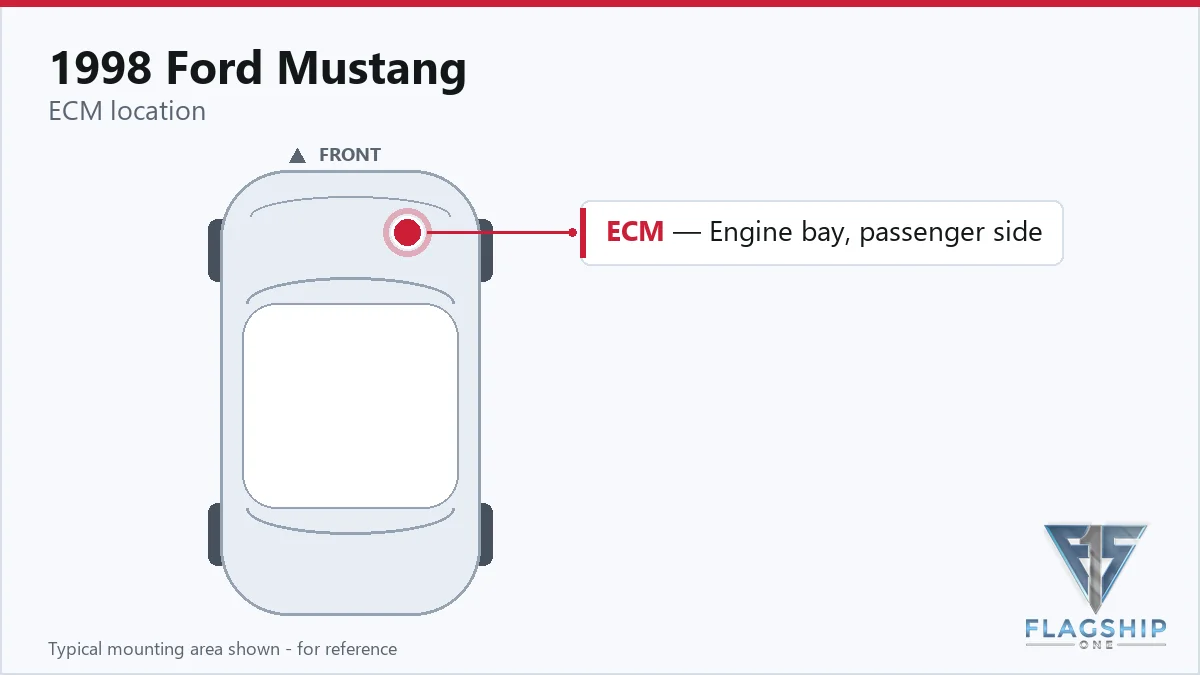
Work with the ignition off, and treat the module as static-sensitive: avoid touching the connector pins at any point.
| Operation | Configuration | Book Time |
|---|---|---|
| Engine Control Module R&R | All configurations | 1.0 hr |
| Powertrain Control Module R&R | All configurations | 0.5 hr |
| Powertrain Control Module Relearn | All configurations | 0.5 hr |
After replacing the PCM in your 1998 Ford Mustang, the factory service procedure requires performing a relearn process to calibrate the new module to your vehicle’s specific characteristics. This relearn procedure accounts for 0.5 hours of the total labor allocation and ensures that the transmission adapts its shift points to your engine’s output, the fuel trims reset to baseline values, and the anti-theft system recognizes the new controller. Without completing this procedure, the vehicle may run poorly or remain in a reduced-functionality mode. However, this step is where purchasing from Flagship One provides meaningful convenience: their units arrive as a VIN-programmed replacement unit, meaning the module is pre-programmed with your specific vehicle identification number before it leaves the warehouse. This eliminates the need for you to source programming equipment or pay a dealer for initial configuration—simply install the module, perform the relearn procedure, and your vehicle should recognize the new controller immediately. The factory procedure remains necessary for full calibration, but the VIN programming burden shifts to the supplier rather than remaining your responsibility.
When the ECM or PCM in your 1998 Ford Mustang fails, the symptoms often manifest in ways that can be mistaken for other problems—particularly because the module may still partially function, producing inconsistent behavior. A no-start condition is among the most common presentations; the engine may crank normally but receive no fuel injection or spark because the control module has stopped processing sensor inputs. Stalling after startup is another frequent complaint, where the engine runs for a few seconds then dies as the module loses ability to maintain idle control. Misfire codes such as P0300 through P0308 frequently appear when the ECM cannot properly time ignition events or adjust fuel delivery, and these codes may persist even after replacing spark plugs or ignition coils. In some cases, the scan tool cannot communicate with the module at all—a dead connection to the diagnostic port indicates either a failed module or a wiring issue that requires investigation. Transmission shifting problems may also point to PCM failure, since the module controls shift firmness, line pressure, and torque converter lockup; you might experience harsh shifts, delayed engagement, or failure to shift into overdrive. These symptoms often develop gradually as internal memory corrupts, though sudden failure from a voltage spike—perhaps during a jump-start or battery disconnect—can produce immediate no-start conditions. If trouble codes were retrieved during diagnosis, code P0601 often indicates internal memory corruption within the control module itself, suggesting the unit has likely reached end of service life.
Factory service bulletin TSB 99-04-03 addresses out-of-vehicle reprogramming procedures specifically for EEC V vehicles, which includes your 1998 Ford Mustang 4.6L. This bulletin was issued to provide guidance to dealers and independent shops on how to properly handle PCM reprogramming when the module is removed from the vehicle for service. The bulletin emphasizes that certain reprogramming procedures must be performed with the module out of the vehicle, using specialized equipment, before reinstallation. This contrasts with newer vehicles that allow in-vehicle programming through the OBD-II port. Understanding that a factory procedure exists for out-of-vehicle programming explains why some independent shops may quote longer turnaround times—the module often must be shipped to a facility capable of performing the reprogramming, then returned for installation. Flagship One handles this entire process by programming the unit before shipping, but the existence of TSB 99-04-03 confirms that proper programming is not optional—it is a required step for correct vehicle operation.
| Bulletin | Subject | What It Addresses |
|---|---|---|
| 99-04-03 | EEC V VEHICLES ONLY – OUT-OF-VEHICLE – REPROGRAMMING POWERTRAIN CONTROL MODULES (PCMS) | — |
Control modules are typically tied to your vehicle’s VIN and sometimes the specific engine calibration. A used PCM from another Mustang of the same year and engine configuration may work, but it will likely require dealer programming to recognize your vehicle. Units from Flagship One arrive pre-programmed with your VIN, eliminating this step.
Voltage spikes from jump-starting can absolutely damage the internal circuits of the control module. This is a documented failure mode on many OBD-II vehicles. If your car runs poorly, stalls, or won’t start after a jump, having the codes read and the module tested should be your first diagnostic step.
These are separate components with distinct functions, so you should replace only the module that has failed. However, if both modules are from the same generation and one has failed, some owners choose to replace both to avoid future downtime. Diagnosis should confirm which module is actually faulty before replacement.
The factory book time allocates 0.5 hours for the relearn procedure. In practice, this may take somewhat longer depending on the specific relearn sequence required and whether the vehicle establishes communication quickly. Your mechanic can advise once the procedure begins.
Repair options exist but typically involve the same internal component replacement that goes into building a remanufactured unit. Purchasing a remanufactured unit from a reputable supplier often provides a warranty and eliminates the wait time associated with sending your original unit out for repair.
Deciding between repair and replacement for your 1998 Ford Mustang’s control module depends on your budget, timeline, and confidence in the diagnosis. A refurbished replacement unit—professionally rebuilt with updated components—often provides the best balance of cost and reliability, typically backed by a warranty that protects against early failure. New old stock units may exist but often carry premium pricing and may still contain aged components. If you choose replacement, ensure the supplier programs the unit to your VIN before shipping; otherwise, you will need to arrange dealer programming after installation. Your specific vehicle’s year, make, and model matters for compatibility, so verify that any unit you consider is explicitly designed for the 1998 Mustang 4.6L application.
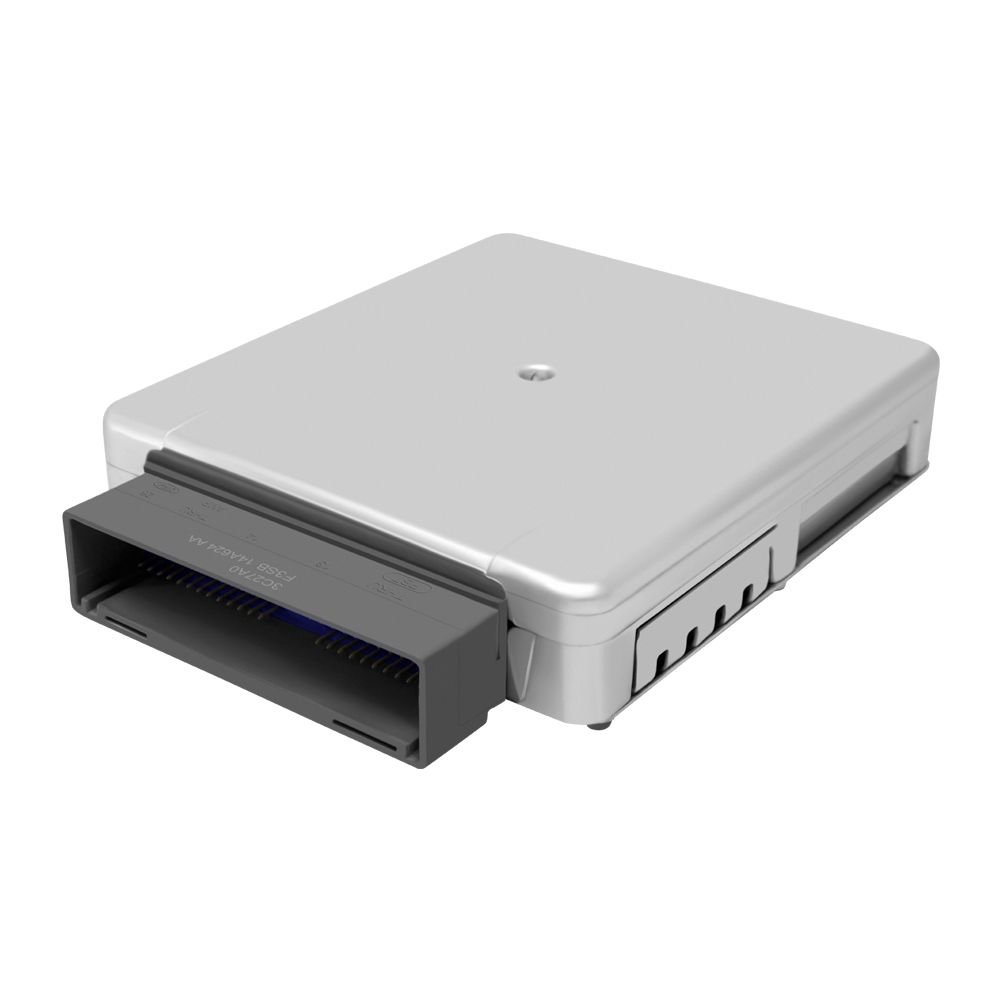
Flagship One stocks a refurbished, VIN-programmed PCM for the 1998 Ford Mustang with a lifetime warranty, free shipping and no core charge. The full Ford Mustang module lineup covers other engine configurations as well.
The Engine Control Module and Powertrain Control Module in your 1998 Ford Mustang serve as the central nervous system of your vehicle’s powertrain. When these components fail, understanding the symptoms, location, and factory service requirements empowers you to make sound repair decisions. Whether you proceed with a remanufactured unit from Flagship One or explore other options, ensuring proper programming and relearn procedures will get your Mustang running reliably again. Take time to verify the diagnosis thoroughly before committing to replacement, and your vehicle will reward you with years of continued service.