
Last updated on August 25th, 2026 at 01:39 pm
In the 1996 Ford Mustang, the powertrain control module (PCM) and engine control module (ECM) manage fuel delivery, ignition timing and transmission shift strategy. Failure of either unit may trigger no‑start conditions, erratic idle, or loss of driveability, often accompanied by diagnostic trouble codes.
When a 1996 Ford Mustang exhibits intermittent stalling or persistent diagnostic codes, the powertrain and engine control modules are common culprits. This guide explains how the modules function, where they reside, and what steps are needed to replace and program them. By understanding the process, you can gauge the effort involved and decide whether a new or refurbished unit best fits your repair plan.
The PCM in a 1996 Ford Mustang acts as the vehicle’s central computer, coordinating engine and transmission functions based on sensor input. It ensures fuel is metered correctly, spark timing is optimized, and shift points are executed smoothly. A failure can disrupt power delivery and trigger multiple fault codes. The ECM performs similar duties focused on engine operation, handling ignition and emission controls. Both modules are essential for reliable performance, and replacement PCMs for 1996 Mustang are typically required when they malfunction.
1996 Ford Mustang
OEM programmed ECM for your 1996 Ford Mustang — plug & play, no dealer visit.
Free shipping · Lifetime warranty
The control modules on the 1996 Ford Mustang are positioned behind the cowl side trim, requiring removal of that trim piece to reach the unit. Replacing the PCM generally takes about 0.5 hours of labor, while the ECM replacement is estimated at 1.0 hour. The factory removal procedure specifies accessing the module from behind the cowl, and the same access point is used for installation of a new unit.
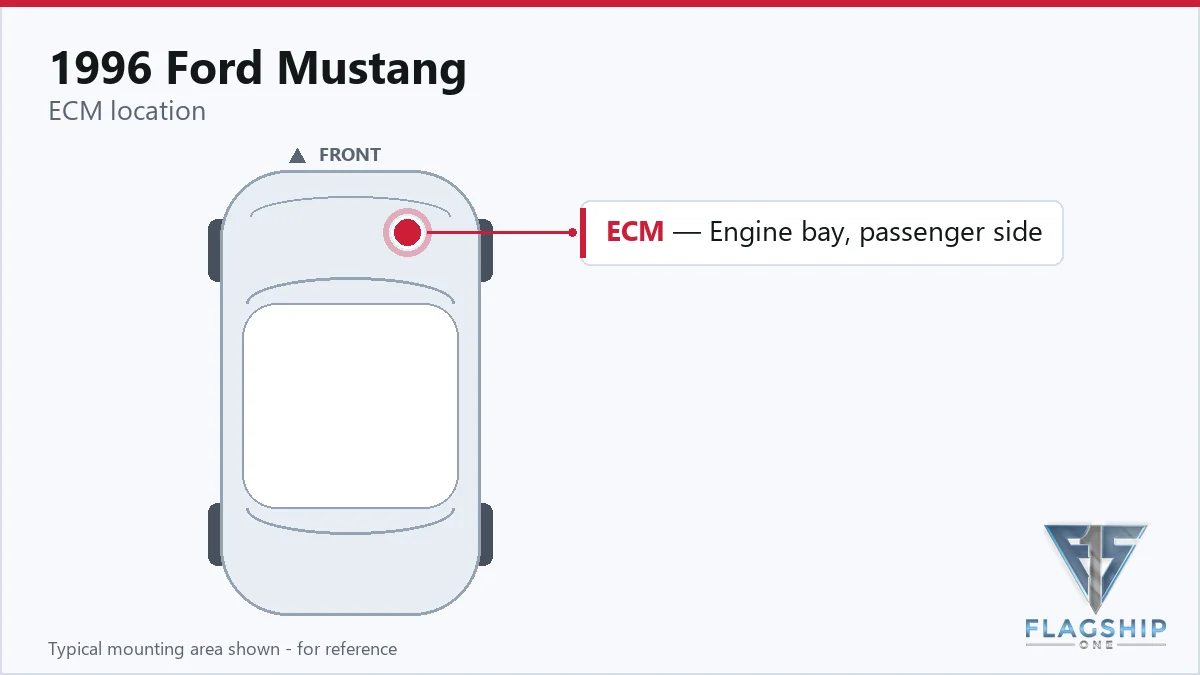
Work with the ignition off, and treat the module as static-sensitive: avoid touching the connector pins at any point.
| Operation | Configuration | Book Time |
|---|---|---|
| Powertrain Control Module R&R | All configurations | 0.5 hr |
| Powertrain Control Module Relearn | All configurations | 0.5 hr |
| Engine Control Module R&R | All configurations | 1.0 hr |
After a module swap, the factory process calls for a PCM relearn operation to synchronize the new unit with the vehicle’s systems. Flagship One supplies units that arrive already programmed to the vehicle’s VIN, so the required relearn step is effectively completed before installation. This means the a VIN-programmed replacement unit can be installed and driven without additional programming steps.
Typical signs of a failing PCM or ECM in a 1996 Ford Mustang include a no‑start condition, rough idle, random stalling, and a lit malfunction indicator lamp. You may also see diagnostic trouble codes such as communication error on a scan tool, or misfire codes ranging from P0300 to P0308. These symptoms often appear without obvious mechanical issues and can affect both engine and transmission behavior.
Service bulletin 97-09-08 outlines the reprogramming steps for the powertrain control module. Bulletin 97-09-07 addresses diagnostic codes P0300 through P0308 on 4.6L 2V engines, recommending PCM reprogramming. Bulletin 99-04-03 provides out‑of‑vehicle reprogramming procedures for EEC‑V equipped vehicles.
| Bulletin | Subject | What It Addresses |
|---|---|---|
| 97-09-08 | POWERTRAIN CONTROL MODULE – REPROGRAM POWERTRAIN CONTROL MODULE (PCM) – SERVICE PROCEDURES – SE | — |
| 97-09-07 | 4.6L 2V ENGINES ONLY – DIAGNOSTIC TROUBLE CODES (DTCS) P0300, P0301, P0302, P0303, P0304, P0305 | — |
| 99-04-03 | EEC V VEHICLES ONLY – OUT-OF-VEHICLE – REPROGRAMMING POWERTRAIN CONTROL MODULES (PCMS) | — |
Yes, because the PCM also controls shift timing, a malfunction can lead to harsh or delayed shifts, especially under load.
The factory procedure includes a PCM relearn, but the ECM typically does not need a separate relearn if the unit is VIN‑programmed.
Codes such as P0601 for communication errors or a series of misfire codes (P0300‑P0308) often point to PCM or ECM problems.
When the PCM or ECM in your 1996 Ford Mustang needs replacement, you can choose a brand‑new unit or a refurbished module that meets original specifications. Both options require the same removal steps, and the refurbished choice may offer cost savings while still delivering factory‑level performance.
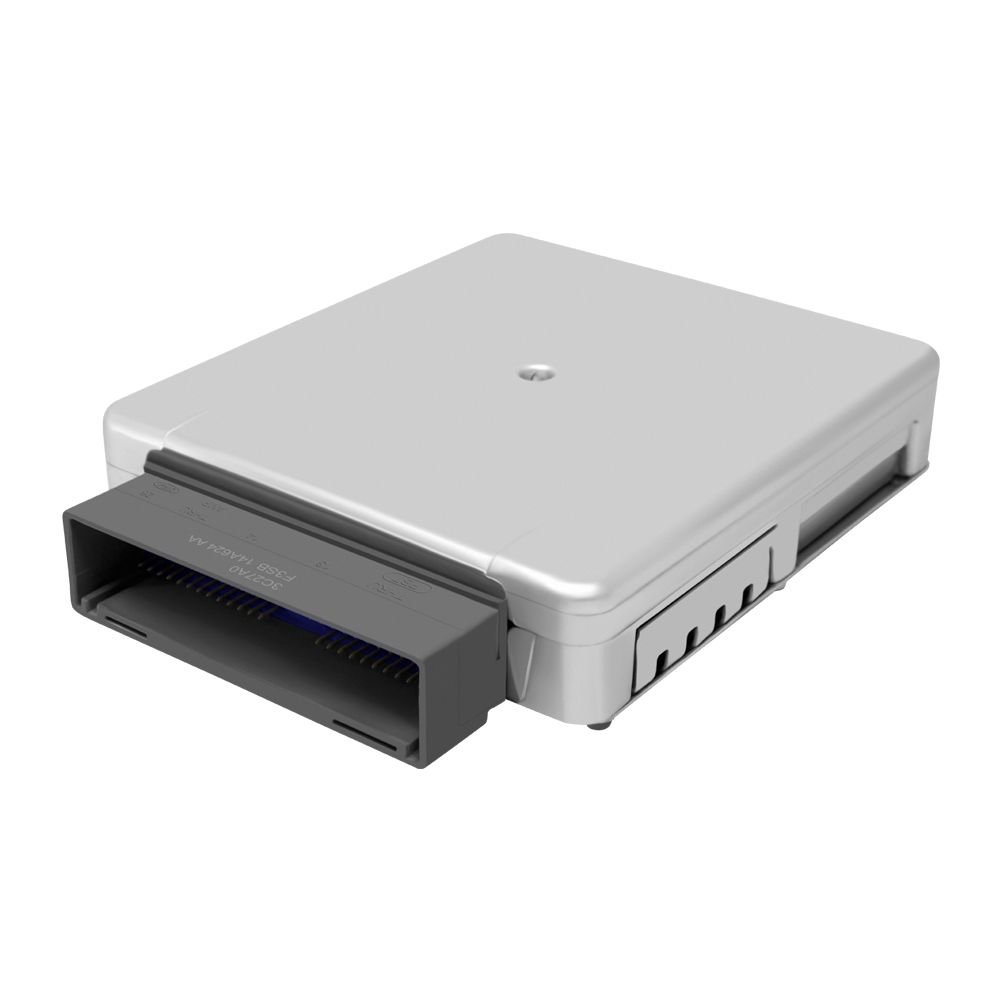
Flagship One stocks a refurbished, VIN-programmed PCM for the 1996 Ford Mustang with a lifetime warranty, free shipping and no core charge. The full Ford Mustang module lineup covers other engine configurations as well.
The 1996 Ford Mustang relies on its PCM and ECM for smooth operation. Replacing a faulty module with a properly programmed unit can restore reliability and keep the car running as intended. Consider your repair path and ensure the new part is correctly programmed.