
Last updated on August 25th, 2026 at 01:38 pm
The Powertrain Control Module in your 1997 Ford Mustang 3.8L serves as the central computer managing engine operation, transmission shifting, and emissions systems. When this module fails, your vehicle may exhibit drivability problems ranging from hard starting to complete communication loss with diagnostic scan tools.
Powertrain control module issues on the 1997 Ford Mustang 3.8L can leave you stranded or dealing with persistent drivability concerns that resist conventional repair attempts. Your Mustang’s PCM continuously monitors sensors throughout the engine and transmission, adjusting fuel delivery, ignition timing, and shift schedules based on real-time conditions. When this computer fails, the effects range from subtle performance degradation to complete engine shutdown. Understanding the replacement process, programming requirements, and common failure patterns helps you make informed decisions when your 1997 Mustang begins showing signs of electronic trouble. This guide walks through what the PCM does in your specific vehicle, where it lives, what symptoms typically appear when it fails, and what the factory service documentation says about repair procedures.
The Powertrain Control Module in your 1997 Ford Mustang 3.8L functions as the electronic brain managing virtually every aspect of engine and transmission operation. This computer processes input from dozens of sensors including the mass air flow sensor, throttle position sensor, coolant temperature sensor, and oxygen sensors to calculate optimal fuel injector pulse width and ignition advance for current driving conditions. Your 1997 Mustang’s PCM also controls the automatic transmission shift firmness and schedule by commanding the electronically controlled transmission solenoids based on vehicle speed, throttle position, and fluid temperature. The module maintains closed-loop fuel management once the engine reaches operating temperature, using feedback from the oxygen sensors to keep air-fuel mixture at the stoichiometric ratio for proper catalytic converter function and emissions compliance. Beyond engine management, your PCM handles the alternator charging system, monitoring voltage and communicating with the instrument cluster to display warning indicators. This generation of Ford vehicles used the EEC V processor architecture, which stores calibration data in non-volatile memory that retains information even when battery power is removed. Your 1997 Mustang 3.8L’s PCM integrates with the vehicle’s anti-lock braking system and can record fault data when component failures occur. Replacement engine computers for the 1997 Ford Mustang must be matched to your specific VIN and powertrain configuration to ensure proper communication with the PATS theft deterrent system and transmission controller.
Flagship One keeps Ford Mustang replacement engine computers in stock for exactly this failure pattern.
1997 Ford Mustang 3.8L
OEM programmed ECM for your 1997 Ford Mustang 3.8L — plug & play, no dealer visit.
Free shipping · Lifetime warranty
The factory service procedure for the 1997 Ford Mustang 3.8L positions the Powertrain Control Module behind the cowl side trim panel in the passenger compartment. Accessing this component requires removing the interior trim piece located near the base of the windshield on the right side of the vehicle. The R&R labor time for PCM replacement on your Mustang is estimated at 0.5 hours according to professional service guides, though actual time may vary depending on technician experience and trim panel condition. After removing the trim panel, the module typically mounts to a bracket or directly to the firewall using screws or integral clips. Disconnection involves releasing the electrical connector by pressing the locking tab and pulling the harness free. Installation reverses the removal procedure, ensuring the connector seats fully and the locking mechanism engages properly. Your Mustang’s specific vehicle identification number must be programmed into the replacement unit before the engine will start, as the PCM communicates with the passive anti-theft system to verify authorization. The reinstalled trim panel should fit flush without gaps to prevent wind noise and water intrusion.
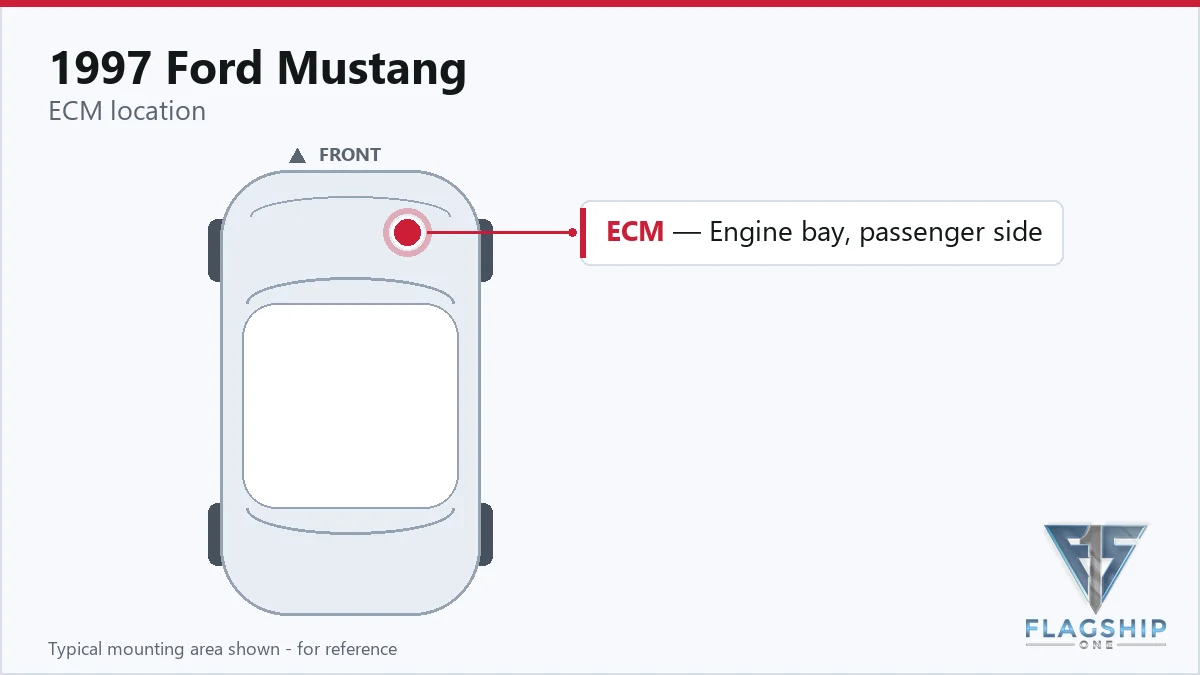
Work with the ignition off, and treat the module as static-sensitive: avoid touching the connector pins at any point.
| Operation | Configuration | Book Time |
|---|---|---|
| Powertrain Control Module R&R | All configurations | 0.5 hr |
| Powertrain Control Module Relearn | All configurations | 0.5 hr |
| Engine Control Module R&R | All configurations | 1.0 hr |
After installing a replacement Powertrain Control Module in your 1997 Ford Mustang 3.8L, Ford’s factory procedure typically requires a relearn process to synchronize the new computer with your vehicle’s unique characteristics. Professional service information allocates 0.5 hours for this PCM relearn procedure, which teaches the module your engine’s specific operating parameters including injector flow rates and sensor calibrations. The relearn process may involve driving the vehicle through specific conditions while the PCM adapts its fuel and timing maps to maintain driveability. Ford service bulletin 99-04-03 addresses out-of-vehicle reprogramming procedures for EEC V modules, indicating that some repair situations require returning the module to a facility capable of updating the calibration software. Units from Flagship One arrive pre-programmed with your VIN and the correct calibration for your 3.8L engine, effectively completing the programming steps that would otherwise require a dealer or specialist programming equipment. This means your replacement unit should start your engine after installation without additional programming visits, though a relearn drive cycle may still optimize performance characteristics over the first few operating hours.
Every VIN-programmed replacement unit from Flagship One arrives with these steps already completed.
When your 1997 Ford Mustang 3.8L develops PCM problems, symptoms often appear suddenly and may worsen over time as internal circuitry degrades. A failing module commonly causes intermittent no-start conditions where the engine cranks normally but fails to fire, particularly when the vehicle is warm or after sitting in hot weather. Stalling complaints frequently accompany PCM issues, with the engine dying at idle or when coming to a stop without warning. Check engine light illumination with stored trouble codes for random misfire, fuel system faults, or transmission concerns often points toward electronic control problems rather than mechanical failures. Some drivers report complete loss of communication with scan tools, where the PCM fails to respond to diagnostic requests even though the engine appears to run normally. Automatic transmission shifting may become harsh, delayed, or erratic when the PCM cannot properly command the shift solenoids. A P0601 internal memory fault code indicates the module has detected an internal error in its non-volatile memory storage, suggesting replacement rather than repair. The 1997 Mustang 3.8L may also exhibit poor fuel economy, hesitation during acceleration, or rough running when the PCM cannot maintain proper closed-loop fuel control.
Ford released service information addressing PCM reprogramming procedures for vehicles in this generation. Technical Service Bulletin 97-09-08 provides guidance on reprogramming the Powertrain Control Module, including service procedures and tips for technicians performing the work. This bulletin covers the standard approach to updating calibration software when addressing driveability concerns or emissions-related issues. A second bulletin, numbered 99-04-03, specifically applies to EEC V vehicles and outlines out-of-vehicle reprogramming procedures for Powertrain Control Modules. This bulletin indicates that certain situations require removing the module and sending it to a facility capable of performing software updates using factory-level diagnostic equipment. Both bulletins confirm that PCM programming and calibration updates represent standard factory-supported repair procedures for this generation of Ford products.
| Bulletin | Subject | What It Addresses |
|---|---|---|
| 97-09-08 | POWERTRAIN CONTROL MODULE – REPROGRAM POWERTRAIN CONTROL MODULE (PCM) – SERVICE PROCEDURES – SE | — |
| 99-04-03 | EEC V VEHICLES ONLY – OUT-OF-VEHICLE – REPROGRAMMING POWERTRAIN CONTROL MODULES (PCMS) | — |
Your Mustang requires a PCM matched to your specific VIN and powertrain configuration. The module must contain the correct calibration for your 3.8L engine and be compatible with your PATS anti-theft system, otherwise the engine will not start. A non-matched unit typically requires professional reprogramming before installation.
Diagnostic trouble codes stored in the PCM can indicate internal module failures. Codes like P0601, P0602, or P0606 often point directly to module problems. Complete loss of scan tool communication combined with multiple system faults may also suggest PCM failure. However, proper diagnosis by a qualified technician is recommended to rule out wiring or sensor issues first.
Mechanical removal behind the cowl side trim is generally straightforward for experienced do-it-yourself mechanics. The challenge lies in programming the replacement unit with your vehicle’s VIN and calibration data. Units pre-programmed by Flagship One eliminate this requirement, making self-replacement more practical for owners without dealer access.
The relearn process allows the new Powertrain Control Module to adapt to your specific engine’s characteristics. This may involve operating the vehicle through various driving conditions while the computer learns optimal fuel delivery and timing adjustments. Some systems reset automatically while others require diagnostic equipment to initiate the adaptation cycle.
Early EEC V modules sometimes required calibration updates to address drivability concerns discovered after vehicles left the factory. Reprogramming allowed dealers and independent shops to apply fixes without physical part replacement. This also meant that used units from salvage yards might carry outdated software unsuitable for your vehicle.
When your 1997 Ford Mustang 3.8L requires Powertrain Control Module replacement, you face a choice between repairing the existing unit or installing a pre-programmed replacement. Repair feasibility depends on the specific nature of internal damage and may not be cost-effective compared to obtaining a properly configured unit. Pre-programmed replacements from Flagship One arrive ready to install with your VIN already matched, potentially eliminating dealer programming delays and costs. Consider your timeline, budget, and access to programming equipment when deciding which approach best fits your situation.
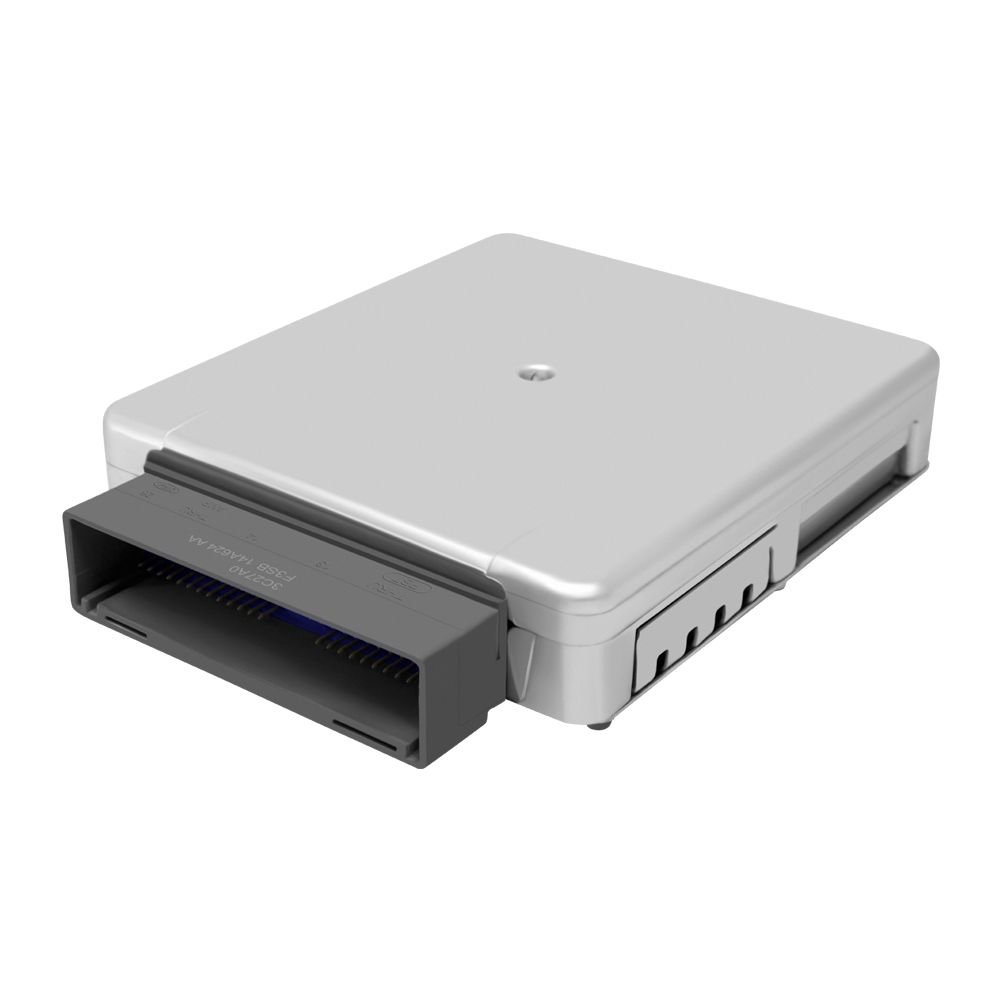
Flagship One stocks a refurbished, VIN-programmed PCM for the 1997 Ford Mustang with a lifetime warranty, free shipping and no core charge. The full Ford Mustang module lineup covers other engine configurations as well.
The Powertrain Control Module in your 1997 Ford Mustang 3.8L represents a critical component that manages virtually every aspect of engine and transmission operation. Understanding its location, programming requirements, and common failure patterns prepares you for informed decision-making when electronic troubles arise. Whether you pursue replacement with a VIN-programmed unit from Flagship One or explore other options, addressing PCM concerns promptly helps prevent secondary damage and restores your Mustang to reliable operation.