
Last updated on August 25th, 2026 at 02:15 pm
In the 1990 Honda Prelude, the Powertrain Control Module and Engine Control Module manage fuel delivery, ignition timing and engine speed. A failure typically results from electrical wear, moisture intrusion or connector damage, causing loss of engine control and drivability issues.
When a 1990 Honda Prelude begins to exhibit no‑start conditions, rough idle, or intermittent power loss, the engine’s electronic controllers often deserve a closer look. The vehicle relies on two distinct modules—the Powertrain Control Module (PCM) and the Engine Control Module (ECM)—to coordinate fuel injection, ignition timing and overall engine management. Understanding how these parts function, where they sit, and what the factory expects after replacement can help you decide between a repair or a refurbished replacement. This guide walks you through the module’s role, typical labor times, location details, required programming steps, common symptoms, and practical tips to keep the system healthy.
1990 Honda Prelude
OEM programmed ECM for your 1990 Honda Prelude — plug & play, no dealer visit.
Free shipping · Lifetime warranty
The PCM in a 1990 Honda Prelude integrates fuel‑injection control with transmission logic, while the ECM focuses on engine speed and ignition timing. Together they ensure the engine runs smoothly across all conditions, adjusting fuel pulses and spark based on sensor input. A malfunction can cause stalling, poor acceleration, or a complete loss of power, making reliable operation essential. Proper operation is critical because the vehicle’s performance and emissions depend on precise timing. The module’s reliability also influences diagnostic communication with scan tools. For owners seeking a new unit, many turn to replacement engine computers for the 1990 Honda Prelude to restore factory functionality.
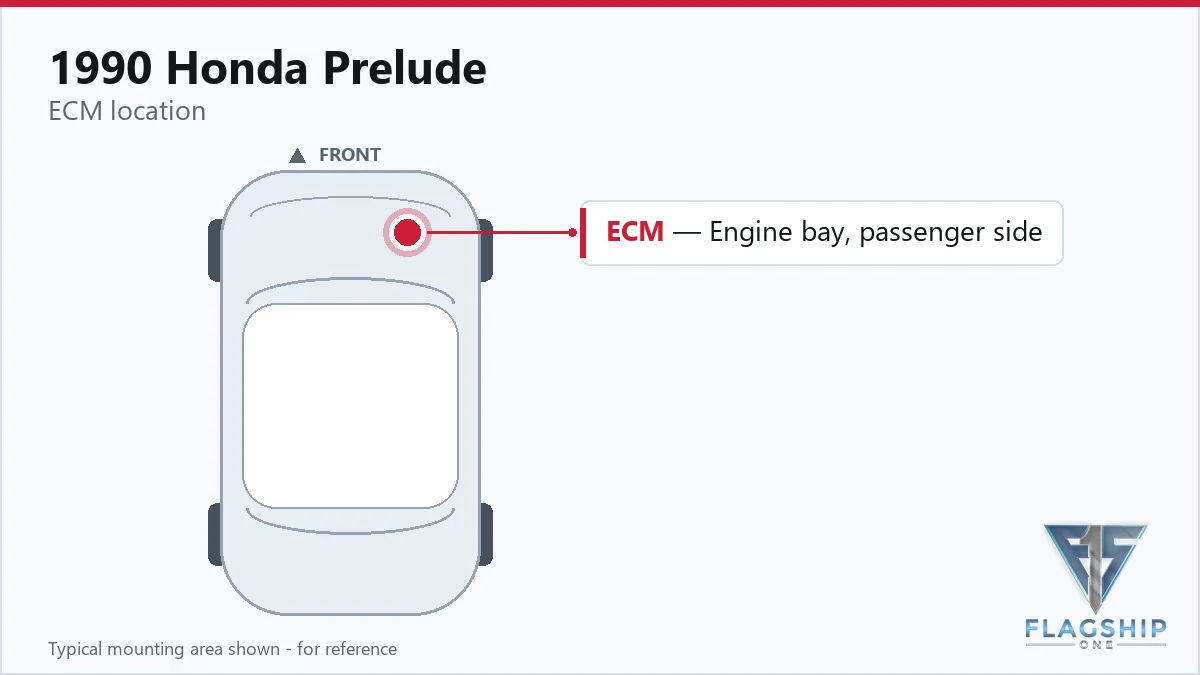
The engine control unit for the 1990 Honda Prelude is positioned on the right side of the engine compartment. Access typically involves reaching the right side area, with variations when the air conditioning system is present or when the vehicle has a PGM‑FI system. Labor estimates from the factory book list 0.8 hours for PCM removal on carbureted models and 1.0 hour for fuel‑injected versions. Removing the ECM is assigned 0.9 hours. After the unit is taken out, the mounting bolts are re‑installed to the same torque specification used by the factory, and the connector is re‑secured. The location remains consistent across most service scenarios, simplifying the replacement process.
| Operation | Configuration | Book Time |
|---|---|---|
| Powertrain Control Module R&R | Carbureted | 0.8 hr |
| Powertrain Control Module R&R | Fuel Injected | 1.0 hr |
| Powertrain Control Module Relearn | All configurations | 0.5 hr |
| Engine Control Module Relearn | All configurations | 0.5 hr |
| Engine Control Module R&R | All configurations | 0.9 hr |
Factory service requires a PCM relearn of 0.5 hours and an ECM relearn of the same duration after a new unit is installed. These procedures re‑establish sensor baselines and idle control parameters. Flagship One supplies a VIN-programmed replacement unit that arrives pre‑configured to match your vehicle’s identification, so the relearn steps are already completed and no additional programming is needed on the shop floor.
Owners of a 1990 Honda Prelude may notice a complete lack of engine start, rough or uneven idle, unexpected stalling, or erratic power delivery when the PCM or ECM fails. In some cases the vehicle may exhibit shifting irregularities if the PCM’s transmission logic is compromised. Communication with a scan tool can also be lost, making diagnosis more difficult. These signs often point to deteriorated module internals, corroded connectors, or wiring issues that disrupt the flow of critical signals.
Service bulletins for the 1990 Honda Prelude note that accessory wiring can damage the fuse box and that the ECU connector terminals may need removal to prevent future issues.
| Bulletin | Subject | What It Addresses |
|---|---|---|
| — | Accessory Wiring May Ruin Fuse Box • ECU Connector Terminal Removal | — |
The factory book lists about one hour for removing and installing the PCM on a fuel‑injected Prelude.
Yes, the factory procedure includes a 0.5‑hour relearn for the ECM after replacement.
The ECU is mounted on the right side of the engine compartment, accessible from that side.
A VIN‑programmed unit arrives pre‑configured, so the standard relearn procedures are already satisfied.
A typical sign is a no‑start condition combined with rough idle and occasional stalling.
When the PCM or ECM in your 1990 Honda Prelude needs attention, you can choose a professional repair or install a refurbished replacement. Both options aim to restore reliable engine control, but a pre‑programmed unit from Flagship One can simplify the process by removing the factory relearn steps. Evaluate the condition of your existing module and consider the benefits of a tested replacement that matches your vehicle’s VIN.
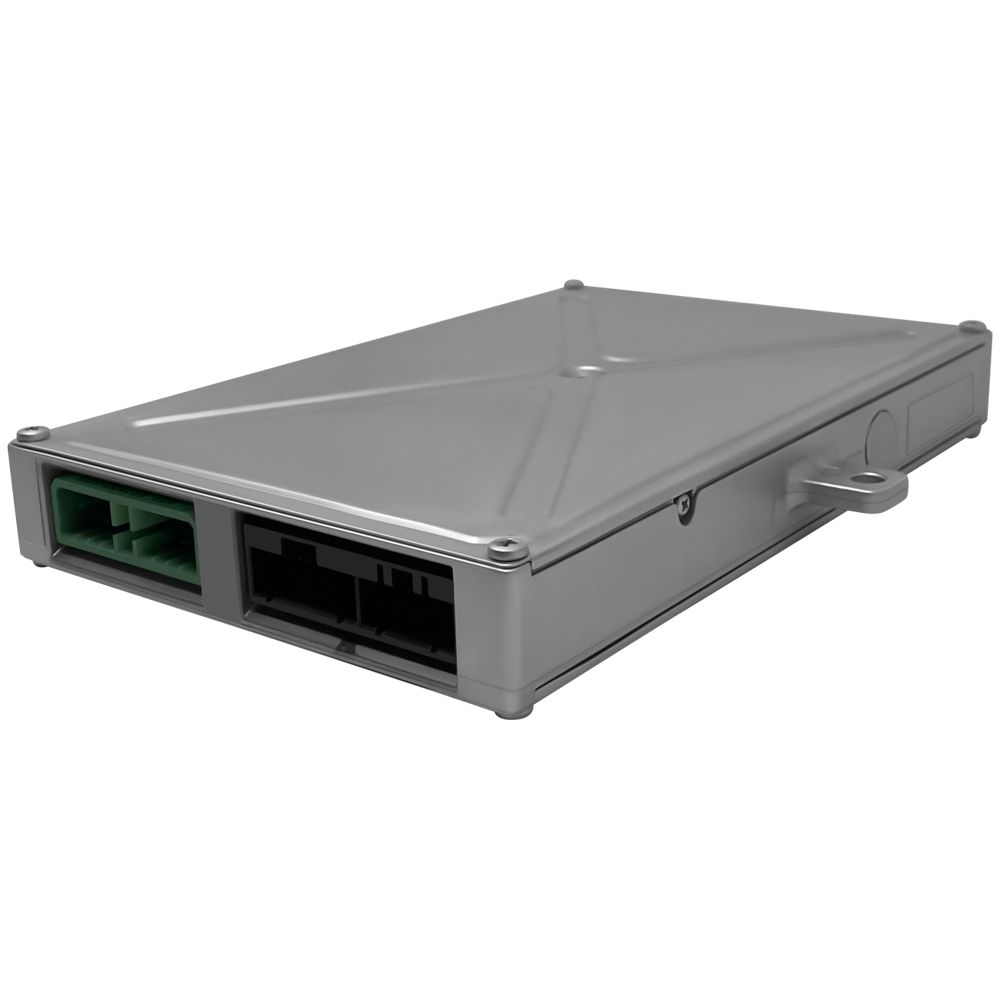
Flagship One stocks a refurbished, VIN-programmed PCM for the 1990 Honda Prelude with a lifetime warranty, free shipping and no core charge. The full Honda Prelude module lineup covers other engine configurations as well.
The 1990 Honda Prelude relies on its PCM and ECM for smooth operation. Whether you opt for a repair or a Flagship One replacement, ensuring proper installation and programming will help keep your vehicle performing as designed. Contact a qualified technician to assess your specific situation.