
Last updated on August 25th, 2026 at 12:22 pm
The powertrain control module (PCM) in your 1996 Honda Prelude manages engine performance, fuel delivery, and transmission behavior. Failures may cause drivability issues, warning lights, or complete engine shutdowns due to internal faults or electrical problems.
If your 1996 Honda Prelude is experiencing unexplained stalling, rough idling, or a no-start condition, the powertrain control module (PCM) may be at fault. This small but critical computer manages fuel injection, ignition timing, and transmission shifts, ensuring smooth operation. Over time, electrical issues, voltage spikes, or internal failures can disrupt its function, leading to frustrating symptoms. Understanding how the PCM works, where it’s located, and what replacement involves can help you make informed decisions. You’ll also learn how to recognize failure signs early and avoid common pitfalls that could damage a new module. Whether you’re troubleshooting a current issue or planning ahead, this guide covers the essentials for maintaining your Prelude’s reliability.
The powertrain control module (PCM) in your 1996 Honda Prelude acts as the brain of the engine and transmission system. It continuously monitors sensors for data like engine speed, air intake, and throttle position, then adjusts fuel delivery and ignition timing for optimal performance. The PCM also controls automatic transmission shifts, ensuring smooth acceleration and fuel efficiency. When it fails, you may notice hesitation, poor fuel economy, or even a complete loss of power. Because the PCM integrates so many functions, its health directly impacts drivability. Replacing it isn’t just about swapping a part—it’s about restoring the vehicle’s ability to interpret sensor data and execute commands correctly. A faulty PCM can mimic other issues, so proper diagnosis is key. If replacement becomes necessary, replacement engine computers for the Prelude are designed to meet or exceed factory specifications, ensuring compatibility with your vehicle’s systems.
In the 1996 Honda Prelude, the PCM is located behind the passenger-side kick panel, near the glove box. Accessing it requires removing the interior trim panel, which is typically held in place by a few screws or clips. Once exposed, the PCM is secured with a mounting bracket and connected via a multi-pin harness. Replacement involves disconnecting the battery, unplugging the harness, removing the mounting hardware, and installing the new unit. The factory labor time for PCM removal and reinstallation is 0.6 hours. After installation, the module must undergo a relearn procedure to synchronize with the vehicle’s systems, which adds another 0.5 hours of labor. Proper torque on the mounting hardware is essential to prevent vibration damage, though specific torque values aren’t provided in the labor guide.
| Operation | Configuration | Book Time |
|---|---|---|
| Powertrain Control Module R&R | All configurations | 0.6 hr |
| Powertrain Control Module Relearn | All configurations | 0.5 hr |
| Engine Control Module Relearn | All configurations | 0.5 hr |
| Engine Control Module R&R | All configurations | 0.5 hr |
1996 Honda Prelude
OEM programmed ECM for your 1996 Honda Prelude — plug & play, no dealer visit.
Free shipping · Lifetime warranty
After replacing the PCM in your 1996 Honda Prelude, the vehicle requires a factory relearn procedure to ensure proper communication with sensors and actuators. This process typically involves using a scan tool to reset adaptive values and may include driving the vehicle under specific conditions to recalibrate the system. The factory labor time for this step is 0.5 hours. However, a VIN-programmed replacement unit from Flagship One arrives pre-configured with your vehicle’s calibration data, eliminating the need for additional programming. This not only saves time but also reduces the risk of errors during the relearn process. Always confirm that the replacement unit matches your Prelude’s engine and transmission configuration to avoid compatibility issues.
A failing PCM in your 1996 Honda Prelude may cause a range of symptoms, often mimicking other mechanical or electrical problems. Common signs include intermittent stalling, especially at idle or during deceleration, as the module struggles to maintain fuel and ignition timing. You might also experience rough running, misfires, or a noticeable drop in fuel economy, as the PCM fails to optimize air-fuel ratios. In some cases, the vehicle may refuse to start altogether, leaving you stranded. Transmission shifting issues, such as harsh or delayed gear changes, can also indicate PCM trouble. On the diagnostic side, you may see a variety of trouble codes, including internal control module keep-alive memory error, which points to a fault within the module itself. Other codes, like P0600 (serial communication link) or P1607 (ECM/PCM internal circuit malfunction), suggest electrical or data transmission problems. If your scan tool fails to communicate with the PCM, that’s another red flag. Because these symptoms can overlap with sensor or wiring issues, thorough testing is essential before condemning the module.
The codes below point to the PCM itself rather than to a sensor or circuit it monitors. Each one links through to its full diagnostic guide.
| Code | Meaning | Full Guide |
|---|---|---|
| P0600 | Module-internal fault | Full P0600 guide → |
| P0603 | Keep-alive memory (KAM) error | Full P0603 guide → |
| P0606 | Module processor failure | Full P0606 guide → |
| P0661 | Module-internal fault | Full P0661 guide → |
| P0662 | Module-internal fault | Full P0662 guide → |
| P0685 | Module-internal fault | Full P0685 guide → |
| P1607 | Module-internal fault | — |
| P1630 | Module-internal fault | — |
| P1635 | Module-internal fault | — |
| P1639 | Module-internal fault | — |
| P1640 | Module-internal fault | — |
| P1641 | Module-internal fault | — |
Honda issued service bulletins for the 1996 Prelude addressing PCM-related concerns. One bulletin highlights the importance of clearing diagnostic trouble codes (DTCs) and resetting the ECM/PCM using the Honda Diagnostic System (HDS). This process can also activate a tripped sensor warning feature, which aids in troubleshooting accessory security system issues. Another bulletin warns about the risks of accessory wiring damaging the fuse box, which may lead to ECU connector terminal problems. Properly securing aftermarket wiring and inspecting the fuse box for corrosion or loose connections can prevent these issues. While the bulletins don’t provide specific repair steps, they underscore the need for careful electrical system maintenance to avoid PCM damage.
| Bulletin | Subject | What It Addresses |
|---|---|---|
| — | Clearing DTCs and Resetting the ECM/PCM With the HDS • Tripped Sensor Warning Feature Ca | — |
| — | Accessory Wiring May Ruin Fuse Box • ECU Connector Terminal Removal | — |
Stalling at stops can stem from a failing PCM, particularly if it’s struggling to maintain idle control. The module may misinterpret sensor data, leading to incorrect fuel or spark adjustments. Other potential causes include a faulty idle air control valve or vacuum leaks, so a thorough diagnosis is necessary.
Yes, a malfunctioning PCM can lead to failed emissions tests by disrupting fuel mixture or ignition timing. If the module isn’t optimizing these parameters, the vehicle may run too rich or too lean, increasing harmful emissions. Diagnostic trouble codes like P0600 or P0603 often accompany these issues.
Start by checking for diagnostic trouble codes. If the PCM is communicating but throwing internal fault codes (e.g., P0603), the module itself may be at fault. If the scan tool can’t connect to the PCM, inspect the wiring harness and connectors for damage, corrosion, or loose pins. A multimeter can help verify power and ground signals.
Skipping the relearn procedure may result in poor engine performance, including rough idling, hesitation, or transmission shifting issues. The PCM needs to recalibrate to your Prelude’s specific sensor data and driving conditions. Without this step, the vehicle may run in a default mode, sacrificing efficiency and drivability.
While the vehicle may still run, driving with a P0603 code is risky. This code indicates an internal PCM fault, which could lead to sudden stalling or other drivability issues. Addressing it promptly can prevent further damage to the module or other components.
If your 1996 Honda Prelude is showing signs of PCM failure, you have options. A repair shop can attempt to diagnose and fix the issue, but if the module is confirmed faulty, replacement is often the most reliable solution. Refurbished units designed for your Prelude can restore factory performance without the hassle of programming or relearn procedures. Consider the labor costs and potential downtime when deciding between repair and replacement.
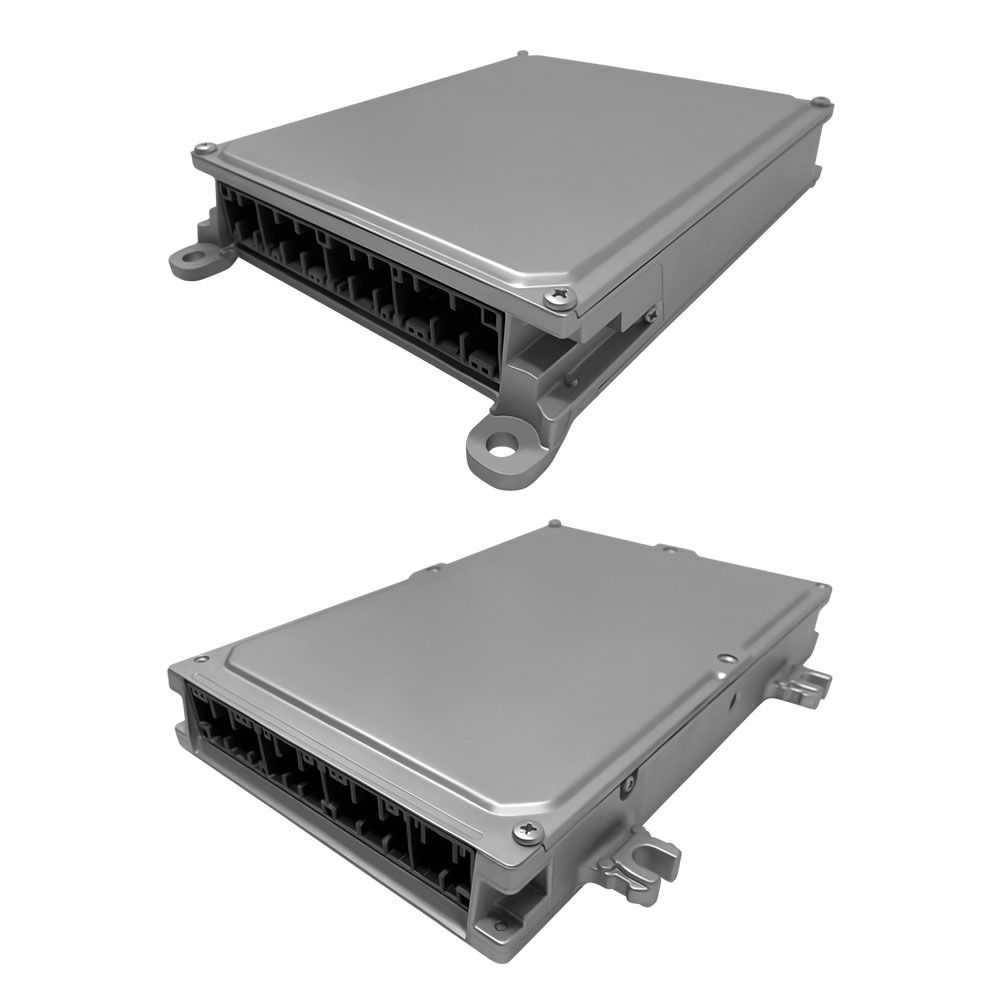
Flagship One stocks a refurbished, VIN-programmed PCM for the 1996 Honda Prelude with a lifetime warranty, free shipping and no core charge. The full Honda Prelude module lineup covers other engine configurations as well.
The PCM in your 1996 Honda Prelude plays a vital role in keeping your vehicle running smoothly. Recognizing failure symptoms early and understanding the replacement process can save you time and frustration. Whether you’re dealing with stalling, warning lights, or diagnostic trouble codes, addressing PCM issues promptly ensures your Prelude remains reliable. If replacement becomes necessary, opting for a pre-programmed unit can simplify the process and get you back on the road faster.