
Last updated on August 25th, 2026 at 11:45 am
The 2004 Toyota Camry uses an engine control module to regulate fuel delivery and ignition timing. Internal circuit failure or software glitches in this unit often cause erratic idling, poor fuel economy, or complete engine shutdown for the driver.
When a 2004 Toyota Camry begins to exhibit unpredictable engine behavior or fails to start, the root cause often traces back to the engine control module. This sophisticated electronic component acts as the central processing unit for the vehicle, coordinating the precise timing of spark and fuel delivery to maintain optimal efficiency. For the owner or technician, understanding the role of this module is essential for accurate troubleshooting. Dealing with these electronics can be daunting, as the symptoms often mimic mechanical failures, such as vacuum leaks or faulty sensors. By examining the specific requirements of this system, you can determine if a replacement is necessary to restore the vehicle to its original operating condition. This guide provides a detailed overview of the module’s function, its physical location within the cabin, and the critical programming steps required to ensure the vehicle remains compliant with emissions laws. You will gain a clearer understanding of how the computer interacts with the 2.4L engine and what to expect during the installation process. This knowledge helps in avoiding unnecessary part replacements and ensures a professional repair.
The engine control module in the 2004 Toyota Camry serves as the primary intelligence for the powertrain, managing the complex 2.4L engine dynamics. It continuously monitors a network of sensors to determine the exact amount of fuel to inject and the precise moment to trigger the ignition. This constant adjustment is vital for maintaining the balance between power output and environmental regulations. Because the module regulates the air-fuel mixture, any internal failure typically manifests as poor fuel economy or erratic idling. The stability of the engine depends on the module’s ability to process data from the oxygen sensors and mass airflow sensor without delay. When you search for 2004 Toyota Camry ECMs, you are looking for the unit that prevents the engine from running too lean or too rich, which could otherwise cause permanent internal damage. Beyond simple fuel management, the module also controls the timing of the valves and manages the interaction with the transmission system to ensure smooth acceleration. Its role is so critical that a complete failure of the internal circuitry often results in a total loss of communication with diagnostic tools, leaving the vehicle immobile. In this specific vehicle, the module’s precision is what allows the 2.4L engine to meet strict efficiency standards while providing reliable daily transportation.
2004 Toyota Camry
OEM programmed replacements — plug & play, no dealer visit.
Find yours by year, make & model →
Free shipping · Lifetime warranty
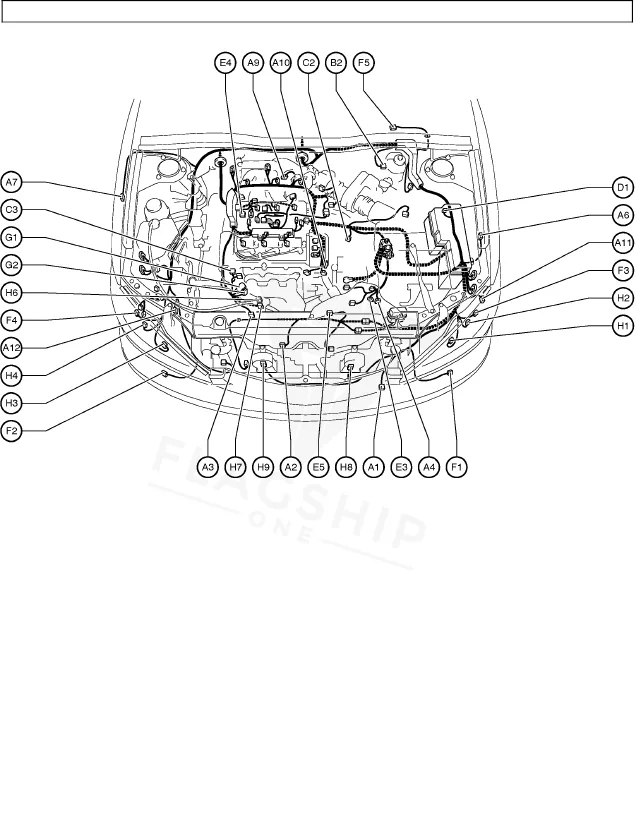
According to the factory wiring documentation, the engine control unit is situated within the instrument panel. Replacing this component involves accessing the dashboard area to remove the old unit and seat the new one. The labor associated with the removal and replacement of the ECM is listed at 0.4 hours. Similarly, the removal and replacement of the PCM is also estimated at 0.4 hours. Once the hardware is installed, a relearn procedure is typically required to synchronize the module with the engine’s current state. This relearn process for the ECM takes approximately 0.5 hours, and the PCM relearn is also rated at 0.5 hours. Because the unit is located inside the cabin, the installation is generally protected from engine bay heat, but careful handling of the connectors is necessary to avoid pin damage.
| Operation | Configuration | Book Time |
|---|---|---|
| Engine Control Module Relearn | All configurations | 0.5 hr |
| Engine Control Module R&R | All configurations | 0.4 hr |
| Powertrain Control Module R&R | All configurations | 0.4 hr |
| Powertrain Control Module Relearn | All configurations | 0.5 hr |
After installing a new module in the 2004 Toyota Camry, the factory procedure requires the VIN to be written into the computer’s memory. This step is performed by following the prompts on a compatible diagnostic tester. It is critical to verify that the device displays a “WRITING COMPLETE” message; if this confirmation is missing, the VIN must be entered again. This process is not merely a formality, as vehicles with missing VIN data may fail state or local emissions inspections. To simplify this process, Flagship One provides a VIN-programmed replacement module that arrives with the necessary identification already stored. This eliminates the need for specialized dealer tools and ensures the vehicle is ready for the road immediately after installation. By bypassing the manual VIN entry, you avoid the risk of software errors and the potential for failed emissions testing.
Identifying a failing engine computer in a 2004 Toyota Camry often requires distinguishing between sensor failure and module failure. Common indicators include a sudden no-start condition where the engine cranks but never fires, or intermittent stalling while the vehicle is at a stop. You may notice a significant drop in fuel efficiency or an erratic idle that feels like a misfire. In some cases, the vehicle might enter a “limp home” mode, severely limiting acceleration to protect the engine. Communication errors are also a primary sign; if a scan tool cannot establish a connection with the PCM, the module’s internal hardware is likely compromised. Specific fault codes may appear on the dashboard, such as a DTC P0142 fault, which indicates an issue with the oxygen sensor circuit that may actually be caused by an internal calibration error. Other symptoms include unpredictable shifting patterns if the powertrain control functions are affected. You might also observe a “Christmas tree” effect where multiple unrelated warning lights illuminate simultaneously. Because these symptoms are diverse, it is important to verify that the wiring harness is intact before concluding that the computer has failed.
Service Bulletin #EG016-03 addresses specific 2003 and 2004 Camry models equipped with the 2AZ-FE PZEV engine. This bulletin focuses on an ECM calibration update. The update is specifically intended to resolve issues related to the “ON” status of the malfunction indicator lamp when the DTC P0142 code is present. This calibration ensures the computer correctly interprets oxygen sensor data for these specific partial zero-emission vehicles, preventing false codes and ensuring the vehicle remains compliant with environmental standards.
| Bulletin | Subject | What It Addresses |
|---|---|---|
| EG016-03 | :EG016-03: 03-04 Camry (2AZ-FE PZEV Only): ECM Calibration Update: M.I.L. ‘ON’ DTC P0142 (Revis | — |
The factory wiring guide places the engine ECU within the instrument panel. This keeps the module away from engine heat.
A missing VIN may cause the vehicle to fail certain state or local emissions Inspection and Maintenance programs. Correct programming is essential for legal compliance.
The removal and replacement of the Powertrain Control Module is estimated at 0.4 hours. An additional 0.5 hours may be needed for the relearn process.
Yes, TSB #EG016-03 provides a calibration update for 2AZ-FE PZEV models to address DTC P0142. This helps prevent incorrect malfunction indicator lamp activation.
Yes, internal electronic failures can lead to erratic fuel delivery or ignition timing, which may cause the engine to stall or fail to start.
When deciding between refurbishing an old unit or choosing a replacement, consider the long-term stability of the 2004 Toyota Camry’s electronics. A high-quality replacement module ensures that the complex timing and fuel parameters are restored to factory specifications. Given the critical role of the PCM in emissions compliance and engine longevity, opting for a pre-programmed unit can save significant time and prevent the frustration of repeated diagnostic attempts.
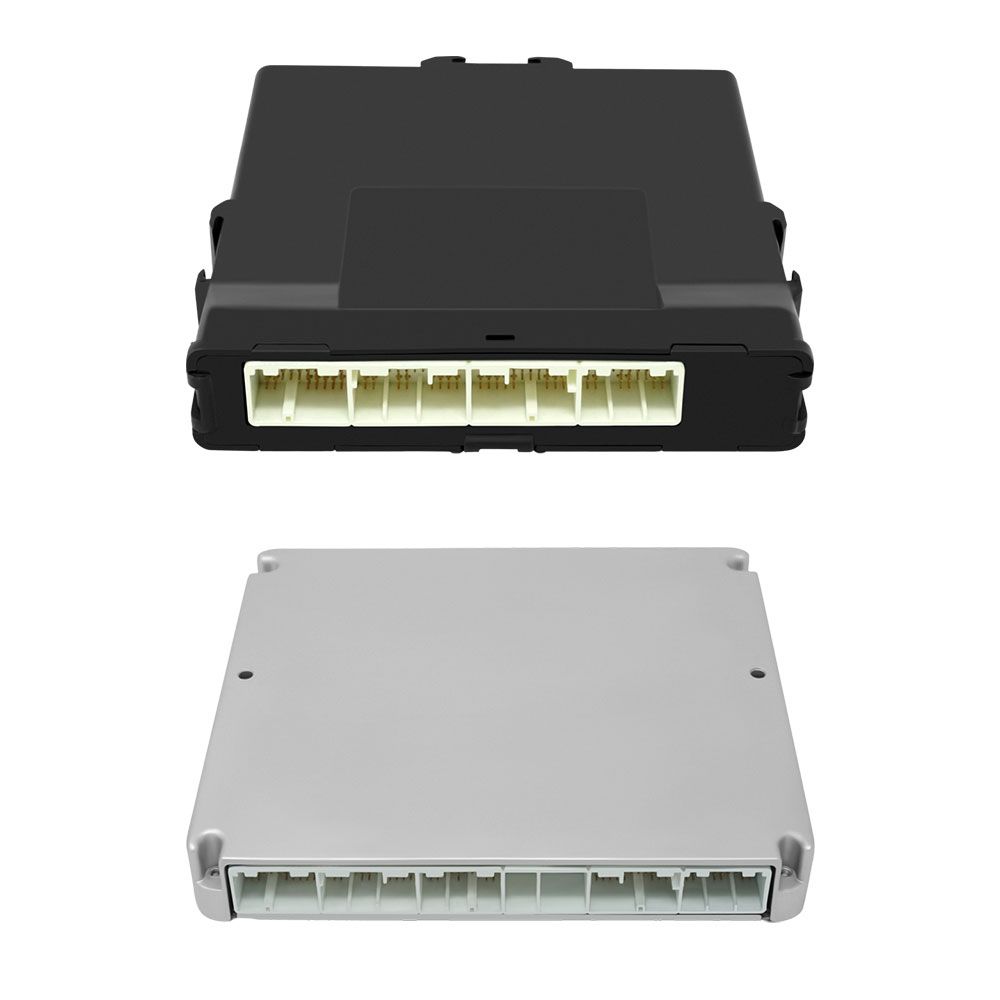
Flagship One stocks a refurbished, VIN-programmed PCM for the 2004 Toyota Camry with a lifetime warranty, free shipping and no core charge. The full Toyota Camry module lineup covers other engine configurations as well.
Ensuring the electronic health of your 2004 Toyota Camry is vital for long-term reliability. Replacing a faulty engine control module can resolve a wide range of performance and emissions issues. By focusing on correct installation and ensuring the VIN is properly programmed, you can restore the vehicle’s factory efficiency. If you are experiencing erratic engine behavior, consider a professional replacement for your 2004 Toyota Camry to ensure lasting results.