
Last updated on August 25th, 2026 at 12:03 pm
The Engine Control Module in your 2005 Toyota Camry (2.4L) manages critical engine functions including fuel delivery, ignition timing, and emissions systems. When this module fails, the vehicle typically triggers a check engine light and may experience drivability problems requiring module replacement.
The Engine Control Module serves as the central computer for your 2005 Toyota Camry, managing everything from fuel mixture to emissions controls. When this module fails, your vehicle may display warning lights, run poorly, or fail to start entirely. Replacing the module requires both mechanical work and programming procedures that must follow factory specifications.
This article covers what the module does in your specific vehicle, where it is located, and what the factory requires after replacement. You will learn why the vehicle identification number must be written to the new module and how that requirement relates to emissions testing in your area. Understanding these procedures helps you make informed decisions about repair options and recognize why certain replacement choices may simplify your experience. Whether you are evaluating repair quotes or considering a do-it-yourself approach, the information here gives you a practical foundation for moving forward with confidence.
The Engine Control Module in your 2005 Toyota Camry serves as the primary computing device managing your engine and drivetrain. This computer monitors input from dozens of sensors to calculate optimal fuel delivery, ignition timing, and emissions control operation. Every time you accelerate, the module processes data from the mass air flow sensor, oxygen sensors, throttle position sensor, and many others to maintain smooth, efficient operation.
replacement engine computers for the Camry coordinate closely with your transmission control module to manage shifting behavior. In many vehicles, including the Camry, these functions reside in separate housings but share data over the controller area network bus. The engine control unit continuously adjusts air-fuel ratios and spark advance to maintain performance while minimizing harmful exhaust emissions. Without this ongoing coordination, your engine would run roughly, consume excessive fuel, or potentially cause damage to emissions components.
These control modules face common failure modes that affect many vehicles over time. Voltage spikes from charging system problems, heat cycles from engine bay temperatures, and simple age-related component degradation can all lead to failure. Jump-starting with reversed polarity, a weak battery forcing the alternator to work excessively, or corrosion at electrical connections can accelerate wear on sensitive electronic circuits. When the module fails, symptoms range from immediate no-start conditions to subtle performance degradation that worsens gradually.
The module stores calibration data and adaptive learning values specific to your vehicle. This learned information helps the computer compensate for normal wear in sensors and components. A new replacement module arrives with factory default values, requiring a relearn procedure so your engine can adapt to the new computer over time.
2005 Toyota Camry
OEM programmed replacements — plug & play, no dealer visit.
Find yours by year, make & model →
Free shipping · Lifetime warranty
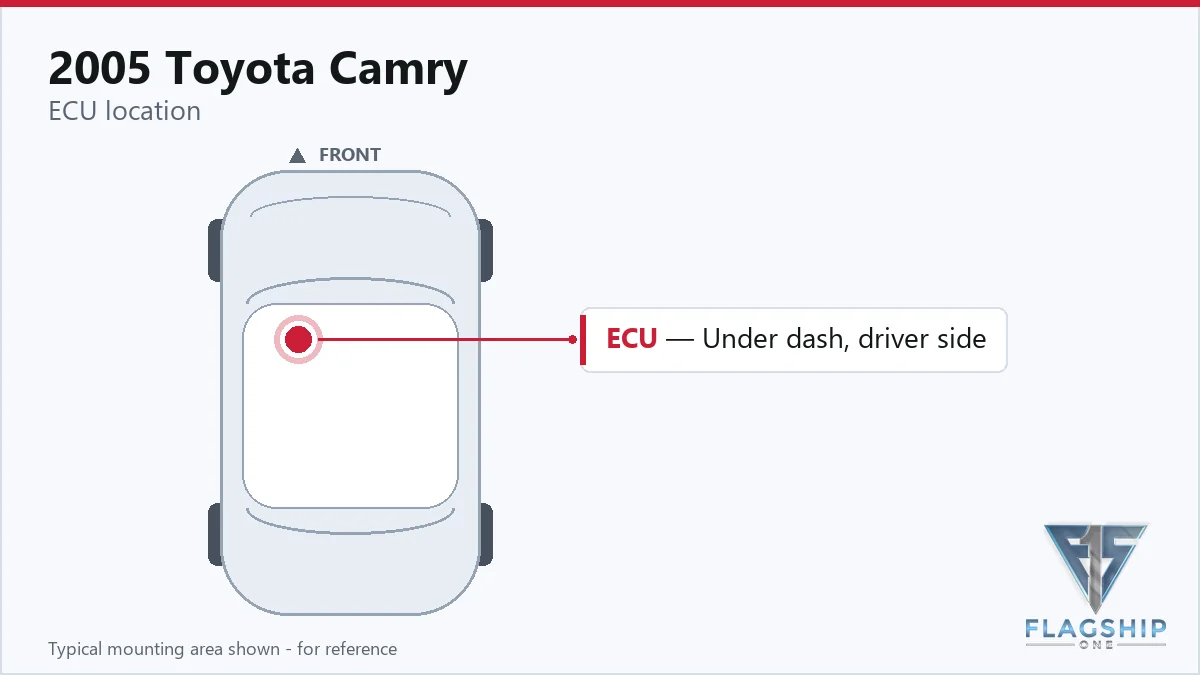
Factory wiring documentation places the engine control unit behind the instrument panel in the 2005 Toyota Camry. This location positions the computer within the passenger compartment, offering some protection from direct engine bay heat, though the module still experiences temperature cycling from the heating and cooling of the vehicle interior.
Removing the module involves disassembling portions of the dashboard structure to gain access. The recommended book time for removal and reinstallation of the Engine Control Module is approximately 0.4 hours. After the new module is installed, a relearn procedure requires an additional 0.5 hours of labor. For the Powertrain Control Module, the removal and reinstallation time matches at 0.4 hours, with a relearn process also requiring 0.5 hours. These time allocations reflect standard repair times and actual work may vary based on technician experience and specific vehicle configuration.
Installation requires disconnecting the vehicle battery before beginning work on electrical components. The replacement procedure involves carefully unplugging electrical connectors, mounting the new module using factory-specified fasteners, and reconnecting all harnesses in their original configuration. Proper torque specifications, if provided in factory service documentation, should be followed to ensure reliable mounting that resists vibration damage over time.
| Operation | Configuration | Book Time |
|---|---|---|
| Engine Control Module Relearn | All configurations | 0.5 hr |
| Engine Control Module R&R | All configurations | 0.4 hr |
| Powertrain Control Module R&R | All configurations | 0.4 hr |
| Powertrain Control Module Relearn | All configurations | 0.5 hr |
Factory service procedures for the 2005 Toyota Camry require writing the vehicle identification number into any replacement engine control module. This step associates the module with your specific vehicle and enables proper OBD functionality. The technician performs this task using a diagnostic scan tool that communicates with the module over the standardized data bus.
The process involves entering the vehicle identification number exactly as it appears on your registration or the original module, following prompts displayed by the diagnostic equipment. Factory guidance emphasizes confirming that the number written matches the number intended. If any discrepancy exists between the written value and the intended number, the procedure directs the technician to repeat the write process until the values match.
Vehicles missing this programming step will fail state and local emissions inspection and maintenance programs. Most 2005 model year vehicles require this association to pass OBD readiness monitors. a VIN-programmed replacement unit arrives from Flagship One with the vehicle identification number already written, meaning this critical factory requirement is satisfied before the module reaches your door.
A failing Engine Control Module in your 2005 Toyota Camry typically announces itself through illuminated warning lights on your dashboard. The check engine light may illuminate steadily or flash intermittently depending on the severity and nature of the fault. In some cases, multiple warning indicators appear simultaneously, suggesting broader communication or processing problems within the control system.
Engine starting problems commonly occur when the module fails to properly manage fuel delivery or spark timing during cranking. Your vehicle may crank normally but fail to fire, or start and then immediately stall. Rough running manifests as stumbling acceleration, hesitation, or vibration through the accelerator pedal. Misfire codes often populate in the module’s memory when combustion events become inconsistent.
Poor fuel economy develops when the computer fails to maintain correct air-fuel mixture ratios. You may notice your tank lasting noticeably fewer miles than usual. Black smoke from the exhaust can indicate an overly rich fuel condition caused by incorrect fuel delivery commands from a malfunctioning computer.
Some failures prevent any communication between your scan tool and the module, leaving you unable to read codes or view live data. When internal memory corruption occurs, specific diagnostic trouble codes related to processor or memory faults may be stored. Failure to write the vehicle identification number to the module after replacement can also trigger specific codes associated with programming or identification faults.
A factory service publication dated June 3, 2005 addressed the vehicle identification number programming procedure for the 2005 Toyota Camry and related vehicles. This update expanded the affected vehicle range to include 2004 and 2006 model year vehicles, indicating cross-model relevance of the programming procedure. The publication also added specific guidance for the Highlander Hybrid to the vehicle identification number write procedure.
The bulletin emphasizes the critical nature of entering the correct vehicle identification number during module replacement. Vehicles that leave the repair facility without proper identification number programming face failure during state and local emissions inspection programs. Technicians performing these repairs must follow diagnostic tool prompts carefully to ensure accurate data entry.
Yes, factory procedures require writing the vehicle identification number into any replacement engine control module using a diagnostic scan tool. Without this step, your vehicle may fail emissions testing and operate incorrectly. Some replacement suppliers provide modules with the VIN already written, which satisfies this requirement.
Factory wiring information places the engine control module behind the instrument panel in the passenger compartment. This position requires partial dashboard disassembly for access. The module sits in a protected interior location rather than the hot engine bay, though it still experiences temperature cycling from cabin climate changes.
The 2005 Toyota Camry will likely fail OBD readiness monitors required by state emissions inspection programs. Most 2005 model year vehicles require proper VIN-to-module association for the on-board diagnostic system to function correctly. Driving without this programming may also cause drivability problems or warning lights.
Estimated book times for the removal and reinstallation procedure are approximately 0.4 hours, with an additional 0.5 hours for relearning procedures. Actual repair time may vary based on technician experience, vehicle condition, and access challenges. Professional shops with the proper diagnostic equipment can typically complete these procedures efficiently.
Common symptoms include illuminated warning lights, hard starting or no-start conditions, rough engine operation with misfires, poor fuel economy, stalling, and reduced power. Some module failures prevent scan tool communication entirely. If you experience multiple electrical symptoms simultaneously, a module failure becomes more likely.
Repairing the factory module or choosing a refurbished replacement involves weighing costs, downtime, and your comfort level with the procedure. Many 2005 Toyota Camry owners find that purchasing a pre-programmed replacement module from a specialized supplier simplifies the repair process considerably. The module arrives with your vehicle identification number already written, eliminating the need to schedule dealer service or find a shop with the correct diagnostic equipment. A new OEM module through the dealer represents another option, though it typically carries a higher price without offering additional functionality. Shop labor rates in your area affect the total investment whether you perform the physical removal yourself or hire the work completed. Comparing total costs between options helps you select the approach that best matches your situation and budget.
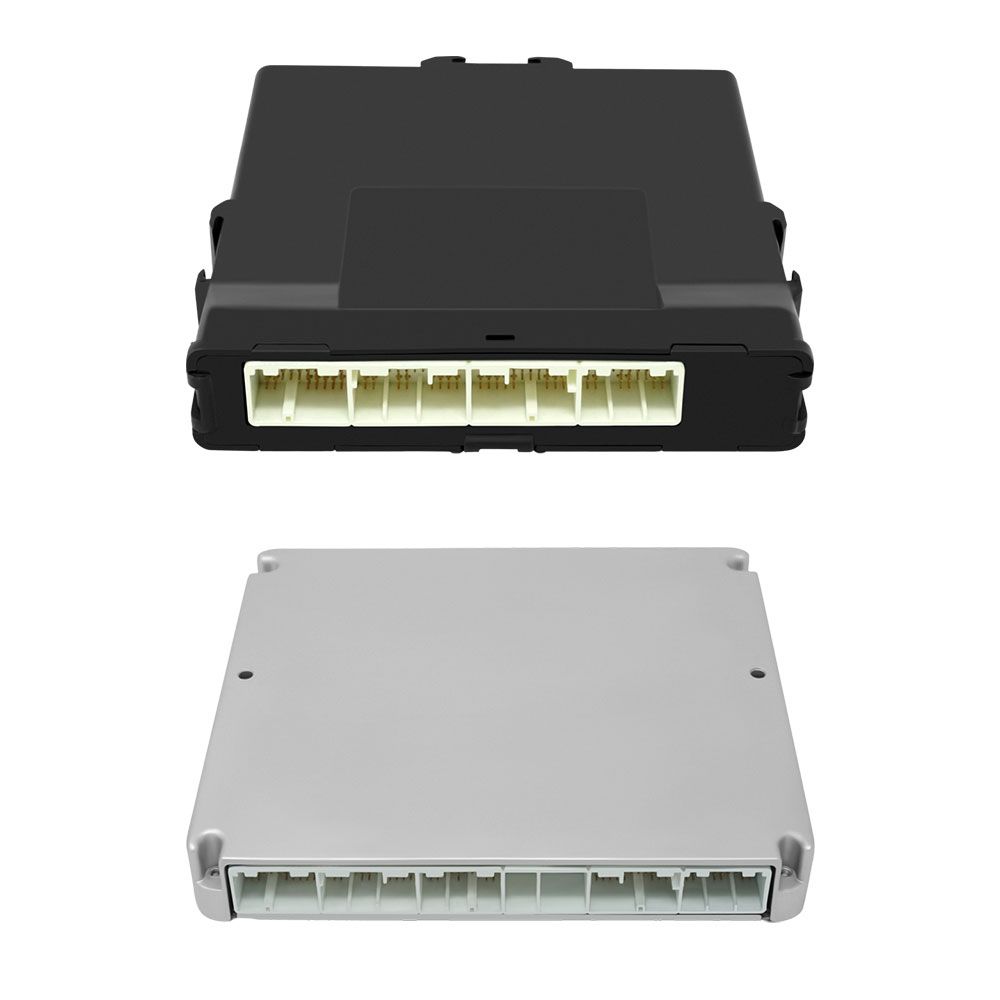
Flagship One stocks a refurbished, VIN-programmed PCM for the 2005 Toyota Camry with a lifetime warranty, free shipping and no core charge. The full Toyota Camry module lineup covers other engine configurations as well.
The Engine Control Module in your 2005 Toyota Camry plays an essential role in engine operation, emissions compliance, and overall driveability. Understanding its location, programming requirements, and failure symptoms prepares you to make informed decisions about service options. Whether you pursue dealer service, an independent shop, or a supplier-provided replacement module, knowing what the factory procedure demands helps you evaluate quotes and understand what your repair involves. Taking action promptly when symptoms appear can prevent secondary damage and get your Camry back to reliable operation more quickly.