
Last updated on August 25th, 2026 at 12:05 pm
The Powertrain Control Module in your 2000 Toyota Avalon manages engine and transmission operation through sensor inputs and actuator outputs. Failure may cause drivability problems, no-start conditions, or poor shifting performance.
If your 2000 Toyota Avalon is experiencing drivability problems such as hard starting, stalling, or transmission shifting issues, the Powertrain Control Module may be the culprit. The PCM serves as the central computer for your vehicle’s engine and transmission systems, processing data from numerous sensors and commanding actuators to maintain proper operation. Understanding how this module works, where it is located, and what replacement involves can help you make an informed decision when faced with these symptoms. This guide covers the role of the engine computer in the 2000 Avalon, common failure indicators, replacement procedures, and programming requirements. Whether you are diagnosing a problem yourself or evaluating repair options with a technician, the information here will give you a solid foundation for addressing PCM-related concerns on your 3.0L equipped Avalon.
The Powertrain Control Module in your 2000 Toyota Avalon functions as the primary computer responsible for managing both engine and transmission operations. This unit, sometimes called the Engine Control Module or PCM depending on the service literature, receives input from sensors throughout the drivetrain and adjusts fuel delivery, ignition timing, and transmission shift points accordingly. On the 3.0L V6 engine found in this generation Avalon, the module monitors mass airflow, engine coolant temperature, throttle position, crankshaft position, and numerous other parameters to maintain optimal air-fuel ratios and emission control system function. The module also communicates with the transmission control system to coordinate shift quality and torque converter lockup. When this module fails, the integrated nature of modern engine management means you may experience symptoms spanning multiple systems simultaneously. Poor fuel economy, rough idle, hesitation under acceleration, no-start conditions, and transmission problems can all stem from a malfunctioning engine computer. The module安装在仪表板后面, which means access requires disassembly of interior trim components. Replacement engine computers for the Toyota Avalon must be programmed to recognize your specific vehicle identification number before they can command the engine and transmission properly. Without correct programming, the replacement module will not communicate with your vehicle’s CAN bus network or activate the necessary outputs for fuel injection and transmission control. This programming requirement is why many shops recommend purchasing a pre-programmed replacement unit rather than a raw module that would require additional dealer or specialist programming steps before installation.
Flagship One keeps Toyota Avalon replacement engine computers in stock for exactly this failure pattern.
2000 Toyota Avalon
OEM programmed ECM for your 2000 Toyota Avalon — plug & play, no dealer visit.
Free shipping · Lifetime warranty
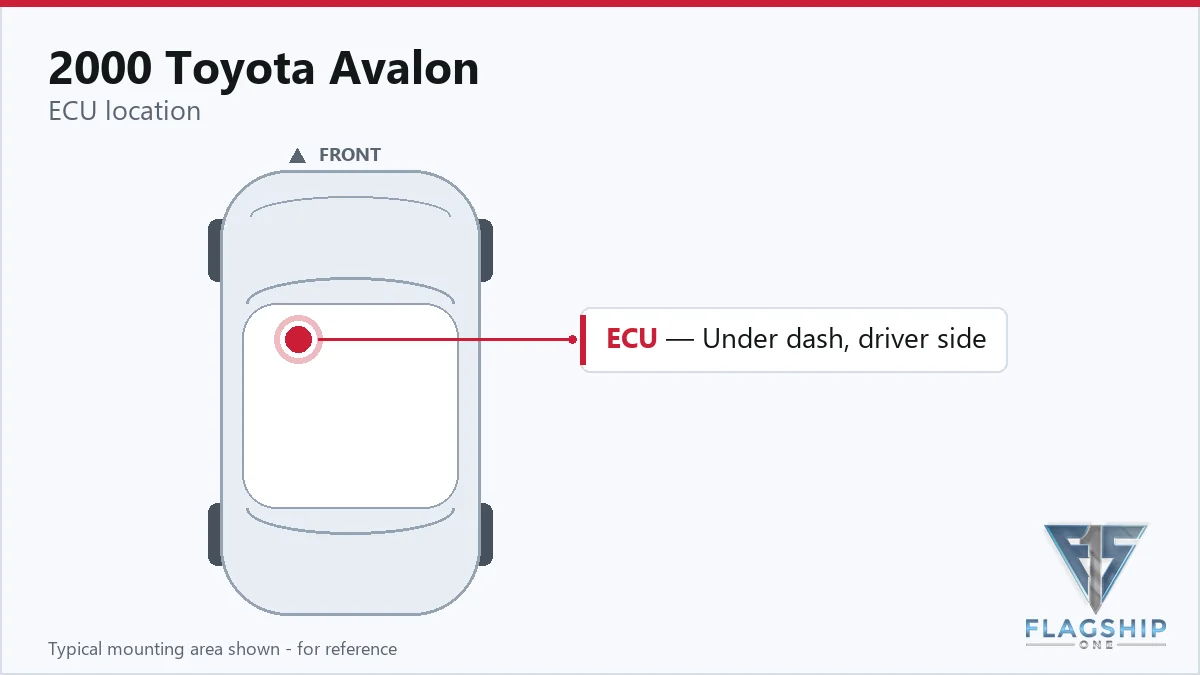
The engine ECU on the 2000 Toyota Avalon is positioned behind the instrument panel according to the factory wiring guide. Accessing this location typically requires removing trim pieces beneath the dashboard and possibly the knee bolster assembly to reach the module mounting location. The physical removal and installation labor for the Powertrain Control Module on this vehicle is listed at 0.8 hours in standard labor guides. This time covers the disconnection of electrical connectors, removal of mounting fasteners, and installation of the replacement module with proper torque application. After installing the new module, the relearn procedure requires an additional 0.5 hours according to factory specifications. This relearn process allows the new module to adapt to your specific engine’s characteristics and calibrate its learned values for idle speed, fuel trims, and transmission shift adaptives. During this procedure, the module monitors sensor inputs while you drive through specific operating conditions to establish proper baseline values. Skipping this step can result in drivability issues even when the replacement module is functioning correctly. Proper connection of all electrical connectors is critical, as poor contact can cause intermittent faults that mimic module failure or create new symptoms after a seemingly successful repair.
| Operation | Configuration | Book Time |
|---|---|---|
| Engine Control Module Relearn | All configurations | 0.5 hr |
| Engine Control Module R&R | All configurations | 0.8 hr |
| Powertrain Control Module R&R | All configurations | 0.8 hr |
| Powertrain Control Module Relearn | All configurations | 0.5 hr |
After replacing the Powertrain Control Module in your 2000 Toyota Avalon, the factory service procedure requires performing a relearn sequence to allow the new module to calibrate to your vehicle. This procedure involves specific driving cycles where the module monitors sensor data and establishes learned values for fuel delivery, idle control, and transmission shift points. The relearn labor time is specified at 0.5 hours in the factory data. When you purchase a replacement module from Flagship One, you receive a VIN-programmed replacement unit that has already been configured with your vehicle’s specific identification number and calibration data. This means the programming steps that would normally be required at a dealership or specialty shop have been completed before the module arrives. The advantage of receiving a pre-programmed unit is that you can proceed directly with the physical installation and relearn procedure without waiting for external programming services. Your technician will still need to complete the relearn cycle after installation to allow the module to optimize its adaptive parameters for your specific engine and transmission.
Every VIN-programmed replacement unit from Flagship One arrives with these steps already completed.
When the Powertrain Control Module in a 2000 Toyota Avalon begins to fail, the symptoms can vary widely depending on the nature of the internal fault. Common indicators include a no-start condition where the engine cranks but does not fire, suggesting the module is not providing the fuel pump activation or injector pulsing commands necessary for starting. Intermittent stalling during deceleration or idle may occur as the module loses communication with sensor inputs or fails to maintain proper idle air control. Misfire symptoms such as rough running, hesitation under acceleration, and decreased power often point to ignition or fuel delivery commands being interrupted. Transmission shifting problems including harsh shifts, failure to shift, or stuck gear may indicate the module is not properly controlling shift solenoids or torque converter clutch operation. Diagnostic trouble codes commonly stored include internal module integrity faults, sensor circuit malfunction codes, and communication-related codes. P0601 faults may appear when the module detects internal memory errors that compromise its ability to store learned data or execute its programming correctly. A dead or unresponsive scan tool connection at the DLC port often indicates a module communication failure that prevents diagnostic equipment from establishing contact with the vehicle’s networks. Reduced fuel economy combined with any of these symptoms may indicate the module is defaulting to open-loop fuel operation without properly adjusting for sensor inputs.
A used module will likely require programming to match your specific vehicle identification number before it can function in your Avalon. Even if you obtain a module from the same model year and engine, it will be locked to a different VIN. Additionally, used modules may have unknown internal damage or degraded components that could cause repeated failures.
The physical replacement is possible for a competent DIY mechanic since the module is located behind the instrument panel. However, you will still need to perform the relearn procedure after installation, and obtaining a properly programmed replacement module requires either dealer-level equipment or purchasing a pre-programmed unit from a specialist supplier.
When multiple unrelated systems are affected simultaneously, such as both engine operation and transmission shifting, the module becomes a more likely suspect. A scan tool capable of reading live data can help verify that sensor values appear reasonable while the module fails to respond appropriately to those inputs. Persistent codes even after sensor replacement also suggest a module-level fault.
Common causes include voltage spikes from charging system problems, heat-related degradation of internal components over time, moisture intrusion at electrical connections, and stress from prolonged operation under extreme temperatures. The module’s location behind the dashboard provides some protection but does not make it immune to these failure modes.
On most 2000 model year vehicles, the security system may require relearn procedures after a module replacement. This typically involves using a properly programmed key and following a specific sequence to allow the new module to recognize valid key codes. Not all replacement modules affect the immobilizer system, but it is a consideration during the repair process.
When faced with Powertrain Control Module failure on your 2000 Toyota Avalon, you have repair options ranging from module exchange to purchasing a professionally refurbished replacement. An exchange unit from a salvage facility carries risk of prior damage and still requires VIN programming. A professionally rebuilt replacement unit from Flagship One arrives ready to install with your vehicle’s identification number already configured, eliminating the need for external programming services before installation. Evaluate your timeline, budget, and access to programming equipment when deciding which approach makes sense for your situation.
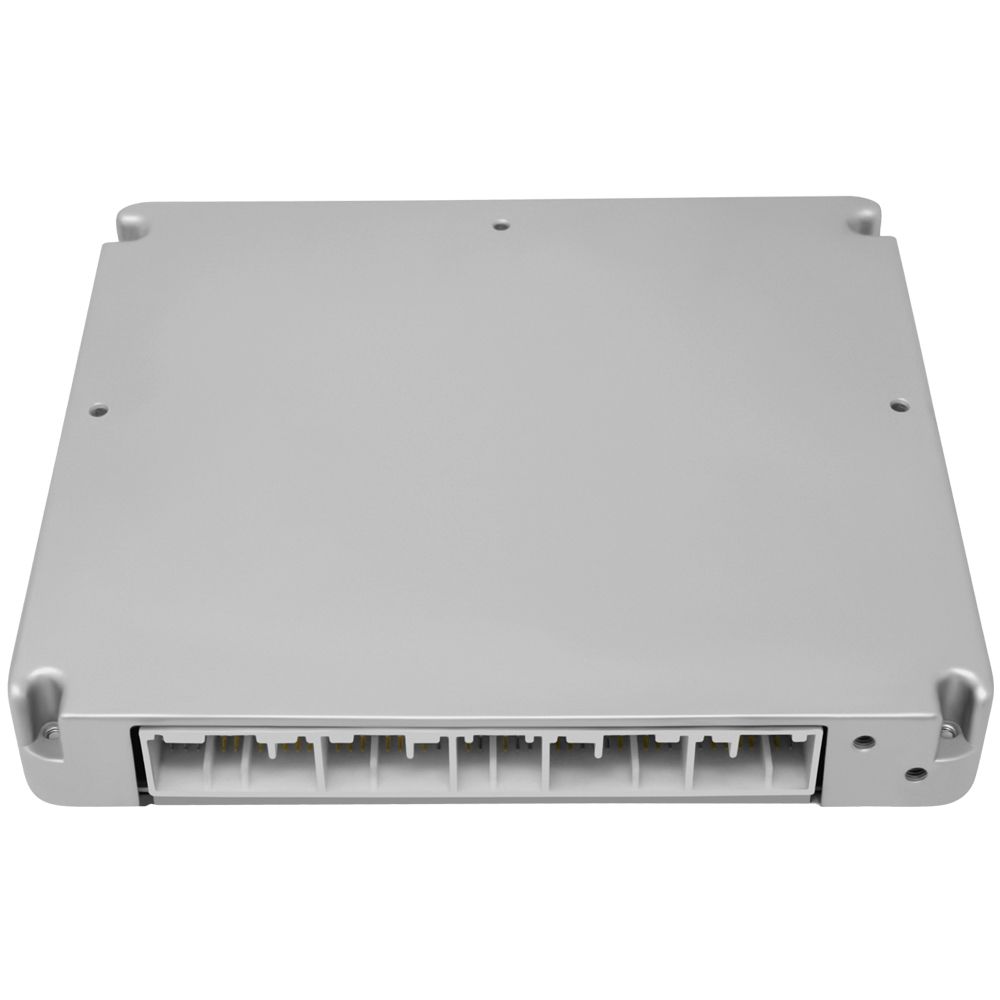
Flagship One stocks a refurbished, VIN-programmed PCM for the 2000 Toyota Avalon with a lifetime warranty, free shipping and no core charge. The full Toyota Avalon module lineup covers other engine configurations as well.
The Powertrain Control Module is essential to the operation of your 2000 Toyota Avalon, managing everything from engine combustion to transmission shifting behavior. When symptoms point to module failure, understanding the location, programming requirements, and relearn procedures helps you make informed repair decisions. Flagship One offers pre-programmed replacement modules designed for your specific vehicle, simplifying the repair process and getting your Avalon back on the road with confidence in its drivability.