
Last updated on August 25th, 2026 at 12:06 pm
The engine control module (ECM) in your 1997 Toyota Avalon manages fuel delivery, ignition timing, and emissions systems. When it fails, you may experience stalling, poor acceleration, or a complete no-start condition, often accompanied by diagnostic trouble codes.
If your 1997 Toyota Avalon has been acting up—stalling at stoplights, refusing to start, or throwing cryptic check-engine lights—your engine computer may be the culprit. This small but critical module, officially called the Engine Control Module (ECM), acts as the brain of your vehicle’s powertrain, constantly adjusting fuel, air, and spark to keep everything running smoothly. When it malfunctions, the symptoms can range from subtle drivability quirks to a car that won’t move at all. Replacing it isn’t just about swapping a box; it involves careful access, proper installation, and often a relearn procedure to sync the new unit with your Avalon’s systems. Understanding what the ECM does, where it’s located, and what to expect during replacement can save you time, frustration, and unnecessary trips to the shop. Whether you’re diagnosing an issue or preparing for a repair, this guide covers the essentials—no fluff, just the practical details you need to get your Avalon back on the road reliably.
1997 Toyota Avalon
OEM programmed ECM for your 1997 Toyota Avalon — plug & play, no dealer visit.
Free shipping · Lifetime warranty
The engine control module in your 1997 Toyota Avalon is a specialized computer responsible for managing nearly every aspect of engine performance. It monitors inputs from sensors throughout the vehicle—like the oxygen sensor, throttle position sensor, and crankshaft position sensor—to make real-time adjustments to fuel injection, ignition timing, and idle speed. These adjustments ensure optimal power, fuel efficiency, and emissions compliance. Without a properly functioning ECM, your Avalon may struggle to start, run roughly, or even enter a fail-safe mode that limits performance to prevent damage. Over time, heat, vibration, and electrical fluctuations can degrade the module’s internal components, leading to intermittent or permanent failures. When replacement becomes necessary, opting for replacement engine computers for the Avalon ensures compatibility with your vehicle’s specific wiring and sensor configurations, reducing the risk of mismatched parts or additional programming headaches.
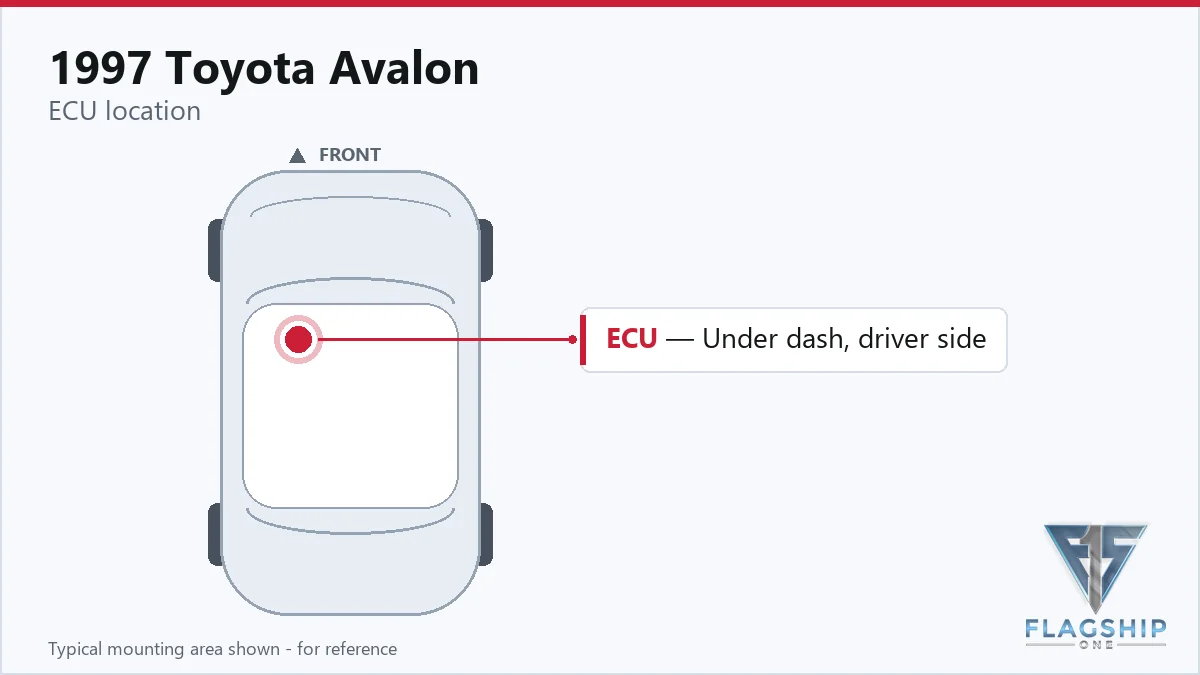
In the 1997 Toyota Avalon, the engine control module is located behind the instrument panel, near the center of the dashboard. This placement protects it from moisture and extreme temperatures but requires removing interior trim panels for access. Replacing the ECM involves disconnecting the battery, carefully prying off the lower dash cover, and unbolting the module’s mounting bracket. The factory labor time for removal and reinstallation is 0.8 hours, which includes disconnecting the wiring harness and securing the new unit. While the process isn’t overly complex, it does demand patience to avoid damaging clips or electrical connectors. Once the new ECM is installed, the vehicle may require a relearn procedure, which typically takes an additional 0.5 hours to complete. This step ensures the module synchronizes with the Avalon’s sensors and systems, restoring proper engine operation.
| Operation | Configuration | Book Time |
|---|---|---|
| Engine Control Module Relearn | All configurations | 0.5 hr |
| Engine Control Module R&R | All configurations | 0.8 hr |
| Powertrain Control Module R&R | All configurations | 0.8 hr |
| Powertrain Control Module Relearn | All configurations | 0.5 hr |
After replacing the engine control module in your 1997 Toyota Avalon, the factory procedure requires a relearn process to calibrate the new unit with the vehicle’s systems. This step, which takes about 0.5 hours, involves resetting learned values for fuel trim, idle speed, and other adaptive parameters. Without this procedure, your Avalon may run poorly or trigger diagnostic trouble codes. However, if you install a VIN-programmed replacement unit, these steps are already completed at the factory. The module arrives pre-configured to match your vehicle’s specific engine and transmission setup, eliminating the need for additional programming. This not only saves time but also reduces the risk of errors during the relearn process, ensuring your Avalon starts and runs smoothly right after installation.
A failing engine control module in your 1997 Toyota Avalon can produce a variety of symptoms, often mimicking other mechanical or electrical issues. One of the most common signs is a no-start condition, where the engine cranks but refuses to fire, often due to incorrect fuel or spark signals from the ECM. You may also experience intermittent stalling, particularly at idle or during deceleration, as the module struggles to maintain stable engine operation. Poor acceleration, hesitation, or surging can occur if the ECM miscalculates fuel delivery or ignition timing. Another telltale sign is the illumination of the check-engine light, frequently accompanied by trouble codes like internal control module memory checksum error, which indicates a fault within the module itself. In some cases, the vehicle may enter a fail-safe mode, limiting engine power to prevent damage. Scan-tool communication issues, where the ECM fails to respond to diagnostic requests, are another red flag. Because these symptoms can overlap with problems like faulty sensors or wiring issues, proper diagnosis is key to avoiding unnecessary repairs.
Stalling at stoplights is a common symptom of a failing ECM in the Avalon. The module controls idle speed and fuel delivery, and if it’s malfunctioning, it may cut fuel or spark at the wrong time. Other potential causes include a faulty idle air control valve or vacuum leaks, so a diagnostic scan is recommended to pinpoint the issue.
A no-start condition can stem from several issues, including a bad starter, fuel pump, or ignition system. If the engine cranks but doesn’t fire, the ECM may be failing to send the correct signals to the fuel injectors or ignition coils. A scan tool can check for ECM-related trouble codes or communication errors to confirm the diagnosis.
While your Avalon may run fine with the check-engine light on, the underlying issue could worsen over time. The ECM may have detected a fault that affects emissions or engine performance, and ignoring it could lead to more serious problems. A diagnostic scan can reveal whether the issue is minor or requires immediate attention.
Yes, a weak or failing battery can cause voltage fluctuations that may damage the ECM or trigger false trouble codes. The module relies on stable voltage to operate correctly, and low voltage can lead to erratic behavior or even permanent failure. Always ensure your battery and charging system are in good condition.
In your Avalon, the terms ECM (Engine Control Module) and PCM (Powertrain Control Module) are often used interchangeably, but they refer to the same component. This module controls both engine functions and, in some vehicles, transmission operations. For the 1997 Avalon, the ECM handles all engine-related tasks, including fuel, ignition, and emissions systems.
If your 1997 Toyota Avalon is showing signs of ECM failure, you have a few options for repair. A dealership or independent shop can replace the module and perform the required relearn procedure, but this often comes with higher labor costs. Alternatively, a refurbished or new replacement unit, pre-programmed to your Avalon’s VIN, can save time and ensure a smoother installation. This approach eliminates the need for additional programming steps, allowing you to get back on the road faster with minimal hassle.
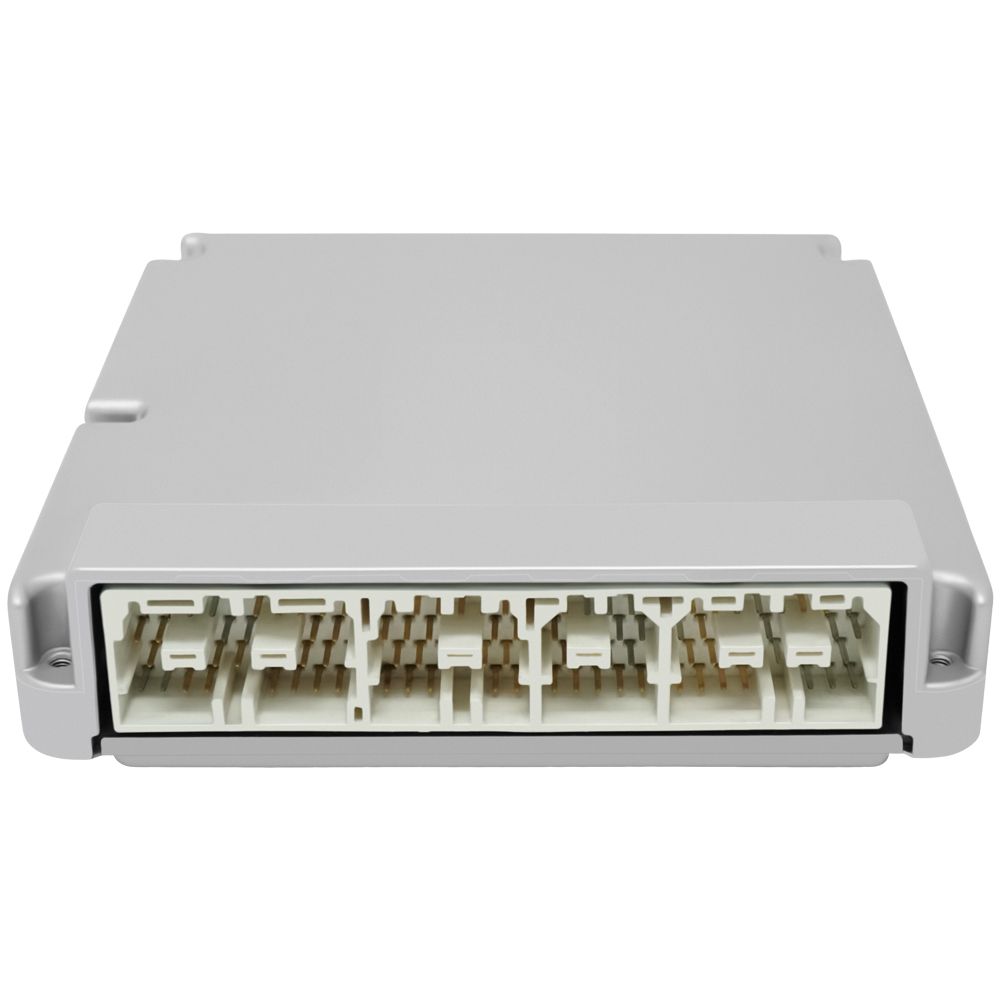
Flagship One stocks a refurbished, VIN-programmed PCM for the 1997 Toyota Avalon with a lifetime warranty, free shipping and no core charge. The full Toyota Avalon module lineup covers other engine configurations as well.
The engine control module in your 1997 Toyota Avalon plays a critical role in keeping your vehicle running smoothly. Whether you’re dealing with stalling, a no-start condition, or mysterious check-engine lights, understanding the ECM’s function, location, and replacement process can help you make informed decisions. If replacement is necessary, opting for a pre-programmed unit can simplify the process and reduce downtime. Regular maintenance and prompt attention to drivability issues can also help extend the life of your Avalon’s ECM, ensuring reliable performance for miles to come.