
Last updated on August 25th, 2026 at 12:43 pm
The Powertrain Control Module (PCM) in the 2003 Lincoln LS 3.0L is the main computer that manages engine fuel injection, ignition timing, and transmission shifting. Failure can cause no-start, rough running, transmission issues, and illuminated warning lights. It is located under the hood and requires careful replacement.
If you own a 2003 Lincoln LS with the 3.0L V6, you may eventually face a failing Powertrain Control Module (PCM). This computer is the brain of your engine and transmission, controlling everything from fuel delivery to shift points. When it starts to fail, your car may refuse to start, stall unexpectedly, or run poorly. Misdiagnosing a PCM issue is common because symptoms can mimic other problems like a bad sensor or fuel pump. This guide will help you understand what the PCM does, where it is located, how to replace it, and what programming is required. You will learn the book labor times for the job and how a pre-programmed unit can save you time and hassle. Whether you are a DIY mechanic or working with a shop, this information will help you get your Lincoln back on the road reliably.
2003 Lincoln LS
OEM programmed ECM for your 2003 Lincoln LS — plug & play, no dealer visit.
Free shipping · Lifetime warranty
The Powertrain Control Module (PCM) in the 2003 Lincoln LS 3.0L is a sophisticated computer that integrates engine and transmission control. It receives input from sensors like the crankshaft position sensor, throttle position sensor, and oxygen sensors, then adjusts fuel injectors, ignition coils, and transmission solenoids in real time. This module also manages idle speed, emission controls, and diagnostic functions. When the PCM fails, it can cause a wide range of drivability issues because it is the central hub for all powertrain commands. In the Lincoln LS, the PCM is particularly sensitive to voltage spikes and heat, which can degrade its internal components over time. If you need to replace this module, you will want to consider replacement PCMs for the Lincoln LS that are pre-programmed to match your vehicle’s VIN. This ensures that the module communicates correctly with the immobilizer system and other modules, avoiding common post-replacement problems like no-start or transmission faults. Understanding the PCM’s role helps you appreciate why a proper replacement is critical for restoring your vehicle’s performance.
The PCM in the 2003 Lincoln LS 3.0L is located in the engine bay, typically mounted on the passenger side near the firewall or behind the battery. To access it, you may need to remove the battery tray or air intake duct. Replacement involves disconnecting the negative battery cable, unplugging the two large electrical connectors, and unbolting the module from its bracket. The factory book time for removal and installation (R&R) is 1.4 hours. After installing the new PCM, a relearn procedure is required to synchronize the module with the vehicle’s security system and adapt to the engine’s characteristics. This relearn adds 0.5 hours of labor. It is important to handle the module carefully and avoid static discharge, which can damage the electronics. Ensure all connectors are clean and fully seated before testing.
| Operation | Configuration | Book Time |
|---|---|---|
| Engine Control Module R&R | All configurations | 1.4 hr |
| Engine Control Module Relearn | All configurations | 0.5 hr |
| Powertrain Control Module R&R | All configurations | 1.4 hr |
After replacing the PCM in a 2003 Lincoln LS 3.0L, the factory procedure requires a relearn process that takes 0.5 hours. This involves using a scan tool to program the module with the vehicle’s VIN and perform a security key reset. Without this step, the engine may not start or may run poorly. However, when you purchase a VIN-programmed replacement unit from Flagship One, that programming is already completed. The module arrives ready to install, with the correct calibration for your engine and transmission. This eliminates the need for a dealer visit or specialized scan tool, saving you time and money. Simply install the module, reconnect the battery, and start the engine. The vehicle may still need a brief idle relearn, but the critical programming is done. This is especially valuable for the Lincoln LS, where the PCM is tied to the PATS (Passive Anti-Theft System) and requires precise VIN matching.
A failing PCM in the 2003 Lincoln LS 3.0L can produce a variety of symptoms that may be intermittent or constant. Common signs include a no-start condition where the engine cranks but does not fire, or it starts and then stalls shortly after. You may notice rough idling, misfires, or hesitation during acceleration. The check engine light may illuminate with codes related to fuel trim, ignition, or transmission communication. In some cases, the transmission may shift erratically, get stuck in a single gear, or refuse to shift at all. Another telltale symptom is a loss of communication with a scan tool; the tool may not be able to connect to the PCM or may show ‘no communication’ errors. Electrical issues like blown fuses or a dead battery can also occur if the PCM shorts internally. Because these symptoms overlap with other problems like a bad crankshaft sensor or fuel pump, it is important to diagnose the PCM by checking for power and ground at the module and reading any stored codes.
Common symptoms include no-start, stalling, rough idle, misfires, erratic transmission shifting, and a check engine light. You may also experience loss of communication with a scan tool.
The PCM is located in the engine bay, typically on the passenger side near the firewall or behind the battery. You may need to remove the battery tray or air intake for access.
The book time for removal and installation is 1.4 hours. An additional 0.5 hours is required for the relearn procedure after installation.
Yes, the factory procedure requires a relearn that programs the VIN and security key. A VIN-programmed replacement unit from Flagship One eliminates this step.
Yes, the PCM controls transmission shifting. A failing PCM can cause harsh shifts, slipping, or the transmission to get stuck in a single gear.
When your 2003 Lincoln LS 3.0L needs a new PCM, you have two main options: repair the existing module or replace it with a refurbished unit. Repair is sometimes possible for minor issues like bad capacitors, but often a replacement is more reliable. A refurbished PCM that is pre-programmed to your VIN ensures plug-and-play installation without dealer visits. This is especially important for the Lincoln LS due to its integrated anti-theft system.
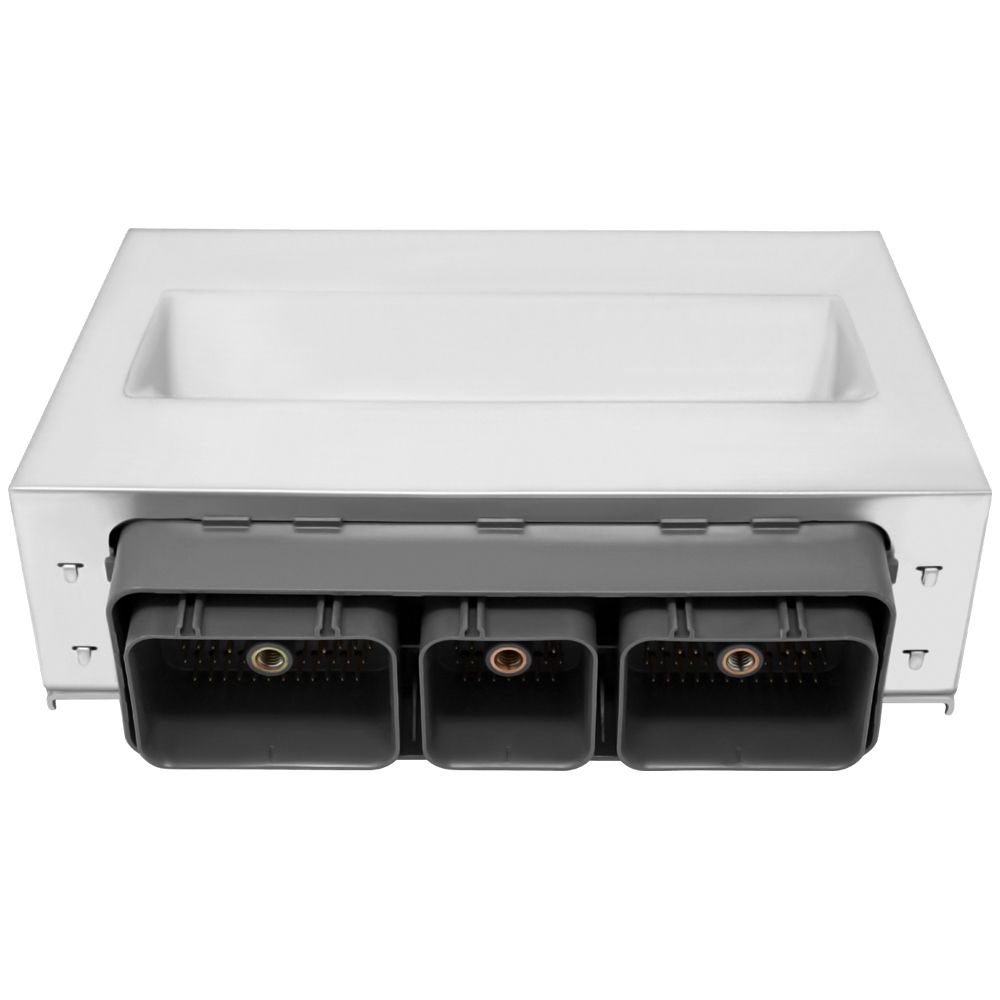
Flagship One stocks a refurbished, VIN-programmed PCM for the 2003 Lincoln LS with a lifetime warranty, free shipping and no core charge. The full Lincoln LS module lineup covers other engine configurations as well.
The PCM in your 2003 Lincoln LS 3.0L is a critical component that controls engine and transmission performance. Recognizing failure symptoms early and understanding the replacement process can save you time and money. Whether you choose a repair or a pre-programmed replacement, ensure the module matches your vehicle’s specifications for a smooth fix.