
Last updated on August 25th, 2026 at 12:43 pm
In the 2001 Lincoln LS, the Powertrain Control Module (PCM) and Engine Control Module (ECM) manage engine timing, fuel delivery, and transmission coordination. Failure of either unit may trigger driveability problems, illuminate the MIL, or store diagnostic codes such as P1572, indicating a loss of proper control signals.
When a 2001 Lincoln LS exhibits erratic performance, a faulty powertrain or engine control module could be the source. This guide explains where the modules live, how long a typical removal and reinstall takes, and what programming steps are required afterward. By understanding these details, you can gauge the effort involved and decide whether a new or refurbished unit fits your repair plan.
The PCM in the 2001 Lincoln LS interprets sensor data to command fuel injection, ignition timing, and transmission shifts, while the ECM focuses on engine‑specific functions. Both modules are essential for maintaining smooth operation and meeting emissions standards. A malfunction can cause loss of power, rough idle, or transmission lag, making reliable replacement critical. replacement ECMs for Lincoln LS ensure the vehicle continues to meet its designed performance criteria.
2001 Lincoln LS
OEM programmed ECM for your 2001 Lincoln LS — plug & play, no dealer visit.
Free shipping · Lifetime warranty
The control modules sit in the plenum chamber behind the base of the windshield, reachable via the factory removal path. Removing the unit typically requires 1.4 hours of labor for each module, according to the service manual. Reinstallation follows the same steps in reverse, and the ECM relearn procedure adds an additional 0.5 hours to verify proper operation after the swap.
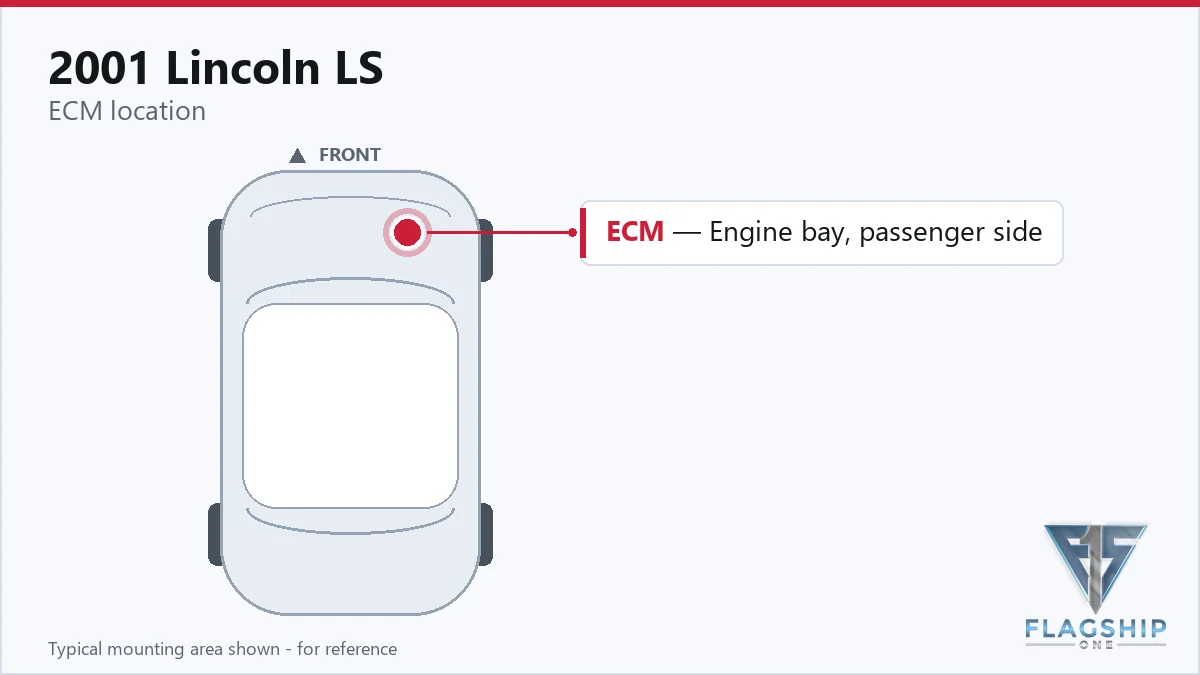
Work with the ignition off, and treat the module as static-sensitive: avoid touching the connector pins at any point.
| Operation | Configuration | Book Time |
|---|---|---|
| Engine Control Module R&R | All configurations | 1.4 hr |
| Engine Control Module Relearn | All configurations | 0.5 hr |
| Powertrain Control Module R&R | All configurations | 1.4 hr |
After installing a new module, the factory procedure calls for a PCM relearn and an ECM communication check, which are covered by the 0.5‑hour relearn time. Flagship One provides a a VIN-programmed replacement unit that arrives already coded to your vehicle, so those programming steps are completed before the unit reaches you.
Typical signs of a failing PCM or ECM in a 2001 Lincoln LS include a non‑starting condition, intermittent stalling, rough idle, and unexpected transmission shifts. Diagnostic scanners often report codes such as driveability code P1572, and you may notice the malfunction indicator lamp illuminated even when other systems appear normal.
Technical Service Bulletin 06-08-03 offers diagnostic tips for speed control problems linked to the PCM, while Bulletin 01-03-03 addresses the P1572 code, describing driveability and electrical symptoms for vehicles built before February 28, 2001.
| Bulletin | Subject | What It Addresses |
|---|---|---|
| 06-08-03 | PCM – SPEED CONTROL DIAGNOSTIC TIPS | — |
| 01-03-03 | DIAGNOSTIC TROUBLE CODE (DTC) P1572 STORED IN MEMORY – DRIVEABILITY – ELECTRICAL – LAMP – MALFU | — |
You may experience poor acceleration, erratic transmission shifts, or a illuminated MIL, often accompanied by diagnostic codes related to speed control.
The service manual lists 1.4 hours for removal and reinstall, plus an additional 0.5 hours for the required relearn procedure.
Yes, the factory process includes a PCM relearn and ECM communication check, which Flagship One units already have completed.
When the PCM or ECM in your 2001 Lincoln LS fails, you can choose a brand‑new factory unit or a refurbished replacement that matches original specifications. Both options restore functionality, but a refurbished part may reduce cost while still delivering the required performance.
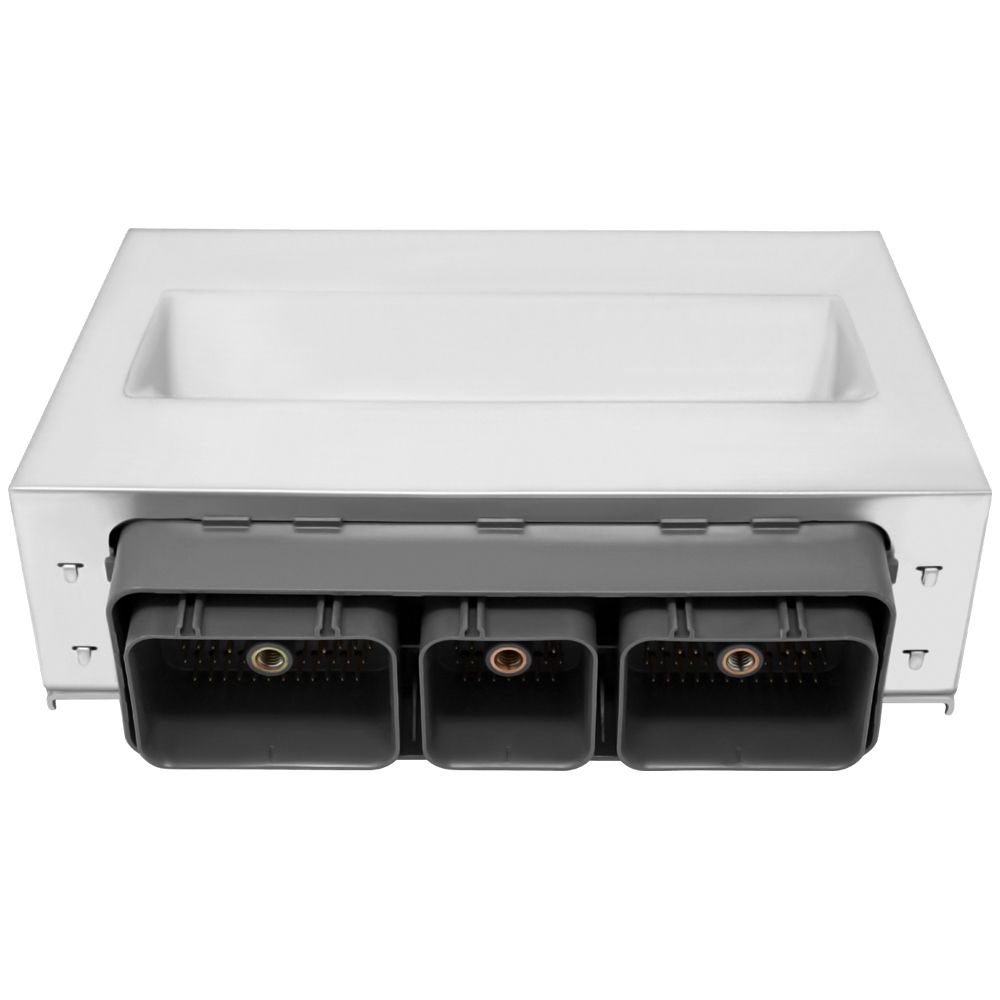
Flagship One stocks a refurbished, VIN-programmed PCM for the 2001 Lincoln LS with a lifetime warranty, free shipping and no core charge. The full Lincoln LS module lineup covers other engine configurations as well.
Replacing the PCM or ECM in a 2001 Lincoln LS restores reliable engine and transmission control. Consider a VIN‑programmed unit from Flagship One to simplify the post‑install steps and get your vehicle back on the road.