
Last updated on August 25th, 2026 at 12:12 pm
The powertrain control module in your 2000 Lincoln LS governs fuel injection, ignition timing, and transmission logic from its position in the plenum chamber. Heat cycles and voltage spikes often degrade internal solder joints or capacitors, causing intermittent driveability failures and communication errors.
When your 2000 Lincoln LS begins to stall without warning or refuses to start on hot afternoons, the root cause often hides inside a sealed aluminum case beneath the windshield. That component is the powertrain control module, and it serves as the central nervous system for your vehicle’s engine and transmission management. Understanding how this module functions, where it lives, and what happens when it fails gives you the knowledge to avoid unnecessary towing bills and misdiagnosed repairs. This guide explains the specific location of the control module in the plenum chamber, the exact book times quoted for replacement, and the programming requirements that determine whether your engine will fire after the swap. You will learn why a simple used module from a salvage yard typically will not start your vehicle without additional configuration, and how factory service bulletins guide technicians through intermittent no-start and cruise control concerns. By the end, you will understand the full scope of the repair, from accessing the module at the windshield base to the final relearn procedure, allowing you to discuss the job confidently with your technician or handle the replacement yourself if you have the tooling.
The powertrain control module in your 2000 Lincoln LS functions as the primary decision-maker for every combustion event and gear change. Mounted deep within the plenum chamber, this unit receives constant data from the crankshaft position sensor, mass airflow meter, and throttle position sensor to calculate ignition advance and fuel injector pulse width in real time. It also commands the automatic transmission’s shift solenoids based on vehicle speed and engine load, meaning a single internal fault can manifest as harsh shifting, unexpected downshifts, or a complete inability to move the vehicle. Because the module sits in the plenum chamber at the base of the windshield, it experiences significant thermal cycling every time you shut off the engine. Heat rises from the exhaust manifold and radiator, concentrating in this enclosed cavity where it slowly stresses the circuit board’s solder connections and electrolytic capacitors. Over years of daily driving, these thermal cycles may cause microscopic cracks that create open circuits or parasitic resistance, leading to symptoms that appear only when the cabin is hot or when the vehicle has been sitting in direct sunlight. When you shop for replacement modules for the Lincoln LS, you are essentially buying the programmed personality of your vehicle. The module stores the VIN, immobilizer codes, and calibration data specific to your engine and transmission combination. Without these identifiers correctly written to the memory, the passive anti-theft system will inhibit the starter and fuel pump, leaving you with a crank-no-start condition even though the hardware is physically installed. This is why procurement of the correct service number matters as much as the physical condition of the unit.
2000 Lincoln LS
OEM programmed ECM for your 2000 Lincoln LS — plug & play, no dealer visit.
Free shipping · Lifetime warranty
Technicians access the control module by removing components to reach the plenum chamber located at the base of the windshield. This cavity sits just ahead of the passenger compartment firewall, making it a high-humidity zone that can corrode connector pins if seals degrade. The factory procedure allocates 1.4 hours for the removal and installation of either the powertrain control module or the engine control module, reflecting the time required to detach the wiring harness, unscrew the mounting bracket, and maneuver the unit past the cowl trim. During service, you should inspect the multi-pin connector for green oxidation or moisture intrusion, as the plenum chamber’s position exposes it to rainwater and engine-bay heat. The book time does not include diagnostic scans or the subsequent relearn procedure, which carries its own labor allocation. No torque specifications were provided for the mounting fasteners, so standard small-screw practices typically apply. Because the module sits in this specific chamber, technicians often find that previous repairs disturbed the foam sealing pads that prevent water from dripping onto the connector, so replacing those seals during the 1.4-hour R&R prevents future intermittent contacts.
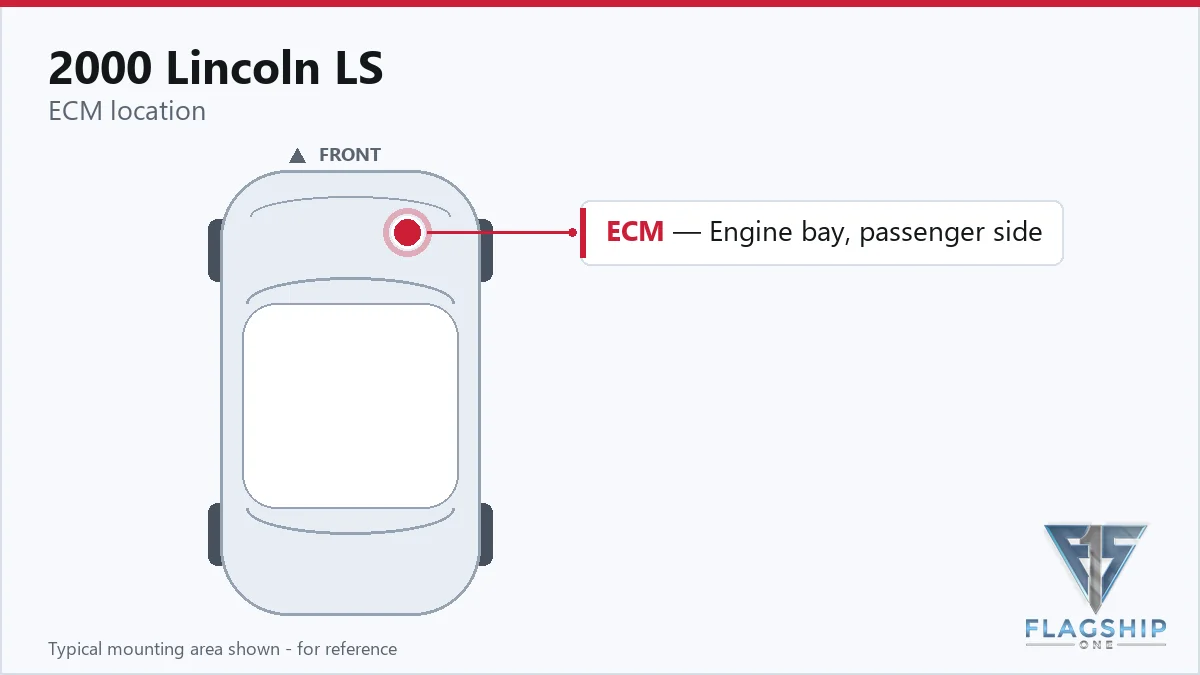
Work with the ignition off, and treat the module as static-sensitive: avoid touching the connector pins at any point.
| Operation | Configuration | Book Time |
|---|---|---|
| Engine Control Module R&R | All configurations | 1.4 hr |
| Engine Control Module Relearn | All configurations | 0.5 hr |
| Powertrain Control Module R&R | All configurations | 1.4 hr |
After physical installation, the factory service manual mandates a relearn procedure to synchronize the new module with your vehicle’s immobilizer and powertrain systems. This step carries a book time of 0.5 hours and involves communicating with the module through the diagnostic port to establish the correct VIN, tire size, and transmission calibration. Without this relearn, the 2000 Lincoln LS may exhibit a flashing theft lamp, incorrect speedometer readings, or a no-start condition despite correct mechanical timing. When you purchase a VIN-programmed replacement unit from Flagship One, this 0.5-hour relearn and the associated security synchronization arrive already completed. Our technicians encode your specific VIN and factory calibration into the memory before shipping, so the module enters the plenum chamber ready to communicate with the instrument cluster and anti-theft transceiver immediately upon connection. You still need to perform the physical installation within the 1.4-hour window, but the subsequent relearn step that often requires a dealer-level scan tool or subscription software is already finished. This preparation eliminates the risk of lockouts or calibration mismatches that can occur when attempting to write data to a blank module after it is bolted into the vehicle.
A degrading control module in your 2000 Lincoln LS rarely announces its failure with a single dramatic event; instead, you may notice a pattern of symptoms that worsen with cabin temperature or humidity. The engine may crank vigorously yet refuse to fire, especially after the vehicle has sat in a hot parking lot, only to start normally once the interior cools. This thermal dependency suggests internal board fractures that expand and contract with heat cycles. You might also experience sudden stalling at traffic lights without any check-engine lamp preceding the event, or the transmission may slam into gear with harsh engagement that feels like a physical jerk. Intermittent communication with your scan tool offers another clue. If the diagnostic software occasionally fails to establish a link with the powertrain control module, or if you receive historical codes for the crankshaft position sensor yet the sensor tests fine, the module’s internal driver may be dropping the circuit. Misfire codes that move between cylinders or appear on cylinders that compression and ignition tests prove healthy often point to erratic injector drivers within the module. Additionally, you may notice the speed control fails to maintain set speed or the instrument cluster displays erratic temperature readings, as the module processes these inputs. The passive anti-theft system may flash its lamp rapidly during cranking, indicating the module cannot validate the ignition key’s transponder signal due to corrupted memory. Shifting delays, harsh downshifts, or the transmission refusing to leave second gear can also trace back to the unit’s inability to process vehicle speed or throttle angle data correctly.
Ford issued technical service bulletins that guide diagnosis for specific concerns on the 2000 Lincoln LS. TSB 06-08-03 addresses diagnostic strategies for the speed control system, offering technicians troubleshooting trees when cruise control functions fail or set erroneous codes. Additionally, TSB 01-16-04 covers intermittent crank-no-start conditions accompanied by a flashing theft warning lamp on vehicles produced before June 15, 2001. This bulletin outlines electrical testing procedures to differentiate between wiring faults and actual module failure when the anti-theft system incorrectly immobilizes the engine. These documents provide factory-endorsed pathways to avoid unnecessary component replacement when symptoms point toward circuit or calibration issues rather than hardware failure.
| Bulletin | Subject | What It Addresses |
|---|---|---|
| 06-08-03 | PCM – SPEED CONTROL DIAGNOSTIC TIPS | — |
| 01-16-04 | DRIVEABILITY – ELECTRICAL – INTERMITTENT CRANK NO START – NO START – THEFT WARNING LAMP FLASHIN | — |
Thermal expansion inside the plenum chamber may cause microscopic fractures in the module’s circuit board to open when hot. This interrupts the signal to the ignition or fuel systems until the metal contracts after cooling.
A salvage module typically arrives with a different VIN and immobilizer code stored in memory. Without professional reprogramming to match your vehicle’s specific identifiers, the passive anti-theft system will prevent the engine from starting.
The 1.4 hour allocation covers only the physical removal and installation of the module within the plenum chamber. The separate relearn procedure requires an additional 0.5 hours according to the factory labor guide.
A failing PCM often produces intermittent symptoms that move between cylinders or appear only when hot, whereas a faulty crank sensor usually causes consistent no-start conditions regardless of temperature and sets a specific circuit code.
While low voltage can cause communication errors, a continuously flashing theft lamp during cranking typically indicates the PCM cannot validate the key transponder, which requires either module reprogramming or replacement rather than battery service.
When the control module in your 2000 Lincoln LS fails, you face a choice between expensive dealership repairs and a cost-effective refurbished replacement. A programmed unit arrives ready to install within the 1.4-hour service window, eliminating the need for additional dealer-based configuration and allowing your vehicle to return to daily service quickly without the delays of software authorization or repeated diagnostic visits.
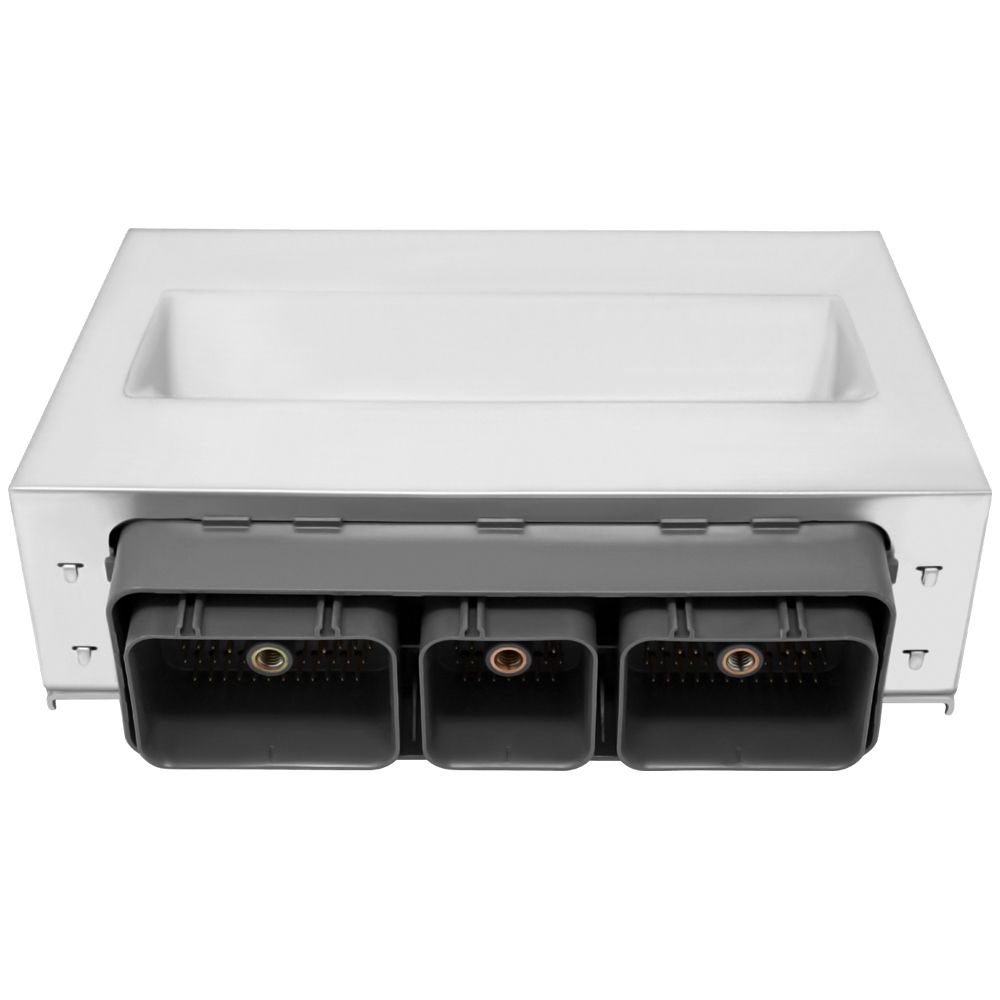
Flagship One stocks a refurbished, VIN-programmed PCM for the 2000 Lincoln LS with a lifetime warranty, free shipping and no core charge. The full Lincoln LS module lineup covers other engine configurations as well.
Understanding the specific location in the plenum chamber, the 1.4-hour labor allocation, and the programming requirements for your 2000 Lincoln LS empowers you to make informed decisions about control module replacement. With proper preparation and a correctly configured unit, you can restore reliable starting and smooth shifting to your vehicle while avoiding the inconvenience of unexpected breakdowns and immobilizer lockouts.