
Last updated on August 25th, 2026 at 12:43 pm
The Powertrain Control Module (PCM) and Engine Control Module (ECM) in your 2004 Lincoln LS serve as the central computer managing engine operation, fuel delivery, ignition timing, and transmission shifting. When internal circuitry fails from heat cycles, voltage spikes, or component aging, the module may stop communicating with scan tools or cause drivability problems.
If your 2004 Lincoln LS with the 3.0L engine has developed starting problems, runs poorly, or a scan tool cannot communicate with the engine computer, you may be facing a Powertrain Control Module or Engine Control Module failure. These terms are often used interchangeably in automotive service, though the PCM typically handles both engine and transmission functions while the ECM focuses primarily on engine management. Understanding what these modules do, where they are located, and what replacement involves helps you make informed decisions about repair options rather than relying solely on dealer recommendations. This guide covers the technical role of the control module in your specific vehicle, the typical symptoms that indicate failure, the factory labor procedures, and what you need to know about programming a replacement unit. Whether you are diagnosing a check engine light, dealing with a no-start condition, or simply planning ahead, the information here helps you understand the repair process and what to expect from replacement components.
2004 Lincoln LS
OEM programmed ECM for your 2004 Lincoln LS — plug & play, no dealer visit.
Free shipping · Lifetime warranty
The Engine Control Module in your 2004 Lincoln LS is the primary computer responsible for managing the 3.0L V6 engine’s air-fuel mixture, idle speed, variable valve timing, and emissions control systems. The module receives input from numerous sensors throughout the engine bay—including the mass airflow sensor, coolant temperature sensor, throttle position sensor, and oxygen sensors—and uses this information to make real-time adjustments to keep the engine running efficiently under all operating conditions. The Powertrain Control Module, if equipped separately or integrated, extends this control to the automatic transmission, managing shift points and line pressure based on driver input and vehicle speed. When these modules function properly, your Lincoln delivers smooth acceleration, acceptable fuel economy, and reliable cold starts. When internal circuitry degrades from repeated heat expansion cycles, voltage stress from charging system irregularities, or simple component aging, the module may lose its programming, experience memory errors, or fail entirely. The consequences affect nearly every aspect of engine operation: starting may become difficult or impossible, the engine may stall unexpectedly, transmission shifting may become harsh or delayed, and diagnostic scan tools may be unable to communicate with the vehicle’s systems. Replacement engine computers for the Lincoln LS must be programmed to match your specific vehicle identification number to ensure proper functionality with the anti-theft system, emissions controls, and transmission calibration.
Flagship One keeps Lincoln LS replacement engine computers in stock for exactly this failure pattern.
The control module on a 2004 Lincoln LS is typically located in the engine compartment, mounted on the firewall or near the左侧fender well, though exact positioning varies by production year and engine configuration. Access generally requires removing the engine cover and possibly related trim components to reach the module’s electrical connectors. The replacement procedure involves disconnecting the battery ground cable, removing the mounting hardware, unplugging the harness connectors, and installing the new unit in reverse order. Torque specifications for mounting bolts typically follow standard factory procedures, though your service manual should be consulted for specific values. Book time for the removal and replacement operation is listed at 1.4 hours, which accounts for the disconnect and reconnect procedures along with securing the new module. After installation, the module requires a relearn procedure taking approximately 0.5 additional hours to allow the engine computer to calibrate to the new hardware and reset adaptive fuel trims. This relearn process is essential for achieving proper idle quality and drivability after replacement.
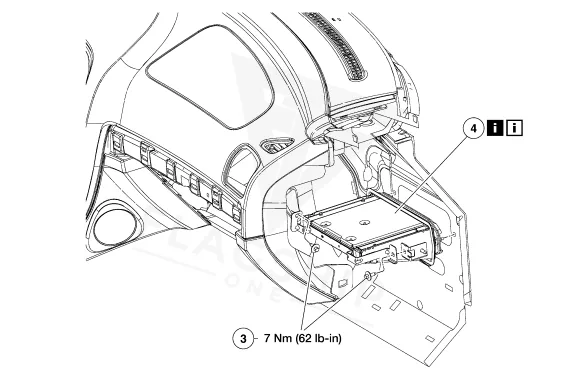
Work with the ignition off, and treat the module as static-sensitive: avoid touching the connector pins at any point.
| Operation | Configuration | Book Time |
|---|---|---|
| Powertrain Control Module R&R | All configurations | 1.4 hr |
| Engine Control Module R&R | All configurations | 1.4 hr |
| Engine Control Module Relearn | All configurations | 0.5 hr |
After replacing the ECM or PCM in your 2004 Lincoln LS, the factory procedure requires programming the new module to recognize your specific vehicle identification number and configure it for your vehicle’s equipment options. This programming step is necessary because the replacement unit arrives as a blank controller that contains no vehicle-specific data. The process typically involves connecting a dealer-level scan tool or equivalent diagnostic equipment to the vehicle’s OBD-II port and performing a security relearn, which may include initializing the throttle body position sensor, resetting fuel trams, and confirming communication with the transmission control module. Without this procedure, the engine may not start or may run in a reduced-performance mode. Flagship One addresses this requirement by shipping a VIN-programmed replacement unit configured specifically for your vehicle before it leaves their facility, meaning the essential programming steps have already been completed. This allows you to install the unit and proceed directly to the relearn procedure without needing dealer equipment or programming fees.
Every VIN-programmed replacement unit from Flagship One arrives with these steps already completed.
When the ECM or PCM in a 2004 Lincoln LS begins to fail, the vehicle often exhibits one or more recognizable symptoms that indicate the engine computer is not functioning properly. A no-start condition is one of the most serious indicators—when the module fails completely, the engine may crank normally but receive no fuel or spark, leaving you stranded. Intermittent starting or hard-starting when the engine is warm frequently accompanies module problems, as the compromised electronics struggle to maintain proper calibrations. Stalling while driving, especially at idle or under light acceleration, points to loss of fuel or ignition control, creating a safety concern. Many owners report that the check engine light illuminates and remains on, with diagnostic codes indicating communication failures or internal memory errors. A dead scan-tool connection—where no diagnostic device can establish contact with the engine computer—is a strong indicator of module failure rather than a simple sensor problem. Transmission shifting issues may also manifest, including harsh shifts, delayed engagement, or the transmission failing to shift into gear, because the PCM manages shift solenoids and line pressure. Misfire codes such as P0300 through P0306, indicating random or specific-cylinder misfires, can also stem from incorrect signals sent by a failing engine computer to the ignition coils and fuel injectors.
Replacing a failed ECM or PCM in your 2004 Lincoln LS is a significant repair, but you have options beyond the dealer parts channel. A brand-new replacement module from Flagship One arrives VIN-programmed and ready to install, eliminating the programming delays and dealer fees typically associated with this repair. Alternatively, a remanufactured unit may offer cost savings, though you should verify whether programming is included and what warranty coverage applies. Consider your budget, timeline, and confidence in the source when choosing between these options.
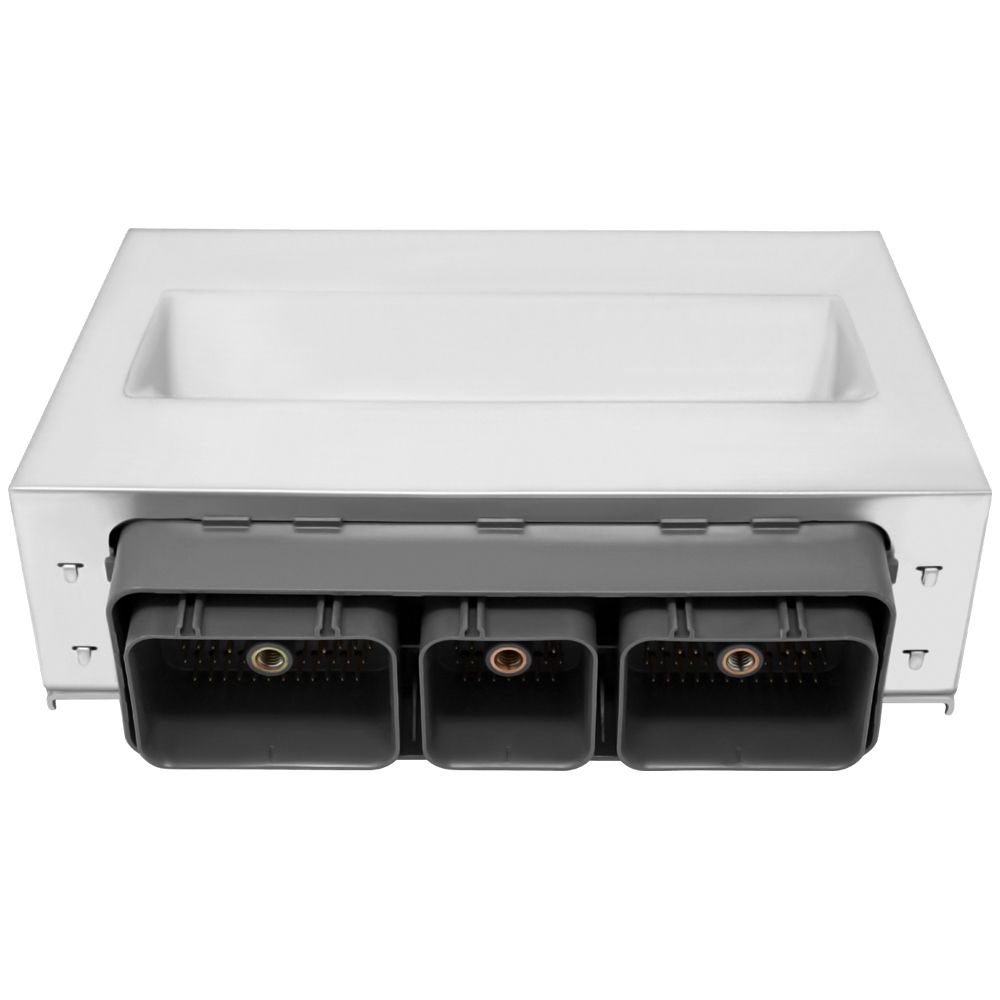
Flagship One stocks a refurbished, VIN-programmed PCM for the 2004 Lincoln LS with a lifetime warranty, free shipping and no core charge. The full Lincoln LS module lineup covers other engine configurations as well.
The Engine Control Module in your 2004 Lincoln LS is essential to virtually every aspect of engine and transmission operation, making failure a serious matter that warrants prompt attention. Understanding the typical symptoms, labor requirements, and programming considerations helps you approach the repair with realistic expectations. Whether you choose a new or remanufactured replacement, ensure the unit is properly programmed to your vehicle before installation to avoid starting issues and drivability problems.