
Last updated on August 25th, 2026 at 01:04 pm
The powertrain control module in your 1997 Mercury Grand Marquis serves as the central computer managing engine operation, transmission shifting, and emissions systems. When this unit fails, your vehicle may experience drivability issues, illumination of the check engine light, or complete no-start conditions.
If your 1997 Mercury Grand Marquis has developed drivability problems, experienced a no-start condition, or is displaying multiple check engine lights, the powertrain control module may be the culprit. This comprehensive guide explains what this critical engine computer does, how to recognize when it has failed, what the replacement process involves, and why choosing a properly programmed replacement unit matters for getting your vehicle back on the road. The PCM serves as the brain of your vehicle’s powertrain, continuously monitoring sensor inputs and adjusting engine and transmission operation to maintain performance, fuel efficiency, and emissions compliance. Understanding the role of this module and the factory-recommended service procedures helps you make informed decisions whether you plan to perform the replacement yourself or entrust the work to a professional technician. This guide draws on manufacturer service information and industry-standard repair practices to provide accurate, practical guidance for addressing PCM issues on this specific vehicle.
The powertrain control module in your 1997 Mercury Grand Marquis functions as the central nervous system for the vehicle’s engine and transmission. This computer receives input from dozens of sensors throughout the powertrain, including the mass airflow sensor, coolant temperature sensor, oxygen sensors, throttle position sensor, and vehicle speed sensor. Using this information, the module calculates optimal fuel injector pulse width, ignition timing advance, transmission shift points, and exhaust gas recirculation rates in real time. The module also monitors the catalytic converter efficiency through oxygen sensor signals and will trigger the malfunction indicator lamp when emissions performance falls below acceptable thresholds. Because the PCM controls such a wide array of critical functions, its failure can manifest in dramatically different ways depending on which circuits are affected. Some failures produce immediate no-start conditions with no communication possible through the diagnostic port, while others may cause intermittent stalling, poor acceleration, or mysterious check engine lights that defy easy diagnosis. The module’s internal memory stores adaptation values learned over thousands of miles of operation, which is why proper programming procedures exist for replacement units. When installing replacement engine computers for the Grand Marquis, the new unit must be configured to communicate with your specific vehicle’s remaining control modules and sensors to ensure proper operation.
Flagship One keeps Mercury Grand Marquis replacement engine computers in stock for exactly this failure pattern.
1997 Mercury Grand Marquis
OEM programmed ECM for your 1997 Mercury Grand Marquis — plug & play, no dealer visit.
Free shipping · Lifetime warranty
The powertrain control module on your 1997 Mercury Grand Marquis is located in the passenger compartment, typically mounted behind the right-side kick panel adjacent to the front passenger door. Access requires removal of the kick panel trim piece, which is secured with several plastic clips and possibly a retaining bolt. Once the panel is removed, you will see the module mounted in a plastic bracket with an electrical connector that must be disconnected to remove the unit. The replacement procedure involves disconnecting the battery negative terminal before starting work to prevent damage to sensitive electronics, removing the mounting hardware and electrical connector from the failed module, installing the new or replacement unit into the mounting bracket, and reconnecting the electrical harness. The book time for engine control module removal and replacement on this vehicle is approximately 1.0 hour, while powertrain control system diagnosis and testing typically requires an additional 0.5 hour to verify proper operation and check for stored diagnostic trouble codes. After reassembly, the new module must undergo an adaptation procedure to learn idle air control values and other vehicle-specific parameters.
Work with the ignition off, and treat the module as static-sensitive: avoid touching the connector pins at any point.
| Operation | Configuration | Book Time |
|---|---|---|
| Engine Control Module Relearn | All configurations | 0.5 hr |
| Engine Control Module R&R | All configurations | 1.0 hr |
| Powertrain Control System Diagnosis & Testing | All configurations | 0.5 hr |
Following module replacement on your 1997 Mercury Grand Marquis, the factory service procedure requires performing a PCM reprogramming sequence using specialized diagnostic equipment. This procedure ensures the replacement module’s software is compatible with your vehicle’s specific calibration and that all security features are properly initialized. The factory procedure utilizes an oversized diagnostic connector that incorporates an 18-volt transformer, which supplies the required voltage to successfully reprogram the PCM with the correct vehicle-specific software. This step is critical because the module must be configured to match your vehicle’s engine displacement, transmission type, and other powertrain specifications. However, when you purchase a VIN-programmed replacement unit from Flagship One, this entire post-install programming requirement is eliminated because the unit arrives pre-configured with your specific vehicle’s identification number already programmed into its memory. This means the module will communicate with your vehicle’s other control modules immediately upon installation without requiring additional diagnostic programming procedures.
Every VIN-programmed replacement unit from Flagship One arrives with these steps already completed.
Recognizing the symptoms of a failing powertrain control module helps you determine whether replacement is necessary before the problem leaves you stranded. The most obvious symptom is a no-start condition where the engine cranks normally but fails to fire, often accompanied by a check engine light that may be illuminated or flashing. Many module failures also produce stalling symptoms where the engine dies unexpectedly while idling or under load, particularly when the module’s internal circuits overheat during extended operation. Misfire codes such as P0300 through P0308 are common indicators of PCM failure because the module may incorrectly calculate fuel delivery or ignition timing, causing rough idle and poor acceleration. Another telltale sign is the complete loss of communication with scan tools at the diagnostic connector, which prevents technicians from retrieving stored trouble codes or viewing live sensor data. Transmission shifting problems may also point to PCM issues since the module controls shift firmness and shift points based on throttle position and vehicle speed inputs. In some cases, the vehicle may run but display multiple unrelated diagnostic trouble codes across different sensor circuits, suggesting internal module failure rather than actual sensor malfunctions.
| Bulletin | Subject | What It Addresses |
|---|---|---|
| 99-04-03 | EEC V VEHICLES ONLY – OUT-OF-VEHICLE – REPROGRAMMING POWERTRAIN CONTROL MODULES (PCMS) | — |
| 03-24-05 | DIAGNOSTIC TROUBLE CODES P0420 AND/OR P0430 – DRIVEABILITY – MALFUNCTION INDICATOR LAMP (MIL) I | — |
If you install a unit that arrives VIN-programmed for your specific vehicle, it will typically function immediately without additional programming. However, the engine may run roughly for a few minutes while the module learns new idle air control values and other adaptive parameters unique to your vehicle.
A weak or failing battery can contribute to PCM problems by allowing voltage fluctuations that stress the module’s internal circuits over time. Maintaining proper charging system voltage helps extend the service life of electronic control modules.
If diagnostic testing reveals internal module codes such as P0601 indicating memory failure, or if the module fails to communicate with scan tools, replacement is typically recommended rather than repair due to the complexity of internal component-level repairs.
Some stored codes may remain in the system after replacement and can be cleared using a scan tool once the new module is installed and communicating properly. However, new codes appearing after a proper replacement may indicate underlying sensor or wiring issues that require further diagnosis.
First verify that all connectors are fully seated and the battery is properly connected. Then check for blown fuses in the powertrain control circuit. If everything appears correct, the replacement module may be defective or may not be properly configured for your vehicle.
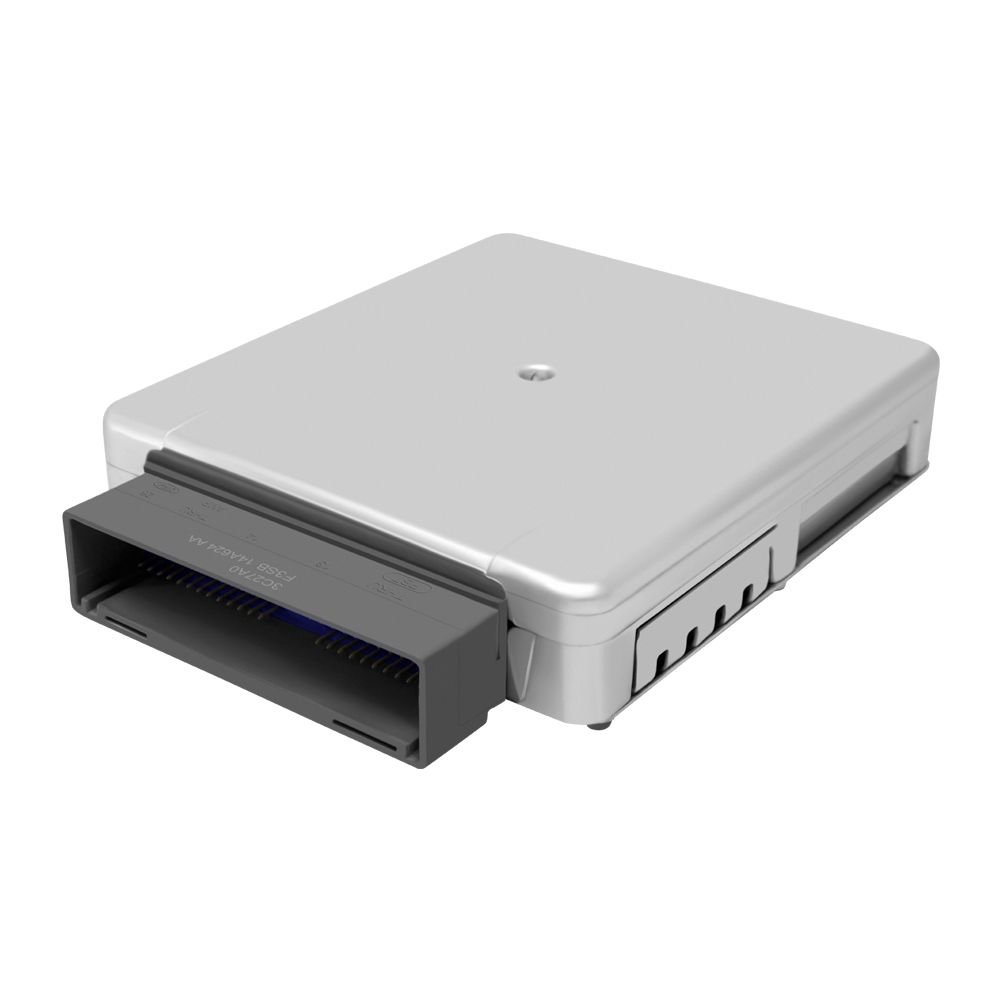
Flagship One stocks a refurbished, VIN-programmed PCM for the 1997 Mercury Grand Marquis with a lifetime warranty, free shipping and no core charge. The full Mercury Grand Marquis module lineup covers other engine configurations as well.
The powertrain control module in your 1997 Mercury Grand Marquis is a critical component that manages engine and transmission operation across a wide range of driving conditions. Recognizing the symptoms of failure, understanding the replacement and programming requirements, and choosing a properly configured replacement unit are essential steps toward restoring your vehicle’s reliability. Whether you perform the replacement yourself or entrust the work to a professional, following factory-recommended procedures helps ensure your Grand Marquis runs properly for years to come.