
Last updated on August 25th, 2026 at 01:03 pm
The Engine Control Module (ECM) on your 2000 Grand Marquis is the central computer that manages fuel injection, ignition timing, emissions controls and transmission shifting. When this processor fails, your vehicle may not run at all or may run poorly with multiple trouble codes stored.
If your 2000 Mercury Grand Marquis has stopped running or is running poorly, the Engine Control Module may be the culprit. This comprehensive guide explains what the ECM does, how it fails, what replacement involves and whether repair or replacement is the right choice for your situation. The Grand Marquis of this era relies heavily on its powertrain control module for virtually every aspect of engine operation, from cold-start enrichment to transmission shift points. Understanding the role of this computer and recognizing the signs of failure helps you make an informed decision about next steps. Whether you are experiencing a no-start condition, dealing with persistent check engine lights or simply preparing for potential problems, this guide provides the technical information you need to navigate the repair process confidently.
The Engine Control Module in your 2000 Mercury Grand Marquis serves as the brain of the powertrain system. This single computer handles multiple critical functions including fuel injector pulse width modulation, ignition timing advance, idle air control, emissions monitoring via oxygen sensors, evaporative emission system control, and automatic transmission shift scheduling. The module receives input from dozens of sensors throughout the engine compartment and uses this data to make real-time adjustments that keep your 4.6L V8 running optimally under all driving conditions. Unlike simpler carbureted engines of earlier decades, your Grand Marquis cannot run at all without proper communication between the ECM and these sensor networks. When the internal processor or its memory becomes corrupted, the vehicle may default to a limp mode, refuse to start entirely, or run with severe drivability problems. Replacement engine computers for the Grand Marquis must be matched to your specific VIN to ensure proper communication with the PATS (Passive Anti-Theft System) and transmission control module.
Flagship One keeps Mercury Grand Marquis replacement engine computers in stock for exactly this failure pattern.
2000 Mercury Grand Marquis
OEM programmed ECM for your 2000 Mercury Grand Marquis — plug & play, no dealer visit.
Free shipping · Lifetime warranty
The Engine Control Module on your 2000 Grand Marquis is located in the passenger-side footwell, behind the kick panel beneath the dashboard. Access requires removal of the lower trim panel on the passenger side, which is held in place with several push fasteners and possibly a few screws. Once the panel is removed, you will see the ECM mounted in a plastic housing secured to the floor pan. The module has a large multi-pin connector that must be carefully disconnected before removal. Installation is the reverse of this process, with careful attention to ensuring the connector seats fully and the mounting hardware is secure. The book time for ECM replacement on this vehicle is 0.5 hours, which covers the physical R&R portion of the job. An additional 0.5 hours is allocated for the relearn procedure that must be performed after installation, and another 0.5 hour is budgeted for initial diagnosis and testing to confirm the module is the cause of the concern rather than a wiring issue or sensor failure.
Work with the ignition off, and treat the module as static-sensitive: avoid touching the connector pins at any point.
| Operation | Configuration | Book Time |
|---|---|---|
| Engine Control Module Relearn | All configurations | 0.5 hr |
| Engine Control Module R&R | All configurations | 0.5 hr |
| Powertrain Control System Diagnosis & Testing | All configurations | 0.5 hr |
After installing a replacement ECM in your 2000 Grand Marquis, the factory procedure requires a relearn process to establish communication between the new module and the rest of the vehicle’s systems. This relearn procedure takes approximately 0.5 hours and involves using a scan tool to initiate the module initialization, then allowing the vehicle to run through a series of calibrations while the engine control module learns the characteristics of your specific engine. During this process, the module monitors oxygen sensor feedback, idle air control positioning, and fuel trims to optimize running conditions. However, when you purchase a VIN-programmed replacement unit from Flagship One, this factory programming step is already completed before the module ships. The unit arrives configured with your specific vehicle identification number, meaning the PATS anti-theft system will recognize the new module as valid and the transmission control module will communicate properly without additional programming effort on your end.
Every VIN-programmed replacement unit from Flagship One arrives with these steps already completed.
When the Engine Control Module on your 2000 Grand Marquis begins to fail, the symptoms can range from subtle to severe depending on the exact nature of the internal fault. A common scenario is a no-start condition where the engine cranks normally but receives no fuel or spark because the ECM has lost the ability to process sensor inputs. Another frequent complaint is intermittent stalling, particularly at idle or during low-speed maneuvers, where the module momentarily loses proper control of idle air or fuel delivery. Misfire codes (including P0350 through P0360 for individual coil circuits) may appear in memory, even when the ignition coils themselves are functioning correctly—this indicates the ECM is not properly managing the coil firing sequence. In some cases, the scan tool may fail to communicate with the vehicle entirely, or may show multiple unrelated trouble codes that seem to appear and disappear randomly. Transmission shifting problems can also stem from ECM failure, as the module controls shift points and line pressure. If your Grand Marquis is exhibiting any combination of these symptoms and diagnostic testing has ruled out sensors, wiring, and the fuel system, the ECM itself is a likely culprit.
Two factory service bulletins apply to common concerns with the 2000 Grand Marquis powertrain control system. TSB 01-01-06 addresses coil-on-plug applications where diagnostic trouble codes P0350 through P0360 are stored in memory, causing the malfunction indicator lamp to illuminate and resulting in a rough idle condition. This bulletin applies to situations where the ECM may be incorrectly flagging coil circuit failures. TSB 99-23-04 covers diagnostic trouble codes P0442 and P0455, which indicate small and large evaporative emission system leaks respectively, with the MIL illuminated but no driveability concerns present. Both bulletins involve ECM-related diagnostics and may require ECM replacement or reprogramming if software updates do not resolve the concerns.
| Bulletin | Subject | What It Addresses |
|---|---|---|
| 01-01-06 | COIL ON PLUG APPLICATIONS ONLY – DIAGNOSTIC TROUBLE CODES (DTCS) – DIAGNOSTIC TROUBLE CODES (DT | — |
| 99-23-04 | DIAGNOSTIC TROUBLE CODES (DTCS) P0442 AND P0455 – MALFUNCTION INDICATOR LAMP (MIL) – NO DRIVEAB | — |
When your 2000 Mercury Grand Marquis ECM fails, you have two primary options: paying the dealer to program a new unit, or purchasing a VIN-programmed replacement that arrives ready to install. The dealer route typically involves sourcing an unprogrammed module and paying for the programming labor, which can exceed the cost of a quality remanufactured unit. A refurbished replacement from Flagship One arrives pre-programmed with your specific VIN, eliminating the dealer programming step entirely and getting your vehicle back on the road faster.
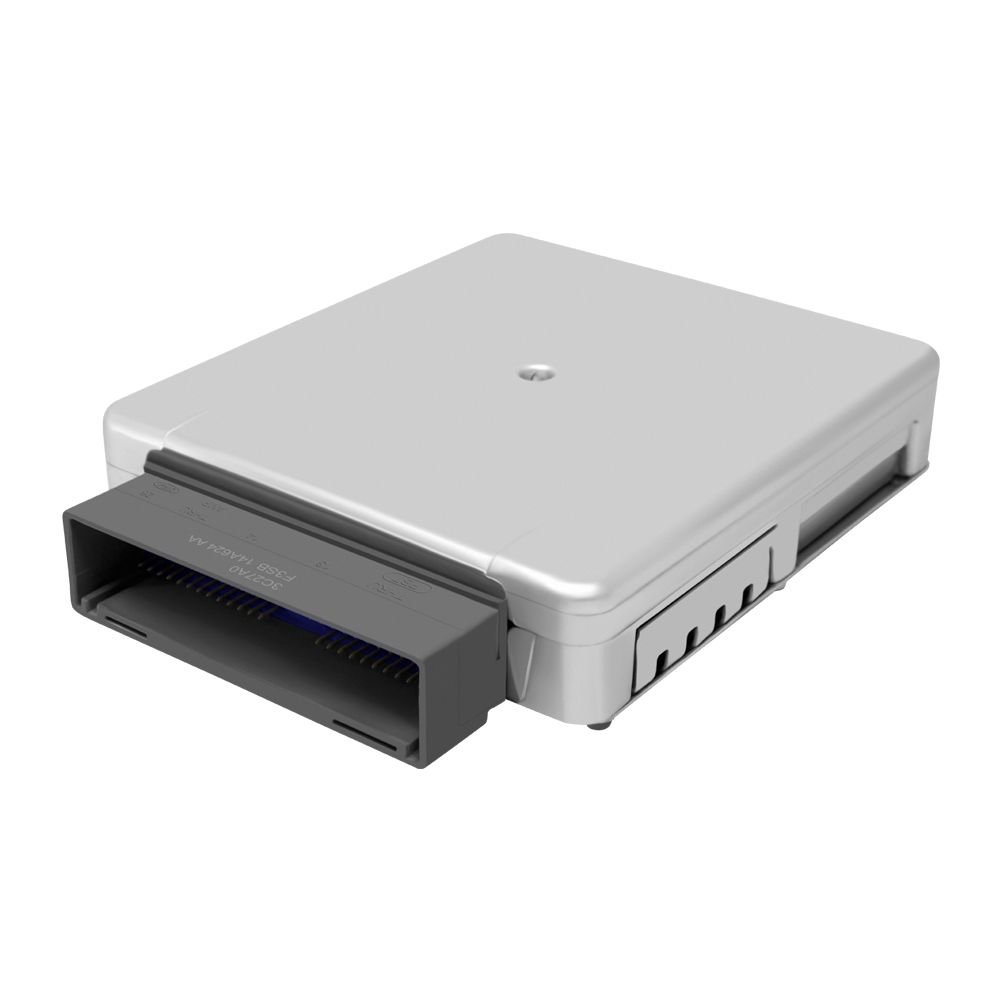
Flagship One stocks a refurbished, VIN-programmed PCM for the 2000 Mercury Grand Marquis with a lifetime warranty, free shipping and no core charge. The full Mercury Grand Marquis module lineup covers other engine configurations as well.
The Engine Control Module in your 2000 Mercury Grand Marquis is a critical component that manages virtually every aspect of engine and transmission operation. When symptoms like no-start, stalling, misfire codes or failed scan-tool communication appear, the ECM is a likely cause that should be investigated systematically. Whether you choose dealer replacement or a VIN-programmed remanufactured unit, understanding what the job involves helps ensure a successful repair and a reliable vehicle.