
Last updated on August 25th, 2026 at 01:34 pm
The Powertrain Control Module (PCM) in your 2009 Ford Edge manages engine performance, transmission shifting, and emissions systems. Failures may cause starting issues, poor drivability, or warning lights, often triggered by electrical faults or internal corruption.
If your 2009 Ford Edge suddenly refuses to start, stalls unexpectedly, or throws cryptic warning lights, the Powertrain Control Module (PCM) may be at fault. This small but critical computer oversees everything from fuel delivery to transmission behavior, and when it fails, your vehicle’s performance suffers. Replacing it isn’t just about swapping a part—it involves precise labor steps and reprogramming to ensure the new module communicates correctly with the engine, transmission, and security systems. Understanding the process helps you avoid unnecessary delays or repeat repairs. You’ll learn where the PCM is located, what the replacement entails, and why choosing a pre-programmed unit can save time. Whether you’re diagnosing symptoms or preparing for the repair, this guide covers the essentials for the 2009 Ford Edge 3.5L model.
2009 Ford Edge 3.5L
OEM programmed ECM for your 2009 Ford Edge 3.5L — plug & play, no dealer visit.
Free shipping · Lifetime warranty
The Powertrain Control Module in your 2009 Ford Edge acts as the brain for both the engine and transmission. It processes data from sensors to optimize fuel injection, ignition timing, and shift points, ensuring smooth operation and compliance with emissions standards. Without a functioning PCM, your vehicle may struggle to start, run roughly, or even enter a fail-safe mode that limits performance. This module also integrates with the Passive Anti-Theft System (PATS), which prevents unauthorized starts by validating a unique key signal. When the PCM fails, it often disrupts this security link, leaving you stranded. Replacement modules for the Ford Edge are designed to restore full functionality, but they must be programmed to match your vehicle’s specific configuration. A faulty PCM may also trigger diagnostic trouble codes, which can help pinpoint the issue before replacement becomes necessary.
The PCM in the 2009 Ford Edge is mounted in the engine compartment, typically near the firewall on the passenger side. Accessing it involves removing a protective cover and disconnecting the wiring harness, which requires basic hand tools. The factory labor time for removal and reinstallation is 0.4 hours, reflecting the straightforward nature of the job. Once the old module is out, the new one bolts into the same location, and the harness is reconnected. No special torque specifications are required for the mounting bolts, but ensuring a secure connection is critical to prevent electrical issues. The entire process is designed to be efficient, though the subsequent relearn procedure adds time to the overall repair.
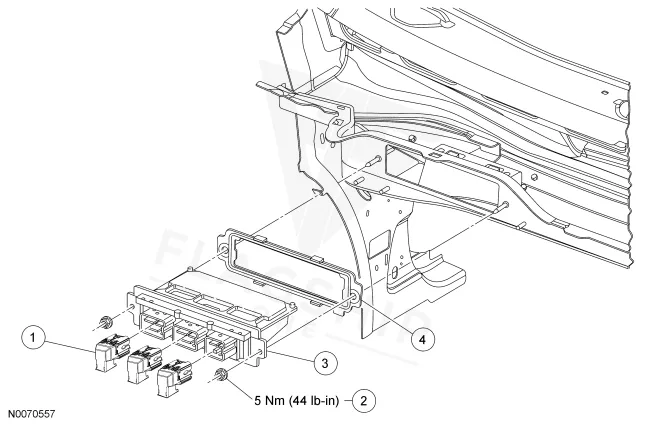
Work with the ignition off, and treat the module as static-sensitive: avoid touching the connector pins at any point.
| Operation | Configuration | Book Time |
|---|---|---|
| Powertrain Control Module R&R | All configurations | 0.4 hr |
| Powertrain Control Module Relearn | All configurations | 0.5 hr |
| Engine Control Module Relearn | All configurations | 0.5 hr |
| Engine Control Module R&R | All configurations | 0.4 hr |
After installing a new PCM in your 2009 Ford Edge, the factory procedure requires a relearn process to synchronize the module with the engine, transmission, and Passive Anti-Theft System (PATS). This step typically takes 0.5 hours and involves using a scan tool to reset adaptive values and reprogram the security system. Without this procedure, your vehicle may fail to start or run poorly. However, a VIN-programmed replacement unit arrives pre-configured to your vehicle’s specifications, eliminating the need for additional programming. This ensures the new PCM communicates correctly with all systems from the moment it’s installed, reducing the risk of post-repair issues. The PATS reprogramming is particularly important, as it prevents security-related no-start conditions that can occur with unprogrammed modules.
A failing PCM in your 2009 Ford Edge may produce a range of symptoms, often starting with intermittent issues before becoming constant. One of the most common signs is a no-start condition, where the engine cranks but refuses to fire. This can occur if the PCM loses communication with the Passive Anti-Theft System (PATS), triggering a security lockout. Stalling or rough idling may also develop, particularly if the module struggles to regulate fuel or ignition timing. Misfires, poor acceleration, or erratic shifting are additional red flags, as the PCM controls both engine performance and transmission behavior. Warning lights, such as the check engine or transmission temperature indicator, may illuminate, often accompanied by diagnostic trouble codes. For example, an internal control module memory check sum error suggests the PCM’s memory has been corrupted, which can lead to unpredictable behavior. Scan tool communication failures are another telltale sign, as a dead PCM may prevent the tool from accessing live data or codes. If your Edge exhibits any of these symptoms, the PCM should be checked as part of the diagnostic process.
If the Passive Anti-Theft System (PATS) isn’t reprogrammed, the new PCM won’t recognize the key’s security signal. This triggers a no-start condition. A VIN-programmed replacement unit eliminates this issue by arriving pre-configured for your vehicle.
Driving with a failing PCM may lead to stalling, poor performance, or transmission issues. In some cases, the vehicle may enter a fail-safe mode that limits speed or power. It’s best to address the problem promptly to avoid further damage.
A scan tool can check for communication with the PCM. If the tool can’t access the module, inspect the wiring harness and connectors for damage or corrosion. If the harness is intact, the PCM itself may be faulty.
Yes, the PCM must be programmed to your vehicle’s VIN to ensure compatibility with the engine, transmission, and security systems. A VIN-programmed replacement unit arrives ready to install, saving time and avoiding reprogramming steps.
Without the relearn procedure, the PCM may not communicate correctly with the engine or transmission. This can result in poor performance, shifting issues, or a no-start condition. The relearn ensures all systems are synchronized for proper operation.
If your 2009 Ford Edge is experiencing PCM-related issues, you have two main options: repair or replace. Refurbished replacement units are often the most practical choice, as they restore full functionality without the cost of a new module. For the 2009 Edge, a VIN-programmed unit eliminates the need for additional programming, simplifying the repair process. Whether you’re dealing with a no-start condition or persistent warning lights, choosing the right replacement ensures your vehicle runs smoothly again.
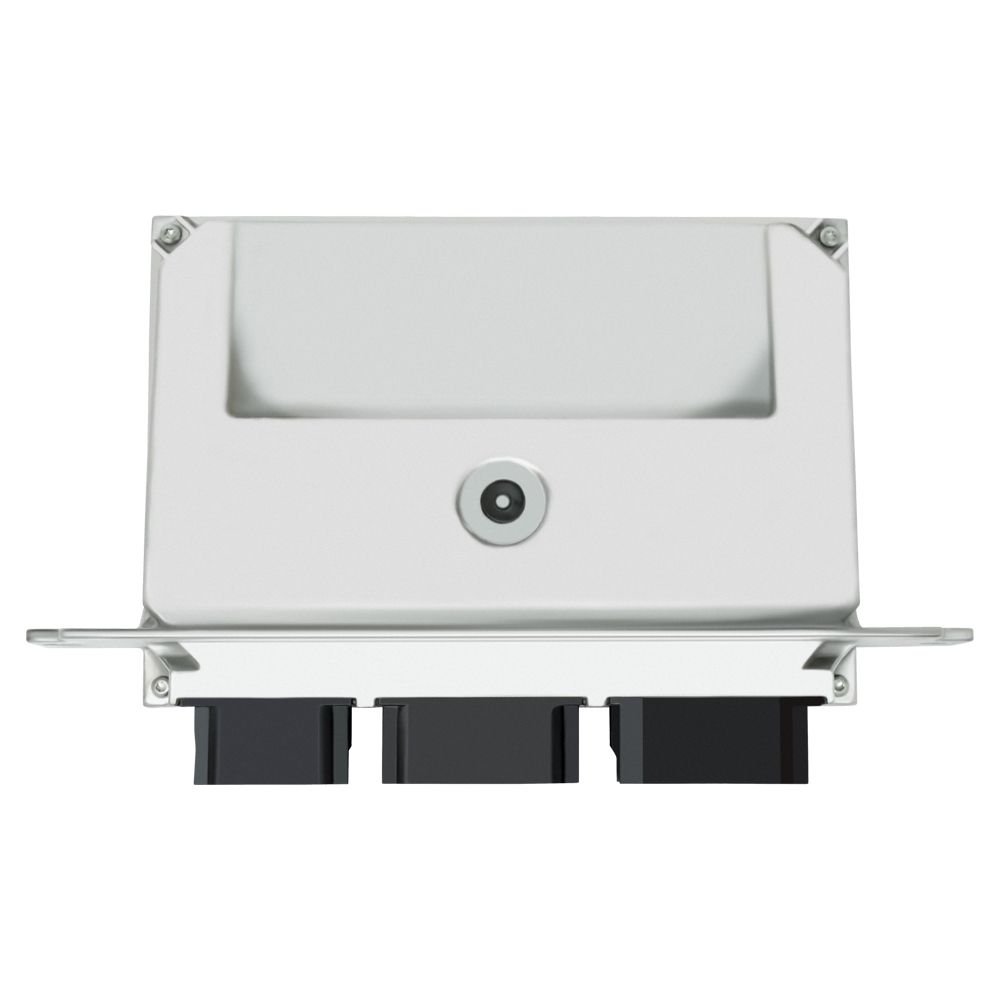
Flagship One stocks a refurbished, VIN-programmed PCM for the 2009 Ford Edge with a lifetime warranty, free shipping and no core charge. The full Ford Edge module lineup covers other engine configurations as well.
The 2009 Ford Edge relies on its PCM to manage critical engine and transmission functions. When this module fails, symptoms like stalling, no-start conditions, or warning lights may appear. Replacing it involves straightforward labor, but the relearn and PATS reprogramming steps are essential for proper operation. By opting for a pre-programmed replacement, you can avoid extra steps and get your Edge back on the road with minimal hassle.