
Last updated on August 25th, 2026 at 01:33 pm
The Powertrain Control Module (PCM) in your 2010 Ford Edge manages engine and transmission functions. Failures may cause drivability issues, including stalling, misfires, or communication errors with diagnostic tools.
If your 2010 Ford Edge has been stalling unexpectedly, refusing to start, or flashing a check-engine light with a P0606 code, the Powertrain Control Module (PCM) may be the culprit. This critical component acts as the brain of your vehicle’s engine and transmission, coordinating everything from fuel injection to shift timing. When it fails, symptoms can range from subtle drivability quirks to complete immobilization. Replacing the PCM isn’t just about swapping a part—it involves precise labor steps and programming to ensure your Edge runs correctly afterward. Understanding the process, from diagnosis to installation, helps you make informed decisions about repairs. You’ll also learn why choosing a pre-programmed replacement unit can save time and avoid potential headaches during the relearn phase. This guide covers what the PCM does, where it’s located, common failure signs, and how to protect it from future issues.
The Powertrain Control Module (PCM) in your 2010 Ford Edge is a combined engine and transmission control unit. It continuously monitors sensor inputs—like throttle position, oxygen levels, and crankshaft speed—to adjust fuel delivery, ignition timing, and shift points in real time. This ensures optimal performance, fuel efficiency, and emissions compliance. Without a functioning PCM, your Edge may struggle to start, run roughly, or even enter a limp-home mode to prevent further damage. The module also communicates with other systems, such as the anti-lock brakes and instrument cluster, making it a central hub for vehicle operation. When the PCM fails, you might notice erratic shifting, poor acceleration, or a complete loss of scan-tool communication. Replacing it requires careful handling, as the unit must be programmed to match your vehicle’s specific configuration. For the 2010 Ford Edge, replacement engine computers for the Edge are designed to integrate seamlessly with the vehicle’s electronics, but proper installation and programming are critical to restoring full functionality.
2010 Ford Edge
OEM programmed ECM for your 2010 Ford Edge — plug & play, no dealer visit.
Free shipping · Lifetime warranty
In the 2010 Ford Edge, the Powertrain Control Module (PCM) is mounted on the passenger side of the engine compartment, near the firewall. Accessing it typically involves removing a plastic cover and disconnecting the battery to prevent electrical shorts. The replacement process is straightforward but requires attention to detail. According to factory labor guides, removing and reinstalling the PCM takes about 0.4 hours. This includes unbolting the module, disconnecting the wiring harness, and securing the new unit in place. Torque specifications for the mounting bolts should be followed to avoid damaging the module or its housing. After installation, the battery must be reconnected, and a relearn procedure is often necessary to synchronize the PCM with the vehicle’s sensors and systems. This step ensures the Edge runs smoothly and prevents issues like poor idle or erratic shifting.
| Operation | Configuration | Book Time |
|---|---|---|
| Powertrain Control Module R&R | All configurations | 0.4 hr |
| Powertrain Control Module Relearn | All configurations | 0.5 hr |
| Engine Control Module Relearn | All configurations | 0.5 hr |
| Engine Control Module R&R | All configurations | 0.4 hr |
After replacing the Powertrain Control Module (PCM) in your 2010 Ford Edge, the factory procedure requires a relearn process to ensure the new unit communicates correctly with the vehicle’s sensors and systems. This typically involves using a scan tool to initiate a 0.5-hour procedure that resets adaptive values and calibrates the module to your Edge’s specific configuration. However, if you install a VIN-programmed replacement unit, these steps are already completed before the module arrives. This eliminates the need for additional programming at the time of installation, saving time and reducing the risk of errors during the relearn phase. The pre-programmed unit is matched to your vehicle’s VIN, ensuring compatibility with its engine, transmission, and emissions systems. This streamlines the repair process and helps your Edge return to normal operation more quickly.
When the Powertrain Control Module (PCM) in your 2010 Ford Edge begins to fail, you may notice a range of symptoms that can vary in severity. One of the most common signs is a no-start condition, where the engine cranks but refuses to fire. This often occurs because the PCM fails to send the correct signals to the fuel injectors or ignition system. Another frequent issue is stalling, particularly at idle or during low-speed driving, as the module struggles to maintain stable engine operation. You might also experience rough running, misfires, or a noticeable drop in fuel efficiency, as the PCM’s ability to adjust air-fuel ratios and ignition timing becomes compromised. Transmission shifting problems, such as delayed or harsh gear changes, can also indicate PCM trouble, since the module controls both engine and transmission functions. In some cases, the check-engine light will illuminate, and a scan tool may reveal module-internal codes like an internal processor fault. If the PCM loses communication entirely, you may find that diagnostic tools can’t access the vehicle’s systems, leaving you with limited information about the underlying issue. These symptoms often worsen over time, so addressing them promptly can prevent further drivability problems.
The 2010 Ford Edge may store specific trouble codes when the Powertrain Control Module (PCM) experiences internal faults. These codes help pinpoint issues within the module itself, rather than external sensors or components.
| Code | Meaning | Full Guide |
|---|---|---|
| P0606 | Module processor failure | Full P0606 guide → |
Stalling after a PCM replacement often indicates an incomplete relearn procedure. The module needs to recalibrate to your Edge’s sensors and adaptive values. If the relearn wasn’t performed, the PCM may not adjust fuel delivery or idle speed correctly. A scan tool can help reset these values, or using a pre-programmed unit can bypass this step entirely.
Yes, a weak or failing battery can contribute to PCM issues. Low voltage may cause the module to operate erratically or fail to store critical data. Voltage spikes during jump-starts or charging can also damage the PCM’s internal circuits. Always use a stable power source when working on your Edge’s electrical system.
Module-internal codes like P0606 typically point to PCM failure, while sensor-related codes (e.g., P0171 for lean condition) suggest external issues. If multiple unrelated codes appear or the PCM fails to communicate with a scan tool, the module itself is likely the problem. A professional diagnosis can confirm the root cause.
A used PCM may physically fit, but it must be programmed to your Edge’s VIN and configuration. Without proper programming, the module may not communicate with the engine, transmission, or emissions systems. This can lead to drivability issues or even prevent the vehicle from starting.
In the 2010 Ford Edge, the PCM (Powertrain Control Module) combines the functions of an ECM (Engine Control Module) and a TCM (Transmission Control Module). It manages both engine and transmission operations, unlike older vehicles where these were separate units. This integration simplifies diagnostics but means a single failure can affect multiple systems.
If your 2010 Ford Edge is experiencing PCM-related issues, you have two main repair options: reflashing the existing module or installing a replacement unit. Reflashing may resolve software glitches but won’t fix hardware failures. A new or remanufactured PCM ensures a fresh start, especially if the original module is damaged. For the 2010 Edge, choosing a VIN-programmed replacement unit eliminates the need for post-installation programming, streamlining the repair process and reducing downtime.
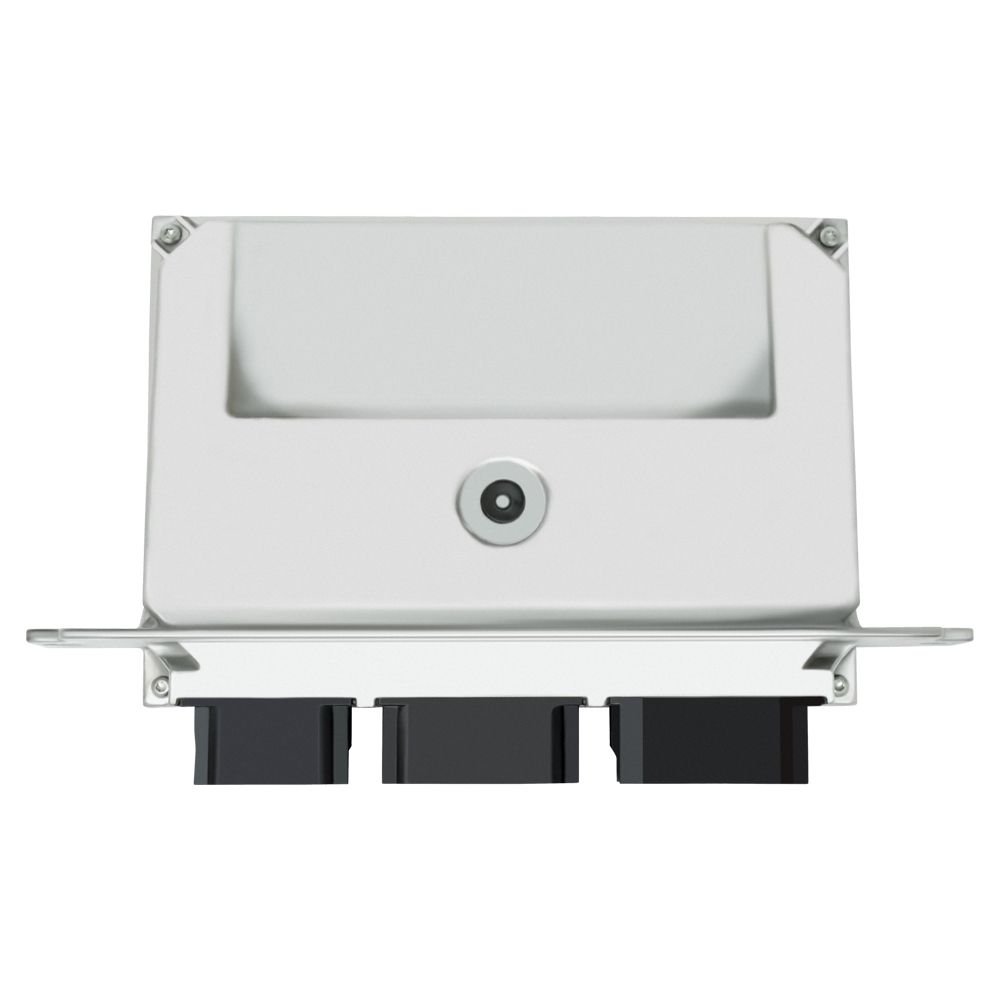
Flagship One stocks a refurbished, VIN-programmed PCM for the 2010 Ford Edge with a lifetime warranty, free shipping and no core charge. The full Ford Edge module lineup covers other engine configurations as well.
The Powertrain Control Module in your 2010 Ford Edge plays a critical role in keeping your vehicle running smoothly. When it fails, symptoms like stalling, no-start conditions, or erratic shifting can disrupt your daily driving. Understanding the replacement process, from labor times to programming requirements, helps you make informed decisions about repairs. Whether you opt for a reflash or a replacement unit, addressing PCM issues promptly can restore your Edge’s performance and reliability. If you’re ready to move forward, a pre-programmed module can simplify the process and get you back on the road faster.