
Last updated on August 25th, 2026 at 01:15 pm
In the 2001 Ford Expedition, the Powertrain Control Module (PCM) acts as the vehicle’s central computer, managing engine timing, fuel delivery, and transmission shifting. A failure typically results from internal circuitry loss, corrosion, or severe voltage spikes, which can cause loss of driveability, incorrect sensor readings, and illumination of diagnostic lamps.
When a 2001 Ford Expedition experiences persistent warning lights, erratic speedometer behavior, or loss of powertrain communication after a PCM or instrument cluster replacement, the situation often points to the need for a proper module swap. Understanding how the PCM integrates with the vehicle, where it sits, and what post‑install steps are required can help you avoid costly re‑diagnoses. This guide walks you through the removal location, the typical labor effort, the factory‑mandated relearn procedure, and how a VIN‑programmed replacement from Flagship One can streamline the process, giving you confidence that the new unit will function correctly from day one.
The Powertrain Control Module in the 2001 Ford Expedition serves as the brain for both the engine and the automatic transmission. It receives data from dozens of sensors, calculates the optimal fuel injection and ignition timing, and commands the transmission shift points. Because the PCM directly influences emissions, fuel economy, and drivability, any fault can quickly translate into performance loss or warning lamps. Proper operation ensures that the vehicle meets its designed power and efficiency targets, and it also supports diagnostic communication with scan tools. The module’s role is especially critical in this model, where the integration of four‑wheel‑drive electronics relies on accurate PCM signals. For owners seeking a reliable swap, understanding that the PCM is a replacement powertrain control module for the 2001 Ford Expedition helps identify the correct aftermarket unit.
2001 Ford Expedition
OEM programmed ECM for your 2001 Ford Expedition — plug & play, no dealer visit.
Free shipping · Lifetime warranty
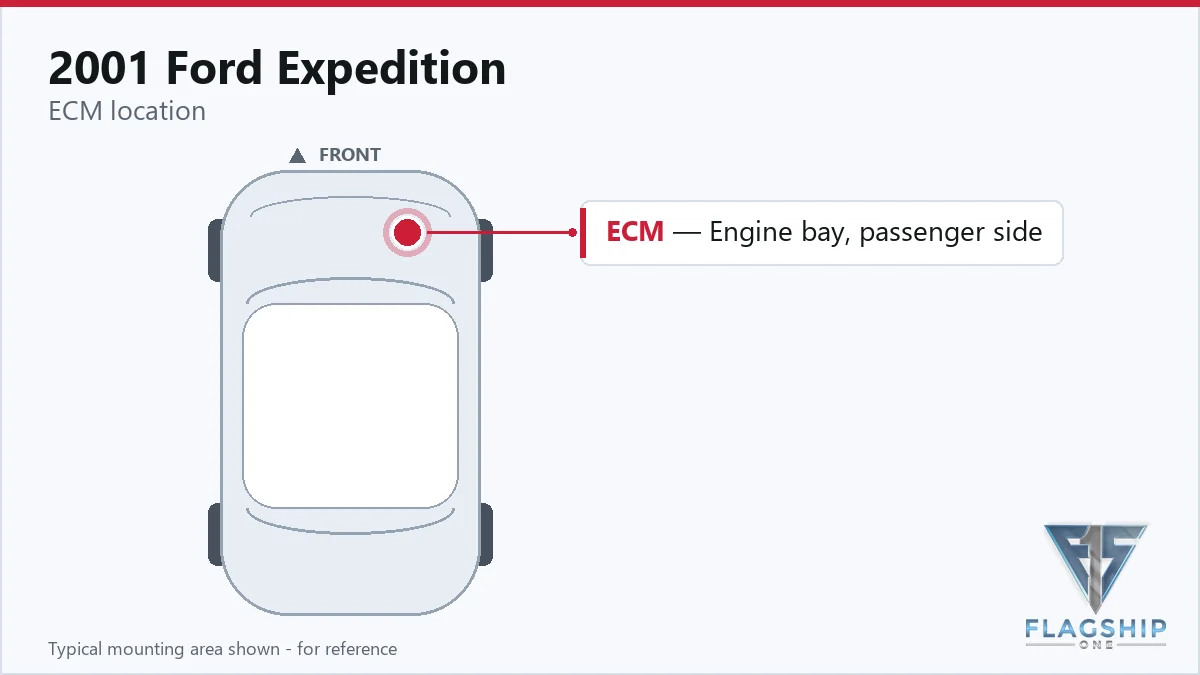
Work with the ignition off, and treat the module as static-sensitive: avoid touching the connector pins at any point.
| Operation | Configuration | Book Time |
|---|---|---|
| Engine Control Module R&R | All configurations | 0.5 hr |
| Powertrain Control Module R&R | All configurations | 0.5 hr |
| Powertrain Control Module Relearn | All configurations | 0.5 hr |
Following a PCM replacement on the 2001 Ford Expedition, the factory service manual calls for a 0.5‑hour relearn procedure to synchronize the new module with the vehicle’s transmission control logic. This step typically involves using a scan tool to initiate the Powertrain Control Module Relearn routine, confirming that shift timing and sensor calibrations are correctly established. When you choose a Flagship One unit, it arrives as a VIN‑programmed replacement unit that has already been encoded with the vehicle’s specific calibration data, eliminating the need for the relearn step and reducing the chance of post‑install errors.
Common signs of a failing PCM in a 2001 Ford Expedition include a complete no‑start condition, intermittent stalling, rough idle, and loss of communication with a scan tool. Drivers may also notice unexpected gear shifts or the transmission staying in a single gear. Diagnostic trouble codes often appear, such as PCM communication fault or P1639, which indicate issues with the instrument cluster or speedometer after a PCM swap. These symptoms typically emerge gradually as internal components degrade or after exposure to voltage spikes, prompting the need for inspection and possible replacement.
Service Bulletin 02‑23‑04 documents that after a Powertrain Control Module or instrument cluster replacement, the 4X4 lamp may stay illuminated and the speedometer can become inaccurate. The bulletin also notes the presence of diagnostic codes P1635 and P1639, indicating that the lamp and speedometer functions may be inaccurate or inoperative until the issue is addressed.
| Bulletin | Subject | What It Addresses |
|---|---|---|
| 02-23-04 | 4X4 LAMP ILLUMINATED AFTER POWERTRAIN CONTROL MODULE (PCM) OR INSTRUMENT CLUSTER REPLACEMENT – | — |
The factory service guide assigns 0.5 hours for the removal and another 0.5 hours for the reinstall. These times reflect the straightforward access once the cowl side trim is lifted.
The official procedure includes a 0.5‑hour relearn step to synchronize the new module with the transmission. A VIN‑programmed replacement from Flagship One already contains the required data, so the relearn can be skipped.
Codes P1635 and P1639 are commonly logged when the PCM or instrument cluster has been swapped, pointing to lamp or speedometer inaccuracies.
Yes, the PCM supplies data to the instrument cluster, and a malfunction can result in speedometer misreadings, as noted in TSB 02‑23‑04.
A refurbished unit that has been VIN‑programmed to match your vehicle’s specifications can be a reliable option, provided it passes functional testing before installation.
When the PCM in your 2001 Ford Expedition needs attention, you can choose a brand‑new factory‑spec unit or a professionally refurbished replacement. Both approaches address the core function of the module, but a Flagship One refurbished PCM arrives pre‑programmed, eliminating the relearn step and reducing shop time. Evaluate your budget and service timeline to decide which path aligns best with your vehicle’s needs.
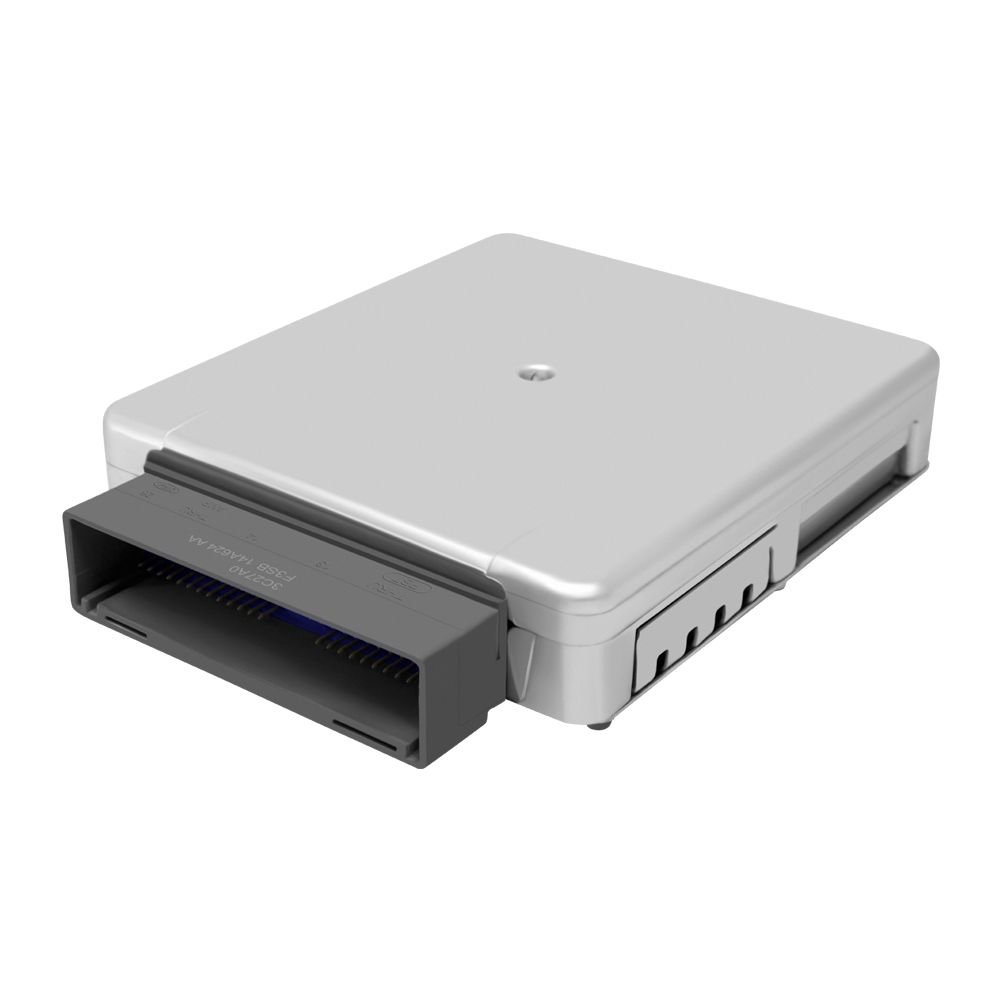
Flagship One stocks a refurbished, VIN-programmed PCM for the 2001 Ford Expedition with a lifetime warranty, free shipping and no core charge. The full Ford Expedition module lineup covers other engine configurations as well.
Replacing the Powertrain Control Module in a 2001 Ford Expedition restores essential engine and transmission management, helping you avoid warning lights and drivability issues. Consider a VIN‑programmed replacement to simplify the post‑install process and keep your Expedition running smoothly.