
Last updated on August 25th, 2026 at 12:15 pm
The Powertrain Control Module (PCM) in your 1997 Ford Expedition 4.6L is the main computer that manages engine timing, fuel delivery, and transmission shift points. When it fails, the vehicle may not start, run poorly, or trigger multiple warning lights.
If you own a 1997 Ford Expedition equipped with the 4.6L V8, you are driving a vehicle that relies heavily on its Powertrain Control Module (PCM) to keep everything running smoothly. This computer is the brain of the engine and transmission, interpreting sensor data and making real-time adjustments to fuel mixture, ignition timing, and shift patterns. Over time, the PCM can fail due to age, heat, voltage spikes, or moisture intrusion. When that happens, you may face no-start conditions, erratic shifting, poor fuel economy, or a check engine light that refuses to go out. This article explains what the PCM does in your Expedition, where it is located, how to replace it, and what programming steps are required afterward. You will also learn about common symptoms of a failing PCM and how Flagship One’s pre-programmed units can simplify the repair. Whether you are a DIY owner or a professional technician, the information here will help you diagnose and resolve PCM-related issues on this specific model.
The Powertrain Control Module (PCM) in the 1997 Ford Expedition 4.6L is a single electronic control unit that integrates engine and transmission management. It receives signals from sensors such as the crankshaft position sensor, throttle position sensor, oxygen sensors, and mass airflow sensor. Using this data, the PCM calculates the correct fuel injector pulse width, ignition timing advance, and transmission shift schedules. It also monitors emissions systems and stores diagnostic trouble codes when a fault is detected. Because the Expedition is a heavy SUV often used for towing or off-road driving, the PCM must handle a wide range of loads and temperatures. A failing PCM can cause the vehicle to run in a default limp-home mode, limiting performance and fuel efficiency. When you need a replacement, you will be looking for replacement PCMs for the Expedition that match the original calibration. The PCM is a critical component; without it, the engine will not start or run properly. Understanding its role helps you appreciate why a correct replacement and proper programming are essential for restoring your Expedition’s drivability.
1997 Ford Expedition 4.6L
OEM programmed ECM for your 1997 Ford Expedition 4.6L — plug & play, no dealer visit.
Free shipping · Lifetime warranty
The PCM in the 1997 Ford Expedition 4.6L is mounted behind the cowl side trim on the passenger side of the vehicle. To access it, you must remove the cowl side trim panel, which typically involves prying off retaining clips and sliding the panel out of the way. The module is then visible, secured by bolts or screws. The factory book time for removing and replacing the PCM is 0.5 hours. Always disconnect the battery ground cable before beginning any work on the electronic engine controls to prevent short circuits or damage to the new module. After the new PCM is installed and the connectors are securely fastened, reconnect the battery. The replacement process is straightforward but requires care to avoid bending pins or damaging the wiring harness. No special tools are needed beyond basic hand tools and a trim removal tool.
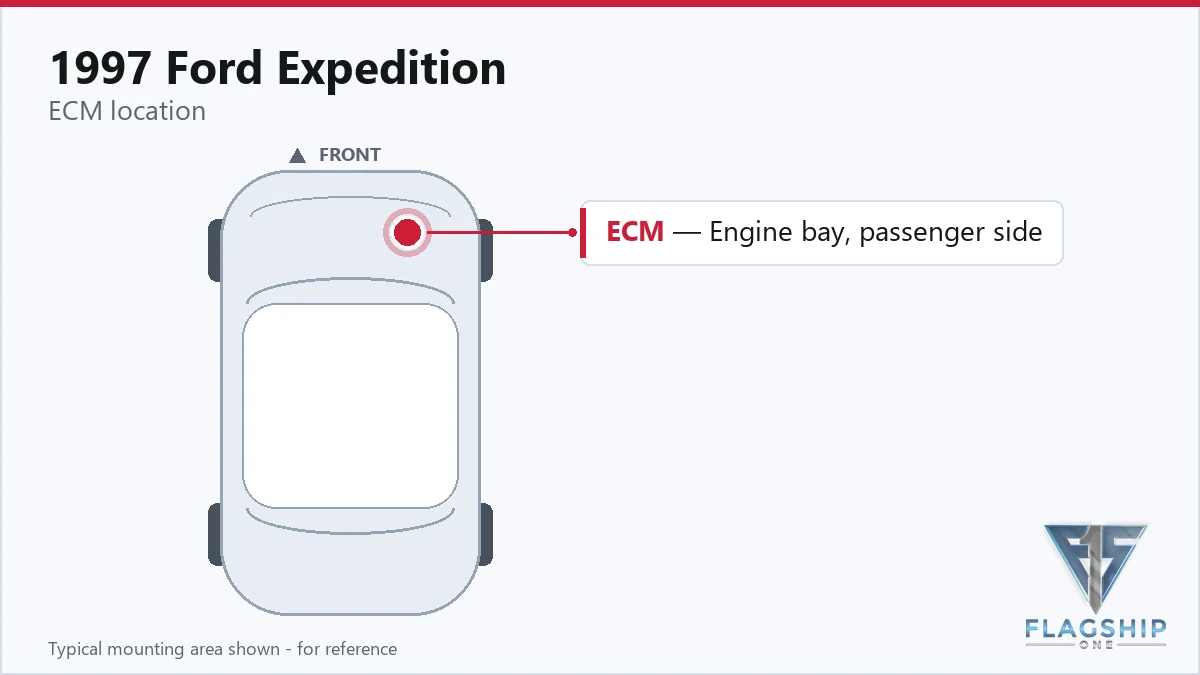
Work with the ignition off, and treat the module as static-sensitive: avoid touching the connector pins at any point.
| Operation | Configuration | Book Time |
|---|---|---|
| Engine Control Module R&R | All configurations | 0.5 hr |
| Powertrain Control Module R&R | All configurations | 0.5 hr |
| Powertrain Control Module Relearn | All configurations | 0.5 hr |
After installing a new PCM in the 1997 Ford Expedition 4.6L, the factory procedure requires a relearn process. The vehicle may need to be driven 16 km (10 mi) or more so the PCM can adapt its fuel and timing strategies to the engine’s specific characteristics. This drive cycle must include a variety of speeds and loads to complete the adaptive learning. However, when you purchase a VIN-programmed replacement unit from Flagship One, the PCM arrives already programmed with your vehicle’s original calibration. This means the relearn drive cycle is not necessary; the module is ready to start and run immediately after installation. The 0.5-hour book time for a PCM relearn is eliminated, saving you time and ensuring the vehicle operates correctly from the first key turn. Flagship One programs each unit using the exact VIN you provide, matching the original strategy.
A failing PCM in the 1997 Ford Expedition 4.6L can produce a variety of symptoms. The engine may crank but not start, or it may start and stall shortly after. You might notice rough idling, misfires, or hesitation during acceleration. The transmission could shift erratically or fail to shift at all. The check engine light often illuminates, and you may see multiple diagnostic trouble codes stored in memory. One common internal PCM fault is anchor text which indicates a memory check sum error. Other symptoms include a complete loss of communication with a scan tool, the vehicle entering a limp-home mode with reduced power, or the cooling fan running continuously. Electrical issues such as blown fuses or a dead battery can also stem from a shorted PCM. If you experience any of these problems, especially in combination, the PCM should be tested or replaced.
Ford issued several technical service bulletins relevant to the 1997 Expedition 4.6L PCM. TSB 97-09-08 covers procedures for reprogramming the Powertrain Control Module and includes service tips. TSB 99-04-03 applies to EEC V vehicles and describes out-of-vehicle reprogramming of PCMs. TSB 97-08-06 addresses diagnostic trouble codes P0300 through P0308 (misfire codes) that may cause the malfunction indicator lamp to illuminate. These bulletins indicate that Ford recognized the need for updated calibrations and specific service steps for this model.
| Bulletin | Subject | What It Addresses |
|---|---|---|
| 97-09-08 | POWERTRAIN CONTROL MODULE – REPROGRAM POWERTRAIN CONTROL MODULE (PCM) – SERVICE PROCEDURES – SE | — |
| 99-04-03 | EEC V VEHICLES ONLY – OUT-OF-VEHICLE – REPROGRAMMING POWERTRAIN CONTROL MODULES (PCMS) | — |
| 97-08-06 | DIAGNOSTIC TROUBLE CODES (DTCS) P0300, P0301, P0302, P0303, P0304, P0305, P0306, P0307, AND/OR | — |
Common signs include a no-start condition, stalling, misfires, erratic transmission shifting, and a check engine light with multiple codes. You may also lose communication with a scan tool. If you have ruled out other components like sensors and wiring, the PCM is likely at fault.
Yes, the replacement is straightforward. The PCM is behind the cowl side trim on the passenger side. The book time is 0.5 hours. You will need basic hand tools and a trim removal tool. Remember to disconnect the battery ground cable first.
Factory procedure requires a relearn drive cycle of 16 km (10 mi) or more. However, Flagship One sells VIN-programmed units that are ready to install and drive without that relearn. The module arrives with your vehicle’s original calibration already loaded.
That bulletin provides service procedures and tips for reprogramming the PCM. It indicates that Ford offered updated calibrations to address certain driveability issues. If your Expedition has not been updated, a replacement PCM from Flagship One will include the latest available calibration.
Yes, because the PCM controls shift timing and line pressure. A failing PCM can cause harsh shifts, delayed engagement, or no shifting at all. Transmission-related trouble codes may also appear, but the root cause is often the PCM itself.
When your 1997 Ford Expedition 4.6L needs a new PCM, you have two options: have a dealer reprogram a new module, or buy a pre-programmed unit from Flagship One. The dealer route involves the 0.5-hour relearn drive cycle and potentially higher labor costs. A VIN-programmed PCM from Flagship One arrives ready to install, saving you time and ensuring the correct calibration for your specific Expedition.
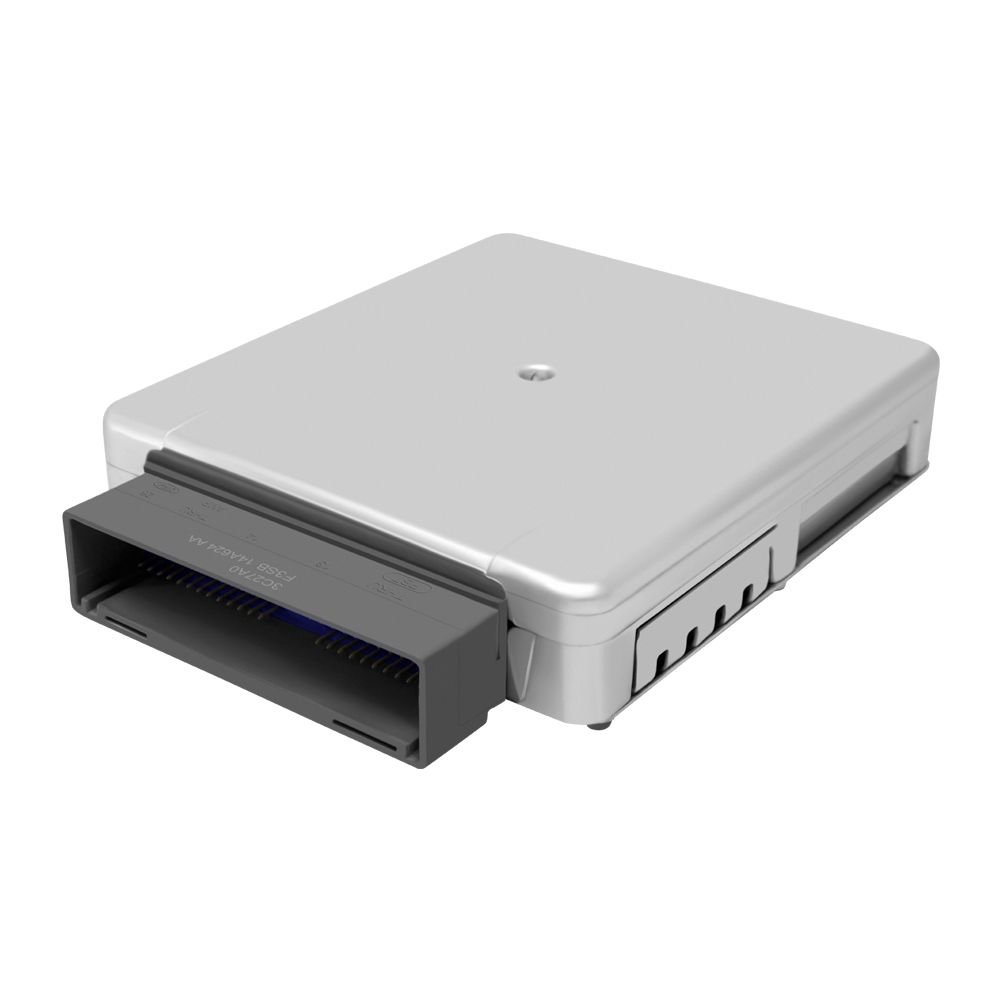
Flagship One stocks a refurbished, VIN-programmed PCM for the 1997 Ford Expedition with a lifetime warranty, free shipping and no core charge. The full Ford Expedition module lineup covers other engine configurations as well.
The PCM is a vital component in your 1997 Ford Expedition 4.6L, controlling engine and transmission performance. Recognizing failure symptoms and understanding the replacement process can help you get back on the road quickly. Flagship One offers VIN-programmed PCMs that eliminate the need for a post-installation relearn, making the repair simpler and more reliable.