
Last updated on August 25th, 2026 at 01:38 pm
In the 2000 Ford Expedition the Powertrain Control Module manages engine and transmission operations, interpreting sensor data to control fuel, spark and shift timing. A failure typically disrupts communication, causing loss of power, erratic gauges or diagnostic trouble codes that prevent normal driving.
When a 2000 Ford Expedition experiences unexpected warning lights or speedometer glitches after a powertrain control module swap, the situation can feel confusing. This guide explains what the PCM does in this particular truck, where it sits, how the factory recommends handling replacement, and what you can expect from a Flagship One unit. By the end, you’ll understand the essential steps to get your Expedition back to reliable operation and why a VIN‑programmed replacement may simplify the process.
The Powertrain Control Module in the 2000 Ford Expedition serves as the central brain for both engine and transmission systems. It continuously reads inputs from sensors such as the crankshaft position, throttle position and vehicle speed, then commands fuel injectors, ignition timing and shift solenoids to match driving conditions. Because the module directly influences performance, emissions compliance and drivability, any loss of communication can lead to no‑start conditions, rough idle or erratic shifting. Proper operation is essential for meeting fuel‑economy targets and maintaining the vehicle’s on‑board diagnostics. The module also stores calibration data that the vehicle uses for adaptive learning; when it is replaced, the system must be instructed to accept the new unit. This is where 2000 Ford Expedition replacement powertrain control modules become relevant, ensuring the new PCM matches the original specifications.
Engine computer (ECM/PCM)
OEM programmed replacements — plug & play, no dealer visit.
Find yours by year, make & model →
Free shipping · Lifetime warranty
To replace the PCM in a 2000 Ford Expedition, you must first remove the cowl side trim that covers the module. Once the trim is out of the way, the control unit is visible behind the cowl, allowing direct access to the electrical connectors. The factory labor guide assigns 0.5 hours for removal and another 0.5 hours for reinstalling the new module. After the physical swap, an additional 0.5 hours is listed for the PCM relearn procedure, which ensures the vehicle accepts the replacement unit and restores proper operation. No torque specifications are noted in the supplied data, so standard connector fastening practices apply.
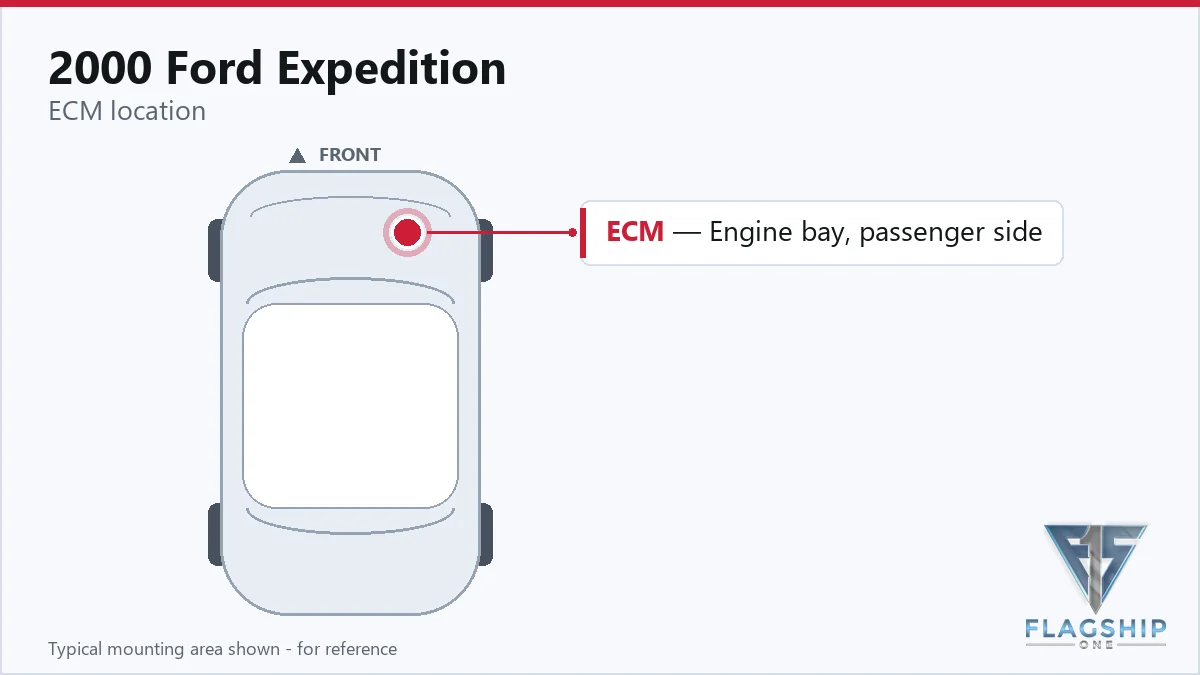
Work with the ignition off, and treat the module as static-sensitive: avoid touching the connector pins at any point.
| Operation | Configuration | Book Time |
|---|---|---|
| Engine Control Module R&R | All configurations | 0.5 hr |
| Powertrain Control Module R&R | All configurations | 0.5 hr |
| Powertrain Control Module Relearn | All configurations | 0.5 hr |
Following the PCM replacement, the factory procedure calls for a relearn step that updates the vehicle’s adaptive parameters and clears any residual codes. Because Flagship One units arrive already VIN‑programmed, that relearn process is effectively completed before the part reaches your shop. This means the technician can focus on the mechanical removal and installation, while the a VIN‑programmed replacement unit takes care of the programming requirements, reducing the chance of post‑install code persistence.
When the PCM in a 2000 Ford Expedition begins to fail, owners often notice a range of issues. Common signs include the engine refusing to start, sudden stalling while driving, or a noticeable loss of power under load. Diagnostic trouble codes may appear, and the scan tool can lose communication with the vehicle’s computer network. Shifting may become harsh or erratic, and in some cases the speedometer will stop working. After a PCM or instrument cluster replacement, you might also see lamp illumination and speedometer errors, with codes such as PCM communication fault or P1639 appearing on the dashboard.
Technical Service Bulletin 02-23-04 notes that after a PCM or instrument cluster replacement, the 4X4 indicator lamp may stay illuminated and the speedometer can become inaccurate. The bulletin also references diagnostic codes P1635 and P1639 that may surface following the replacement procedure.
| Bulletin | Subject | What It Addresses |
|---|---|---|
| 02-23-04 | 4X4 LAMP ILLUMINATED AFTER POWERTRAIN CONTROL MODULE (PCM) OR INSTRUMENT CLUSTER REPLACEMENT – | — |
When the PCM in your 2000 Ford Expedition needs attention, you can choose between a remanufactured unit and a brand‑new, VIN‑programmed replacement from Flagship One. Both options restore the vehicle’s engine and transmission control, but the pre‑programmed unit eliminates the factory relearn step, potentially saving time and reducing the risk of post‑install issues.
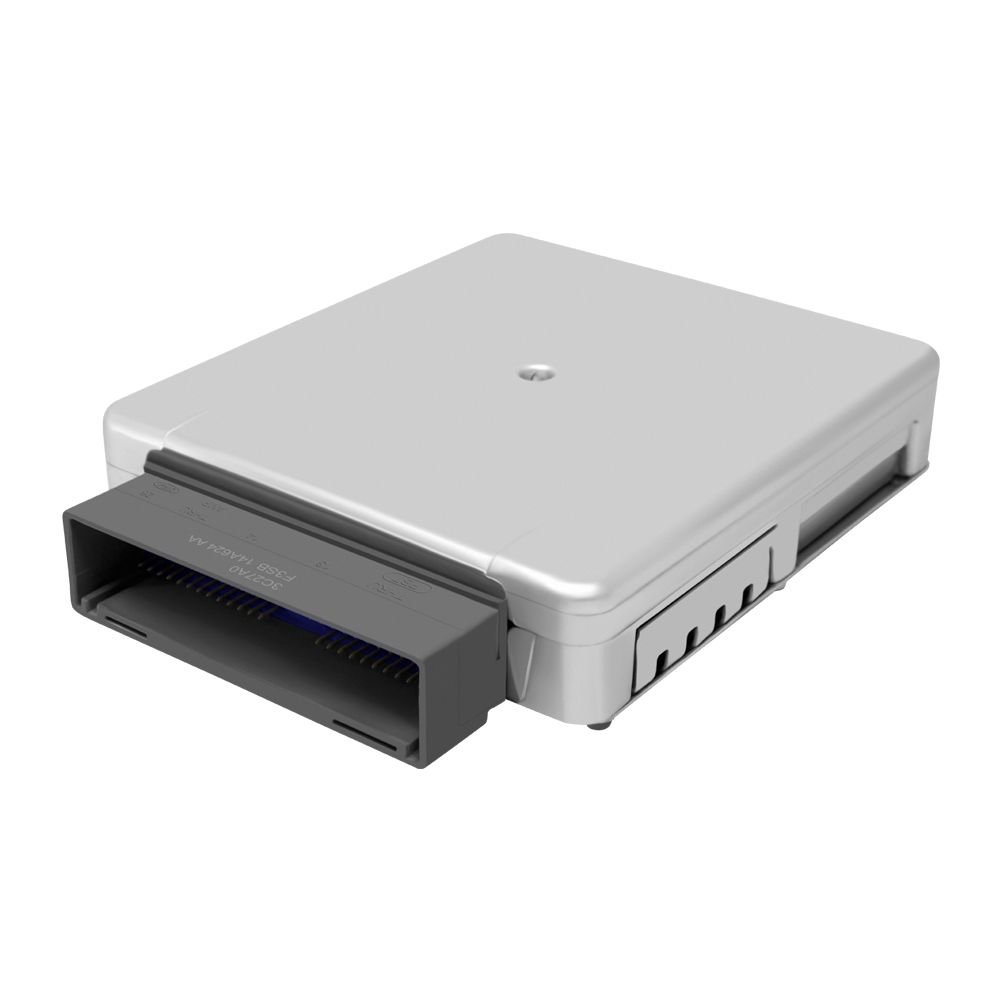
Flagship One stocks a refurbished, VIN-programmed PCM for the 2000 Ford Expedition with a lifetime warranty, free shipping and no core charge. The full Ford Expedition module lineup covers other engine configurations as well.
The Powertrain Control Module is vital to the reliable operation of your 2000 Ford Expedition. Whether you opt for a refurbished part or a Flagship One VIN‑programmed replacement, proper installation and understanding of the relearn process will help keep your truck running smoothly.