
Last updated on August 25th, 2026 at 01:15 pm
In the 1999 Ford Taurus 3.4L, the Powertrain Control Module manages engine timing, fuel delivery, and emission controls. When it fails, the vehicle may experience misfires, loss of power, or a malfunction indicator lamp that remains illuminated.
You may have noticed a persistent check engine light or unexplained performance loss in your 1999 Ford Taurus 3.4L. The Powertrain Control Module (PCM) is the vehicle’s central brain for engine management. Replacing a failing PCM can restore smooth acceleration, proper fuel economy, and correct emission outputs. By understanding where the PCM sits, how long it takes to swap, and what post‑install steps are required, you can make an informed decision about whether to repair or replace this critical component. The information below focuses on the exact labor times, service bulletins, and common symptoms tied specifically to your Taurus model, giving you a clear picture of what to expect during a PCM replacement.
Engine computer (ECM/PCM)
OEM programmed replacements — plug & play, no dealer visit.
Find yours by year, make & model →
Free shipping · Lifetime warranty
The Powertrain Control Module in the 1999 Ford Taurus 3.4L is responsible for coordinating engine ignition timing, fuel injection mapping, and transmission shift logic. It continuously monitors sensor inputs such as throttle position, engine temperature, and oxygen sensor readings, adjusting engine parameters in real time to maintain efficient operation and meet emission standards. If the PCM’s internal circuitry or firmware becomes corrupted, the vehicle may fail to start, misfire, or exhibit erratic idle. The PCM also interfaces with the vehicle’s On‑Board Diagnostics (OBD) system to report trouble codes. Replacement of this module is often required when persistent codes such as P1138 or P1518 appear and cannot be resolved through relearn procedures. Powertrain Control Module for 1999 Ford Taurus 3.4L for the correct application.
The Powertrain Control Module is situated behind the steering column, below the dashboard. Accessing it requires removal of the lower dash panels and the steering column covers. The book time for removal and installation is 1.0 hours. Once the module is accessed, it is unbolted, disconnected from the wiring harness, and replaced. The new unit is then reconnected, and the harness is secured. After the physical installation, a relearn procedure that takes 0.5 hours is performed to calibrate the new module to the vehicle’s specific parameters.
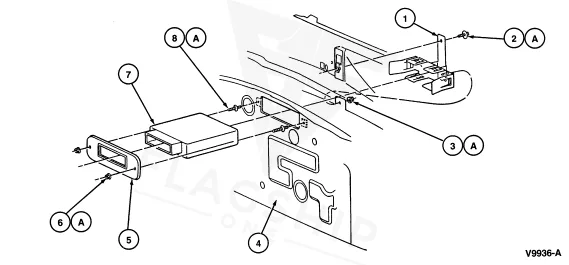
Work with the ignition off, and treat the module as static-sensitive: avoid touching the connector pins at any point.
| Operation | Configuration | Book Time |
|---|---|---|
| Powertrain Control Module R&R | All configurations | 1.0 hr |
| Powertrain Control Module Relearn | All configurations | 0.5 hr |
| Engine Control Module R&R | GAS | 0.5 hr |
| Engine Control Module R&R | GAS | 0.8 hr |
| Engine Control Module R&R | FLEX | 0.4 hr |
| Engine Control Module R&R | 3.4L | 0.4 hr |
After the PCM replacement, the vehicle normally requires a relearn procedure to align the new module’s internal maps with the engine and transmission. However, Flagship One units arrive VIN‑programmed, so that relearn step is already completed on arrival. The factory procedure for a new PCM involves only the relearn step, which is normally performed after installation. VIN‑programmed replacement unit for the correct application.
A failing Powertrain Control Module in the 1999 Ford Taurus 3.4L may manifest as a steady or flashing malfunction indicator lamp, reduced engine power, stalling, or a loss of fuel efficiency. The vehicle may also trigger diagnostic trouble codes such as P1138 for a perceived lack of engine braking or P1518 related to intake manifold runner control. When the PCM cannot communicate with the rest of the vehicle’s electronics, the scan tool may show dead or intermittent data.
The following service bulletins apply to the 1999 Ford Taurus 3.4L with respect to the Powertrain Control Module. 99-04-03 addresses reprogramming of powertrain control modules in EEC V vehicles only, conducted out‑of‑vehicle. 00-06-01 covers DTC P1138 in vehicles with 3.0L engines built through 4/11/1999, which may also affect related modules. 02-15-03 covers DTC P1518 in vehicles equipped with 3.0L 4V engines only.
| Bulletin | Subject | What It Addresses |
|---|---|---|
| 99-04-03 | EEC V VEHICLES ONLY – OUT-OF-VEHICLE – REPROGRAMMING POWERTRAIN CONTROL MODULES (PCMS) | — |
| 00-06-01 | DIAGNOSTIC TROUBLE CODE (DTC) P1138 STORED IN MEMORY – LAMP – MALFUNCTION INDICATOR LAMP (MIL) | — |
| 02-15-03 | DRIVEABILITY – MALFUNCTION INDICATOR LAMP (MIL) ILLUMINATED WITH DIAGNOSTIC TROUBLE CODE (DTC) | — |
If your 1999 Ford Taurus 3.4L is showing persistent engine issues, consider whether a PCM replacement is necessary or if a refurbished unit could resolve the problem. With accurate labor times and a VIN‑programmed replacement, you can choose the option that best fits your schedule and budget.
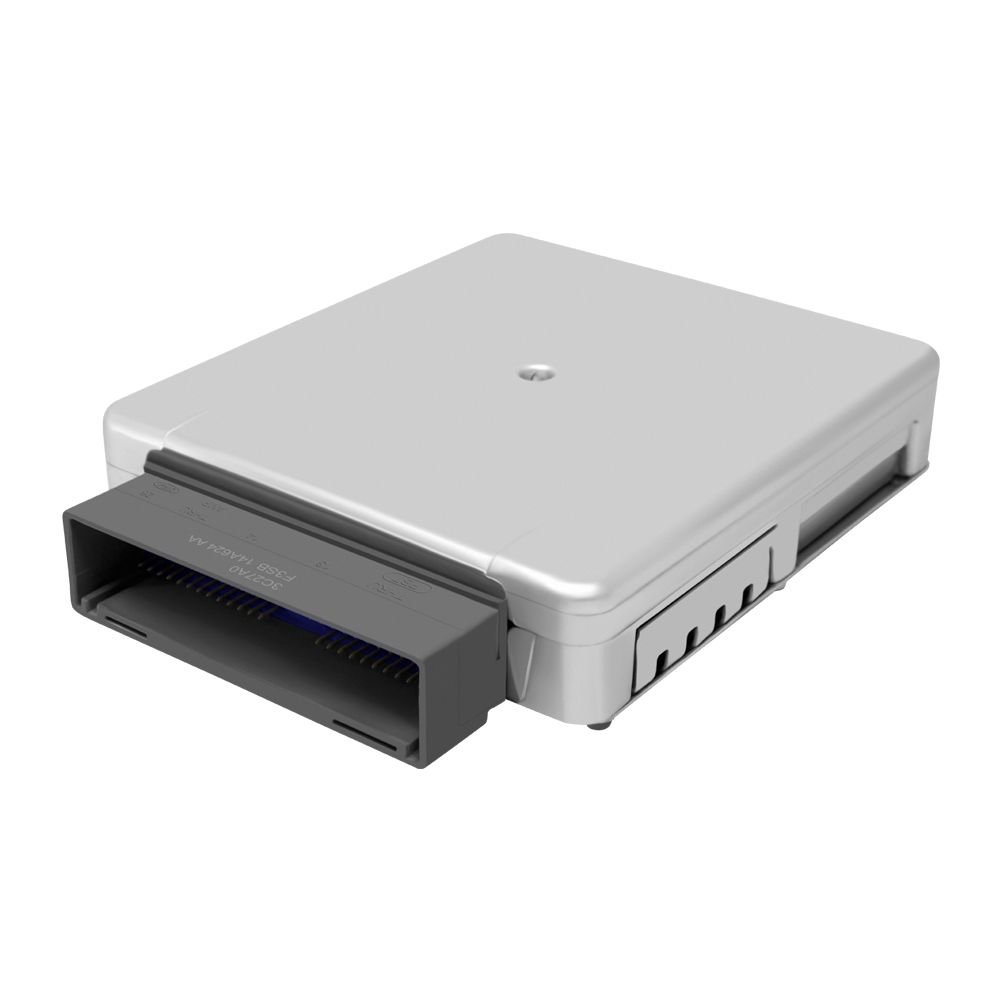
Flagship One stocks a refurbished, VIN-programmed PCM for the 1999 Ford Taurus with a lifetime warranty, free shipping and no core charge. The full Ford Taurus module lineup covers other engine configurations as well.
For the 1999 Ford Taurus 3.4L, a reliable Powertrain Control Module is essential for smooth engine operation and proper emissions control. By understanding the replacement process and the importance of post‑install programming, you can keep your vehicle running efficiently.