
Last updated on August 25th, 2026 at 01:39 pm
The Powertrain Control Module (PCM) in your 1996 Ford Thunderbird manages engine and transmission functions. Failure may cause erratic performance, no-start conditions, or stored trouble codes related to fuel, ignition, or emissions systems.
If your 1996 Ford Thunderbird is experiencing unexplained stalling, rough idling, or a no-start condition, the Powertrain Control Module (PCM) may be the culprit. This critical component oversees engine and transmission operations, ensuring optimal performance. Replacing it involves accessing a concealed location and following precise steps to avoid further issues. Understanding the process helps you anticipate labor time and avoid unnecessary complications. A properly functioning PCM restores drivability and prevents related system failures.
The PCM in your 1996 Ford Thunderbird acts as the brain for engine and transmission functions. It processes sensor data to regulate fuel delivery, ignition timing, and emissions controls. A malfunctioning module may disrupt these systems, leading to poor performance or failure to start. When replacement is necessary, sourcing replacement engine computers for the Thunderbird ensures compatibility and proper functionality. Without a working PCM, your vehicle may struggle to meet basic operational demands.
1996 Ford Thunderbird
OEM programmed ECM for your 1996 Ford Thunderbird — plug & play, no dealer visit.
Free shipping · Lifetime warranty
The PCM in the 1996 Ford Thunderbird is positioned behind the cowl side trim, requiring removal of interior panels for access. Factory labor estimates for replacement on the 3.8L engine are 1.0 hours. If you’re working on a 4.6L model, the process may take slightly longer, around 1.1 hours. The procedure involves disconnecting the battery, removing trim components, and carefully unplugging the module’s connectors. Reinstallation follows the reverse steps, ensuring all connections are secure.
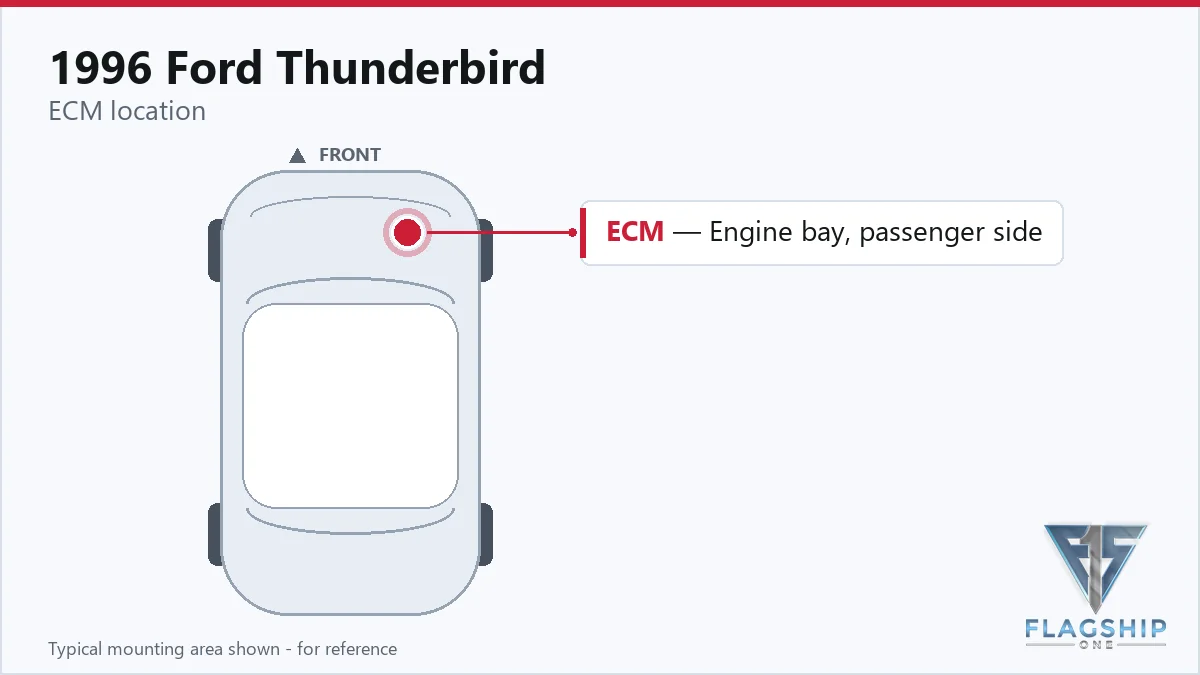
Work with the ignition off, and treat the module as static-sensitive: avoid touching the connector pins at any point.
| Operation | Configuration | Book Time |
|---|---|---|
| Powertrain Control Module R&R | 4.6L | 1.1 hr |
| Powertrain Control Module R&R | 3.8L | 1.0 hr |
| Powertrain Control Module Relearn | All configurations | 0.5 hr |
| Engine Control Module R&R | 4.6L | 1.1 hr |
| Engine Control Module R&R | 3.8L | 1.1 hr |
After installing a new PCM in your 1996 Thunderbird, the factory procedure typically requires a 0.5-hour relearn process to synchronize the module with the vehicle’s systems. However, a VIN-programmed replacement unit eliminates this step, as it arrives pre-configured for your specific vehicle. This saves time and reduces the risk of programming errors during installation.
A failing PCM in your 1996 Ford Thunderbird may cause a range of issues, including stalling, rough idling, or a complete no-start condition. You might also notice the check engine light illuminating with misfire-related codes, such as random cylinder misfire detected. In some cases, the vehicle may enter a limp-home mode, limiting power or shifting erratically. If your scan tool fails to communicate with the PCM, the module itself could be the problem.
Ford issued several service bulletins addressing PCM-related concerns for EEC V vehicles, including the 1996 Thunderbird. TSB 97-09-08 outlines reprogramming procedures for the PCM to resolve driveability issues. TSB 97-09-07 focuses on 4.6L 2V engines, targeting misfire codes (P0300-P0308) with a PCM reprogram. TSB 99-04-03 provides guidelines for out-of-vehicle PCM reprogramming, ensuring updated calibration for improved performance.
| Bulletin | Subject | What It Addresses |
|---|---|---|
| 97-09-08 | POWERTRAIN CONTROL MODULE – REPROGRAM POWERTRAIN CONTROL MODULE (PCM) – SERVICE PROCEDURES – SE | — |
| 97-09-07 | 4.6L 2V ENGINES ONLY – DIAGNOSTIC TROUBLE CODES (DTCS) P0300, P0301, P0302, P0303, P0304, P0305 | — |
| 99-04-03 | EEC V VEHICLES ONLY – OUT-OF-VEHICLE – REPROGRAMMING POWERTRAIN CONTROL MODULES (PCMS) | — |
Replacing the PCM is possible if you’re comfortable with basic automotive repairs. The module is located behind the cowl side trim, requiring removal of interior panels. Ensure the battery is disconnected before starting, and follow factory procedures to avoid damaging connectors or the new unit.
A relearn procedure helps the new PCM synchronize with the vehicle’s sensors and systems. This step ensures proper fuel delivery, ignition timing, and transmission shifting. Skipping it may result in poor performance or stored trouble codes until the module adapts to the vehicle.
Common signs include stalling, rough idling, or a no-start condition. The check engine light may illuminate with misfire or sensor-related codes. If your scan tool fails to communicate with the PCM, the module itself may be faulty and require replacement.
If your 1996 Ford Thunderbird’s PCM is failing, you have options for repair or replacement. A refurbished unit can restore functionality without the cost of a new module. Given the labor involved in accessing and reprogramming the PCM, choosing a pre-programmed replacement saves time and reduces the risk of installation errors.
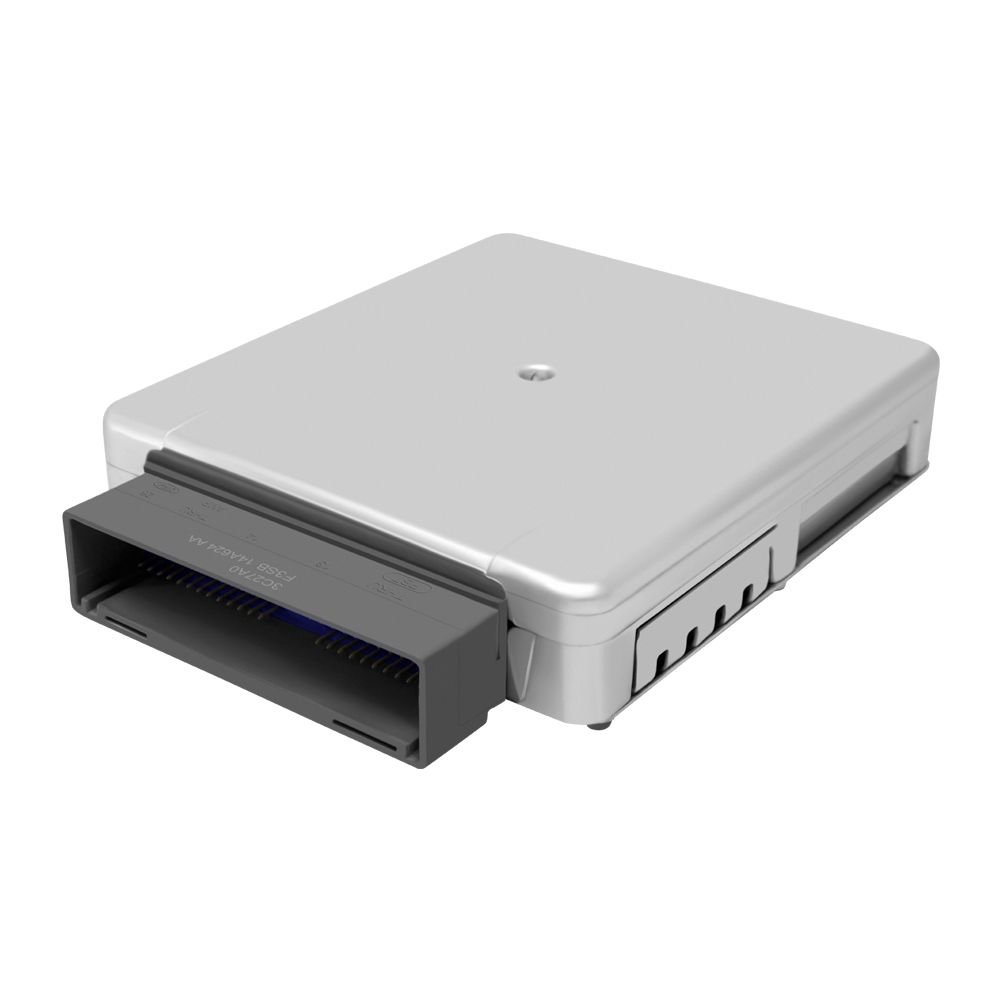
Flagship One stocks a refurbished, VIN-programmed PCM for the 1996 Ford Thunderbird with a lifetime warranty, free shipping and no core charge. The full Ford Thunderbird module lineup covers other engine configurations as well.
Replacing the PCM in your 1996 Ford Thunderbird can resolve persistent drivability issues and restore reliable performance. Whether you tackle the job yourself or leave it to a professional, understanding the process helps you make informed decisions. A properly functioning PCM ensures your Thunderbird runs smoothly for miles to come.