
Last updated on August 25th, 2026 at 01:39 pm
The Powertrain Control Module (PCM) in your 1995 Ford Thunderbird manages engine and transmission functions. A failing PCM may cause erratic shifting, stalling, or poor drivability without triggering obvious dashboard warnings.
If your 1995 Ford Thunderbird hesitates during acceleration, stalls unexpectedly, or shifts roughly, the Powertrain Control Module (PCM) may be the cause. This critical component oversees engine and transmission operations, and failures can disrupt drivability without clear warnings. Replacing it involves straightforward labor, but proper programming is essential to avoid further issues. Understanding the role of the PCM, its location, and the steps involved helps you make informed decisions about repairs or replacements, ensuring your Thunderbird runs reliably.
In your 1995 Ford Thunderbird, the PCM acts as the brain for both the engine and transmission. It monitors sensors to adjust fuel delivery, ignition timing, and shift points, ensuring smooth performance. A malfunctioning PCM may lead to poor throttle response, erratic shifting, or even a no-start condition. Since this module integrates multiple systems, its failure can mimic other issues, making diagnosis tricky. If replacement becomes necessary, replacement engine computers for the Thunderbird are available to restore proper function without extensive reprogramming hassles.
1995 Ford Thunderbird
OEM programmed ECM for your 1995 Ford Thunderbird — plug & play, no dealer visit.
Free shipping · Lifetime warranty
The PCM in your 1995 Ford Thunderbird is located near the passenger-side firewall, behind the glove box. Accessing it requires removing interior panels, but no major disassembly is needed. Replacement typically involves disconnecting the battery, unplugging the wiring harness, and removing the mounting bolts. Labor time for removal and reinstallation is usually 0.9 to 1.1 hours, depending on whether the engine is naturally aspirated or supercharged. No special tools are required beyond basic hand tools, but care should be taken to avoid damaging connectors during removal.
Work with the ignition off, and treat the module as static-sensitive: avoid touching the connector pins at any point.
| Operation | Configuration | Book Time |
|---|---|---|
| Powertrain Control Module R&R | Naturally Aspirated | 1.0 hr |
| Powertrain Control Module R&R | Supercharged | 0.9 hr |
| Powertrain Control Module R&R | Naturally Aspirated | 1.1 hr |
| Powertrain Control Module Relearn | All configurations | 0.5 hr |
| Engine Control Module R&R | 3.8L | 1.0 hr |
| Engine Control Module R&R | 4.6L | 0.9 hr |
After installing a new PCM in your 1995 Ford Thunderbird, the factory procedure requires a 0.5-hour relearn process to synchronize the module with the vehicle’s systems. This step ensures proper fuel trim, idle control, and transmission shift patterns. However, a VIN-programmed replacement unit from Flagship One arrives pre-configured, eliminating the need for this additional step. This saves time and reduces the risk of incomplete initialization, allowing your Thunderbird to return to normal operation immediately after installation.
A failing PCM in your 1995 Ford Thunderbird may cause a range of symptoms, often without warning. Common issues include hesitation or sag during acceleration, delayed or harsh transmission shifts, and intermittent stalling. You might also notice poor fuel economy or a rough idle, as the module struggles to maintain proper air-fuel ratios. In some cases, the vehicle may fail to start at all, or the check engine light may illuminate. If the PCM loses communication with the scan tool, it could indicate an internal fault like memory integrity failure.
Ford issued several service bulletins addressing PCM-related concerns in the 1995 Thunderbird. TSB 97-09-08 outlines procedures for reprogramming the PCM to resolve drivability issues. TSB 99-04-03 focuses on EEC V vehicles, providing steps for out-of-vehicle PCM reprogramming. Additionally, TSB 95-08-03 links delayed or soft transmission shifts to PCM replacement, particularly when paired with a remanufactured 4R70W transmission.
| Bulletin | Subject | What It Addresses |
|---|---|---|
| 97-09-08 | POWERTRAIN CONTROL MODULE – REPROGRAM POWERTRAIN CONTROL MODULE (PCM) – SERVICE PROCEDURES – SE | — |
| 99-04-03 | EEC V VEHICLES ONLY – OUT-OF-VEHICLE – REPROGRAMMING POWERTRAIN CONTROL MODULES (PCMS) | — |
| 95-08-03 | 3.8L AND 4.6L ENGINES – 4R70W – DELAYED/SLOW/SOFT OR HESITATION/SAG ON 1-2 AND/OR 3-4 UPSHIFTS | — |
Hesitation in your Thunderbird may stem from a failing PCM, which controls fuel delivery and ignition timing. If the module isn’t processing sensor data correctly, it can cause delayed throttle response or misfires. A scan tool can help confirm if the PCM is the root cause.
Common signs include stalling, rough shifting, or a no-start condition. If the vehicle exhibits these symptoms and no other issues are found, the PCM may be faulty. A diagnostic scan can reveal internal module faults, though pre-OBD-II vehicles may not store all codes.
Driving with a failing PCM may lead to further drivability issues, such as stalling or transmission slippage. While the vehicle might still run, performance will likely degrade over time. Replacement is often the safest long-term solution.
If your 1995 Ford Thunderbird is experiencing PCM-related issues, you have options. A repair shop can attempt to reflash or replace the module, though labor and programming costs add up. Alternatively, a remanufactured replacement unit designed for your Thunderbird can restore function quickly, especially if pre-programmed to your VIN to skip factory relearn steps.
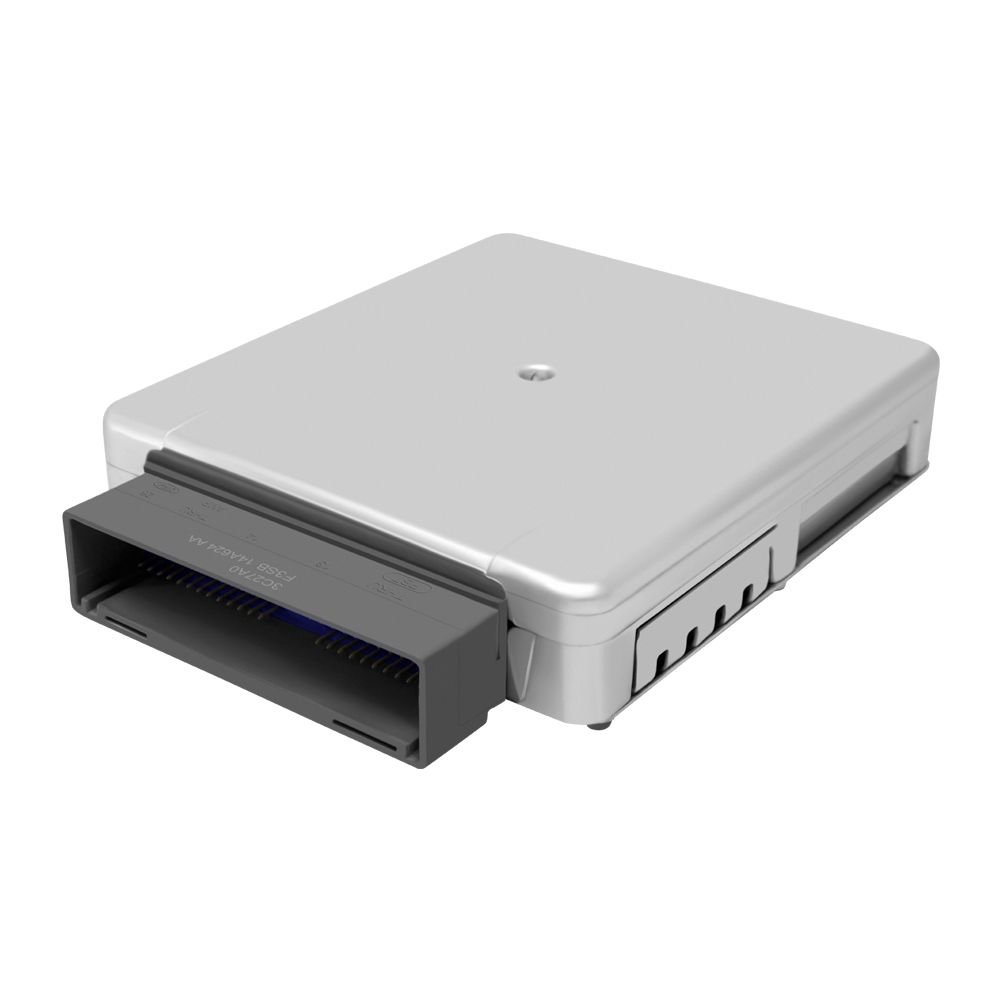
Flagship One stocks a refurbished, VIN-programmed PCM for the 1995 Ford Thunderbird with a lifetime warranty, free shipping and no core charge. The full Ford Thunderbird module lineup covers other engine configurations as well.
The 1995 Ford Thunderbird relies on its PCM to manage critical engine and transmission functions. If you’re facing hesitation, stalling, or shifting issues, the module may be the culprit. Replacement is straightforward, and opting for a pre-programmed unit can simplify the process. Addressing PCM problems promptly helps maintain your Thunderbird’s reliability and performance.