
Last updated on August 25th, 2026 at 01:39 pm
The powertrain control module in a 1996 Ford Escort manages engine timing, fuel delivery, and transmission control. Failure typically results in loss of power, misfire codes, or inability to start, because the computer can no longer coordinate critical engine functions.
When a 1996 Ford Escort experiences persistent misfire codes or a no‑start condition, the powertrain control module often becomes the focus of diagnosis. This guide explains where the PCM lives, what labor is involved in its removal and replacement, and the programming steps needed to get your vehicle back on the road. By the end, you will understand how to approach the job safely and what to expect from a Flagship One replacement unit.
The powertrain control module in the 1996 Ford Escort interprets sensor data to control fuel injection, ignition timing, and transmission shift points, ensuring smooth operation and emissions compliance. Its role is critical because any miscommunication can trigger engine codes or halt power delivery. Proper function influences drivability, fuel economy, and emission control, making it a central component of the vehicle’s electronic system. Replacing it often involves sourcing a compatible unit, such as 1996 Ford Escort PCM replacement that matches the original specifications.
1996 Ford Escort
OEM programmed ECM for your 1996 Ford Escort — plug & play, no dealer visit.
Free shipping · Lifetime warranty
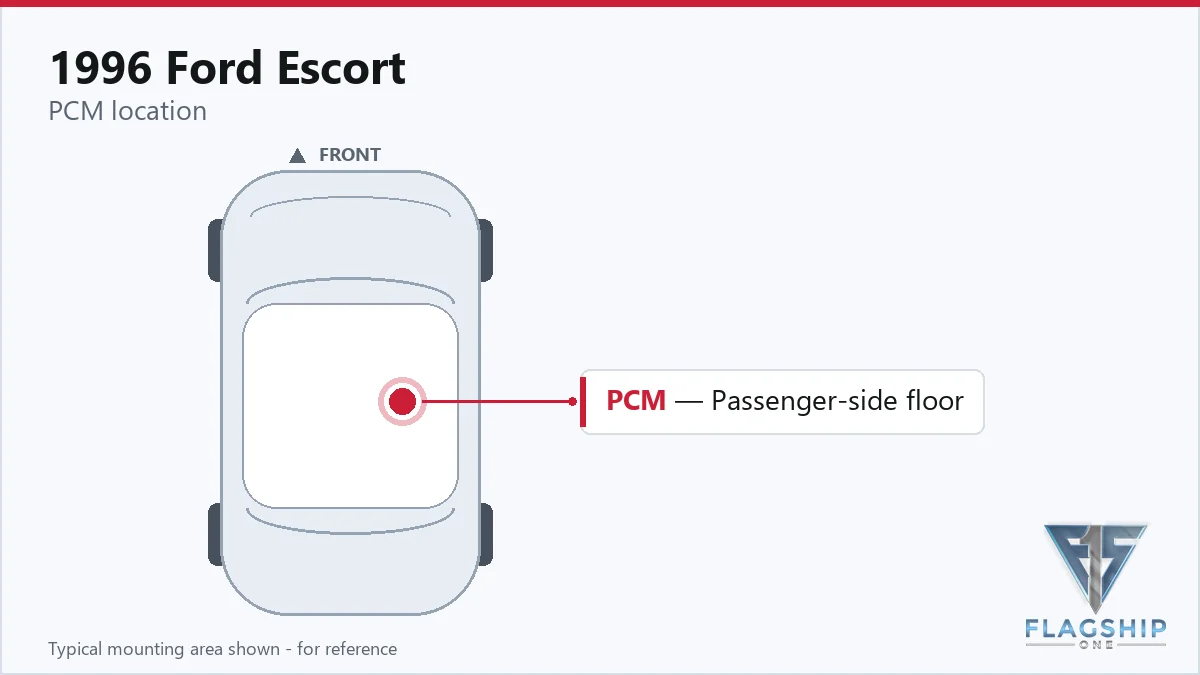
The PCM sits on the floor tunnel ahead of the shift console, secured in a bracket. Access requires first removing the heater and ventilation intake duct (part 18651) positioned in front of the module. The labor book times list 0.6 hours for removal and reinstall, plus an additional 0.5 hour for the relearn procedure after the new unit is in place. No torque specifications were provided, so follow standard fastener practices while securing the bracket.
Work with the ignition off, and treat the module as static-sensitive: avoid touching the connector pins at any point.
| Operation | Configuration | Book Time |
|---|---|---|
| Powertrain Control Module R&R | All configurations | 0.6 hr |
| Powertrain Control Module Relearn | All configurations | 0.5 hr |
| Engine Control Module Relearn | All configurations | 0.5 hr |
| Engine Control Module R&R | All configurations | 1.0 hr |
After installing a new PCM, the factory procedure calls for a powertrain control module relearn that takes about 0.5 hours. Flagship One units arrive already VIN‑programmed, so the required a VIN-programmed replacement unit eliminates the need for that relearn step, simplifying the post‑install process.
A failing PCM in a 1996 Ford Escort may cause the engine to refuse to start, stall intermittently, or produce random misfire codes such as misfire. You might also see the check engine light illuminate and lose transmission shift quality, reflecting the module’s loss of communication with the engine and drivetrain sensors.
Service bulletins for this vehicle include #97-09-08, which outlines reprogramming procedures for the PCM, #99-04-03 covering out‑of‑vehicle PCM reprogramming, and #97-08-06 describing diagnostic codes P0300‑P0308 and related MIL illumination. These bulletins provide the official steps and tips for addressing PCM issues.
| Bulletin | Subject | What It Addresses |
|---|---|---|
| 97-09-08 | POWERTRAIN CONTROL MODULE – REPROGRAM POWERTRAIN CONTROL MODULE (PCM) – SERVICE PROCEDURES – SE | — |
| 99-04-03 | EEC V VEHICLES ONLY – OUT-OF-VEHICLE – REPROGRAMMING POWERTRAIN CONTROL MODULES (PCMS) | — |
| 97-08-06 | DIAGNOSTIC TROUBLE CODES (DTCS) P0300, P0301, P0302, P0303, P0304, P0305, P0306, P0307, AND/OR | — |
Yes, because the PCM also controls shift timing, a malfunction can lead to harsh or delayed shifts, especially under load.
The factory procedure includes a relearn step, but a VIN‑programmed Flagship One unit typically eliminates that requirement.
Disconnect the battery, avoid static discharge, and follow the removal sequence for the heater duct and intake to access the module safely.
When the PCM fails, you can either have it repaired or replace it with a refurbished unit that matches the original specifications. Both options restore engine control, but a Flagship One replacement offers a tested, VIN‑programmed solution that simplifies installation and reduces post‑repair steps.
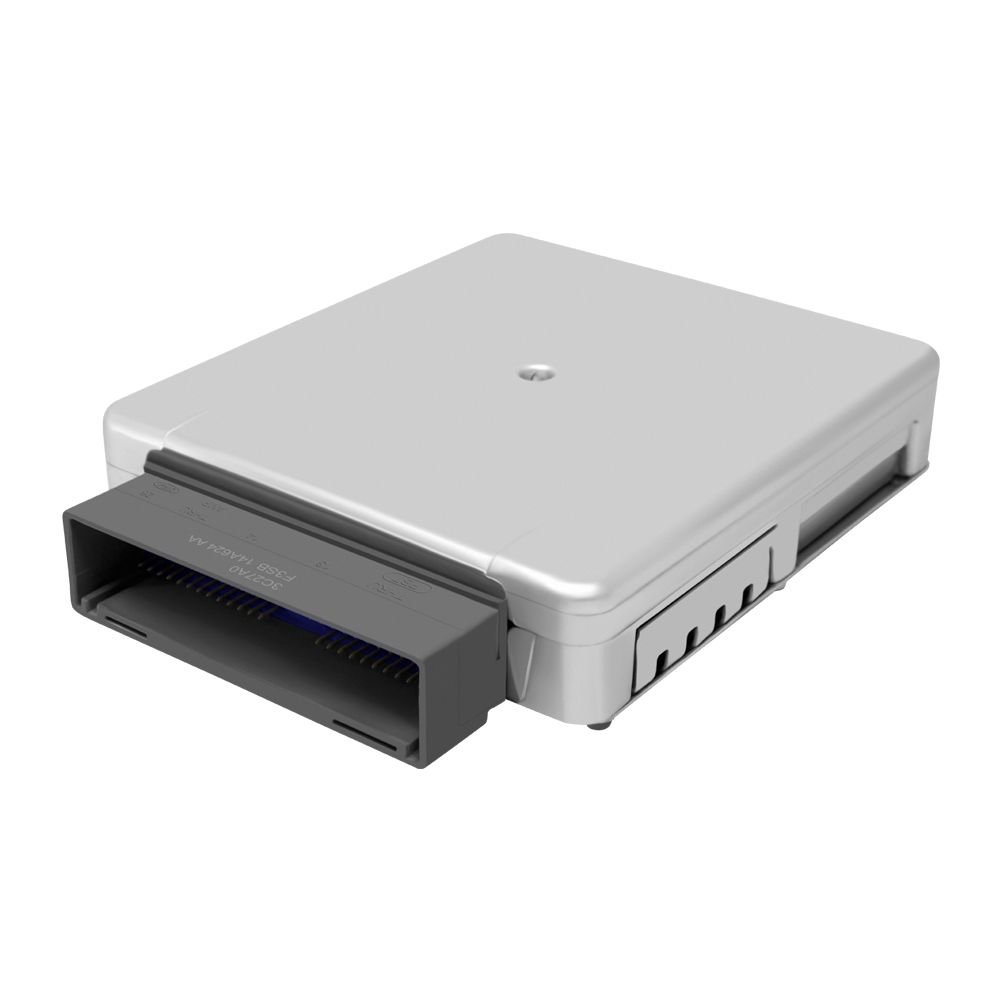
Flagship One stocks a refurbished, VIN-programmed PCM for the 1996 Ford Escort with a lifetime warranty, free shipping and no core charge. The full Ford Escort module lineup covers other engine configurations as well.
The powertrain control module is vital to the 1996 Ford Escort’s operation. Whether you choose repair or a Flagship One replacement, ensure proper handling and programming to keep your vehicle running smoothly.