
Last updated on August 25th, 2026 at 01:40 pm
The PCM in a 1994 Ford Escort controls engine timing, fuel delivery, and ignition events. Failure often results in a loss of power, misfires, or a MIL that stays on.
You’ve likely noticed a check engine light on your 1994 Ford Escort that refuses to go away. The Powertrain Control Module (PCM) is the brain of the engine and transmission, managing everything from fuel injection to shift timing. Replacing this module can restore full functionality and eliminate persistent trouble codes. This guide walks you through locating the PCM, the labor involved, the factory relearn process, and the service bulletins that affect your vehicle. By the end, you’ll know what to expect and how a new unit can bring your Escort back to reliable operation.
In the 1994 Ford Escort, the PCM coordinates engine and transmission functions to keep the vehicle running smoothly. It monitors sensor inputs and adjusts ignition timing, fuel maps, and shift points in real time. When the PCM fails, the engine may misfire, stall, or fail to start, and a MIL may illuminate. 1994 Ford Escort PCM is essential for vehicle performance.
1994 Ford Escort
OEM programmed ECM for your 1994 Ford Escort — plug & play, no dealer visit.
Free shipping · Lifetime warranty
The PCM is located behind the center of the instrument panel. To access it, you must first remove the air duct that sits in front of the module. The replacement labor time for removal and reinstallation is 0.6 hours, and relearn takes an additional 0.5 hours. Follow the standard dash removal steps to avoid damage to surrounding components.
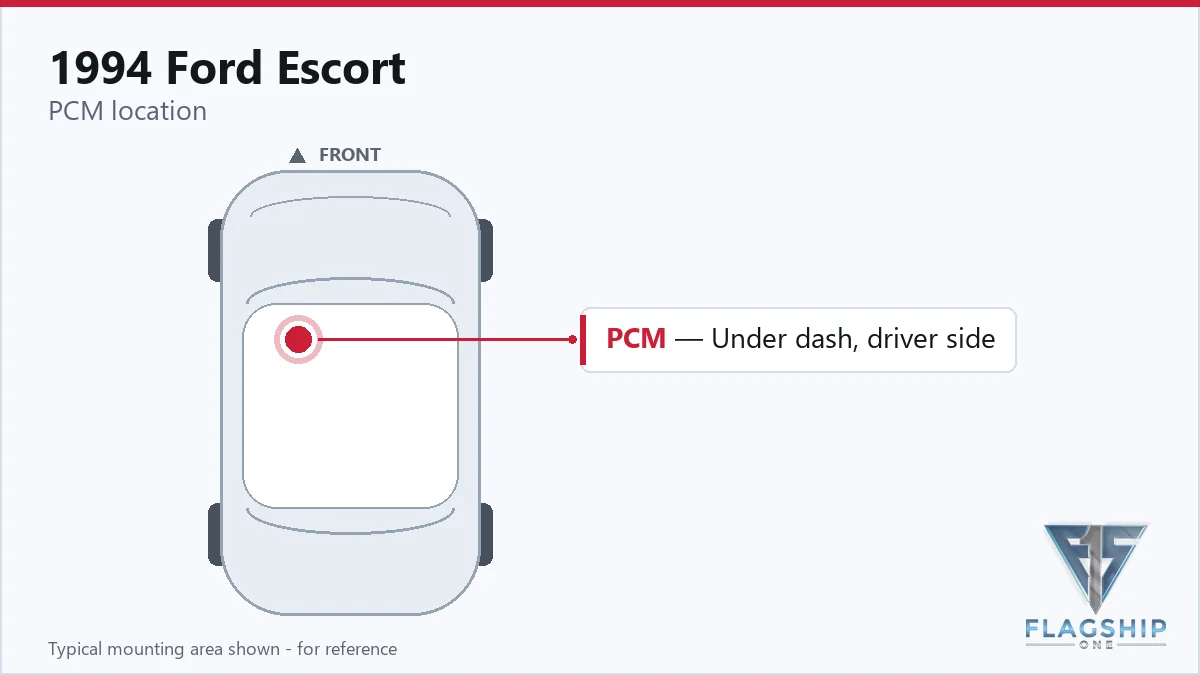
Work with the ignition off, and treat the module as static-sensitive: avoid touching the connector pins at any point.
| Operation | Configuration | Book Time |
|---|---|---|
| Powertrain Control Module R&R | All configurations | 0.6 hr |
| Powertrain Control Module Relearn | All configurations | 0.5 hr |
| Engine Control Module Relearn | All configurations | 0.5 hr |
| Engine Control Module R&R | All configurations | 1.0 hr |
After installing a new PCM, the factory procedure requires a relearn of the engine and transmission parameters. Flagship One units arrive VIN‑programmed, so the relearn step is already completed, and no further programming is needed. VIN‑programmed replacement unit eliminates the need for post‑install calibration.
When the PCM in a 1994 Ford Escort is compromised, you may see a MIL that remains lit, a sudden loss of power, stalling during acceleration, or a misfire that prevents the engine from starting. In some cases, the scan tool may report no communication. If a code appears, it may reference a P0601 condition, indicating a PCM failure. PCM Failure
TSB 95‑10‑02 addresses MIL illumination in distributorless ignition systems, requiring connector retention clip and seal revisions. TSB 94‑09‑05 notes that the self‑test output circuit is inoperative for 1.8L 4EAT models built between 11/1/93 and 3/15/94. TSB 95‑20‑01 warns that the warning indicator may flash intermittently when DTC 32 is present in Escorts built from 11/1/93 to 8/19/94.
| Bulletin | Subject | What It Addresses |
|---|---|---|
| 95-10-02 | “MALFUNCTION INDICATOR LAMP” (MIL) ILLUMINATED – DISTRIBUTORLESS IGNITION SYSTEM (DIS) ONLY – I | — |
| 94-09-05 | 1.8L 4EAT APPLICATIONS ONLY – SELF TEST OUTPUT (STO) CAN BE ACCESSED ONLY THROUGH MALFUNCTION I | — |
| 95-20-01 | AIR BAG – ESCORTS BUILT FROM 11/1/93 THROUGH 8/19/94 – TRACERS BUILT FROM 11/15/93 THROUGH 9/9/ | — |
If the MIL is caused by a PCM fault, a new unit often resolves the issue. However, other components such as sensors or wiring can also trigger the light, so a full diagnostic scan is recommended before replacing the PCM.
Yes. The factory relearn procedure updates shift maps and timing. With a VIN‑programmed replacement, the relearn step is already completed, but verifying transmission behavior after installation is still advised.
A refurbished PCM can be used, but it must be inspected for proper seals and connector integrity. If it is not VIN‑programmed, you will need to perform the relearn procedure yourself.
Replacing the PCM in your 1994 Ford Escort can restore reliable power and eliminate lingering MILs. Whether you choose a new factory unit or a refurbished alternative, the process remains straightforward. Consider the vehicle’s age and mileage to determine the best approach, and ensure any replacement module is compatible with your Escort’s specific control architecture.
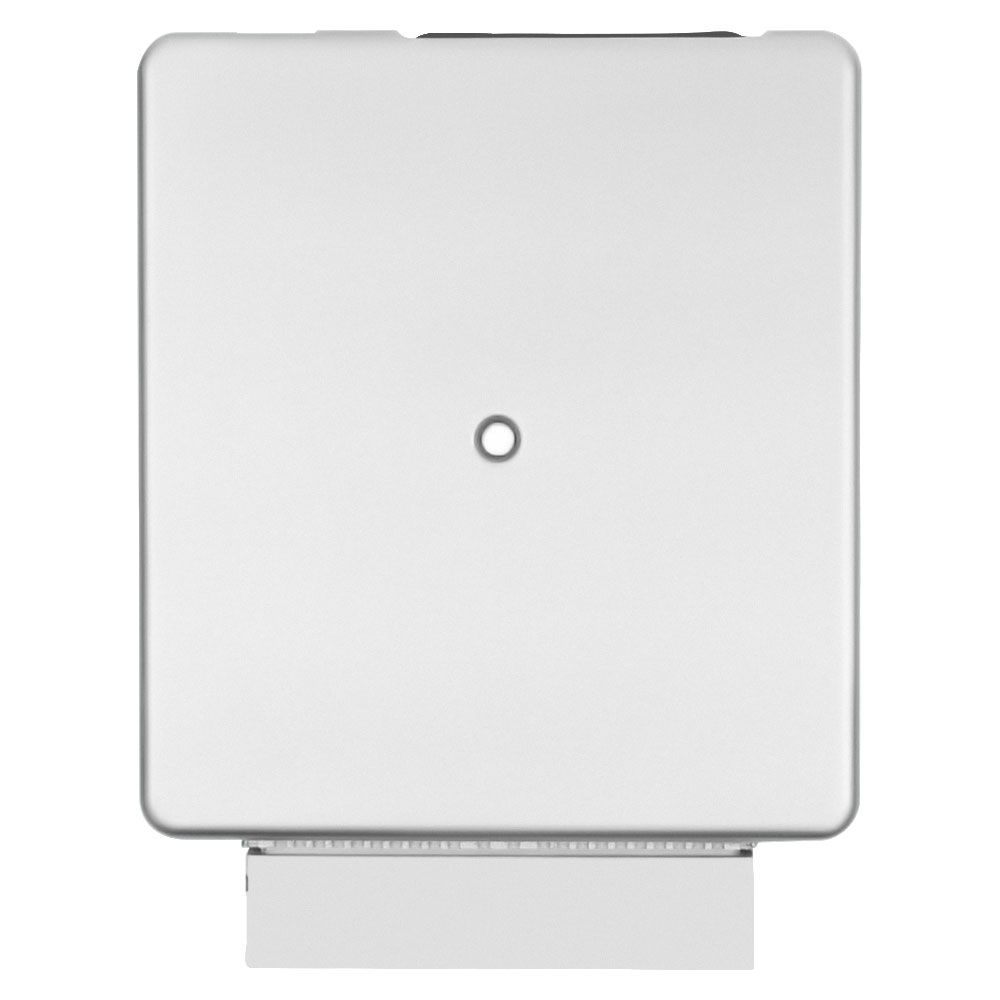
Flagship One stocks a refurbished, VIN-programmed PCM for the 1994 Ford Escort with a lifetime warranty, free shipping and no core charge. The full Ford Escort module lineup covers other engine configurations as well.
Your 1994 Ford Escort relies on the PCM to manage engine and transmission performance. By understanding its location, replacement steps, and post‑install requirements, you can confidently address MIL issues and keep your vehicle running smoothly.