
Last updated on August 25th, 2026 at 01:42 pm
The powertrain control module (PCM) in your 2009 Saturn Sky 2.4L manages engine and transmission functions. Failure can cause drivability issues, no-start conditions, and stored trouble codes. It is a critical component that requires proper handling and programming when replaced.
If you own a 2009 Saturn Sky with the 2.4L engine, you may eventually face a failing powertrain control module (PCM) or engine control module (ECM). These modules are the brain of your vehicle’s engine and transmission management, and when they fail, the car may not start, run poorly, or illuminate the check engine light. This guide is written to help you understand what the PCM/ECM does in your Sky, recognize the symptoms of a failing module, and know what is involved in replacing it. You will learn the factory-recommended procedures, including the need to capture data before removal and the requirement for specialized programming equipment. We also cover the module-internal trouble codes that point to internal faults rather than sensor issues. By the end, you will have a clear picture of your options: repairing the original module or replacing it with a pre-programmed unit that eliminates the need for dealer programming. This information is based on documented labor times and factory cautions specific to the 2009 Saturn Sky 2.4L.
The powertrain control module (PCM) in your 2009 Saturn Sky 2.4L is a single unit that controls both the engine and the automatic transmission (if equipped). It receives input from sensors such as the crankshaft position, throttle position, oxygen sensors, and more. Using this data, the PCM adjusts fuel injection timing, ignition timing, idle speed, and transmission shift points to optimize performance and emissions. In the Sky, the PCM also manages the variable valve timing system and the electronic throttle control. When the PCM fails, it can cause a wide range of drivability problems because it is the central decision-maker. The module is designed to be replaced as a complete assembly; internal components are not serviceable. For the 2.4L engine, the book labor time to remove and replace the PCM is 0.7 hours. If you need a replacement, you can find Saturn Sky replacement PCMs that are pre-programmed with your vehicle’s VIN, saving you the step of dealer reprogramming. Understanding what the PCM does helps you diagnose whether a no-start or rough-running condition is due to the module itself or a peripheral sensor.
2009 Saturn Sky 2.4L
OEM programmed ECM for your 2009 Saturn Sky 2.4L — plug & play, no dealer visit.
Free shipping · Lifetime warranty
The PCM on the 2009 Saturn Sky 2.4L is located in the engine compartment, typically mounted near the battery or on the firewall. To access it, you may need to remove a cover or air intake duct. Replacement begins by disconnecting the negative battery cable and waiting a few minutes for the system to discharge. Then, unbolt the PCM from its bracket, disconnect the electrical connectors (usually two large harness connectors), and remove the module. Installation is the reverse: position the new PCM, reconnect the harnesses, and secure it with the original bolts. The book labor time for this procedure on the 2.4L engine is 0.7 hours. A practical note: before removal, use a scan tool to capture the ECM data as recommended by the factory. This data can be useful for diagnostics or for the new module’s setup. Ensure all connectors are clean and fully seated to avoid future issues.
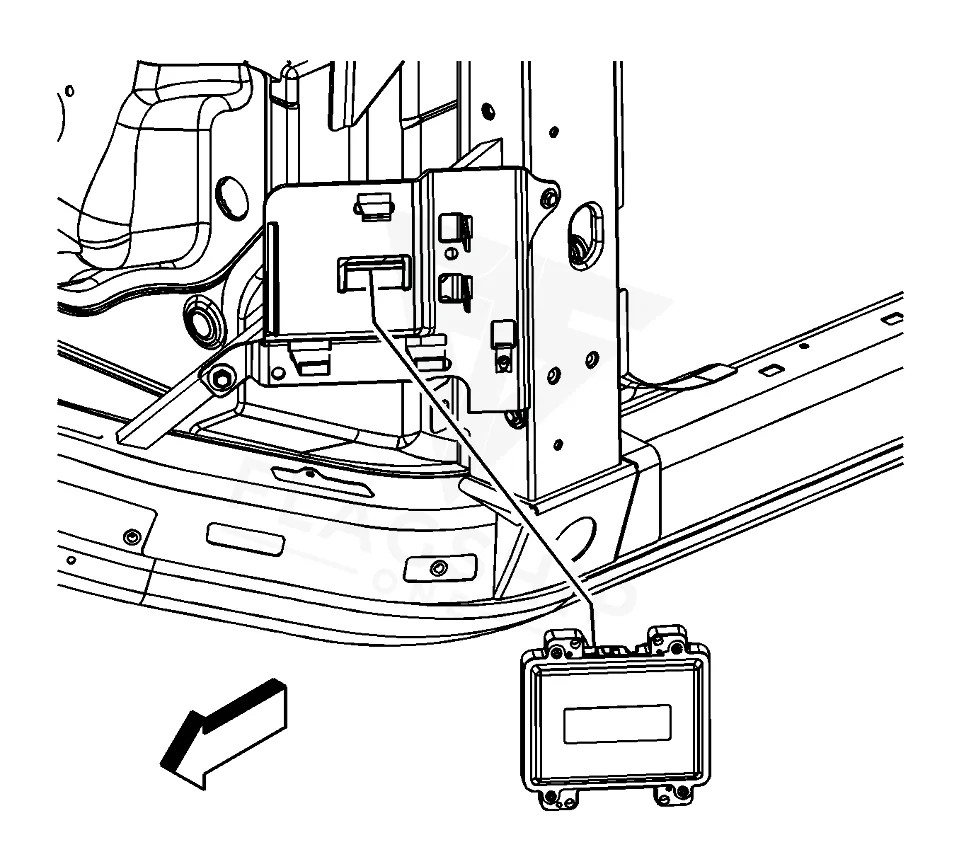
Work with the ignition off, and treat the module as static-sensitive: avoid touching the connector pins at any point.
| Operation | Configuration | Book Time |
|---|---|---|
| Powertrain Control Module R&R | 2.0L | 0.9 hr |
| Powertrain Control Module R&R | 2.4L | 0.7 hr |
| Engine Control Module R&R | 2.0L | 0.9 hr |
| Engine Control Module R&R | 2.4L | 0.7 hr |
| Engine Control Module Relearn | All configurations | 0.5 hr |
After replacing the PCM on a 2009 Saturn Sky 2.4L, the factory procedure requires reprogramming the module with the correct software and calibration for your specific vehicle. This process demands special equipment and access to the manufacturer’s programming system. Additionally, the factory advises using a scan tool to capture the ECM data before removal, which may be needed during programming. However, when you purchase a VIN-programmed replacement unit from Flagship One, the module arrives already programmed with your vehicle’s VIN and the appropriate calibration. This means you can install the unit and start the engine without needing to visit a dealer or perform the reprogramming steps yourself. The labor time for the physical swap remains 0.7 hours, but the programming step is eliminated, saving you time and the cost of a dealer visit. Always follow the factory caution about connecting aftermarket equipment directly to the battery to avoid damaging the new module.
A failing PCM in your 2009 Saturn Sky 2.4L can produce a variety of symptoms. The most common is a no-start condition where the engine cranks but does not fire, often because the PCM is not sending fuel injector or ignition signals. You may also experience intermittent stalling, rough idle, or hesitation during acceleration. The check engine light will likely illuminate, and you may retrieve codes such as internal control module fault P0601 which indicates a PCM internal error. Other symptoms include the transmission shifting erratically or failing to shift, as the PCM controls shift solenoids. You might also notice that the scan tool cannot communicate with the PCM, a sign of a dead module. In some cases, the vehicle may run but with reduced power or poor fuel economy. Because the PCM manages so many systems, symptoms can mimic other failures like a bad sensor or wiring issue. If you have multiple codes that are not sensor-related, or if the module fails to respond to diagnostics, the PCM itself is likely the culprit.
The following module-internal trouble codes are documented for the 2009 Saturn Sky 2.4L. These codes indicate internal PCM/ECM faults rather than sensor or circuit issues.
| Code | Meaning | Full Guide |
|---|---|---|
| P0601 | Internal memory checksum error | Full P0601 guide → |
| P0602 | Control module programming error | Full P0602 guide → |
| P0603 | Keep-alive memory (KAM) error | Full P0603 guide → |
| P0604 | Internal RAM error | Full P0604 guide → |
| P0606 | Module processor failure | Full P0606 guide → |
| P062F | Internal EEPROM error | Full P062F guide → |
| P064D | Module-internal fault | — |
| P1621 | Control module long-term memory performance | Full P1621 guide → |
| P167A | Module-internal fault | — |
| P167D | Module-internal fault | — |
Common signs include a no-start condition, stalling, rough running, and trouble codes like P0601 or P0602. If the scan tool cannot communicate with the PCM, that is a strong indicator of failure. However, always rule out wiring and sensor issues first.
Yes, the physical replacement is straightforward and takes about 0.7 hours of labor. You will need basic hand tools and the ability to disconnect the battery and electrical connectors. However, the module must be programmed to your vehicle, which is why a pre-programmed unit is recommended.
The factory warns that any aftermarket electrical or vacuum equipment should be connected directly to the 12V battery, not to the vehicle’s wiring. This prevents damage to the PCM and other sensitive electronics. Follow this when installing accessories like alarms or audio systems.
The factory procedure recommends using a scan tool to capture the ECM data before removal. This data may include learned values and calibration information that can be useful for diagnostics or for the new module’s setup. It is a precautionary step to ensure a smooth replacement.
Documented codes include P0601, P0602, P0603, P0604, P0606, P062F, P064D, P1621, P167A, and P167D. These indicate internal PCM faults such as memory errors, performance issues, or communication failures. They are not related to external sensors or circuits.
When your 2009 Saturn Sky 2.4L needs a PCM, you have two main paths: have the original module repaired by a specialist, or replace it with a refurbished unit. Repair may be possible for some internal faults, but replacement is often more reliable. A pre-programmed replacement from Flagship One arrives ready to install, saving you the dealer programming step. Consider the labor time of 0.7 hours and the factory cautions when making your decision.
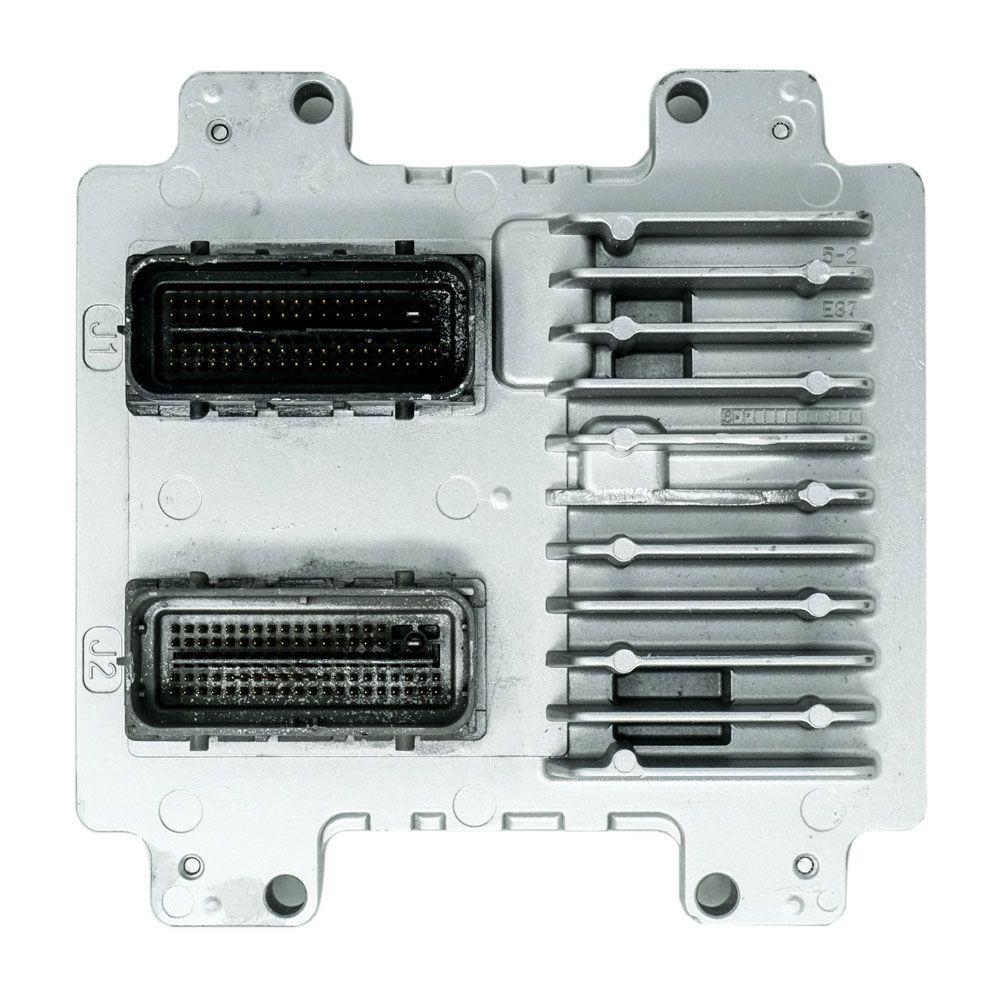
Flagship One stocks a refurbished, VIN-programmed PCM for the 2009 Saturn Sky with a lifetime warranty, free shipping and no core charge. The full Saturn Sky module lineup covers other engine configurations as well.
The 2009 Saturn Sky 2.4L relies on its PCM for engine and transmission control. Recognizing symptoms like no-start, stalling, and codes such as P0601 can help you diagnose a failing module. Replacement is straightforward with a 0.7-hour book time, and choosing a VIN-programmed unit eliminates the need for dealer reprogramming. Keep your Sky running smoothly with the right replacement.