
Last updated on August 25th, 2026 at 01:44 pm
In the 2016 Nissan Titan XD, the powertrain control module (PCM) and engine control module (ECM) manage engine timing, fuel delivery, and transmission shift logic. When either unit fails, the vehicle can lose power, exhibit erratic shifting, or refuse to start, and a diagnostic trouble code such as P0605 may be stored.
When a 2016 Nissan Titan XD begins to exhibit power‑loss, rough idle, or an inability to shift correctly, the underlying cause often traces back to the vehicle’s computer modules. Understanding how the powertrain control module (PCM) and engine control module (ECM) operate, where they sit, and what the factory expects after a swap can help you make an informed decision about repair versus replacement. This guide walks you through the function of each module, the typical labor involved, the programming steps required, and the signs that point to a failing unit, so you can approach the repair with confidence.
The powertrain control module in the 2016 Nissan Titan XD serves as the central brain for both engine and transmission functions, translating sensor data into real‑time adjustments for fuel injection, ignition timing, and gear shifts. It also monitors the engine control module, which focuses on engine‑specific parameters such as air‑fuel mixture and emissions controls. Together, these computers ensure the V8 delivers smooth power while meeting regulatory standards. When either module malfunctions, you may see loss of power, erratic shifting, or a complete no‑start condition. Understanding that the PCM and ECM work in tandem helps explain why a fault in one often triggers related symptoms across the powertrain. replacement powertrain control modules for the 2016 Nissan Titan XD are engineered to match the vehicle’s calibrated maps and communication protocols.
2016 Nissan Titan XD
OEM programmed ECM for your 2016 Nissan Titan XD — plug & play, no dealer visit.
Free shipping · Lifetime warranty
Both the PCM and ECM are mounted within the engine compartment, typically secured to the firewall or a bracket near the battery. Access generally involves disconnecting the negative battery cable, removing protective covers, and unfastening a series of bolts that hold the module housing. The labor guide lists three hours for removal and replacement of each unit, reflecting the time needed to safely disconnect wiring harnesses, extract the module, and reinstall it with proper torque. After the PCM is reinstalled, a relearn procedure lasting half an hour is required, while the ECM reset takes roughly three tenths of an hour, followed by a half‑hour relearn. These steps ensure the new computer aligns with the vehicle’s existing sensor calibrations.
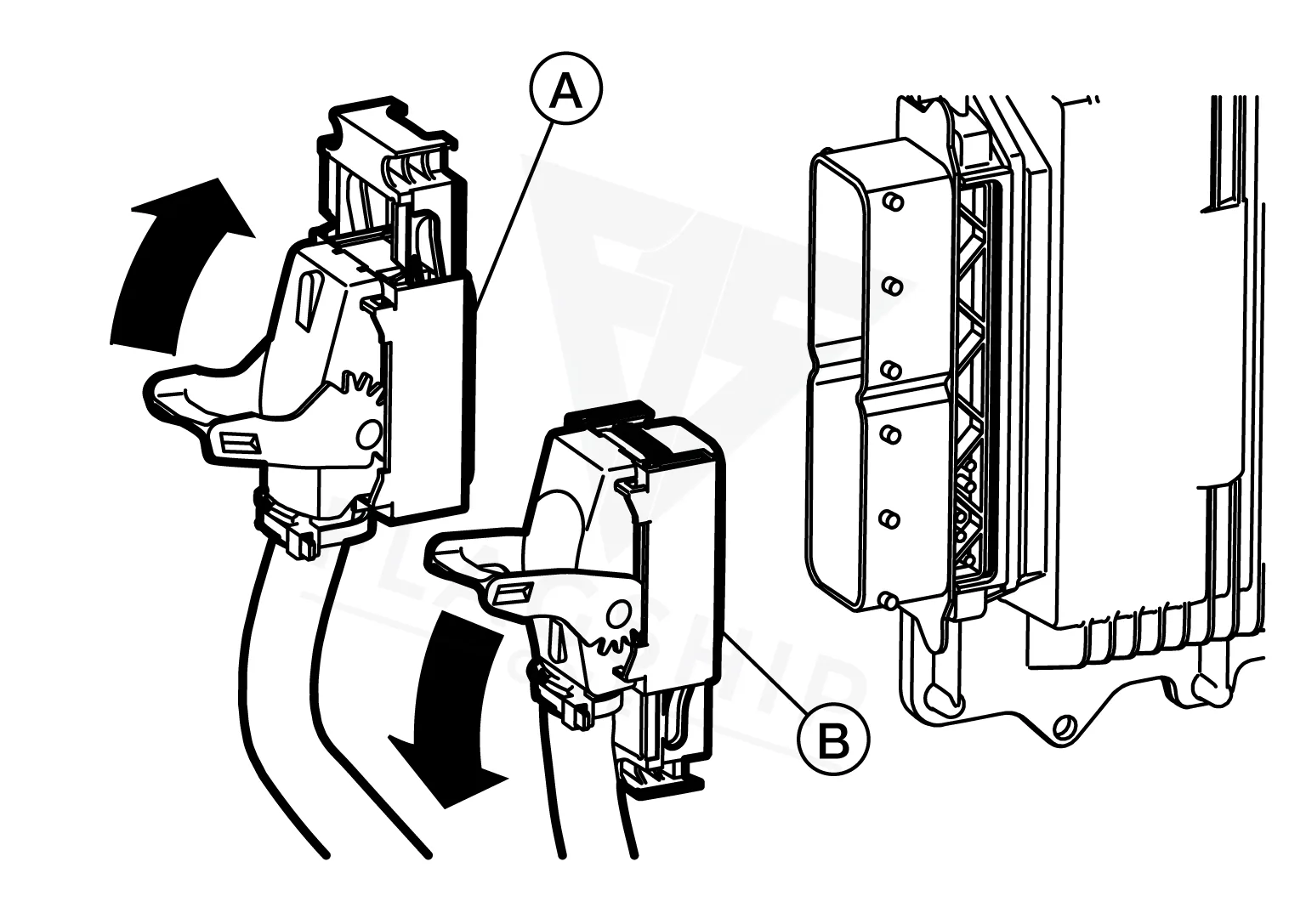
Work with the ignition off, and treat the module as static-sensitive: avoid touching the connector pins at any point.
| Operation | Configuration | Book Time |
|---|---|---|
| Powertrain Control Module R&R | All configurations | 3.0 hr |
| Powertrain Control Module Relearn | All configurations | 0.5 hr |
| Engine Control Module R&R | All configurations | 3.0 hr |
| Engine Control Module Reset | All configurations | 0.3 hr |
| Engine Control Module Relearn | All configurations | 0.5 hr |
Once the PCM or ECM is physically installed, the factory service routine calls for a short relearn or reset to synchronize the module with the vehicle’s existing sensors and transmission control logic. Flagship One supplies units that arrive already programmed to the vehicle’s VIN, which means the VIN‑specific calibration data is embedded before the module reaches the shop. This eliminates the need for the technician to perform the initial programming step, allowing them to focus on the relearn procedures outlined in the labor times. a VIN‑programmed replacement unit therefore streamlines the overall repair process and reduces the chance of programming errors.
A failing PCM or ECM in a 2016 Nissan Titan XD may present as a no‑start condition, intermittent stalling while driving, rough idle, or unexpected transmission shifts. You might also notice the check engine light illuminating and the scan tool reporting a generic powertrain fault. In many cases, the diagnostic trouble code stored will reference internal module communication errors, such as internal control module memory checksum error, which points directly to a fault within the PCM or ECM hardware. These symptoms often appear together, reflecting the intertwined nature of engine and transmission control in this model.
The following internal diagnostic codes are commonly logged by the 2016 Nissan Titan XD when its PCM or ECM encounters a fault.
| Code | Meaning | Full Guide |
|---|---|---|
| P0605 | Internal ROM error | Full P0605 guide → |
The factory labor guide assigns three hours for removal and installation of the powertrain control module, plus an additional half hour for the relearn procedure.
Yes, the engine control module reset is listed as 0.3 hours, followed by a 0.5‑hour relearn to synchronize engine parameters.
A VIN‑programmed unit already contains the vehicle‑specific calibration data, so the technician can skip the initial programming and proceed directly to relearn tasks.
P0605 signals an internal control module memory checksum error, which usually points to a fault within the PCM or ECM hardware.
While the physical removal is straightforward, the required relearn procedures and the need for proper VIN programming make professional service advisable.
When your 2016 Nissan Titan XD shows signs of a failing PCM or ECM, you can choose a new factory‑spec unit or a refurbished replacement that meets the same performance standards. Both options involve the same labor steps, but a VIN‑programmed replacement from Flagship One removes the need for initial programming, letting you focus on the required relearn processes and get back on the road sooner.
Flagship One stocks a refurbished, VIN-programmed PCM for the 2016 Nissan Titan XD with a lifetime warranty, free shipping and no core charge. The full Nissan Titan XD module lineup covers other engine configurations as well.
If the powertrain or engine control modules in your 2016 Nissan Titan XD are causing drivability issues, a proper replacement paired with the factory‑required relearn can restore reliable performance. Consider a VIN‑programmed unit to simplify the process and reduce the chance of programming errors.