
Last updated on August 25th, 2026 at 01:45 pm
The powertrain control module (PCM) in your 2015 Nissan Altima manages engine and transmission functions. A failure may cause stalling, poor performance, or a complete no-start condition, often triggered by internal faults or electrical issues.
If your 2015 Nissan Altima suddenly refuses to start or stalls unexpectedly, the powertrain control module (PCM) may be the culprit. This small but critical computer oversees everything from fuel delivery to transmission shifting, and when it fails, your vehicle may exhibit a range of frustrating symptoms. Unlike simpler components, the PCM isn’t just swapped and forgotten—it requires precise programming to sync with your Altima’s systems. Understanding what this module does, how to spot its failures, and what replacement involves can save you time and guesswork. Whether you’re diagnosing a stubborn trouble code or preparing for a repair, knowing the steps—and the potential pitfalls—helps you make informed decisions about your vehicle’s health.
The powertrain control module in your 2015 Nissan Altima serves as the brain for both the engine and transmission. It processes data from sensors to optimize fuel injection, ignition timing, and shift points, ensuring smooth operation and efficiency. Without a functioning PCM, your Altima may struggle to start, run roughly, or even enter a limp mode to prevent further damage. This module also stores critical vehicle data, including emission controls and transmission adaptations, which is why a direct replacement replacement engine computers for the Altima must be programmed to match your specific VIN. A failure here doesn’t just affect performance—it can leave you stranded if the module loses communication with other systems entirely.
2015 Nissan Altima
OEM programmed ECM for your 2015 Nissan Altima — plug & play, no dealer visit.
Free shipping · Lifetime warranty
In the 2015 Nissan Altima, the PCM is located in the engine bay, typically mounted near the firewall or on the passenger side. Accessing it involves removing the air intake assembly and possibly some wiring harnesses to reach the module’s mounting bolts. The factory labor time for removal and reinstallation is 2.2 hours, which includes disconnecting the battery, unplugging the wiring harness, and securing the new unit. Once the physical swap is complete, the module must be relearned to the vehicle’s systems, a process that adds another 0.5 hours of labor. This step ensures the PCM recognizes the engine, transmission, and other critical components, preventing drivability issues after replacement.
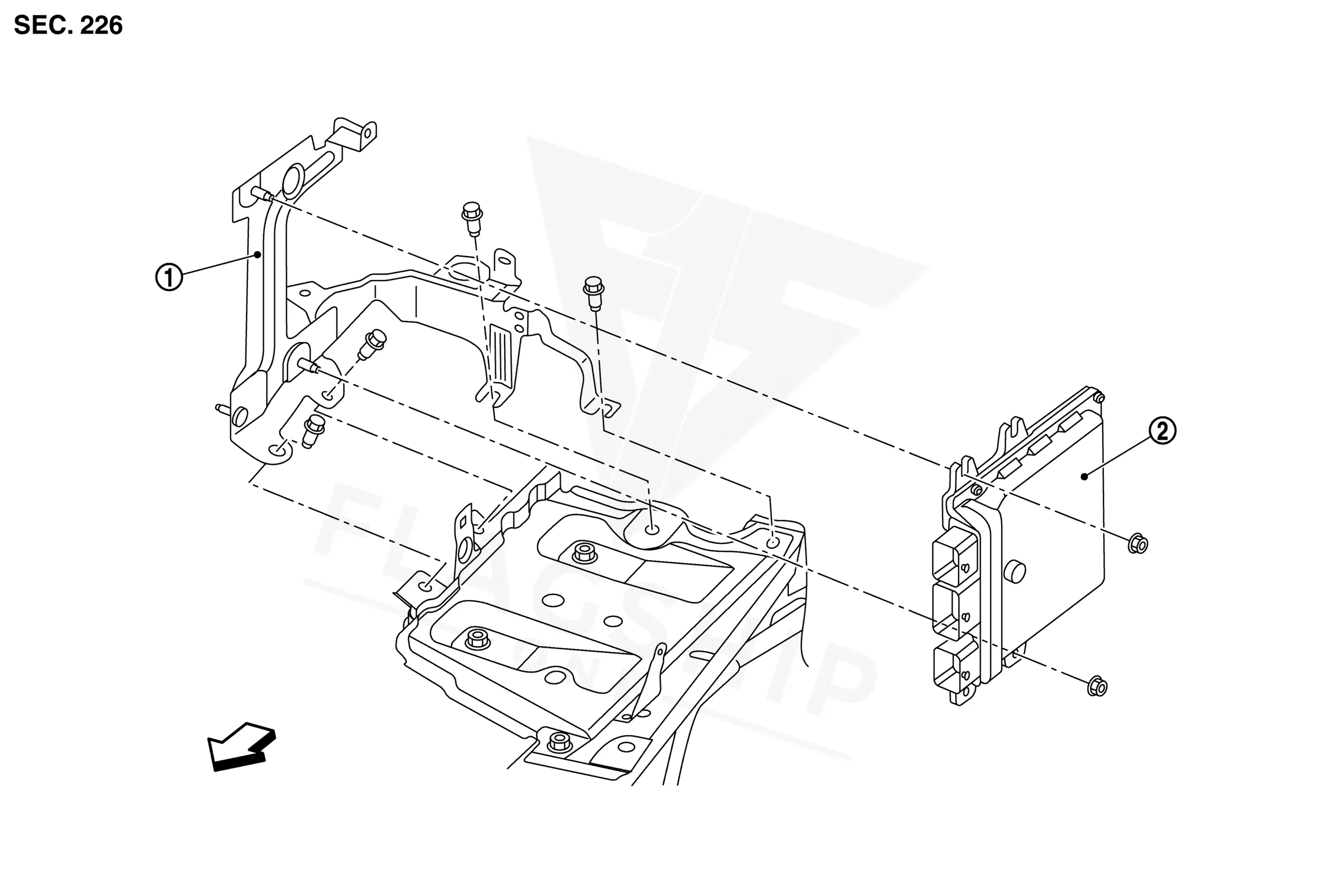
Work with the ignition off, and treat the module as static-sensitive: avoid touching the connector pins at any point.
| Operation | Configuration | Book Time |
|---|---|---|
| Powertrain Control Module R&R | All configurations | 2.2 hr |
| Powertrain Control Module Relearn | All configurations | 0.5 hr |
| Engine Control Module R&R | All configurations | 2.2 hr |
| Engine Control Module Relearn | All configurations | 0.5 hr |
After installing a new PCM in your 2015 Nissan Altima, the factory procedure requires a relearn process to synchronize the module with the vehicle’s systems. This typically involves using a scan tool to reset adaptive values, recalibrate the transmission, and ensure all sensors communicate properly. The labor time for this step is 0.5 hours, but it can be avoided entirely by using a VIN-programmed replacement unit. These units arrive pre-configured to your Altima’s specifications, eliminating the need for dealer programming and reducing downtime. Without this pre-programming, you may face additional trips to the shop or dealership to complete the relearn, adding unnecessary time and expense to the repair.
A failing PCM in your 2015 Nissan Altima often announces itself through a variety of symptoms, some subtle and others impossible to ignore. You may notice the engine stalling unexpectedly, especially at idle or during deceleration, or the vehicle refusing to start altogether. Misfires, rough running, or a sudden drop in fuel efficiency can also point to PCM issues, as the module struggles to regulate fuel and ignition timing. Transmission problems, such as harsh or delayed shifts, may occur if the PCM loses communication with the transmission control module. In some cases, the check engine light will illuminate, and a scan tool may reveal module-internal codes like an internal control module fault. If the PCM fails completely, you might lose all communication with the vehicle’s onboard diagnostics, leaving you with a no-start condition and no clear trouble codes to guide the repair.
The 2015 Nissan Altima’s PCM may log specific internal trouble codes when it begins to fail. These codes often indicate faults within the module itself rather than external sensor or wiring issues. Addressing them promptly can prevent further drivability problems or complete system failure.
| Code | Meaning | Full Guide |
|---|---|---|
| P0605 | Internal ROM error | Full P0605 guide → |
A jump start with incorrect voltage or polarity can damage the PCM, leading to stalling or no-start conditions. The module may struggle to regulate fuel or ignition timing, causing the engine to cut out. If the stalling persists, the PCM may need to be inspected or replaced, especially if trouble codes like P0605 appear.
While the vehicle may still run with a P0605 code, it’s not advisable to ignore it. This code indicates an internal PCM fault, which may cause unpredictable behavior like stalling, misfires, or transmission issues. Driving with this code active could lead to further damage or a complete no-start condition.
A professional diagnosis is the best way to distinguish between a faulty PCM and a wiring problem. A technician can check for proper voltage and ground at the PCM connector, inspect wiring harnesses for damage, and use a scan tool to verify communication with the module. If all electrical checks pass but the PCM still logs internal faults, replacement is likely needed.
Without reprogramming, the new PCM won’t recognize your Altima’s specific engine, transmission, or emission controls. This can lead to poor performance, shifting issues, or even a no-start condition. The factory procedure requires a relearn process, but using a pre-programmed unit eliminates this step and ensures proper functionality from the start.
Testing the PCM directly is challenging without specialized equipment, but a technician can perform indirect checks. This includes verifying power and ground at the module, scanning for trouble codes, and monitoring live data to see if the PCM responds to sensor inputs. If the module fails to communicate or logs internal faults, replacement is often the next step.
If your 2015 Nissan Altima is exhibiting symptoms of PCM failure, you have options beyond a costly dealership replacement. A refurbished or new PCM, pre-programmed to your vehicle’s VIN, can restore functionality without the need for additional programming. This approach saves time and ensures your Altima runs as intended, whether you’re addressing a no-start condition or resolving persistent drivability issues. Consider the labor involved and the benefits of a plug-and-play solution before proceeding with repairs.
Flagship One stocks a refurbished, VIN-programmed PCM for the 2015 Nissan Altima with a lifetime warranty, free shipping and no core charge. The full Nissan Altima module lineup covers other engine configurations as well.
A failing PCM in your 2015 Nissan Altima can disrupt your daily routine, but understanding the symptoms and replacement process helps you take control. Whether you’re dealing with a no-start condition or erratic performance, addressing the issue promptly with the right replacement unit ensures your vehicle runs smoothly. With the right approach, you can avoid unnecessary downtime and get back on the road with confidence.