
Last updated on August 25th, 2026 at 02:25 pm
The powertrain control module (PCM) in your 2009 Chevrolet Cobalt 2.2L is the central computer that manages engine and transmission operation. It processes sensor inputs, controls fuel delivery, ignition timing, and shift points. Failure often results from voltage spikes, corrosion, or internal component degradation, leading to drivability issues.
If your 2009 Chevrolet Cobalt 2.2L is experiencing intermittent stalling, a no-start condition, or a check-engine light that won’t clear, the powertrain control module (PCM) — also called the engine control module (ECM) — may be the culprit. This computer is the brain of your vehicle’s engine and transmission management system. It interprets data from oxygen sensors, throttle position, crankshaft and camshaft sensors, and many others to adjust fuel mixture, ignition timing, and shift patterns in real time. When the PCM begins to fail, you may notice erratic behavior that mimics other component failures, making diagnosis tricky. This guide explains what the PCM does in your specific Cobalt, where it is located, how replacement is performed, and what factory procedures are required after installation. You will also learn about common failure symptoms and the internal trouble codes that point to module problems. Understanding these details helps you make an informed decision about repair versus replacement, and how a pre-programmed unit from Flagship One can eliminate the need for dealer-level programming.
The powertrain control module in your 2009 Chevrolet Cobalt 2.2L is a single unit that combines engine and transmission control functions. It receives signals from sensors such as the mass airflow sensor, throttle position sensor, knock sensor, and wheel speed sensors to calculate the correct air-fuel ratio, spark timing, and transmission shift points. The module also monitors emissions systems and communicates with other modules via the vehicle’s data bus. When the PCM fails, it can disrupt these critical functions, leading to poor fuel economy, hesitation, or complete loss of power. The factory cautions that the metal case of the control module must never contact battery voltage — doing so can cause immediate internal damage. Additionally, any aftermarket electrical equipment should be connected directly to the battery terminals, not to the module’s wiring, to prevent voltage spikes. For your Cobalt, replacement ECMs for the Cobalt are available that are pre-programmed to match your vehicle’s VIN, ensuring plug-and-play installation without the need for a dealer visit.
2009 Chevrolet Cobalt 2.2L
OEM programmed ECM for your 2009 Chevrolet Cobalt 2.2L — plug & play, no dealer visit.
Free shipping · Lifetime warranty
The PCM/ECM in the 2009 Chevrolet Cobalt 2.2L is typically located in the engine compartment, mounted near the battery or on the driver-side strut tower. Access may require removing the air cleaner assembly or other components to reach the module. The factory book time for removing and replacing the control module is 0.9 hours. After installation, a relearn procedure is required, which takes an additional 0.5 hours. This relearn involves using a scan tool to synchronize the module with the vehicle’s security system and to reset adaptive learning values. The factory cautions that the metal case of the module must not contact battery voltage during service, so care must be taken when disconnecting and reconnecting the battery or using jumper cables. Always disconnect the negative battery cable before handling the module to avoid accidental shorts.
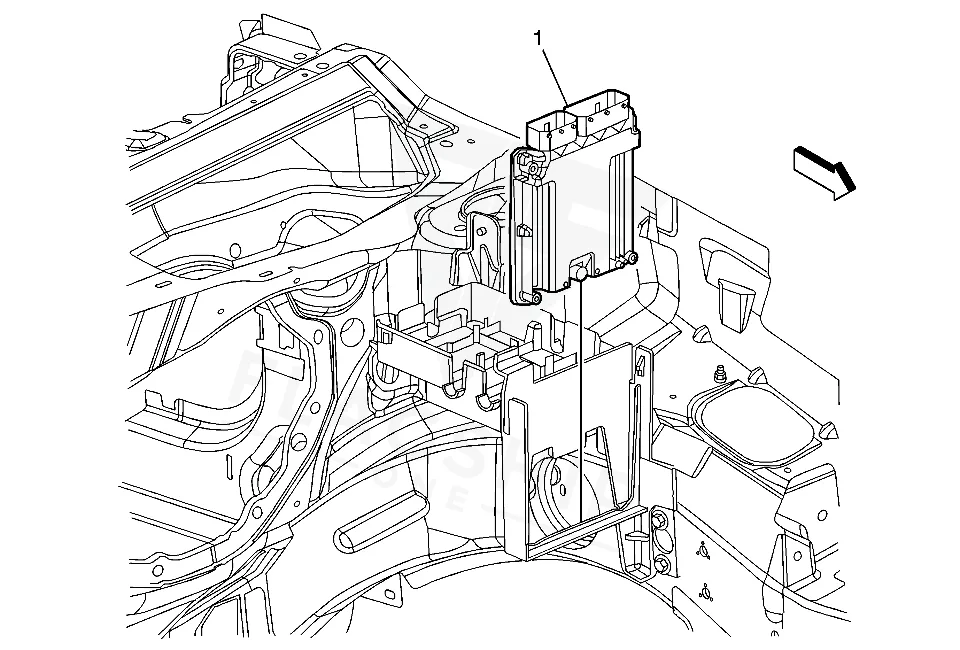
Work with the ignition off, and treat the module as static-sensitive: avoid touching the connector pins at any point.
| Operation | Configuration | Book Time |
|---|---|---|
| Engine Control Module R&R | All configurations | 0.9 hr |
| Engine Control Module Relearn | All configurations | 0.5 hr |
| Powertrain Control Module R&R | All configurations | 0.9 hr |
| Powertrain Control Module Relearn | All configurations | 0.5 hr |
After installing a new or replacement PCM/ECM in your 2009 Chevrolet Cobalt 2.2L, the factory procedure requires a relearn using specialized scan tool equipment. The correct program and calibration for your specific vehicle must be loaded, and the module must be synchronized with the immobilizer system. Before removal, the factory recommends capturing the existing ECM data with a scan tool to aid in the reprogramming process. However, when you purchase a VIN-programmed replacement unit from Flagship One, all of these steps are already completed. The module arrives ready to install, with the correct software and VIN matching already performed. This eliminates the need for dealer-level programming equipment and saves the 0.5-hour relearn labor, as the module is already configured for your Cobalt.
A failing PCM/ECM in the 2009 Chevrolet Cobalt 2.2L can produce a variety of symptoms that may be mistaken for other issues. Common signs include a no-start condition where the engine cranks but does not fire, intermittent stalling while driving, or a check-engine light that stays on. You may also experience poor acceleration, hesitation, or rough idle. Transmission shifting may become erratic or delayed, as the PCM controls shift solenoids. Another indicator is a loss of communication with a scan tool — if the module cannot be read, it may be internally damaged. The factory has documented several module-internal trouble codes for this vehicle, such as internal control module error P0601, which indicates a checksum failure in the PCM’s internal memory. Other codes like P0602 (programming error) or P0606 (internal processor fault) also point to module failure. If you notice any of these symptoms, especially combined with a code in the P0600 series, the PCM is likely the root cause.
The following trouble codes are stored internally within the PCM/ECM of the 2009 Chevrolet Cobalt 2.2L. These codes indicate faults within the module itself rather than external sensors or circuits. They are often accompanied by drivability issues and may require module replacement.
Yes, the physical replacement is straightforward with basic hand tools. The factory book time is 0.9 hours. However, after installation, the module requires a relearn procedure using a scan tool to synchronize with the vehicle’s security system. A pre-programmed unit from Flagship One eliminates that step.
P0601 is an internal control module memory checksum error. It indicates that the PCM’s internal read-only memory has failed a self-test. This typically requires module replacement, as the fault is inside the computer itself.
If you have multiple sensor codes or communication faults, or if the scan tool cannot connect to the module, the PCM is likely at fault. Codes in the P0600 series (P0601-P0607, P062F, etc.) are specific to internal module problems.
Disconnecting the battery may clear temporary fault codes and reset adaptive learning, but it will not fix a physically damaged module. If the PCM has internal faults like P0601, it will return after reconnection.
In this vehicle, the terms are often used interchangeably. The single module controls both the engine (ECM) and transmission (PCM) functions. It is a combined unit.
If your 2009 Chevrolet Cobalt 2.2L is showing signs of PCM failure, you have two main options: have the original module repaired by a specialist, or replace it with a new or refurbished unit. Given the complexity of the factory relearn procedure, a pre-programmed replacement from Flagship One offers a direct solution. The module arrives with your VIN already loaded, so installation is plug-and-play without dealer programming costs.
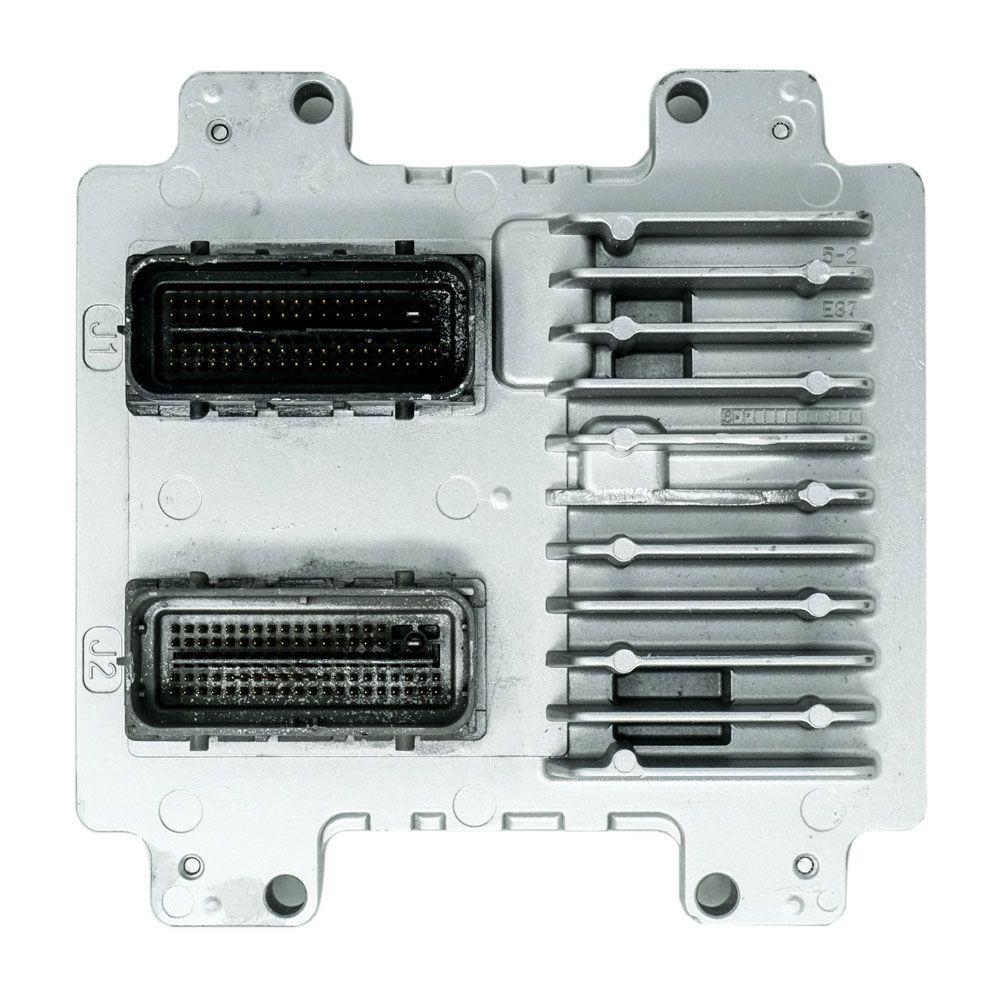
Flagship One stocks a refurbished, VIN-programmed PCM for the 2009 Chevrolet Cobalt with a lifetime warranty, free shipping and no core charge. The full Chevrolet Cobalt module lineup covers other engine configurations as well.
The PCM/ECM in your 2009 Chevrolet Cobalt 2.2L is a critical component that manages engine and transmission performance. Recognizing the symptoms of failure and understanding the factory replacement procedure helps you avoid unnecessary repairs. A VIN-programmed replacement from Flagship One simplifies the process, saving time and ensuring your Cobalt returns to reliable operation.