
Last updated on August 25th, 2026 at 02:34 pm
In the 2009 Cadillac XLR, the engine control module (ECM) manages fuel delivery, ignition timing, and emission controls. When the ECM fails, the powertrain may lose crank capability, display error codes, or refuse to start, directly affecting drivability and emissions compliance.
When a 2009 Cadillac XLR exhibits persistent warning lights, missing gear‑shift indicators, or refuses to crank, the engine control module often lies at the heart of the problem. Understanding how the ECM interacts with the vehicle’s powertrain, what the factory recommends for removal, and how programming is completed can help you decide between a repair and a refurbished replacement. This guide walks you through the module’s role, the labor involved, the programming steps required, and practical tips to keep the system healthy, so you can make an informed choice for your XLR.
The engine control module in the 2009 Cadillac XLR serves as the central computer that continuously monitors sensor inputs and commands actuators to control engine speed, fuel injection, and emissions. It processes data from the crankshaft position sensor, oxygen sensors, and throttle position sensor to determine the optimal spark timing and fuel mixture for each operating condition. When the ECM cannot perform these calculations, the vehicle may limit engine output, trigger diagnostic codes, or prevent start‑up entirely. Proper operation is essential for performance, fuel economy, and regulatory compliance. The module also communicates with the transmission control module to coordinate shifting, making its reliability crucial for smooth driving. 2009 Cadillac XLR engine computer integration with other control units ensures the vehicle meets its design specifications.
The ECM in the 2009 Cadillac XLR is mounted within the engine compartment, accessible after removing the intake assembly and disconnecting the battery to protect against voltage spikes. Replacement follows the factory labor estimate of 1.4 hours, which includes disconnecting the wiring harness, removing mounting bolts, and installing the new unit. After the hardware is secured, the technician reconnects the harness and restores battery power. The powertrain control module (PCM) replacement follows an identical time frame, also listed at 1.4 hours. Once the ECM is in place, a relearn procedure adds an additional 0.5 hours to complete the calibration of sensor references and idle control parameters.
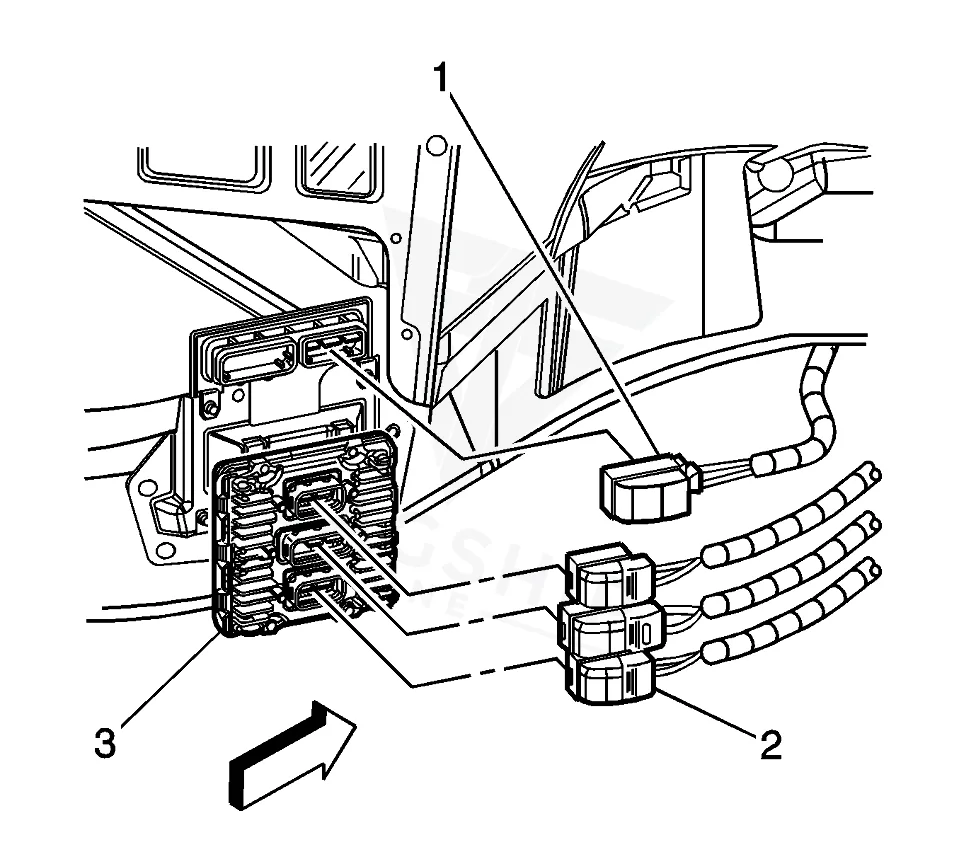
Work with the ignition off, and treat the module as static-sensitive: avoid touching the connector pins at any point.
| Operation | Configuration | Book Time |
|---|---|---|
| Powertrain Control Module R&R | All configurations | 1.4 hr |
| Engine Control Module R&R | All configurations | 1.4 hr |
| Engine Control Module Relearn | All configurations | 0.5 hr |
2009 Cadillac XLR
OEM programmed ECM for your 2009 Cadillac XLR — plug & play, no dealer visit.
Free shipping · Lifetime warranty
Factory service requires the technician to use a scan tool to capture the existing ECM data before the unit is removed, then apply the correct program and calibration specific to the 2009 Cadillac XLR. Special equipment and the appropriate software version are mandatory for this reprogramming step. Flagship One supplies units that arrive already VIN‑programmed, so the data capture and calibration process is effectively completed before the part reaches your shop. a VIN-programmed replacement unit eliminates the need for additional on‑site programming time, streamlining the repair workflow.
A failing ECM in the 2009 Cadillac XLR may cause the engine to refuse to start, stall unexpectedly, or produce rough idle conditions. Drivers often notice the malfunction indicator lamp illuminated, accompanied by missing gear‑shift display on the instrument cluster. Diagnostic trouble codes such as code P0601 may appear, indicating internal processor errors. Additional signs include loss of power during acceleration, erratic throttle response, and occasional transmission shifting irregularities due to the loss of communication between the ECM and TCM.
The following diagnostic trouble codes are documented for the 2009 Cadillac XLR ECM and may appear during fault detection:
Service bulletin #08-07-30-020 (Mar 3 2010) addresses MIL illumination with codes P1825, P182E, or P1915, along with PRNDL display loss and potential no‑crank conditions. Bulletin #PIP4653D (Jun 20 2012) covers stored TCM codes P0601, P0603, P0604, P062F, and P1621, providing diagnostic guidance for related failures.
| Bulletin | Subject | What It Addresses |
|---|---|---|
| 08-07-30-020 | Diagnostic Information for MIL Illuminated with DTC P1825, P182E or P1915 Found Current or as H | — |
| — | DTC’s P0601 P0603 P0604 P062F Or P1621 (Stored in the TCM) – (Jun 20, 2012) | — |
Yes, because the ECM controls fuel and spark timing, a malfunction can result in intermittent stalling or loss of power.
Factory guidelines specify a relearn procedure lasting about 0.5 hours to calibrate sensor baselines after replacement.
The factory process requires a scan tool and the correct calibration files; Flagship One units arrive pre‑programmed, removing that requirement.
The check engine light may illuminate, and the instrument panel could lose the PRNDL display, signaling a communication fault.
Labor estimates suggest 1.4 hours for removal and installation, plus an additional 0.5 hours for the post‑install relearn.
When the ECM in your 2009 Cadillac XLR fails, you can choose a repair or a refurbished replacement. Both approaches address the mechanical removal steps, but a Flagship One unit arrives VIN‑programmed, eliminating the need for on‑site calibration. Considering labor times and the factory’s programming requirements, a refurbished module can often reduce shop time while delivering comparable performance.
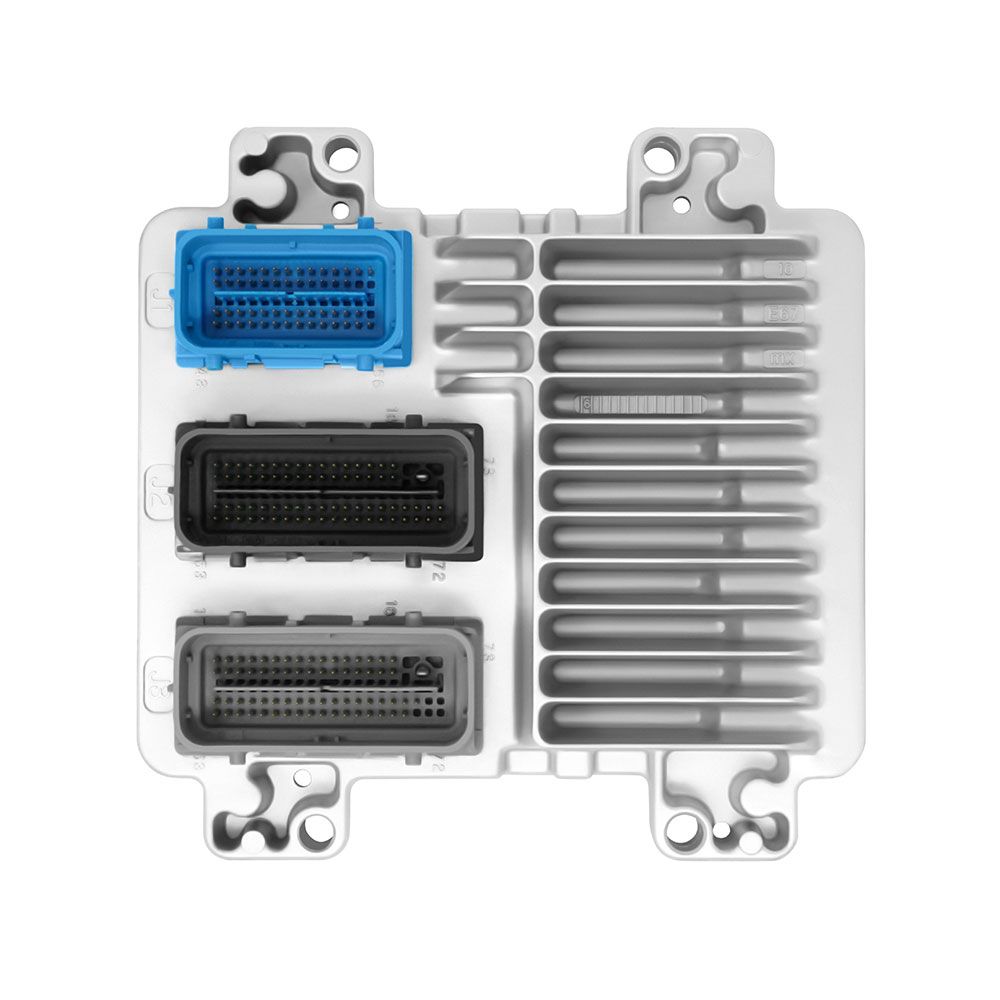
Flagship One stocks a refurbished, VIN-programmed PCM for the 2009 Cadillac XLR with a lifetime warranty, free shipping and no core charge. The full Cadillac XLR module lineup covers other engine configurations as well.
The 2009 Cadillac XLR relies on a properly functioning ECM for engine start, smooth operation, and transmission coordination. Choosing a VIN‑programmed replacement can simplify the repair process while meeting factory specifications. Contact Flagship One for more information on compatible modules.